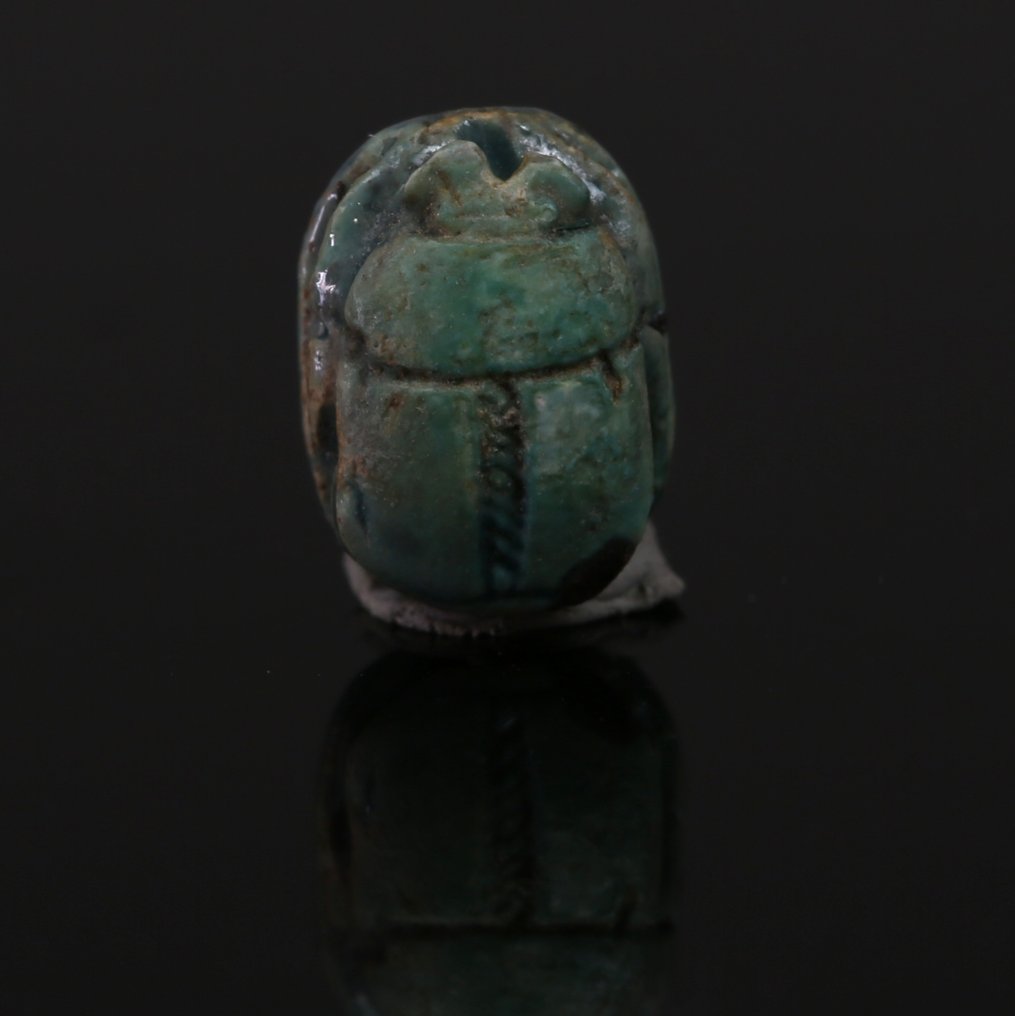
古埃及,阿玛纳时期 Faience 圣甲虫,阿蒙霍特普三世在位时期,原属博物馆收藏


07
天
04
小時
15
分鐘
56
秒

 | €53 | |
|---|---|---|
 | €50 |
Catawiki買家保障
在您收到物品前,我們會妥善保管您的付款。查看詳情
Trustpilot評分 4.4 | 143856 則評論
在Trustpilot獲得極佳評等。
埃及法陶蟲護符,阿瑪納時期(阿蒙霍特普三世在位,公元前1391–1353年),良好狀態,尺寸為6 × 10 mm,來源自德國博物館展覽部;於2024年在德國取得,附有真實性證明與出口許可。
AI輔助摘要
賣家描述
ITEM: Scarab, reign of Amenhotep III
MATERIAL: Faience
CULTURE: Egyptian
PERIOD: Amarna period, 1391 – 1353 B.C
DIMENSIONS: 6 mm x 10 mm
CONDITION: Good condition
PROVENANCE: Ex Museum Exhibiton of the Arbeitsgruppe für Biblische Archäologie, Germany (Deaccession)
Comes with Certificate of Authenticity and Export license
If you bid outside the european union and win the item, we will have to apply for an export licence for your country and shipping will take 3 to 5 weeks.
Scarab amulets from the Amarna Period, particularly during the reign of Amenhotep III (circa 1391–1353 BCE), represent both continuity and innovation in Egyptian religious and artistic practices. Scarabs had long been used in ancient Egypt as protective amulets, symbols of rebirth, and tokens of personal identity. During Amenhotep III’s reign—an era of immense wealth, artistic refinement, and growing religious experimentation—scarabs continued to hold deep symbolic importance while often serving as diplomatic gifts or royal propaganda tools.
Scarabs from this period were typically made of glazed steatite or faience and bore inscriptions on their flat undersides. These could include the names and titles of the king, deities, or references to specific events. Under Amenhotep III, a distinctive group of large “commemorative scarabs” was produced, bearing long inscriptions detailing royal achievements such as lion hunts, building projects, or diplomatic marriages. These were widely distributed throughout the Near East, emphasizing the pharaoh’s power and divine favor.
Artistically, Amarna Period scarabs often reflect the increasing stylization and realism that characterized the broader visual culture of the time. While most still maintained the traditional beetle form associated with the god Khepri, some scarabs began to show more fluid and dynamic shapes, influenced by the artistic reforms that would fully blossom under Amenhotep IV (Akhenaten). The craftsmanship of these amulets was high, with finely carved hieroglyphs and smooth, glossy glazes in shades of blue and green—colors linked to life, regeneration, and the Nile.
In both funerary and diplomatic contexts, these scarabs served to reinforce the divine nature of the king and the protective power of Egyptian symbolism. Their widespread discovery—from Egyptian tombs to Levantine palaces—attests to Egypt’s far-reaching influence during Amenhotep III’s reign.
賣家的故事
您的古董商提供古代藝術品和古錢幣。我們的主要目標是以最優惠的價格提供最高的質量,尊重並嚴格遵守遺產保護法和聯合國教科文組織遺產規範。因此,出版的作品全部來自可查出處的私人收藏或國際拍賣。我們所有的古物和硬幣都附有真品證書。我們有 90 天無條件退貨政策。在 Your Antiquarian,我們致力於幫助弱勢群體,因此每次購買的產品都會捐贈一部分給慈善機構,以幫助有需要的人。
由Google翻譯翻譯ITEM: Scarab, reign of Amenhotep III
MATERIAL: Faience
CULTURE: Egyptian
PERIOD: Amarna period, 1391 – 1353 B.C
DIMENSIONS: 6 mm x 10 mm
CONDITION: Good condition
PROVENANCE: Ex Museum Exhibiton of the Arbeitsgruppe für Biblische Archäologie, Germany (Deaccession)
Comes with Certificate of Authenticity and Export license
If you bid outside the european union and win the item, we will have to apply for an export licence for your country and shipping will take 3 to 5 weeks.
Scarab amulets from the Amarna Period, particularly during the reign of Amenhotep III (circa 1391–1353 BCE), represent both continuity and innovation in Egyptian religious and artistic practices. Scarabs had long been used in ancient Egypt as protective amulets, symbols of rebirth, and tokens of personal identity. During Amenhotep III’s reign—an era of immense wealth, artistic refinement, and growing religious experimentation—scarabs continued to hold deep symbolic importance while often serving as diplomatic gifts or royal propaganda tools.
Scarabs from this period were typically made of glazed steatite or faience and bore inscriptions on their flat undersides. These could include the names and titles of the king, deities, or references to specific events. Under Amenhotep III, a distinctive group of large “commemorative scarabs” was produced, bearing long inscriptions detailing royal achievements such as lion hunts, building projects, or diplomatic marriages. These were widely distributed throughout the Near East, emphasizing the pharaoh’s power and divine favor.
Artistically, Amarna Period scarabs often reflect the increasing stylization and realism that characterized the broader visual culture of the time. While most still maintained the traditional beetle form associated with the god Khepri, some scarabs began to show more fluid and dynamic shapes, influenced by the artistic reforms that would fully blossom under Amenhotep IV (Akhenaten). The craftsmanship of these amulets was high, with finely carved hieroglyphs and smooth, glossy glazes in shades of blue and green—colors linked to life, regeneration, and the Nile.
In both funerary and diplomatic contexts, these scarabs served to reinforce the divine nature of the king and the protective power of Egyptian symbolism. Their widespread discovery—from Egyptian tombs to Levantine palaces—attests to Egypt’s far-reaching influence during Amenhotep III’s reign.
賣家的故事
您的古董商提供古代藝術品和古錢幣。我們的主要目標是以最優惠的價格提供最高的質量,尊重並嚴格遵守遺產保護法和聯合國教科文組織遺產規範。因此,出版的作品全部來自可查出處的私人收藏或國際拍賣。我們所有的古物和硬幣都附有真品證書。我們有 90 天無條件退貨政策。在 Your Antiquarian,我們致力於幫助弱勢群體,因此每次購買的產品都會捐贈一部分給慈善機構,以幫助有需要的人。
由Google翻譯翻譯詳細資料
文化
Ancient Egypt, Amarna period
世紀/時間框架
Amarna period, 1391 - 1353 B.C
Name of object
Scarab, reign of Amenhotep III, Ex MUSEUM
獲得來源
私人收藏
獲得年份
2024
材質
Faience
獲得國家
德國
狀態
好
前任擁有者獲得來源
古董市場
前任擁有者獲得年份
1970
前任擁有者獲得國家
德國
我保證此物品為合法取得,且本人有權出售。
是
真偽
原創/正版
免責聲明
Catawiki已告知賣家有關文件的要求,賣家須保證如下: - 物品為合法獲得; - 賣家有權出售和/或出口相關物品; - 賣家依據當地法規(如適用)提供必要的原產地資訊,並辦理所需文件和許可證/執照; - 若許可證/執照的取得發生任何延誤,賣家須通知買家。 參與競標即表示您知悉,根據您的居住國,可能需要進口文件,而取得許可證/執照可能導致您的物品延遲交付。
Catawiki已告知賣家有關文件的要求,賣家須保證如下: - 物品為合法獲得; - 賣家有權出售和/或出口相關物品; - 賣家依據當地法規(如適用)提供必要的原產地資訊,並辦理所需文件和許可證/執照; - 若許可證/執照的取得發生任何延誤,賣家須通知買家。 參與競標即表示您知悉,根據您的居住國,可能需要進口文件,而取得許可證/執照可能導致您的物品延遲交付。
