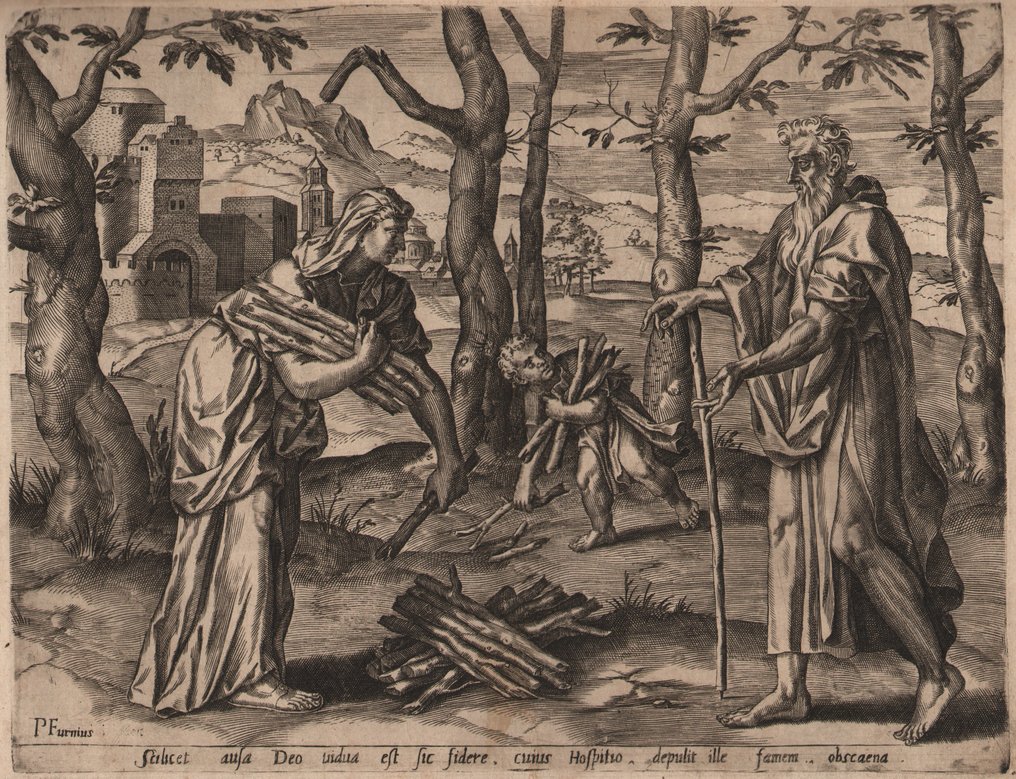
Pieter Jalhea Furnius (1545 -1610) - Elijah and the widow of Zarephath


04
天
22
小時
08
分鐘
30
秒

沒有出價記錄
Catawiki買家保障
在您收到物品前,我們會妥善保管您的付款。查看詳情
Trustpilot評分 4.4 | 122813 則評論
在Trustpilot獲得極佳評等。
彼得·賈勒亞·馮紐厄斯(Pieter Jalhea Furnius),以利亞與撒勒薄寡婦為題的版畫,文藝復興風格(約1590–1620),原產地比利時,版面簽名,21.5 x 27.5 cm,狀況極佳。
AI輔助摘要
賣家描述
Description:
The Story of the Prophet Elijah - Undescribed. The present print, part of a series of four is not described in the critical literature. Elijah, en route to the city Zarephath, meets a widow who is the gathering with her son wood. The widow has put the gesprokkelde wood in the shape of a cross. Among the show is a line of text in Latin. Hollstein’s catalogue of engravings by Furnius fails to include the Elijah series in its inventory. The print depicts the meeting of Elijah with the widow of Zarephath and the raising of her son. Furnius’ formal language is stern and strong. His engraving style is not intended to achieve beauty of line, its austerity is adapted to the seriousness of the theme. The figures appear static and massive, yet very expressive and filled with great inner energy.
Dimensions:
21,50 x 27,50 cm
Literature:
This print is undescribed in Hollstein. . Pieter Jalhea Furnius (1545 -1610) Flemish name: Petrus Dufour Flemish printmaker; painter/draughtsman Born in Liège, pupil of Lambert Lombard worked Antwerp for Plantin 1563-71. Died in Liège. We know little about the life and work of the Liège painter and engraver Pieter Furnius. The prints we know by Furnius show him as a significant representative of Flemish Mannerism. Furnius studied under the influential painter Lambert Lombard in Liège. He spent the years between 1563 and 1571 in Antwerp working as a reproductive engraver for such well-known publishers as Christopher Plantin and Hieronymus Cock, while also producing a number of prints after his own inventions. His powerful engraving technique is characteristic of what is called the Antwerp style, the most important representatives of which included such engravers as Crispijn van den Broeck, Cornelis Cort and Philips Galle.
Medium:
Engraving
Circa:
1590-1620
Notes:
All measurements are taken on the plate mark. All lot's are listed with several high resolution images, which is the best way to give a clear and objective idea of the general very good condition. Textual condition description is limited, so please examine the images carefully and ask for more info if needed.
Condition:
Very good tonal impressions with margins. Minor ageing, old numeration in ink, otherwise in excellent, untreated condition.
Description:
The Story of the Prophet Elijah - Undescribed. The present print, part of a series of four is not described in the critical literature. Elijah, en route to the city Zarephath, meets a widow who is the gathering with her son wood. The widow has put the gesprokkelde wood in the shape of a cross. Among the show is a line of text in Latin. Hollstein’s catalogue of engravings by Furnius fails to include the Elijah series in its inventory. The print depicts the meeting of Elijah with the widow of Zarephath and the raising of her son. Furnius’ formal language is stern and strong. His engraving style is not intended to achieve beauty of line, its austerity is adapted to the seriousness of the theme. The figures appear static and massive, yet very expressive and filled with great inner energy.
Dimensions:
21,50 x 27,50 cm
Literature:
This print is undescribed in Hollstein. . Pieter Jalhea Furnius (1545 -1610) Flemish name: Petrus Dufour Flemish printmaker; painter/draughtsman Born in Liège, pupil of Lambert Lombard worked Antwerp for Plantin 1563-71. Died in Liège. We know little about the life and work of the Liège painter and engraver Pieter Furnius. The prints we know by Furnius show him as a significant representative of Flemish Mannerism. Furnius studied under the influential painter Lambert Lombard in Liège. He spent the years between 1563 and 1571 in Antwerp working as a reproductive engraver for such well-known publishers as Christopher Plantin and Hieronymus Cock, while also producing a number of prints after his own inventions. His powerful engraving technique is characteristic of what is called the Antwerp style, the most important representatives of which included such engravers as Crispijn van den Broeck, Cornelis Cort and Philips Galle.
Medium:
Engraving
Circa:
1590-1620
Notes:
All measurements are taken on the plate mark. All lot's are listed with several high resolution images, which is the best way to give a clear and objective idea of the general very good condition. Textual condition description is limited, so please examine the images carefully and ask for more info if needed.
Condition:
Very good tonal impressions with margins. Minor ageing, old numeration in ink, otherwise in excellent, untreated condition.
詳細資料
藝術家
Pieter Jalhea Furnius (1545 -1610)
藝術品標題
Elijah and the widow of Zarephath
技術
鐫版術
簽名
Plate signed
原產國
比利時
狀態
極佳狀態
Height
215 mm
Width
275 mm
Style
文藝復興時期
時段
16世紀
連框架出售
不是