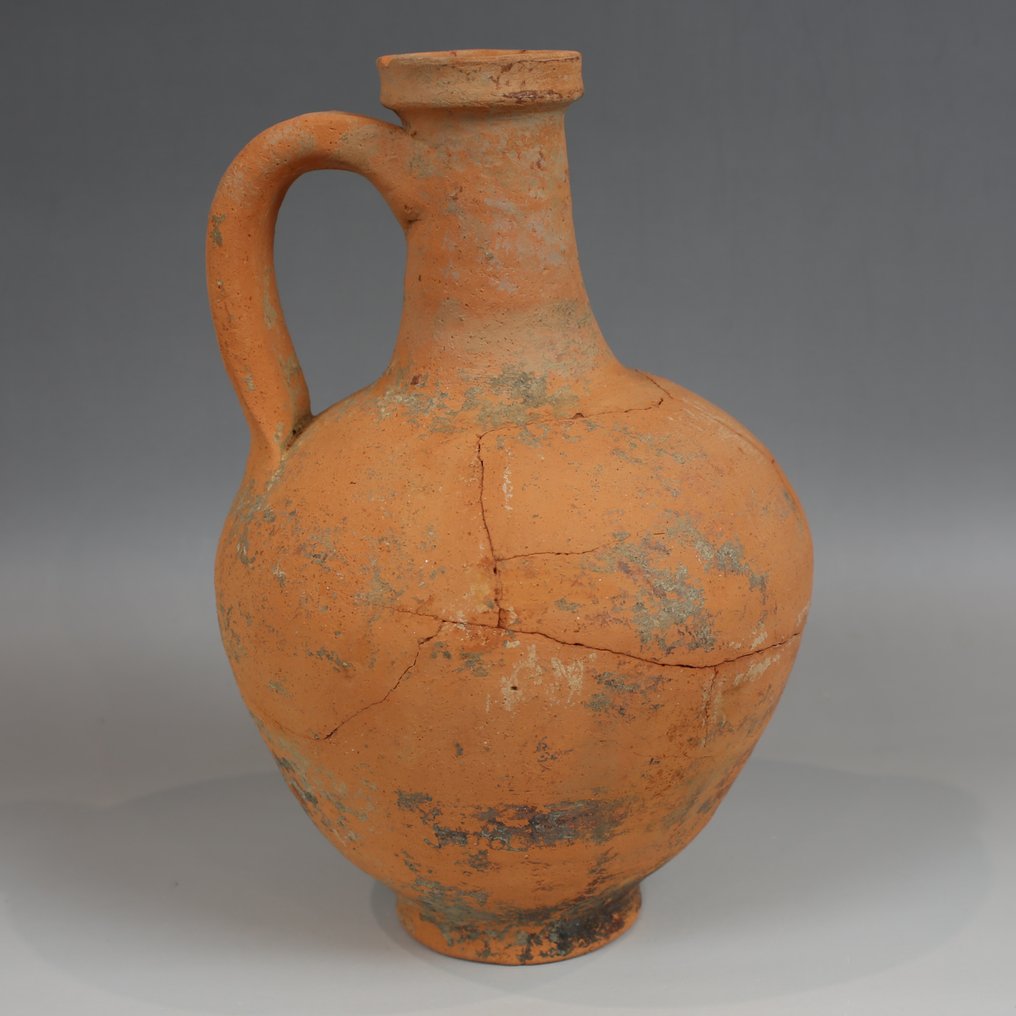
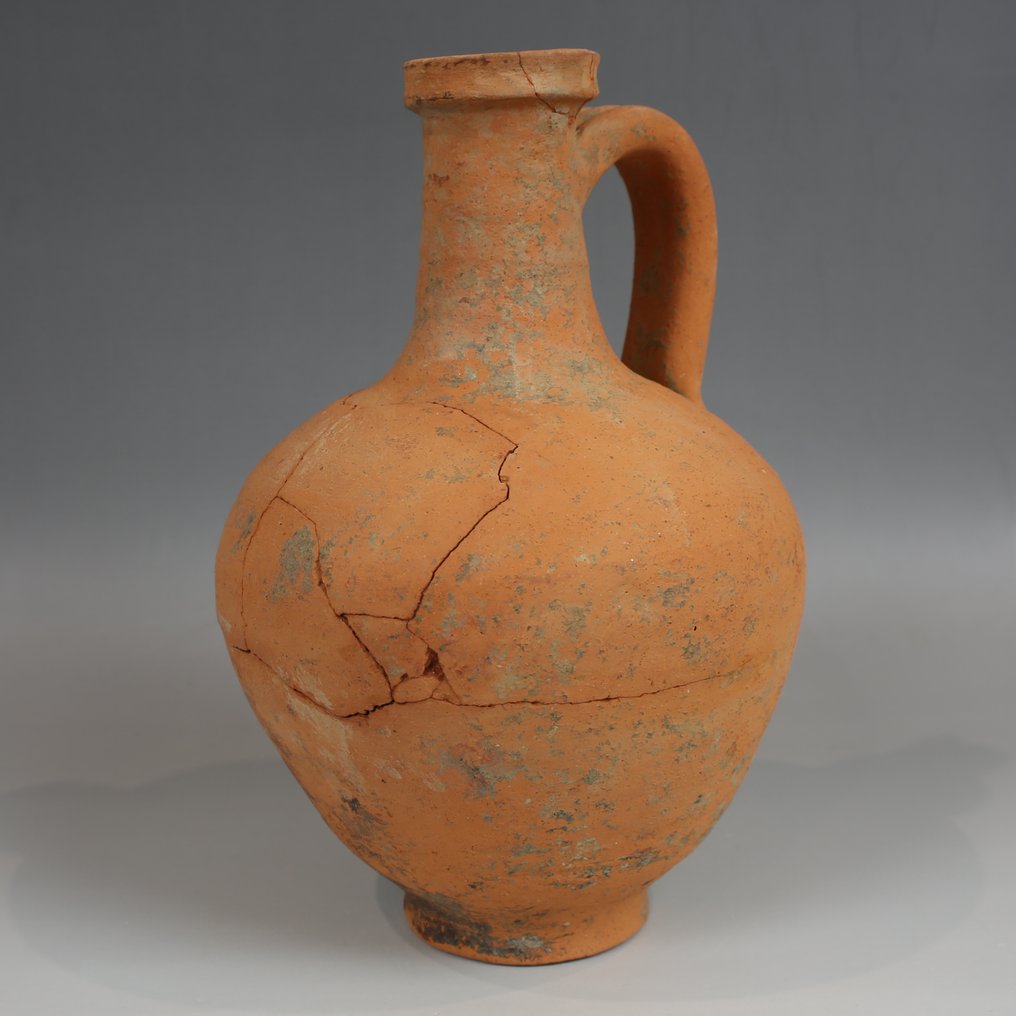
古羅馬 陶器 杆子 - 205 mm (沒有保留價)


01
天
07
小時
46
分鐘
23
秒

另有27人對此物品感興趣
 競投者 1943 競投者 1943 | €80 | |
|---|---|---|
 競投者 1079 競投者 1079 | €75 | |
| 競投者 1079 | €68 | |
Catawiki買家保障
在您收到物品前,我們會妥善保管您的付款。查看詳情
Trustpilot評分 4.4 | 121899 則評論
在Trustpilot獲得極佳評等。
羅馬陶器壺,公元1–3世紀,高205 毫米、寬130 毫米,來自德國私人收藏,於2025年取得,附真實性證明與出口許可,狀態受損。
AI輔助摘要
賣家描述
ITEM: Jug
MATERIAL: Pottery
CULTURE: Roman
PERIOD: 1st - 3rd Century A.D
DIMENSIONS: 205 mm x 130 mm
CONDITION: Good condition, repaired
PROVENANCE: Ex German private collection, F.B., acquired in European antiquities auctions between 2000 - 2009.
Comes with Certificate of Authenticity and Export license.
If you bid outside the European Union and win the item, we will have to apply for an export licence for your country and shipping will take 3 to 5 weeks.
Roman jugs were versatile vessels used for storing, pouring, and serving liquids, particularly in domestic and ceremonial contexts. Made from materials such as terracotta, glass, or metal, Roman jugs were commonly used for liquids like wine, water, oil, and vinegar. These jugs were essential components of Roman tableware and storage solutions, reflecting the advanced ceramic production techniques of the empire. The design of Roman jugs varied widely, with some featuring simple, utilitarian forms, while others were more elaborate, adorned with decorative motifs, and designed to serve as both functional and status-symbolizing objects. The shape of the jug was typically characterized by a rounded body, a long neck, and a handle, often with a spout for controlled pouring.
One of the most common types of Roman jugs was the oenochon, which was specifically designed for holding and serving wine. These jugs were often found in Roman homes, villas, and public bathhouses, where wine played a central role in daily life and social gatherings. Some jugs were crafted with intricate reliefs or painted scenes, which could range from mythological depictions to representations of daily Roman life. The use of color and texture in the decoration of jugs was not just artistic; it also reflected the status and wealth of the owner. Wealthier Romans would commission more decorative jugs made from higher-quality materials, often featuring gilding or enamel work, while more common versions were simpler but no less functional.
Roman jugs also had a significant role in religious and funerary practices. In domestic shrines or temples, jugs were used to store offerings of liquids to the gods, often as part of libation rituals. These vessels were also frequently found in tombs, sometimes buried with the deceased as offerings or to ensure the continued provision of liquids in the afterlife. Some jugs, particularly those made from glass, reflect the technological advances in Roman glassmaking, showing the skill and innovation of Roman artisans.
賣家的故事
您的古董商提供古代藝術品和古錢幣。我們的主要目標是以最優惠的價格提供最高的質量,尊重並嚴格遵守遺產保護法和聯合國教科文組織遺產規範。因此,出版的作品全部來自可查出處的私人收藏或國際拍賣。我們所有的古物和硬幣都附有真品證書。我們有 90 天無條件退貨政策。在 Your Antiquarian,我們致力於幫助弱勢群體,因此每次購買的產品都會捐贈一部分給慈善機構,以幫助有需要的人。
由Google翻譯翻譯ITEM: Jug
MATERIAL: Pottery
CULTURE: Roman
PERIOD: 1st - 3rd Century A.D
DIMENSIONS: 205 mm x 130 mm
CONDITION: Good condition, repaired
PROVENANCE: Ex German private collection, F.B., acquired in European antiquities auctions between 2000 - 2009.
Comes with Certificate of Authenticity and Export license.
If you bid outside the European Union and win the item, we will have to apply for an export licence for your country and shipping will take 3 to 5 weeks.
Roman jugs were versatile vessels used for storing, pouring, and serving liquids, particularly in domestic and ceremonial contexts. Made from materials such as terracotta, glass, or metal, Roman jugs were commonly used for liquids like wine, water, oil, and vinegar. These jugs were essential components of Roman tableware and storage solutions, reflecting the advanced ceramic production techniques of the empire. The design of Roman jugs varied widely, with some featuring simple, utilitarian forms, while others were more elaborate, adorned with decorative motifs, and designed to serve as both functional and status-symbolizing objects. The shape of the jug was typically characterized by a rounded body, a long neck, and a handle, often with a spout for controlled pouring.
One of the most common types of Roman jugs was the oenochon, which was specifically designed for holding and serving wine. These jugs were often found in Roman homes, villas, and public bathhouses, where wine played a central role in daily life and social gatherings. Some jugs were crafted with intricate reliefs or painted scenes, which could range from mythological depictions to representations of daily Roman life. The use of color and texture in the decoration of jugs was not just artistic; it also reflected the status and wealth of the owner. Wealthier Romans would commission more decorative jugs made from higher-quality materials, often featuring gilding or enamel work, while more common versions were simpler but no less functional.
Roman jugs also had a significant role in religious and funerary practices. In domestic shrines or temples, jugs were used to store offerings of liquids to the gods, often as part of libation rituals. These vessels were also frequently found in tombs, sometimes buried with the deceased as offerings or to ensure the continued provision of liquids in the afterlife. Some jugs, particularly those made from glass, reflect the technological advances in Roman glassmaking, showing the skill and innovation of Roman artisans.
賣家的故事
您的古董商提供古代藝術品和古錢幣。我們的主要目標是以最優惠的價格提供最高的質量,尊重並嚴格遵守遺產保護法和聯合國教科文組織遺產規範。因此,出版的作品全部來自可查出處的私人收藏或國際拍賣。我們所有的古物和硬幣都附有真品證書。我們有 90 天無條件退貨政策。在 Your Antiquarian,我們致力於幫助弱勢群體,因此每次購買的產品都會捐贈一部分給慈善機構,以幫助有需要的人。
由Google翻譯翻譯詳細資料
文化
古羅馬
世紀/時間框架
1st - 3rd Century A.D
Name of object
Jug
獲得來源
私人收藏
獲得年份
2025
材質
陶器
獲得國家
德國
狀態
Damaged
前任擁有者獲得來源
古董市場
Height
205 mm
前任擁有者獲得年份
2000
Width
130 mm
前任擁有者獲得國家
德國
我保證此物品為合法取得,且本人有權出售。
是
免責聲明
Catawiki已告知賣家有關文件的要求,賣家須保證如下: - 物品為合法獲得; - 賣家有權出售和/或出口相關物品; - 賣家依據當地法規(如適用)提供必要的原產地資訊,並辦理所需文件和許可證/執照; - 若許可證/執照的取得發生任何延誤,賣家須通知買家。 參與競標即表示您知悉,根據您的居住國,可能需要進口文件,而取得許可證/執照可能導致您的物品延遲交付。
Catawiki已告知賣家有關文件的要求,賣家須保證如下: - 物品為合法獲得; - 賣家有權出售和/或出口相關物品; - 賣家依據當地法規(如適用)提供必要的原產地資訊,並辦理所需文件和許可證/執照; - 若許可證/執照的取得發生任何延誤,賣家須通知買家。 參與競標即表示您知悉,根據您的居住國,可能需要進口文件,而取得許可證/執照可能導致您的物品延遲交付。
