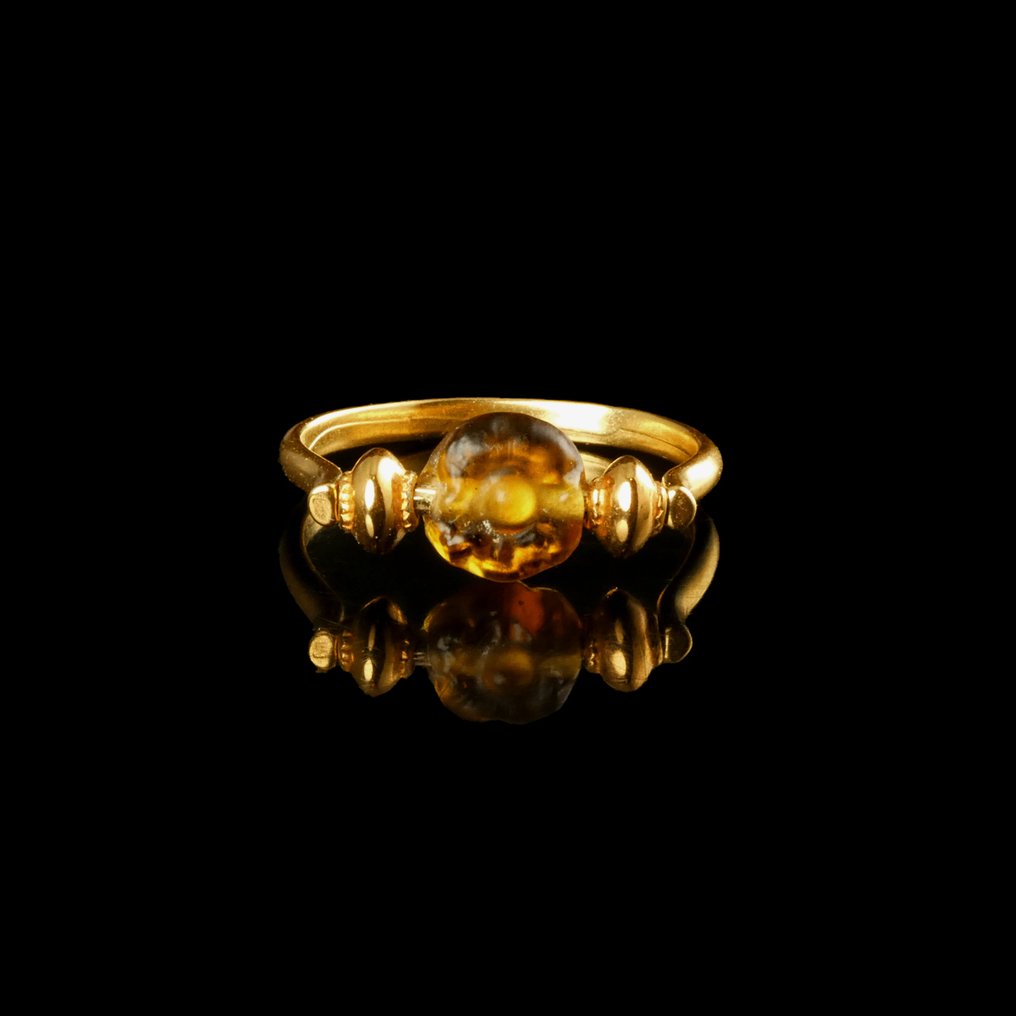
後羅馬時期/前拜占庭時期 带有装饰性护身符珠子的戒指


01
天
12
小時
40
分鐘
51
秒

另有37人對此物品感興趣
 競投者 4101 競投者 4101 | €80 | |
|---|---|---|
| 競投者 4101 | €75 | |
 競投者 4512 競投者 4512 | €65 | |
Catawiki買家保障
在您收到物品前,我們會妥善保管您的付款。查看詳情
Trustpilot評分 4.4 | 121899 則評論
在Trustpilot獲得極佳評等。
裝有裝飾性護身珠的戒指,屬於晚期羅馬/早期拜占庭文化,玻璃珠嵌在現代鍍金戒指上可旋轉,珠徑約8.6毫米,外徑約23.1毫米,內徑約20.1–18.8毫米,年代公元4–7世紀,狀態良好且可佩戴,珠串與現代隔珠重新穿串,於2016年於英國的一家畫廊/古董商取得;可依需求提供真實性證明。
AI輔助摘要
賣家描述
Attention: due to customs regulations we can only ship inside the European Union. Please ensure you have a valid EU shipping address before placing a bid.
Ring with a late Roman decorated amber colour glass amulet bead. The ancient bead is set on a modern gold-plated ring and is free to rotate (swivel-type).
Outside diameter: ± 23,1 mm
Inside diameter: ± 20,1 - 18,8 mm
Diameter bead: ± 8,6 mm
Condition: good condition and wearable. The ancient beads are restrung and combined with modern gold-plated spacer beads and fittings. Signs of wear consistent with age and use. See images.
Composed with beads originating from various old collections, acquired in the UK between 2016-2024.
Every ancient bead shows subtle variations and signs of age, reflecting its history and adding to the unique charm of every composition.
Certificate of Authenticity (PDF) is available upon request.
ANCIENT GLASS
Glass has always been found in nature, but the humans first created glass about 4.000 years ago. when ancient craftsmen in Mesopotamia discovered the art of mixing sand, soda and lime to make glass.
For centuries, glass was a luxury item and reserved for the upper classes.
Glassmaking centers around the Mediterranean world experimented with new techniques (casting, core-forming, mosaic glass) and with colours by adding metallic oxides (cobalt, copper, etc) to the mixture.
The Romans learned the glass-making craft after the conquest of Egypt in the 1st century BC. During the 1st century AD the glassblowing technique revolutionized the production and made it possible to produce larger quantities. By adding manganese dioxide Roman glassmakers successfully produced colourless or ‘aqua’ glass for the first time.
Roman glass became a very popular material, used for beads, glass windows, mosaic tiles, tableware pieces etc. Roman glass was traded all over the Roman Empire and far beyond to Central Africa, Scandinavia and via the Silk Route to China.
賣家的故事
请仔细阅读我们的信息。
*运输信息 由于保险程序,合并运输仅在一次付款的情况下可能实现。(1个付款参考编号对应1个保险包裹。)如果您在拍卖后接受报价并单独付款,之后无法手动合并发货。请在付款前确保您的收货地址完整且正确。付款后进行的更改不会自动传达给我们。
真实性证明(COA)为了保险起见,我们可以为每件起拍价为100欧元或以上的物品提供数字版真实性证明(PDF)。真实性证明将在拍卖日期后20天内应要求提供。相关说明将在发货时提供。证明证书不包含在包裹中。
保险与索赔
我们所有的包裹都投保了外部保险。此保险需要满足以下条件:
监控在线追踪情况,并在发货日期后14天内通知延误情况。
如有损坏:请在送货单上注明预留,保留所有包装,并向我们发送损坏的照片。
* 重要提示:欧盟以外的买家:我们无法向欧盟以外的国家发货。请在出价前确保您有一个欧盟的收货地址。无法例外。瑞士、挪威和英国不属于欧盟。
文件通知:之前的发票和进出口文件将不会与客户共享。
感谢您的关注,祝您投标顺利!
由Google翻譯翻譯Attention: due to customs regulations we can only ship inside the European Union. Please ensure you have a valid EU shipping address before placing a bid.
Ring with a late Roman decorated amber colour glass amulet bead. The ancient bead is set on a modern gold-plated ring and is free to rotate (swivel-type).
Outside diameter: ± 23,1 mm
Inside diameter: ± 20,1 - 18,8 mm
Diameter bead: ± 8,6 mm
Condition: good condition and wearable. The ancient beads are restrung and combined with modern gold-plated spacer beads and fittings. Signs of wear consistent with age and use. See images.
Composed with beads originating from various old collections, acquired in the UK between 2016-2024.
Every ancient bead shows subtle variations and signs of age, reflecting its history and adding to the unique charm of every composition.
Certificate of Authenticity (PDF) is available upon request.
ANCIENT GLASS
Glass has always been found in nature, but the humans first created glass about 4.000 years ago. when ancient craftsmen in Mesopotamia discovered the art of mixing sand, soda and lime to make glass.
For centuries, glass was a luxury item and reserved for the upper classes.
Glassmaking centers around the Mediterranean world experimented with new techniques (casting, core-forming, mosaic glass) and with colours by adding metallic oxides (cobalt, copper, etc) to the mixture.
The Romans learned the glass-making craft after the conquest of Egypt in the 1st century BC. During the 1st century AD the glassblowing technique revolutionized the production and made it possible to produce larger quantities. By adding manganese dioxide Roman glassmakers successfully produced colourless or ‘aqua’ glass for the first time.
Roman glass became a very popular material, used for beads, glass windows, mosaic tiles, tableware pieces etc. Roman glass was traded all over the Roman Empire and far beyond to Central Africa, Scandinavia and via the Silk Route to China.
賣家的故事
请仔细阅读我们的信息。
*运输信息 由于保险程序,合并运输仅在一次付款的情况下可能实现。(1个付款参考编号对应1个保险包裹。)如果您在拍卖后接受报价并单独付款,之后无法手动合并发货。请在付款前确保您的收货地址完整且正确。付款后进行的更改不会自动传达给我们。
真实性证明(COA)为了保险起见,我们可以为每件起拍价为100欧元或以上的物品提供数字版真实性证明(PDF)。真实性证明将在拍卖日期后20天内应要求提供。相关说明将在发货时提供。证明证书不包含在包裹中。
保险与索赔
我们所有的包裹都投保了外部保险。此保险需要满足以下条件:
监控在线追踪情况,并在发货日期后14天内通知延误情况。
如有损坏:请在送货单上注明预留,保留所有包装,并向我们发送损坏的照片。
* 重要提示:欧盟以外的买家:我们无法向欧盟以外的国家发货。请在出价前确保您有一个欧盟的收货地址。无法例外。瑞士、挪威和英国不属于欧盟。
文件通知:之前的发票和进出口文件将不会与客户共享。
感谢您的关注,祝您投标顺利!
由Google翻譯翻譯詳細資料
文化
後羅馬時期/前拜占庭時期
世紀/時間框架
4th - 7th century AD
Name of object
Ring with decorated amulet bead
獲得來源
畫廊/古董商
獲得年份
2016
獲得國家
英國
狀態
好
前任擁有者獲得來源
畫廊/古董商
前任擁有者獲得年份
2016
前任擁有者獲得國家
英國
我保證此物品為合法取得,且本人有權出售。
是
免責聲明
Catawiki已告知賣家有關文件的要求,賣家須保證如下: - 物品為合法獲得; - 賣家有權出售和/或出口相關物品; - 賣家依據當地法規(如適用)提供必要的原產地資訊,並辦理所需文件和許可證/執照; - 若許可證/執照的取得發生任何延誤,賣家須通知買家。 參與競標即表示您知悉,根據您的居住國,可能需要進口文件,而取得許可證/執照可能導致您的物品延遲交付。
Catawiki已告知賣家有關文件的要求,賣家須保證如下: - 物品為合法獲得; - 賣家有權出售和/或出口相關物品; - 賣家依據當地法規(如適用)提供必要的原產地資訊,並辦理所需文件和許可證/執照; - 若許可證/執照的取得發生任何延誤,賣家須通知買家。 參與競標即表示您知悉,根據您的居住國,可能需要進口文件,而取得許可證/執照可能導致您的物品延遲交付。
