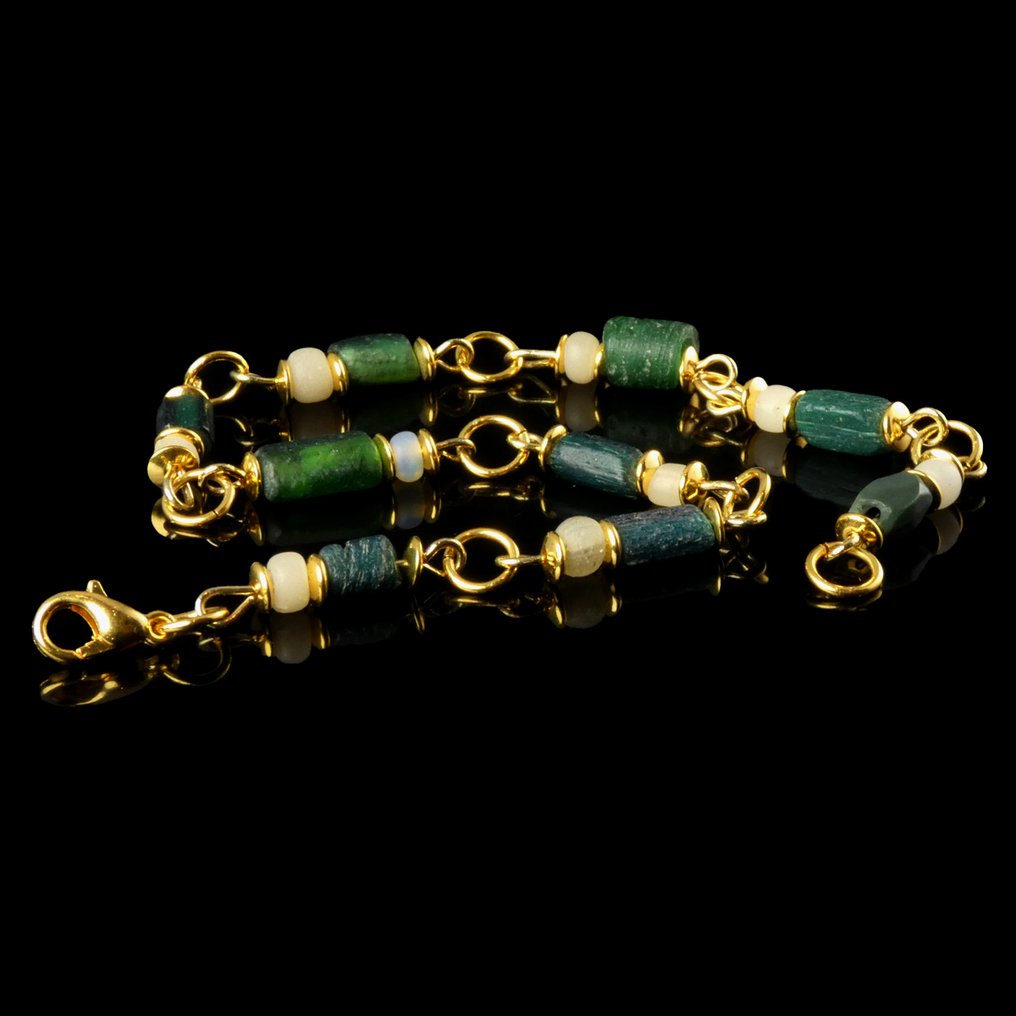
Αρχαίο ρωμαϊκό, Αυτοκρατορικό Βραχιόλι με ρωμαϊκές πράσινες και λευκές γυάλινες χάντρες



06
ημέρες
01
ώρα
55
λεπτά
48
δευτερόλεπτα
Τρέχουσα προσφορά
€ 45
Τιμή επιφύλαξης δεν επιτεύχθηκε

Ειδικός
Επιλεγμένο από Peter Reynaers
Διαθέτει σχεδόν 30 χρόνια εμπειρίας και έχει δειξει ρόλο συντονιστή σε αρκετές διαδικτυακές ομάδες έρευνας τέχνης.
Εκτιμήστε € 210 - € 250
16 άλλα άτομα παρακολουθούν αυτό το αντικείμενο
 Πλειοδότης 2225 Πλειοδότης 2225 | 45 € | |
|---|---|---|
| Πλειοδότης 2225 | 40 € | |
| Πλειοδότης 2225 | 35 € | |
Προστασία Αγοραστή Catawiki
Η πληρωμή σας είναι ασφαλής μαζί μας μέχρι να παραλάβετε το αντικείμενό σας.Προβολή λεπτομερειών
Trustpilot 4.4 | 128070 κριτικών
Βαθμολογήθηκε με Άριστα στο Trustpilot.
Αρχαίο ρωμαϊκό βραχιόλι με πράσινες και λευκές γυάλινες χάντρες, συνδεδεμένες με σύγχρονους φερμουάρτες σε σχεδιασμό συνδεόμενο, συνολικό μήκος ~22 εκ, διάμετρος χαντρών ~5,5 χιλ.; καλή κατάσταση.
Περίληψη με τη βοήθεια τεχνητής νοημοσύνης
Περιγραφή από τον πωλητή
Attention: due to customs regulations we can only ship inside the European Union. Please ensure you have a valid EU shipping address before placing a bid.
Handmade bracelet with Roman green and white glass beads in a classic linked design. The ancient beads are carefully restrung with modern materials and fittings.
Total length: ± 22 cm
Diameter beads: ± 5,5 mm
Linking chains to craft jewellery is one of the earliest known jewellery-making techniques, appearing across various ancient cultures. The oldest known example of a chain necklace was discovered in a royal tomb in Babylonia, dating back to around 2500 BC.
Certificate of Authenticity (PDF) is available upon request.
Condition: good condition and wearable. The ancient beads are restrung and combined with modern gold-plated spacer beads and fittings. Signs of wear consistent with age and use. See images.
Composed with beads originating from various old collections, acquired in the UK between 2016-2024.
Every ancient bead shows subtle variations and signs of age, reflecting its history and adding to the unique charm of every composition.
Please note: photographed in a professional studio against a deep black background to enhance contrast and detail. Studio lighting and individual screen settings may slightly affect the appearance of colours.
ANCIENT GLASS
Glass has always been found in nature, but the humans first created glass about 4.000 years ago. when ancient craftsmen in Mesopotamia discovered the art of mixing sand, soda and lime to make glass.
For centuries, glass was a luxury item and reserved for the upper classes.
Glassmaking centers around the Mediterranean world experimented with new techniques (casting, core-forming, mosaic glass) and with colours by adding metallic oxides (cobalt, copper, etc) to the mixture.
The Romans learned the glass-making craft after the conquest of Egypt in the 1st century BC. During the 1st century AD the glassblowing technique revolutionized the production and made it possible to produce larger quantities. By adding manganese dioxide Roman glassmakers successfully produced colourless or ‘aqua’ glass for the first time.
Roman glass became a very popular material, used for beads, glass windows, mosaic tiles, tableware pieces etc. Roman glass was traded all over the Roman Empire and far beyond to Central Africa, Scandinavia and via the Silk Route to China.
Ιστορία πωλητή
Μετάφραση από Google ΜετάφρασηAttention: due to customs regulations we can only ship inside the European Union. Please ensure you have a valid EU shipping address before placing a bid.
Handmade bracelet with Roman green and white glass beads in a classic linked design. The ancient beads are carefully restrung with modern materials and fittings.
Total length: ± 22 cm
Diameter beads: ± 5,5 mm
Linking chains to craft jewellery is one of the earliest known jewellery-making techniques, appearing across various ancient cultures. The oldest known example of a chain necklace was discovered in a royal tomb in Babylonia, dating back to around 2500 BC.
Certificate of Authenticity (PDF) is available upon request.
Condition: good condition and wearable. The ancient beads are restrung and combined with modern gold-plated spacer beads and fittings. Signs of wear consistent with age and use. See images.
Composed with beads originating from various old collections, acquired in the UK between 2016-2024.
Every ancient bead shows subtle variations and signs of age, reflecting its history and adding to the unique charm of every composition.
Please note: photographed in a professional studio against a deep black background to enhance contrast and detail. Studio lighting and individual screen settings may slightly affect the appearance of colours.
ANCIENT GLASS
Glass has always been found in nature, but the humans first created glass about 4.000 years ago. when ancient craftsmen in Mesopotamia discovered the art of mixing sand, soda and lime to make glass.
For centuries, glass was a luxury item and reserved for the upper classes.
Glassmaking centers around the Mediterranean world experimented with new techniques (casting, core-forming, mosaic glass) and with colours by adding metallic oxides (cobalt, copper, etc) to the mixture.
The Romans learned the glass-making craft after the conquest of Egypt in the 1st century BC. During the 1st century AD the glassblowing technique revolutionized the production and made it possible to produce larger quantities. By adding manganese dioxide Roman glassmakers successfully produced colourless or ‘aqua’ glass for the first time.
Roman glass became a very popular material, used for beads, glass windows, mosaic tiles, tableware pieces etc. Roman glass was traded all over the Roman Empire and far beyond to Central Africa, Scandinavia and via the Silk Route to China.
Ιστορία πωλητή
Μετάφραση από Google ΜετάφρασηΛεπτομέρειες
Πολιτισμός
Αρχαίο ρωμαϊκό, Αυτοκρατορικό
Αιώνες/χρονική περίοδος
1st - 3rd century AD
Name of object
Bracelet with Roman green and white glass beads
Αποκτήθηκε από
Γκαλερί / Έμπορος αντικών
Έτος απόκτησης
2016
Χώρα απόκτησης
Ηνωμένο Βασίλειο
Κατάσταση
Καλή
Προηγούμενος κάτοχος - αποκτήθηκε από
Γκαλερί / Έμπορος αντικών
Προηγούμενος κάτοχος – έτος απόκτησης
2016
Προηγούμενος κάτοχος – χώρα απόκτησης
Ηνωμένο Βασίλειο
Βεβαιώνω ότι έχω αποκτήσει νόμιμα αυτό το αντικείμενο και ότι μου επιτρέπεται να το πουλήσω.
Ναι
Πωλήθηκε από τον/-ην
Αποποίηση ευθυνών
Ο πωλητής ενημερώθηκε από την Catawiki σχετικά με τις απαιτήσεις εγγράφων και εγγυάται τα εξής: - το αντικείμενο αποκτήθηκε νόμιμα - ο πωλητής έχει το δικαίωμα να πωλήσει ή/και να εξαγάγει το αντικείμενο, ανάλογα με την περίπτωση - ο πωλητής θα παράσχει τις απαραίτητες πληροφορίες προέλευσης και θα διευθετήσει τα απαιτούμενα έγγραφα και άδειες, κατά περίπτωση και σύμφωνα με τους τοπικούς νόμους - ο πωλητής θα ειδοποιήσει τον αγοραστή για τυχόν καθυστερήσεις στην έκδοση των αδειών. Υποβάλλοντας προσφορά, αναγνωρίζετε ότι ενδέχεται να απαιτούνται έγγραφα εισαγωγής ανάλογα με τη χώρα διαμονής σας και ότι η έκδοση των αδειών μπορεί να προκαλέσει καθυστερήσεις στην παράδοση του αντικειμένου σας.
Ο πωλητής ενημερώθηκε από την Catawiki σχετικά με τις απαιτήσεις εγγράφων και εγγυάται τα εξής: - το αντικείμενο αποκτήθηκε νόμιμα - ο πωλητής έχει το δικαίωμα να πωλήσει ή/και να εξαγάγει το αντικείμενο, ανάλογα με την περίπτωση - ο πωλητής θα παράσχει τις απαραίτητες πληροφορίες προέλευσης και θα διευθετήσει τα απαιτούμενα έγγραφα και άδειες, κατά περίπτωση και σύμφωνα με τους τοπικούς νόμους - ο πωλητής θα ειδοποιήσει τον αγοραστή για τυχόν καθυστερήσεις στην έκδοση των αδειών. Υποβάλλοντας προσφορά, αναγνωρίζετε ότι ενδέχεται να απαιτούνται έγγραφα εισαγωγής ανάλογα με τη χώρα διαμονής σας και ότι η έκδοση των αδειών μπορεί να προκαλέσει καθυστερήσεις στην παράδοση του αντικειμένου σας.
