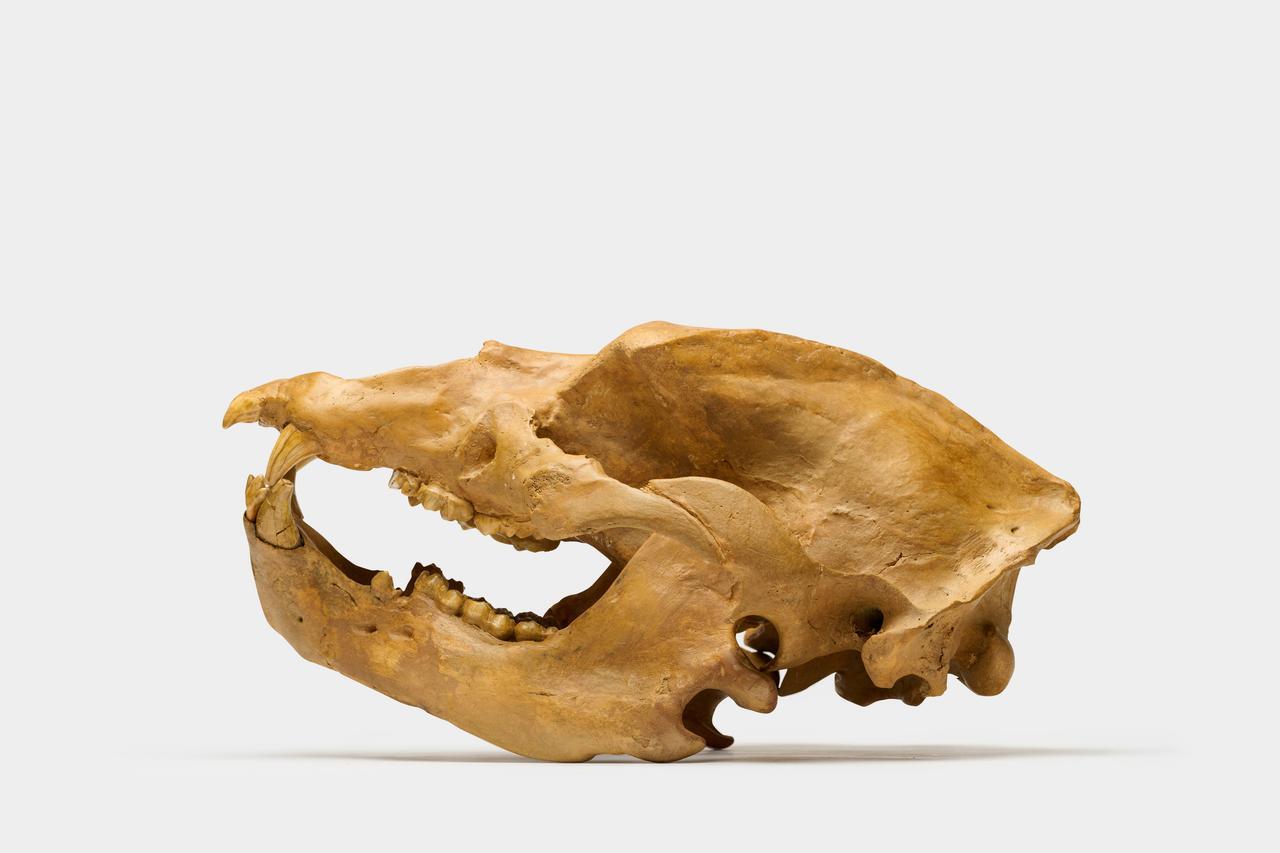
Τεράστιος Basilosaurid -cf Pappocetus- (Αρχέγονος πρόγονος των φαλαινών) κυνόδοντας - Ηώκαινος - Απολιθωμένο δόντι


04
ημέρες
13
ώρες
08
λεπτά
59
δευτερόλεπτα
Τρέχουσα προσφορά
€ 50
Τιμή επιφύλαξης δεν επιτεύχθηκε

13 άλλα άτομα παρακολουθούν αυτό το αντικείμενο
 Πλειοδότης 9309 Πλειοδότης 9309 | 50 € |
|---|
Προστασία Αγοραστή Catawiki
Η πληρωμή σας είναι ασφαλής μαζί μας μέχρι να παραλάβετε το αντικείμενό σας.Προβολή λεπτομερειών
Trustpilot 4.4 | 128236 κριτικών
Βαθμολογήθηκε με Άριστα στο Trustpilot.
Αναγνωρισμένο κογχοειδές δόντι Basilosaurid, πιθανώς cf Pappocetus lugardi ή Zygorhiza kochii, από το Υστερνάιο Εώκωλ (~40 εκατομμύρια χρόνια), με αποκαταστημένη κορώνα και μερικώς αποκατεστημένες ρίζες.
Περίληψη με τη βοήθεια τεχνητής νοημοσύνης
Περιγραφή από τον πωλητή
Scientific name: Unidentified Basilosaurid - (primitive whale ancestor) - Potencial cf Pappocetus lugardi or Zygorhiza kochii species- Canine Tooth.
Location: Dakhla, Western Sahara, South Morocco
Geological Formation: Samlat - Aridal Formation
Age: Late Eocene (~40 Million Years)
Size: 14cm
REF.: #J548
DESCRIPTION:
Huge rooted canine tooth from Pappocetus lugardi or Zygorhiza kochii , a type of protocetid cetacean (early whale ancestor). These outstanding teeth come from the Middle Eocene-age Aridal and Samlat Formations, located in the Western Sahara near Gueran, Morocco. They're commonly found associated with teeth of the shark Otodus sokolovi (Carcharocles auriculatus), a megalodon ancestor.
Observations about Restorations/Repairs/Comments: The crown of the tooth is almost perfect, except for the cusp that appears to have been restored using the filling method.
The root apex is natural; however, some sectors of the root have been restored and reconstructed with restorative material and putty to reshape it to its original shape.
Despite these restorations, this remains a truly magnificent enormous specimen.
Pappocetus lugardi is an extinct species of protocetid whale that lived during the Eocene epoch (approximately 40–44 million years ago) in Africa. As a transitional form between land and sea, this amphibious, 20–25 foot long carnivore is considered an ancestor of Basilosaurus and represents a crucial stage in whale evolution.
Key Facts About Pappocetus lugardi:
Discovery: First described by C.W. Andrews in 1920 based on fossils from the Ameki Formation in Nigeria. Additional specimens have been found in the Sahara Desert in Morocco.
Evolutionary Position: Pappocetus belongs to the family Protocetidae, which are early, amphibious whales that could likely move on land using their large limbs, while also being capable swimmers.
Physical Characteristics:
Size: Estimated to be around 20-25 feet in length.
Diet/Habits: A large, amphibious, aquatic carnivore with robust teeth, likely relying on vision and smell for hunting.
Appearance: More whale-like than its predecessors, with a streamlined body, yet retaining functional, though reduced, hind limbs.
Fossil Record: Known from jaw fragments, teeth, and skull material.
Relation to Modern Whales: While it was a transitional form, it is unlikely to have possessed the modern echolocation abilities found in later cetaceans.
All of our fossils come with a Certificate of Authenticity. Every week, the issued Certificates of Authenticity are updated in our database verification system on our website. If you find that your certificate has not yet been updated, please contact us and we will update it immediately. Display box NOT included.
IMPORTANT SHIPPING INFORMATION:
Our company is based in the USA, but our headquarters and products are located in Europe. Therefore, ALL PRODUCTS WILL BE SHIPPED FROM EUROPE. Consequently, any European customer will receive their shipment without any import charges, as it will be an intra-community shipment.
For customers in the USA: Shipments will be made via UPS from Europe, and in this case, we will be responsible for any import charges. These will be paid online by us before the package arrives. Therefore, US customers will not pay any import fees.
For the rest of the world: We are not responsible for any import charges applicable to the destination country.
Ιστορία πωλητή
Μετάφραση από Google ΜετάφρασηScientific name: Unidentified Basilosaurid - (primitive whale ancestor) - Potencial cf Pappocetus lugardi or Zygorhiza kochii species- Canine Tooth.
Location: Dakhla, Western Sahara, South Morocco
Geological Formation: Samlat - Aridal Formation
Age: Late Eocene (~40 Million Years)
Size: 14cm
REF.: #J548
DESCRIPTION:
Huge rooted canine tooth from Pappocetus lugardi or Zygorhiza kochii , a type of protocetid cetacean (early whale ancestor). These outstanding teeth come from the Middle Eocene-age Aridal and Samlat Formations, located in the Western Sahara near Gueran, Morocco. They're commonly found associated with teeth of the shark Otodus sokolovi (Carcharocles auriculatus), a megalodon ancestor.
Observations about Restorations/Repairs/Comments: The crown of the tooth is almost perfect, except for the cusp that appears to have been restored using the filling method.
The root apex is natural; however, some sectors of the root have been restored and reconstructed with restorative material and putty to reshape it to its original shape.
Despite these restorations, this remains a truly magnificent enormous specimen.
Pappocetus lugardi is an extinct species of protocetid whale that lived during the Eocene epoch (approximately 40–44 million years ago) in Africa. As a transitional form between land and sea, this amphibious, 20–25 foot long carnivore is considered an ancestor of Basilosaurus and represents a crucial stage in whale evolution.
Key Facts About Pappocetus lugardi:
Discovery: First described by C.W. Andrews in 1920 based on fossils from the Ameki Formation in Nigeria. Additional specimens have been found in the Sahara Desert in Morocco.
Evolutionary Position: Pappocetus belongs to the family Protocetidae, which are early, amphibious whales that could likely move on land using their large limbs, while also being capable swimmers.
Physical Characteristics:
Size: Estimated to be around 20-25 feet in length.
Diet/Habits: A large, amphibious, aquatic carnivore with robust teeth, likely relying on vision and smell for hunting.
Appearance: More whale-like than its predecessors, with a streamlined body, yet retaining functional, though reduced, hind limbs.
Fossil Record: Known from jaw fragments, teeth, and skull material.
Relation to Modern Whales: While it was a transitional form, it is unlikely to have possessed the modern echolocation abilities found in later cetaceans.
All of our fossils come with a Certificate of Authenticity. Every week, the issued Certificates of Authenticity are updated in our database verification system on our website. If you find that your certificate has not yet been updated, please contact us and we will update it immediately. Display box NOT included.
IMPORTANT SHIPPING INFORMATION:
Our company is based in the USA, but our headquarters and products are located in Europe. Therefore, ALL PRODUCTS WILL BE SHIPPED FROM EUROPE. Consequently, any European customer will receive their shipment without any import charges, as it will be an intra-community shipment.
For customers in the USA: Shipments will be made via UPS from Europe, and in this case, we will be responsible for any import charges. These will be paid online by us before the package arrives. Therefore, US customers will not pay any import fees.
For the rest of the world: We are not responsible for any import charges applicable to the destination country.
Ιστορία πωλητή
Μετάφραση από Google ΜετάφρασηΛεπτομέρειες
Είδος
Huge Basilosaurid -cf Pappocetus- (Primitive Whale Ancestor) Canine Tooth - Eocene Aged
Geological Period
Late Eocene (~40 Million Years)
Κατάσταση
Επιδιορθωμένη
Πωλήθηκε από τον/-ην