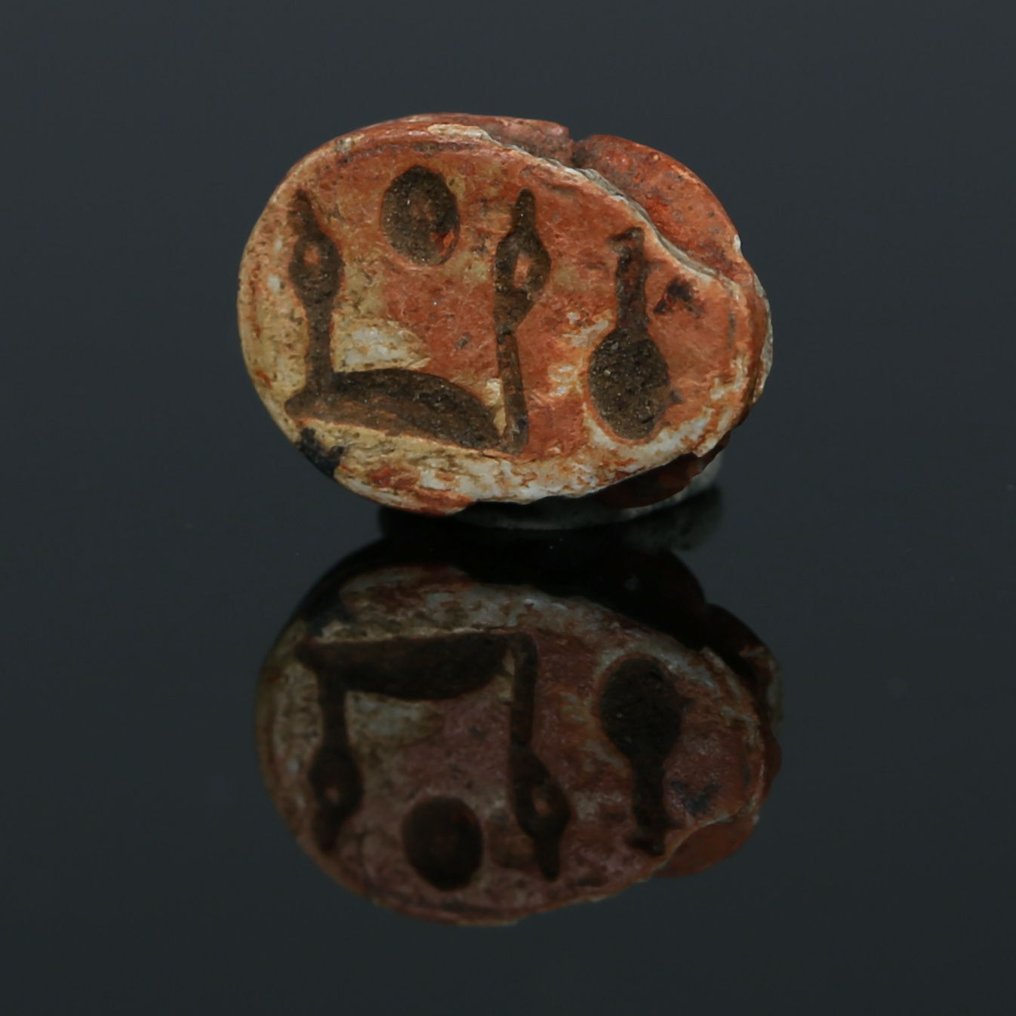
Αρχαία Αίγυπτος, τρίτη ενδιάμεση περίοδος Στεατίτης Σκαραβαίος του Νεφερκάρ, από το ΜΟΥΣΕΙΟ. Ισπανική Άδεια Εξαγωγής.




03
ημέρες
21
ώρες
58
λεπτά
49
δευτερόλεπτα
Τρέχουσα προσφορά
€ 52
Τιμή επιφύλαξης δεν επιτεύχθηκε

Ειδικός
Επιλεγμένο από Ruth Garrido Vila
Διηύθυνε το Μουσείο Συλλογής Ifergan, ειδικευμένη στην Φοινικική αρχαιολογία.
Εκτιμήστε € 500 - € 650
15 άλλα άτομα παρακολουθούν αυτό το αντικείμενο
 Πλειοδότης 3948 Πλειοδότης 3948 | 52 € | |
|---|---|---|
| Πλειοδότης 3948 | 46 € | |
| Πλειοδότης 3948 | 41 € | |
Προστασία Αγοραστή Catawiki
Η πληρωμή σας είναι ασφαλής μαζί μας μέχρι να παραλάβετε το αντικείμενό σας.Προβολή λεπτομερειών
Trustpilot 4.4 | 128679 κριτικών
Βαθμολογήθηκε με Άριστα στο Trustpilot.
Νεφερκαρέ σκαραβίδιο, γνήσιο σκαραβειον από φαινόλιθο της 25ης δυναστείας της Αιγύπτου (713–698 π.Χ.) στην Τρίτη Εμφύλη Περίοδο, διαστάσεις 7 × 11 mm, σε καλή κατάσταση, προέλευση Ex Museum, συνοδεύεται από Πιστοποιητικό γνησιότητας και άδεια εξαγωγής.
Περίληψη με τη βοήθεια τεχνητής νοημοσύνης
Περιγραφή από τον πωλητή
ITEM: Scarab of Neferkare
MATERIAL: Steatite
CULTURE: Egyptian
PERIOD: Third Intermediate Period, 25th Dynasty, 713 - 698 B.C
DIMENSIONS: 7 mm x 11 mm
CONDITION: Good condition
PROVENANCE: Ex Museum Exhibiton of the Arbeitsgruppe für Biblische Archäologie, Germany (Deaccession)
Comes with Certificate of Authenticity and Export license
If you bid outside the european union and win the item, we will have to apply for an export licence for your country and shipping will take 3 to 5 weeks.
The Scarab of Pharaoh Shabako, identified by his prenomen (throne name) Neferkare, serves as an important artifact connecting the Kushite rulers of the 25th Dynasty to the ancient traditions of Egyptian kingship. Shabako, who reigned approximately from 713–698 B.C., was a Nubian pharaoh who successfully consolidated Kushite control over the whole of Egypt, reviving many old Egyptian customs and commissioning extensive building works. The appearance of his royal name, Neferkare ("Beautiful is the Soul of Re"), on a scarab is significant because the scarab beetle itself was a potent symbol of the sun god Khepri, representing rebirth, regeneration, and the daily cycle of the sun. By inscribing his name onto this powerful amulet, Shabako not only reinforced his divine authority but also firmly positioned himself as a legitimate successor to the pharaohs of Egypt's glorious past, even adopting the prenomen of the Sixth Dynasty ruler Pepi II.
Shabako’s royal-name scarabs were typically crafted from materials like hematite, blue faience, or glazed steatite and were small, worn as protective amulets, personal seals, or integrated into jewelry. These scarabs played a crucial dual role: they served a practical administrative function as seals, confirming royal decree or ownership, and an apotropaic, ritual function, providing protection and guaranteeing the pharaoh's success and eternal existence. Notably, the 25th Dynasty revived the tradition of creating large, commemorative scarabs—a practice originally associated with the powerful New Kingdom pharaoh Amenhotep III. These larger pieces were often used to advertise major royal achievements, such as military victories, thereby functioning as important political and diplomatic propaganda across the empire.
The legacy of the Neferkare Shabako scarab lies in its ability to embody the political and cultural agenda of the 25th Dynasty. As Kushites, these rulers needed to visibly demonstrate their piety and commitment to Egyptian state religion to secure the support of the influential Egyptian clergy and populace. By producing numerous artifacts like the royal-name scarabs, often mimicking classical Egyptian styles while maintaining their distinct Kushite identity, Shabako cemented the legitimacy of his rule over both the Delta and the Thebais. These ubiquitous small objects, recovered widely across Egypt and the Levant, confirm the extent of his consolidated control and his successful adoption of the millennia-old symbols of Egyptian royal power and divine protection.
#CollectorsFairMarch2026
Ιστορία πωλητή
Το Antiquarian σας προσφέρει αρχαία τέχνη και αρχαία νομίσματα. Κύριος στόχος μας είναι να προσφέρουμε την υψηλότερη ποιότητα στην καλύτερη τιμή, σεβόμενοι και αυστηρά τη νομοθεσία περί προστασίας της πολιτιστικής κληρονομιάς και τους κανόνες πολιτιστικής κληρονομιάς της UNESCO. Επομένως, όλα τα κομμάτια που δημοσιεύονται προέρχονται από ιδιωτικές συλλογές στις οποίες μπορεί να ελεγχθεί η προέλευση ή από διεθνείς δημοπρασίες. Όλες οι αρχαιότητες και τα νομίσματά μας συνοδεύονται από το Πιστοποιητικό γνησιότητάς τους. Έχουμε πολιτική επιστροφής 90 ημερών χωρίς αμφισβήτηση. Στο Your Antiquarian δεσμευόμαστε να βοηθάμε τις μειονεκτούσες ομάδες και για το λόγο αυτό ένα μέρος κάθε αγοράς δωρίζεται σε φιλανθρωπικά ιδρύματα για να βοηθήσουμε άτομα που έχουν ανάγκη.
Μετάφραση από Google ΜετάφρασηITEM: Scarab of Neferkare
MATERIAL: Steatite
CULTURE: Egyptian
PERIOD: Third Intermediate Period, 25th Dynasty, 713 - 698 B.C
DIMENSIONS: 7 mm x 11 mm
CONDITION: Good condition
PROVENANCE: Ex Museum Exhibiton of the Arbeitsgruppe für Biblische Archäologie, Germany (Deaccession)
Comes with Certificate of Authenticity and Export license
If you bid outside the european union and win the item, we will have to apply for an export licence for your country and shipping will take 3 to 5 weeks.
The Scarab of Pharaoh Shabako, identified by his prenomen (throne name) Neferkare, serves as an important artifact connecting the Kushite rulers of the 25th Dynasty to the ancient traditions of Egyptian kingship. Shabako, who reigned approximately from 713–698 B.C., was a Nubian pharaoh who successfully consolidated Kushite control over the whole of Egypt, reviving many old Egyptian customs and commissioning extensive building works. The appearance of his royal name, Neferkare ("Beautiful is the Soul of Re"), on a scarab is significant because the scarab beetle itself was a potent symbol of the sun god Khepri, representing rebirth, regeneration, and the daily cycle of the sun. By inscribing his name onto this powerful amulet, Shabako not only reinforced his divine authority but also firmly positioned himself as a legitimate successor to the pharaohs of Egypt's glorious past, even adopting the prenomen of the Sixth Dynasty ruler Pepi II.
Shabako’s royal-name scarabs were typically crafted from materials like hematite, blue faience, or glazed steatite and were small, worn as protective amulets, personal seals, or integrated into jewelry. These scarabs played a crucial dual role: they served a practical administrative function as seals, confirming royal decree or ownership, and an apotropaic, ritual function, providing protection and guaranteeing the pharaoh's success and eternal existence. Notably, the 25th Dynasty revived the tradition of creating large, commemorative scarabs—a practice originally associated with the powerful New Kingdom pharaoh Amenhotep III. These larger pieces were often used to advertise major royal achievements, such as military victories, thereby functioning as important political and diplomatic propaganda across the empire.
The legacy of the Neferkare Shabako scarab lies in its ability to embody the political and cultural agenda of the 25th Dynasty. As Kushites, these rulers needed to visibly demonstrate their piety and commitment to Egyptian state religion to secure the support of the influential Egyptian clergy and populace. By producing numerous artifacts like the royal-name scarabs, often mimicking classical Egyptian styles while maintaining their distinct Kushite identity, Shabako cemented the legitimacy of his rule over both the Delta and the Thebais. These ubiquitous small objects, recovered widely across Egypt and the Levant, confirm the extent of his consolidated control and his successful adoption of the millennia-old symbols of Egyptian royal power and divine protection.
#CollectorsFairMarch2026
Ιστορία πωλητή
Το Antiquarian σας προσφέρει αρχαία τέχνη και αρχαία νομίσματα. Κύριος στόχος μας είναι να προσφέρουμε την υψηλότερη ποιότητα στην καλύτερη τιμή, σεβόμενοι και αυστηρά τη νομοθεσία περί προστασίας της πολιτιστικής κληρονομιάς και τους κανόνες πολιτιστικής κληρονομιάς της UNESCO. Επομένως, όλα τα κομμάτια που δημοσιεύονται προέρχονται από ιδιωτικές συλλογές στις οποίες μπορεί να ελεγχθεί η προέλευση ή από διεθνείς δημοπρασίες. Όλες οι αρχαιότητες και τα νομίσματά μας συνοδεύονται από το Πιστοποιητικό γνησιότητάς τους. Έχουμε πολιτική επιστροφής 90 ημερών χωρίς αμφισβήτηση. Στο Your Antiquarian δεσμευόμαστε να βοηθάμε τις μειονεκτούσες ομάδες και για το λόγο αυτό ένα μέρος κάθε αγοράς δωρίζεται σε φιλανθρωπικά ιδρύματα για να βοηθήσουμε άτομα που έχουν ανάγκη.
Μετάφραση από Google ΜετάφρασηΛεπτομέρειες
Πολιτισμός
Αρχαία Αίγυπτος, τρίτη ενδιάμεση περίοδος
Αιώνες/χρονική περίοδος
25th Dynasty, 713 - 698 B.C
Name of object
Scarab of Neferkare, Ex MUSEUM. Spanish Export License.
Αποκτήθηκε από
Ιδιωτική συλλογή
Έτος απόκτησης
2025
Υλικό
Στεατίτης
Χώρα απόκτησης
Γερμανία
Κατάσταση
Καλή
Προηγούμενος κάτοχος - αποκτήθηκε από
Αγορά αντικών
Προηγούμενος κάτοχος – έτος απόκτησης
1990
Προηγούμενος κάτοχος – χώρα απόκτησης
Γερμανία
Βεβαιώνω ότι έχω αποκτήσει νόμιμα αυτό το αντικείμενο και ότι μου επιτρέπεται να το πουλήσω.
Ναι
Γνησιότητα
Αυθεντικό/επίσημο
Πωλήθηκε από τον/-ην
Αποποίηση ευθυνών
Ο πωλητής ενημερώθηκε από την Catawiki σχετικά με τις απαιτήσεις εγγράφων και εγγυάται τα εξής: - το αντικείμενο αποκτήθηκε νόμιμα - ο πωλητής έχει το δικαίωμα να πωλήσει ή/και να εξαγάγει το αντικείμενο, ανάλογα με την περίπτωση - ο πωλητής θα παράσχει τις απαραίτητες πληροφορίες προέλευσης και θα διευθετήσει τα απαιτούμενα έγγραφα και άδειες, κατά περίπτωση και σύμφωνα με τους τοπικούς νόμους - ο πωλητής θα ειδοποιήσει τον αγοραστή για τυχόν καθυστερήσεις στην έκδοση των αδειών. Υποβάλλοντας προσφορά, αναγνωρίζετε ότι ενδέχεται να απαιτούνται έγγραφα εισαγωγής ανάλογα με τη χώρα διαμονής σας και ότι η έκδοση των αδειών μπορεί να προκαλέσει καθυστερήσεις στην παράδοση του αντικειμένου σας.
Ο πωλητής ενημερώθηκε από την Catawiki σχετικά με τις απαιτήσεις εγγράφων και εγγυάται τα εξής: - το αντικείμενο αποκτήθηκε νόμιμα - ο πωλητής έχει το δικαίωμα να πωλήσει ή/και να εξαγάγει το αντικείμενο, ανάλογα με την περίπτωση - ο πωλητής θα παράσχει τις απαραίτητες πληροφορίες προέλευσης και θα διευθετήσει τα απαιτούμενα έγγραφα και άδειες, κατά περίπτωση και σύμφωνα με τους τοπικούς νόμους - ο πωλητής θα ειδοποιήσει τον αγοραστή για τυχόν καθυστερήσεις στην έκδοση των αδειών. Υποβάλλοντας προσφορά, αναγνωρίζετε ότι ενδέχεται να απαιτούνται έγγραφα εισαγωγής ανάλογα με τη χώρα διαμονής σας και ότι η έκδοση των αδειών μπορεί να προκαλέσει καθυστερήσεις στην παράδοση του αντικειμένου σας.
