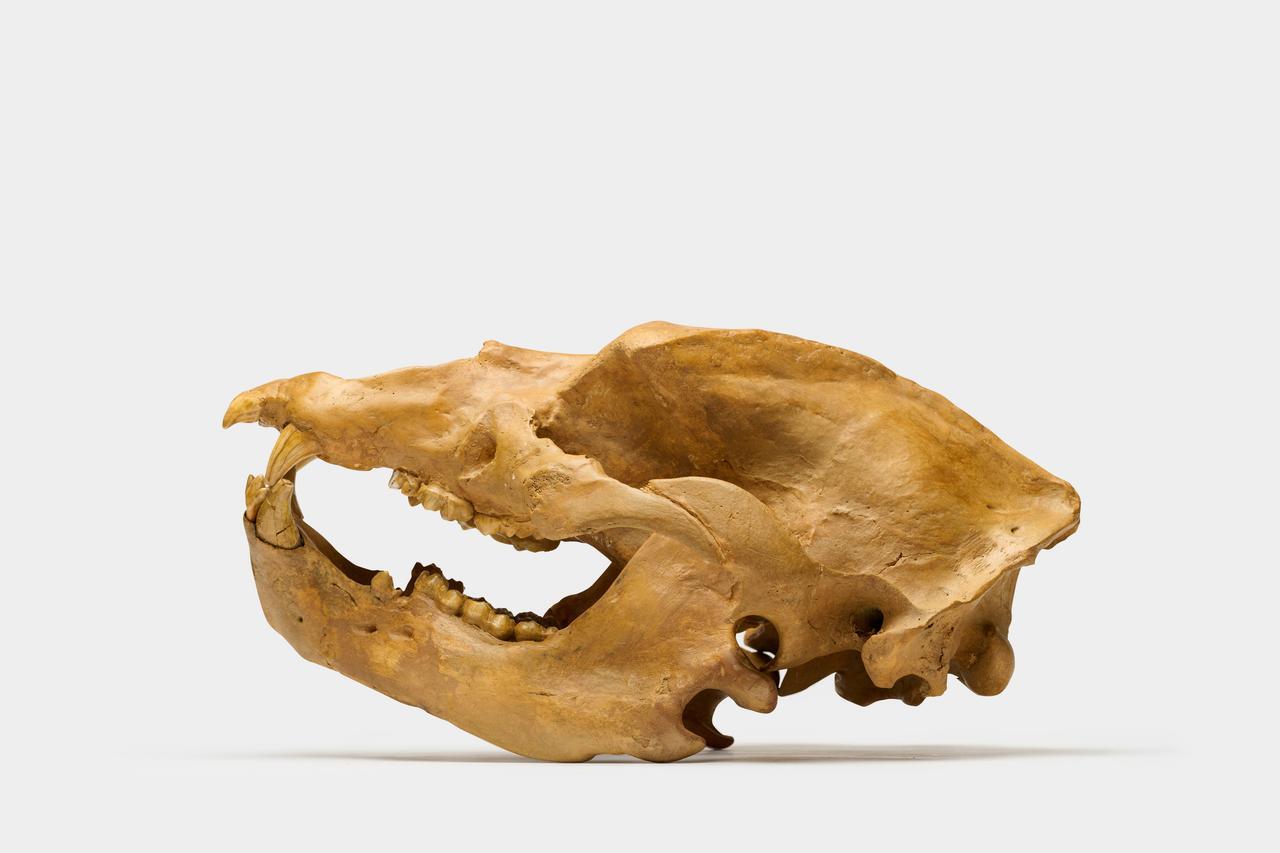
Σπάνιο, με αξία μουσειακού επιπέδου Jeholotriton paradoxus - Αρχέγονη σαλαμάνδρα του Ιουρασικού - - Απολιθωμένος σκελετός


08
ημέρες
20
ώρες
02
λεπτά
35
δευτερόλεπτα
Εναρκτήρια προσφορά
€ 1
Τιμή επιφύλαξης δεν επιτεύχθηκε

Δεν υποβλήθηκαν προσφορές
Προστασία Αγοραστή Catawiki
Η πληρωμή σας είναι ασφαλής μαζί μας μέχρι να παραλάβετε το αντικείμενό σας.Προβολή λεπτομερειών
Trustpilot 4.4 | 129200 κριτικών
Βαθμολογήθηκε με Άριστα στο Trustpilot.
Περιγραφή από τον πωλητή
Scientific name: †Jeholotriton paradoxus (Wang, 2000) - Primitive salamander - showing well-preserved, soft-tissue impressions.
Location: East Asia, Daohugou village of Inner Mongolia, China.
Geological Formation: Daohugou Beds - Tiaojishan Formation
Age: Middle-Late Jurassic ( 164 million years)
Size: 14cm - Matrix: 20x12x0,5cm
REF.: #J530
DESCRIPTION:
Jeholotriton is a genus of primitive, neotenic (retaining larval features) salamanders from the Middle/Late Jurassic (approx. 164–155 Ma) of Inner Mongolia, China. Found in the Daohugou Beds, it is a key fossil for early urodele evolution, with specimens often showing well-preserved, soft-tissue impressions, short limbs, and 16-17 presacral vertebrae.
Key Details of Jeholotriton paradoxus:
Age and Location: Primarily found in the Daohugou Bed, which is considered late Middle Jurassic to early Late Jurassic, not the Early Cretaceous as previously thought.
Characteristics: It is a small salamander with a distinctively shaped "paradoxical" skull, from which it derives its species name, J. paradoxus. It shows paedomorphic features (retaining juvenile traits into adulthood), such as larval-like skull structure and unossified carpal/tarsal elements.
Diet: Studies of fossilized guts show that Jeholotriton (along with Chunerpeton) fed on aquatic, invertebrate prey such as juvenile conchostracans (Euestheria luanpingensis), indicating a specialized, lacustrine (lake-dwelling) diet.
Evolutionary Significance: Jeholotriton is considered a member of the Cryptobranchidae family (giant salamanders) and represents a key, early branch in the evolution of modern salamanders (Urodela).
Jeholotriton is often associated with the Jehol Biota, although the Daohugou fossils are actually older than the main Jehol fauna.
Observations about our specimen: Our specimen, among all others, we can consider it a masterpiece. Its size is extraordinarily large in comparison with the average of this primitive salamander.
Regarding to its preservation: It is exceptional as it corresponds to a "Konservat-Lagerstätten" fossil. Coined by Adolf Seilacher in 1970, Lagerstätte means "storage place" or "site". Konservat implies high-quality preservation. Focus on quality (exceptional preservation of soft parts).
Our specimen perfectly shows the impression of all soft parts.
During the excavation of the fossil, the final slab broke into various fragments which were subsequently glued and filled, making the piece stable again. Considering these restorations in the matrix, the fossil in itself does not pose any type of restoration other than the fractures that cross it and were glued and filled.
All of our fossils come with a Certificate of Authenticity. Every week, the issued Certificates of Authenticity are updated in our database verification system on our website. If you find that your certificate has not yet been updated, please contact us and we will update it immediately. Display box not included.
IMPORTANT SHIPPING INFORMATION:
Our company is based in the USA, but our headquarters and products are located in Europe. Therefore, ALL PRODUCTS WILL BE SHIPPED FROM EUROPE. Consequently, any European customer will receive their shipment without any import charges, as it will be an intra-community shipment.
For customers in the USA: Shipments will be made via UPS from Europe, and in this case, we will be responsible for any import charges. These will be paid online by us before the package arrives. Therefore, US customers will not pay any import fees.
For the rest of the world: We are not responsible for any import charges applicable to the destination country.
Ιστορία πωλητή
Μετάφραση από Google ΜετάφρασηScientific name: †Jeholotriton paradoxus (Wang, 2000) - Primitive salamander - showing well-preserved, soft-tissue impressions.
Location: East Asia, Daohugou village of Inner Mongolia, China.
Geological Formation: Daohugou Beds - Tiaojishan Formation
Age: Middle-Late Jurassic ( 164 million years)
Size: 14cm - Matrix: 20x12x0,5cm
REF.: #J530
DESCRIPTION:
Jeholotriton is a genus of primitive, neotenic (retaining larval features) salamanders from the Middle/Late Jurassic (approx. 164–155 Ma) of Inner Mongolia, China. Found in the Daohugou Beds, it is a key fossil for early urodele evolution, with specimens often showing well-preserved, soft-tissue impressions, short limbs, and 16-17 presacral vertebrae.
Key Details of Jeholotriton paradoxus:
Age and Location: Primarily found in the Daohugou Bed, which is considered late Middle Jurassic to early Late Jurassic, not the Early Cretaceous as previously thought.
Characteristics: It is a small salamander with a distinctively shaped "paradoxical" skull, from which it derives its species name, J. paradoxus. It shows paedomorphic features (retaining juvenile traits into adulthood), such as larval-like skull structure and unossified carpal/tarsal elements.
Diet: Studies of fossilized guts show that Jeholotriton (along with Chunerpeton) fed on aquatic, invertebrate prey such as juvenile conchostracans (Euestheria luanpingensis), indicating a specialized, lacustrine (lake-dwelling) diet.
Evolutionary Significance: Jeholotriton is considered a member of the Cryptobranchidae family (giant salamanders) and represents a key, early branch in the evolution of modern salamanders (Urodela).
Jeholotriton is often associated with the Jehol Biota, although the Daohugou fossils are actually older than the main Jehol fauna.
Observations about our specimen: Our specimen, among all others, we can consider it a masterpiece. Its size is extraordinarily large in comparison with the average of this primitive salamander.
Regarding to its preservation: It is exceptional as it corresponds to a "Konservat-Lagerstätten" fossil. Coined by Adolf Seilacher in 1970, Lagerstätte means "storage place" or "site". Konservat implies high-quality preservation. Focus on quality (exceptional preservation of soft parts).
Our specimen perfectly shows the impression of all soft parts.
During the excavation of the fossil, the final slab broke into various fragments which were subsequently glued and filled, making the piece stable again. Considering these restorations in the matrix, the fossil in itself does not pose any type of restoration other than the fractures that cross it and were glued and filled.
All of our fossils come with a Certificate of Authenticity. Every week, the issued Certificates of Authenticity are updated in our database verification system on our website. If you find that your certificate has not yet been updated, please contact us and we will update it immediately. Display box not included.
IMPORTANT SHIPPING INFORMATION:
Our company is based in the USA, but our headquarters and products are located in Europe. Therefore, ALL PRODUCTS WILL BE SHIPPED FROM EUROPE. Consequently, any European customer will receive their shipment without any import charges, as it will be an intra-community shipment.
For customers in the USA: Shipments will be made via UPS from Europe, and in this case, we will be responsible for any import charges. These will be paid online by us before the package arrives. Therefore, US customers will not pay any import fees.
For the rest of the world: We are not responsible for any import charges applicable to the destination country.
Ιστορία πωλητή
Μετάφραση από Google ΜετάφρασηΛεπτομέρειες
Είδος
Museum Grade Rare Jeholotriton paradoxus - Primitive Jurassic Salamander - Daohugou Beds
Geological period
Middle-Late Jurassic ( 164 million years)
Κατάσταση
Φυσικό
Πωλήθηκε από τον/-ην