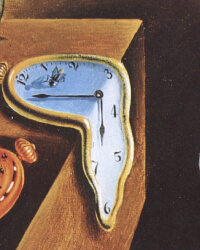
Mario Schifano (1934-1998) - "Il Gusto"


04
ημέρες
23
ώρες
21
λεπτά
49
δευτερόλεπτα
Εναρκτήρια προσφορά
€ 1
χωρίς τιμή ασφαλείας

Ειδικός
Επιλεγμένο από Silvia Possanza
Διηύθυνε ως Senior Specialist στη Finarte για 12 χρόνια, ειδικευμένη σε σύγχρονα έργα.
Εκτιμήστε € 150 - € 200
Δεν υποβλήθηκαν προσφορές
Προστασία Αγοραστή Catawiki
Η πληρωμή σας είναι ασφαλής μαζί μας μέχρι να παραλάβετε το αντικείμενό σας.Προβολή λεπτομερειών
Trustpilot 4.4 | 133188 κριτικών
Βαθμολογήθηκε με Άριστα στο Trustpilot.
Μάριο Σκιφάνο, Il Gusto, λιθογραφία περιορισμένης έκδοσης με χειρόγραφο υπογραφη (offset πέντε χρωμάτων) του πρωτότυπου έργου του 1974, 29 × 23 cm, σε εξαιρετική κατάσταση.
Περίληψη με τη βοήθεια τεχνητής νοημοσύνης
Περιγραφή από τον πωλητή
Mario Schifano, The Taste. Lithographic offset reproduction (5 colors) of Mario Schifano's original work "Il Gusto" expressly made for Bolaffiarte. 5000 numbered copies bear the autograph signature of the Artist (our copy no. 792). Dry stamp Bolaffi. In excellent condition. Rare to find associated with the magazine and still preserved inside the official cardboard with which it was shipped in 1974. No reserve price!
Mario Schifano (Homs, 20 September 1934 – Rome, 26 January 1998) was an Italian painter and filmmaker.
Together with Franco Angeli and Tano Festa he represented a fundamental point of Italian and European Pop Art. Perfectly inserted in the international cultural landscape of the sixties, he was regarded as a prolific, exuberant artist who loved social life. The habit of drugs that lasted his entire life earned him the label of doomed artist.[1]
A passionate student of new painting techniques, he was among the first to use a computer to create works and managed to process images from the computer and transfer them onto emulsion canvases (the "computerized canvases").[2] The author’s prolificity and the apparent simplicity of his works led to the diffusion of a large number of fakes, especially after his death.
Mario Schifano was born in Italian Libya, where his Sicilian-born father was a employee of the Ministry of Public Education and collaborator of Renato Bartoccini.[3] After the end of the war he returned to Rome where, due to his restless personality, he left school early, initially working as a clerk, then following in his father’s footsteps who worked at the Etruscan museum of Villa Giulia as archaeologist and restorer. Thanks to this experience he approached art by creating, in a first period, works that reflected the influence of Informal Art. His first solo show was at the Galleria Appia Antica in Rome in 1959.[4]
Toward the end of the fifties he participated in the artistic movement Scuola di Piazza del Popolo together with artists such as Francesco Lo Savio, Mimmo Rotella, Giuseppe Uncini, Giosetta Fioroni, Tano Festa and Franco Angeli. The group met at Caffè Rosati, a Roman bar then frequented among others by Pier Paolo Pasolini, Alberto Moravia and Federico Fellini and located at Piazza del Popolo, from which they took the name. In 1960 the group’s works were exhibited, in a collective exhibition, at Galleria La Salita.[5]
1961-1970: Art, Cinema and the Stars
In 1961 he won the Lissone Prize for the section "Young International Painting" and a solo show at Galleria La Tartaruga of Plinio De Martiis in Rome.
Meanwhile, at Caffè Rosati he had met among others his future lover Anita Pallenberg, with whom he made his first trip to New York in 1962 where he came into contact with Andy Warhol and Gerard Malanga frequenting the Factory and the nights of the New American Cinema Group. In this period he participated in the New Realists exhibition at the Sidney Janis Gallery, a group show that included many of the younger artists of Pop Art and Nouveau Réalisme, among them Andy Warhol and Roy Lichtenstein.[1] He then had the opportunity to participate in New York’s fashionable social life which led him to early experiments with LSD.[6]
Upon returning from New York, after having participated in exhibitions in Rome, Paris and Milan, in 1964 he participated in the XXXII Venice International Art Exhibition.[5] In this period, his paintings defined as "Anemic landscapes", in which memory evokes the representation of nature with small details or allusive writings and embryo revisitations of the history of art which later led him to famous painted works on futurism.[4] Also from the same year are his first films in 16 mm Round Trip and Reflex, which positioned him, as a central figure of Italian experimental cinema, on the fringe of that movement that soon would lead to the experience of the Independent Cinema Cooperative, which he never openly joined.[5] In Rome he met and mingled with Marco Ferreri and Giuseppe Ungaretti, to whom, already eighty, he offered an evening at Peyote.[6] But one of the acquaintances of this period that influenced him the most was Ettore Rosboch, with whom he formed a deep friendship based on a shared passion for music. In those years, also thanks to constant trips to London, the two befriended the Rolling Stones, to whom they introduced Anita Pallenberg who in 1965 began a relationship with Brian Jones, later becoming the companion of Keith Richards.[6] In 1965 he participated in the Biennale di San Marino and the Biennale di São Paulo do Brasil and carried out his cycle of works titled Io sono infantile, rekindling interest among others of Maurizio Calvesi, Maurizio Fagiolo dell'Arco and Goffredo Parise.[4]
In 1966-67, also thanks to the collaboration of Ettore Rosboch he formed the band Le Stelle di Mario Schifano, thus initiating a close collaboration with musicians Giandomenico Crescentini, former New Dada bassist, the Roman guitarist Urbano Orlandi, the keyboardist Nello Marini and the Alexandrian drummer Sergio Cerra, whose direction he managed and the concert direction he turned into one of the highest examples of Italian and international psychedelic music for a couple of years.[7] Mario Schifano left the group to themselves after the Roman event Grande angolo, sogni e stelle held on December 28 at Piper Club,[8] dedicating himself more actively to his film and artistic activity, and also getting drawn into a temporary relationship with Marianne Faithfull, which was widely discussed in the English scandal sheets.[6][9] The visual setup of the Grande angolo, sogni e stelle night also included the projection onto the musicians, through four projectors, of images of Vietnam, nature and the feature film Anna Carini visto in agosto dalle farfalle[6] previously presented at Studio Marconi.[4]
In 1967 he created the title sequences for the film L’harem by Marco Ferreri. It was thanks to Ferreri’s interest in his work that the following year he managed to produce his Trilogia per un massacro, made up of the three feature films Satellite (1968), Umano non umano (1969), to which collaborated Adriano Aprà, Carmelo Bene, Mick Jagger, Alberto Moravia, Sandro Penna, Rada Rassimov and Keith Richards and Trapianto, consunzione, morte di Franco Brocani (1969).[5]
In 1968 he designed the cover of Stereoequipe by Equipe 84. In 1969 the apartment located in Piazza in Piscinula in Rome which then belonged to Schifano was used by Ferreri as a set for the film Dillinger è morto, on whose walls are visible some of the artist’s paintings.[10][11] In 1969 the Rolling Stones dedicated to Mario Schifano the song Monkey Man.[6]
Seventies and eighties
In 1971 some of his paintings were included by Achille Bonito Oliva in the exhibition Vitalità nel negativo nell’arte italiana 1960/70.[4] Moreover his friendship with the president of the Biennale di Monza, Oscar Cugola, brought him very close to television circles. Many of his works, the so-called "monochromes", present only one or two colors, applied on wrapping paper glued to canvas. The influence of Jasper Johns manifested itself in the use of isolated numbers or letters of the alphabet, but in Schifano’s painting style one can trace analogies with Robert Rauschenberg’s work. In a 1960 painting the word "no" is read painted with color drips in large uppercase letters, as in a mural graffiti.
The influence of Pop Art is visible throughout Mario Schifano’s artistic production, fascinated by new technologies, advertising, music, photography, and experimentation. In particular, his works closest to the artist’s Pop Art are those of the eighties. Among the most important works of this period are the Propagande, a series dedicated to advertising brands (Coca-Cola and Esso) in which there is a clear example of conveying images of common use and easily recognizable cited in multiple ways or parts of them, to bicycles, flowers and nature in general (among the most famous series are the Anemic Landscapes, Interrupted Views, The Tree of Life, Extinct and the Wheat Fields). They are certainly to be counted among the most recognizable and important canvases emulsion-based, the result of his ongoing photographic bursts that accompany his entire life, supports on which television images of everyday consumption are reproduced, multiple and in a continuous flow with light painting interventions. There are in his production also canvases where through screen printing technique images of some of his most important works are reproduced (Esso, Compagni compagni, Paesaggi), which however are not to be understood as proper "serigraphies", but as unique works produced with the aforementioned technique. Schifano in those years had almost abandoned painting as a technique as he himself claimed that it was dead and obsolete compared to the use of different techniques (for example emulsions or serigraphies). In reality he never abandoned it despite the painterly reality of those years suggesting otherwise, allowing him, in any case, to become a perpetual curious precursor of the use of technology for artistic production. For affinity with the cultural trends mentioned above, in the eighties he came into contact with the creative group (illustrators, writers, cartoonists, reporters) of the magazine Frigidaire (Stefano Tamburini, Vincenzo Sparagna, Andrea Pazienza, Tanino Liberatore, Massimo Mattioli, Filippo Scozzari).
In 1984 he realized the Cycle of Nature, composed of ten large canvases donated to the Museum of Modern Art of Gibellina, in the province of Trapani.
Nineties
The last period of production is particularly marked by the media and multimedia, interrupted only by some more painterly cycles[12]. On 27 March 1997 the artist, who in the eighties had endured sentences for possession of drugs, obtained from the Court of Criminal Appeal of Rome full judicial reintegration since “the drug was only for personal use” thanks to his lawyer Attilio Maccarrone.[13] He died at 63, while he was in the intensive care unit of Santo Spirito Hospital in Rome, due to a heart attack.[14]
Legacy
The Centro Studi e Archivio della Comunicazione (CSAC) of Parma preserves two fonds dedicated to Mario Schifano. The first[16] includes 13 canvas works. The second[17] is made up of 132 Polaroids and 244 black-and-white photographs on silver-toned paper, made in the United States during the production of the film Human Lab, as well as a series of 47 black-and-white photographs by various authors (mostly anonymous): portraits of Mario Schifano at work, at home, in the company of other artists or intellectuals. Both fonds are public and fully accessible.
In 2008, on the occasion of the tenth anniversary of Schifano’s death, the CSAC organized America Anemica, a survey of the author’s entire donation curated by Arturo Carlo Quintavalle.
Mario Schifano, The Taste. Lithographic offset reproduction (5 colors) of Mario Schifano's original work "Il Gusto" expressly made for Bolaffiarte. 5000 numbered copies bear the autograph signature of the Artist (our copy no. 792). Dry stamp Bolaffi. In excellent condition. Rare to find associated with the magazine and still preserved inside the official cardboard with which it was shipped in 1974. No reserve price!
Mario Schifano (Homs, 20 September 1934 – Rome, 26 January 1998) was an Italian painter and filmmaker.
Together with Franco Angeli and Tano Festa he represented a fundamental point of Italian and European Pop Art. Perfectly inserted in the international cultural landscape of the sixties, he was regarded as a prolific, exuberant artist who loved social life. The habit of drugs that lasted his entire life earned him the label of doomed artist.[1]
A passionate student of new painting techniques, he was among the first to use a computer to create works and managed to process images from the computer and transfer them onto emulsion canvases (the "computerized canvases").[2] The author’s prolificity and the apparent simplicity of his works led to the diffusion of a large number of fakes, especially after his death.
Mario Schifano was born in Italian Libya, where his Sicilian-born father was a employee of the Ministry of Public Education and collaborator of Renato Bartoccini.[3] After the end of the war he returned to Rome where, due to his restless personality, he left school early, initially working as a clerk, then following in his father’s footsteps who worked at the Etruscan museum of Villa Giulia as archaeologist and restorer. Thanks to this experience he approached art by creating, in a first period, works that reflected the influence of Informal Art. His first solo show was at the Galleria Appia Antica in Rome in 1959.[4]
Toward the end of the fifties he participated in the artistic movement Scuola di Piazza del Popolo together with artists such as Francesco Lo Savio, Mimmo Rotella, Giuseppe Uncini, Giosetta Fioroni, Tano Festa and Franco Angeli. The group met at Caffè Rosati, a Roman bar then frequented among others by Pier Paolo Pasolini, Alberto Moravia and Federico Fellini and located at Piazza del Popolo, from which they took the name. In 1960 the group’s works were exhibited, in a collective exhibition, at Galleria La Salita.[5]
1961-1970: Art, Cinema and the Stars
In 1961 he won the Lissone Prize for the section "Young International Painting" and a solo show at Galleria La Tartaruga of Plinio De Martiis in Rome.
Meanwhile, at Caffè Rosati he had met among others his future lover Anita Pallenberg, with whom he made his first trip to New York in 1962 where he came into contact with Andy Warhol and Gerard Malanga frequenting the Factory and the nights of the New American Cinema Group. In this period he participated in the New Realists exhibition at the Sidney Janis Gallery, a group show that included many of the younger artists of Pop Art and Nouveau Réalisme, among them Andy Warhol and Roy Lichtenstein.[1] He then had the opportunity to participate in New York’s fashionable social life which led him to early experiments with LSD.[6]
Upon returning from New York, after having participated in exhibitions in Rome, Paris and Milan, in 1964 he participated in the XXXII Venice International Art Exhibition.[5] In this period, his paintings defined as "Anemic landscapes", in which memory evokes the representation of nature with small details or allusive writings and embryo revisitations of the history of art which later led him to famous painted works on futurism.[4] Also from the same year are his first films in 16 mm Round Trip and Reflex, which positioned him, as a central figure of Italian experimental cinema, on the fringe of that movement that soon would lead to the experience of the Independent Cinema Cooperative, which he never openly joined.[5] In Rome he met and mingled with Marco Ferreri and Giuseppe Ungaretti, to whom, already eighty, he offered an evening at Peyote.[6] But one of the acquaintances of this period that influenced him the most was Ettore Rosboch, with whom he formed a deep friendship based on a shared passion for music. In those years, also thanks to constant trips to London, the two befriended the Rolling Stones, to whom they introduced Anita Pallenberg who in 1965 began a relationship with Brian Jones, later becoming the companion of Keith Richards.[6] In 1965 he participated in the Biennale di San Marino and the Biennale di São Paulo do Brasil and carried out his cycle of works titled Io sono infantile, rekindling interest among others of Maurizio Calvesi, Maurizio Fagiolo dell'Arco and Goffredo Parise.[4]
In 1966-67, also thanks to the collaboration of Ettore Rosboch he formed the band Le Stelle di Mario Schifano, thus initiating a close collaboration with musicians Giandomenico Crescentini, former New Dada bassist, the Roman guitarist Urbano Orlandi, the keyboardist Nello Marini and the Alexandrian drummer Sergio Cerra, whose direction he managed and the concert direction he turned into one of the highest examples of Italian and international psychedelic music for a couple of years.[7] Mario Schifano left the group to themselves after the Roman event Grande angolo, sogni e stelle held on December 28 at Piper Club,[8] dedicating himself more actively to his film and artistic activity, and also getting drawn into a temporary relationship with Marianne Faithfull, which was widely discussed in the English scandal sheets.[6][9] The visual setup of the Grande angolo, sogni e stelle night also included the projection onto the musicians, through four projectors, of images of Vietnam, nature and the feature film Anna Carini visto in agosto dalle farfalle[6] previously presented at Studio Marconi.[4]
In 1967 he created the title sequences for the film L’harem by Marco Ferreri. It was thanks to Ferreri’s interest in his work that the following year he managed to produce his Trilogia per un massacro, made up of the three feature films Satellite (1968), Umano non umano (1969), to which collaborated Adriano Aprà, Carmelo Bene, Mick Jagger, Alberto Moravia, Sandro Penna, Rada Rassimov and Keith Richards and Trapianto, consunzione, morte di Franco Brocani (1969).[5]
In 1968 he designed the cover of Stereoequipe by Equipe 84. In 1969 the apartment located in Piazza in Piscinula in Rome which then belonged to Schifano was used by Ferreri as a set for the film Dillinger è morto, on whose walls are visible some of the artist’s paintings.[10][11] In 1969 the Rolling Stones dedicated to Mario Schifano the song Monkey Man.[6]
Seventies and eighties
In 1971 some of his paintings were included by Achille Bonito Oliva in the exhibition Vitalità nel negativo nell’arte italiana 1960/70.[4] Moreover his friendship with the president of the Biennale di Monza, Oscar Cugola, brought him very close to television circles. Many of his works, the so-called "monochromes", present only one or two colors, applied on wrapping paper glued to canvas. The influence of Jasper Johns manifested itself in the use of isolated numbers or letters of the alphabet, but in Schifano’s painting style one can trace analogies with Robert Rauschenberg’s work. In a 1960 painting the word "no" is read painted with color drips in large uppercase letters, as in a mural graffiti.
The influence of Pop Art is visible throughout Mario Schifano’s artistic production, fascinated by new technologies, advertising, music, photography, and experimentation. In particular, his works closest to the artist’s Pop Art are those of the eighties. Among the most important works of this period are the Propagande, a series dedicated to advertising brands (Coca-Cola and Esso) in which there is a clear example of conveying images of common use and easily recognizable cited in multiple ways or parts of them, to bicycles, flowers and nature in general (among the most famous series are the Anemic Landscapes, Interrupted Views, The Tree of Life, Extinct and the Wheat Fields). They are certainly to be counted among the most recognizable and important canvases emulsion-based, the result of his ongoing photographic bursts that accompany his entire life, supports on which television images of everyday consumption are reproduced, multiple and in a continuous flow with light painting interventions. There are in his production also canvases where through screen printing technique images of some of his most important works are reproduced (Esso, Compagni compagni, Paesaggi), which however are not to be understood as proper "serigraphies", but as unique works produced with the aforementioned technique. Schifano in those years had almost abandoned painting as a technique as he himself claimed that it was dead and obsolete compared to the use of different techniques (for example emulsions or serigraphies). In reality he never abandoned it despite the painterly reality of those years suggesting otherwise, allowing him, in any case, to become a perpetual curious precursor of the use of technology for artistic production. For affinity with the cultural trends mentioned above, in the eighties he came into contact with the creative group (illustrators, writers, cartoonists, reporters) of the magazine Frigidaire (Stefano Tamburini, Vincenzo Sparagna, Andrea Pazienza, Tanino Liberatore, Massimo Mattioli, Filippo Scozzari).
In 1984 he realized the Cycle of Nature, composed of ten large canvases donated to the Museum of Modern Art of Gibellina, in the province of Trapani.
Nineties
The last period of production is particularly marked by the media and multimedia, interrupted only by some more painterly cycles[12]. On 27 March 1997 the artist, who in the eighties had endured sentences for possession of drugs, obtained from the Court of Criminal Appeal of Rome full judicial reintegration since “the drug was only for personal use” thanks to his lawyer Attilio Maccarrone.[13] He died at 63, while he was in the intensive care unit of Santo Spirito Hospital in Rome, due to a heart attack.[14]
Legacy
The Centro Studi e Archivio della Comunicazione (CSAC) of Parma preserves two fonds dedicated to Mario Schifano. The first[16] includes 13 canvas works. The second[17] is made up of 132 Polaroids and 244 black-and-white photographs on silver-toned paper, made in the United States during the production of the film Human Lab, as well as a series of 47 black-and-white photographs by various authors (mostly anonymous): portraits of Mario Schifano at work, at home, in the company of other artists or intellectuals. Both fonds are public and fully accessible.
In 2008, on the occasion of the tenth anniversary of Schifano’s death, the CSAC organized America Anemica, a survey of the author’s entire donation curated by Arturo Carlo Quintavalle.
Λεπτομέρειες
Καλλιτέχνης
Mario Schifano (1934-1998)
Πωλείται από
Ιδιοκτήτης ή μεταπωλητής
Έκδοση
Περιορισμένη έκδοση
Τίτλος έργου τέχνης
"Il Gusto"
Τεχνική
Λιθογραφία
Υπογραφή
Υπογεγραμμένο χειρόγραφα
Χώρα
Ιταλία
Έτος
1974
Κατάσταση
Άριστη κατάσταση
Height
29 cm
Width
23 cm
Style
Ποπ αρτ
Περίοδος
1970-1980
Πωλήθηκε με κορνίζα
Όχι
Πωλήθηκε από τον/-ην