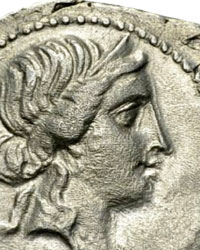
Λυκιακή Συνομοσπονδία. Augustus (27 BC-AD 14). Drachm


08
ημέρες
04
ώρες
06
λεπτά
03
δευτερόλεπτα
Εναρκτήρια προσφορά
€ 1
Τιμή επιφύλαξης δεν επιτεύχθηκε

Ειδικός
Επιλεγμένο από Carmen Vera Gutiérrez
Έμπειρη εκτιμήτρια αρχαιοτήτων με εξειδίκευση σε ισπανικά και αρχαία νομίσματα.
Εκτιμήστε € 900 - € 1,000
Δεν υποβλήθηκαν προσφορές
Προστασία Αγοραστή Catawiki
Η πληρωμή σας είναι ασφαλής μαζί μας μέχρι να παραλάβετε το αντικείμενό σας.Προβολή λεπτομερειών
Trustpilot 4.4 | 133888 κριτικών
Βαθμολογήθηκε με Άριστα στο Trustpilot.
Ασημένια δραχμή της Λυκικής Συμμαχίας Αύγουστου (27 π.Χ.–14 μ.Χ.), όψη M-A με λύρα και τρίποδο, όψις γυμνό κεφάλι δεξιά με ΛΥ, βάρος 3,51 g, διάμετρος 18 mm, άξονας 12h, μη πιστοποιημένο.
Περίληψη με τη βοήθεια τεχνητής νοημοσύνης
Περιγραφή από τον πωλητή
★ ΕΝΤΥΠΩΣΙΑΚΟ ΠΟΡΤΡΕΤΟ ★
LYCIAN LEAGUE. Augustus.(27 BC-AD 14). Drachm.
Rev : Λ-Υ.
Bare head right.
Obv : M-A.
lyre; tripod in right field.
RPC I 3308.
Condition : The coin is in good condition, with visible surface scratches but no significant wear. It has a light gray patina that gives it a soft, matte appearance, which highlights the design without obscuring any of the details.Extremely fine.
Material : Silver.
Axis : 12h
Weight : 3.51 gr
Diameter : 18 mm
The lyre is a stringed instrument widely used in ancient times, particularly significant in Greek and Roman cultures, and often played by poets, bards, and during religious ceremonies. In Greek mythology, the lyre was said to be invented by the god Hermes. He crafted the instrument using a tortoise shell and ox sinew, then gifted it to the god Apollo. Apollo played the lyre alongside the Muses, who were the inspirations for poetry and music, affecting both gods and mortals alike. As a result, the lyre became a symbol of music, poetry, and the arts.
The lyre was a small, portable instrument. It usually had several strings, and its strings could be plucked by hand or with a plectrum. The lyre often had a U-shaped frame with strings stretched across the two sides. The number of strings varied by time and region, but it generally had between five and seven strings. Its sound was soft and soothing, making it suitable for personal performances and musical gatherings in small groups.
The lyre had a wide range of uses. In ancient Greece, educated individuals were expected to learn how to play the lyre as part of their musical education. The instrument was particularly favored by bards who recited Homer’s epics and lyric poetry. In religious ceremonies, the lyre was frequently used to accompany hymns and songs offered to the gods. It was also commonly played during social gatherings, banquets, and feasts.
During the Roman era, the lyre continued to be an important instrument. The Romans admired Greek culture, and this admiration extended to Greek music. Roman poets and bards adopted the Greek lyre to perform their literary works. The lyre also became part of Roman entertainment culture, with performers often playing it at gatherings.
The significance of the lyre in ancient times was not only musical but also symbolic and mythological. Orpheus, a famous mythological figure known for enchanting both gods and creatures of the underworld with his music, played the lyre to perform these miraculous feats. The lyre also gave its name to the Lyra constellation in the sky, which according to myth, was placed in the heavens after Orpheus’s death when his lyre was said to have been immortalized as a starry symbol.
In conclusion, the lyre played a crucial role in the artistic and cultural framework of the ancient world. Its deep roots in mythology, as well as its presence in everyday social life, made the lyre an indispensable symbol of the ancient era. This instrument was not only an expression of music but also a representation of the human soul and cultural heritage.
★ ΕΝΤΥΠΩΣΙΑΚΟ ΠΟΡΤΡΕΤΟ ★
LYCIAN LEAGUE. Augustus.(27 BC-AD 14). Drachm.
Rev : Λ-Υ.
Bare head right.
Obv : M-A.
lyre; tripod in right field.
RPC I 3308.
Condition : The coin is in good condition, with visible surface scratches but no significant wear. It has a light gray patina that gives it a soft, matte appearance, which highlights the design without obscuring any of the details.Extremely fine.
Material : Silver.
Axis : 12h
Weight : 3.51 gr
Diameter : 18 mm
The lyre is a stringed instrument widely used in ancient times, particularly significant in Greek and Roman cultures, and often played by poets, bards, and during religious ceremonies. In Greek mythology, the lyre was said to be invented by the god Hermes. He crafted the instrument using a tortoise shell and ox sinew, then gifted it to the god Apollo. Apollo played the lyre alongside the Muses, who were the inspirations for poetry and music, affecting both gods and mortals alike. As a result, the lyre became a symbol of music, poetry, and the arts.
The lyre was a small, portable instrument. It usually had several strings, and its strings could be plucked by hand or with a plectrum. The lyre often had a U-shaped frame with strings stretched across the two sides. The number of strings varied by time and region, but it generally had between five and seven strings. Its sound was soft and soothing, making it suitable for personal performances and musical gatherings in small groups.
The lyre had a wide range of uses. In ancient Greece, educated individuals were expected to learn how to play the lyre as part of their musical education. The instrument was particularly favored by bards who recited Homer’s epics and lyric poetry. In religious ceremonies, the lyre was frequently used to accompany hymns and songs offered to the gods. It was also commonly played during social gatherings, banquets, and feasts.
During the Roman era, the lyre continued to be an important instrument. The Romans admired Greek culture, and this admiration extended to Greek music. Roman poets and bards adopted the Greek lyre to perform their literary works. The lyre also became part of Roman entertainment culture, with performers often playing it at gatherings.
The significance of the lyre in ancient times was not only musical but also symbolic and mythological. Orpheus, a famous mythological figure known for enchanting both gods and creatures of the underworld with his music, played the lyre to perform these miraculous feats. The lyre also gave its name to the Lyra constellation in the sky, which according to myth, was placed in the heavens after Orpheus’s death when his lyre was said to have been immortalized as a starry symbol.
In conclusion, the lyre played a crucial role in the artistic and cultural framework of the ancient world. Its deep roots in mythology, as well as its presence in everyday social life, made the lyre an indispensable symbol of the ancient era. This instrument was not only an expression of music but also a representation of the human soul and cultural heritage.
Λεπτομέρειες
Εποχή
Πριν το 1400
Πολιτισμός/περιοχή
Lycian League
Ruler
Augustus (27 BC-AD 14)
Denomination
Drachm
Μέταλλο
AR
Κατάσταση
Ungraded
Βάρος
2 kg
Αριθμός αντικειμένων
1
Απεικόνιση/θέμα
History
Πωλήθηκε από τον/-ην