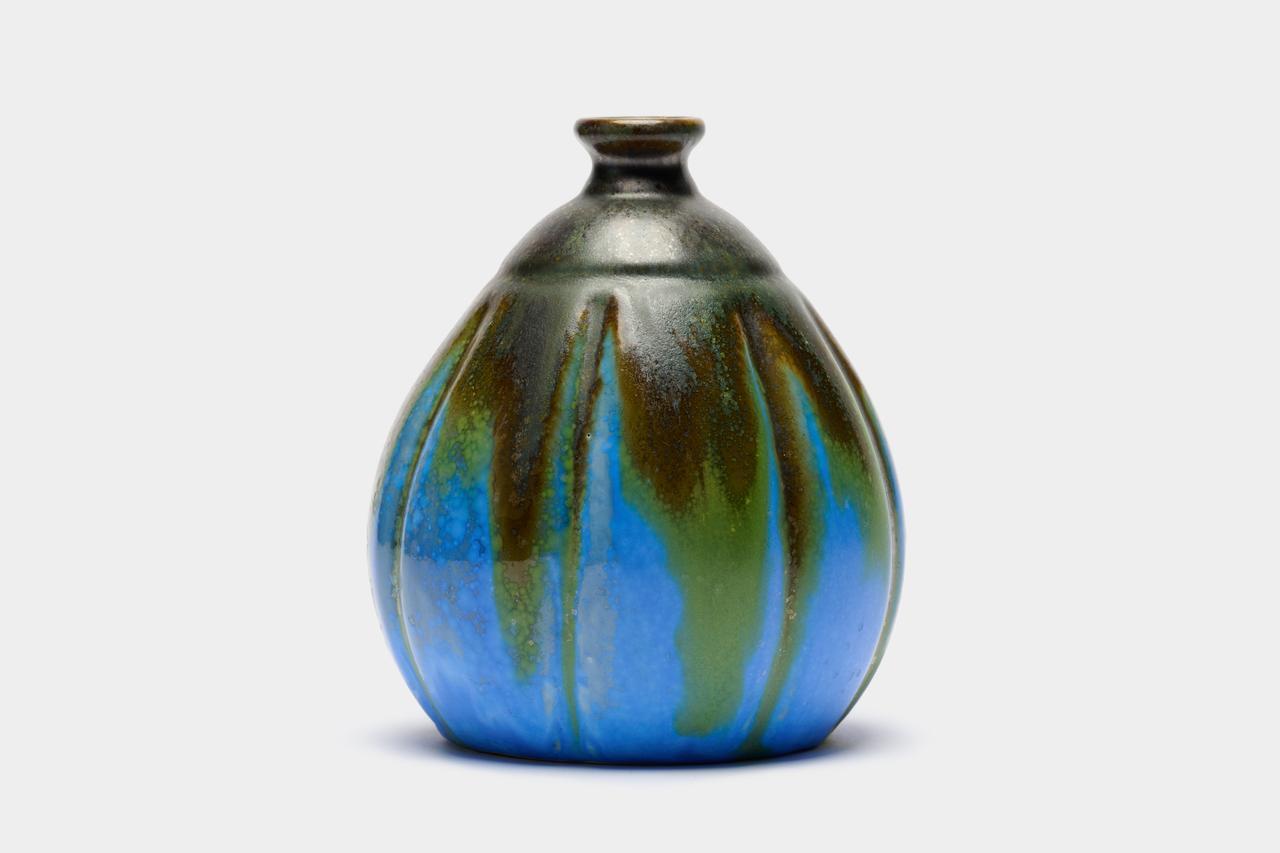
Limoges - Emile Bourgeois - Σερβίτσιο καφέ - Πορσελάνη


04
ημέρες
14
ώρες
37
λεπτά
22
δευτερόλεπτα
Εναρκτήρια προσφορά
€ 1
Τιμή επιφύλαξης δεν επιτεύχθηκε

Δεν υποβλήθηκαν προσφορές
Προστασία Αγοραστή Catawiki
Η πληρωμή σας είναι ασφαλής μαζί μας μέχρι να παραλάβετε το αντικείμενό σας.Προβολή λεπτομερειών
Trustpilot 4.4 | 136578 κριτικών
Βαθμολογήθηκε με Άριστα στο Trustpilot.
Περιγραφή από τον πωλητή
Emile Bourgeois"Grand Dépôt"
1880-1900 г.
Bernardaud/Limoges/France
In the heart of Paris, during the glittering Belle Époque, Emile Bourgeois created an empire that did not just sell tableware, but dictated the laws of good taste. His shop, Le Grand Dépôt, was called the "Palace of the Arts of Fire", becoming a true legend in the world of ceramics and crystal.
Born in 1832 in Normandy, Émile began his career as a salesman in a porcelain shop at the age of 16. In 1856, he went to London, where he discovered the superiority of English faience, something that the French at the time looked down on. When he returned to Paris in 1862, a merchant told him mockingly that the only things worth importing from England were biscuits and razors. Bourgeois proved otherwise, opening a small shop on Rue Drouot that soon grew into the legendary Le Grand Dépôt.
Le Grand Dépôt - Where
the aristocracy shops
The store at 21 Rue Drouot is not just a retail outlet, but a curatorial experience. Bourgeois is not a manufacturer, but he has the exceptional "flair" to select the best from Limoges, Sarreguemines and elite English factories like Minton. He puts his personal stamp on everything he sells, guaranteeing a quality that attracts the most sophisticated customers.
Regular customers included members of the French aristocracy, wealthy bourgeois and intellectuals. The store was a destination for discerning shoppers looking not only for everyday tableware but also for wedding gifts that would last in the family for generations.
One of the little-known "secrets" to his success was his aggressive advertising strategy for the time and catalogs that created a specific "Le Grand Dépôt" style. He offered to personalize the sets with coats of arms or monograms, making each item unique to its owner.
Émile Bourgeois’s Le Grand Dépôt was not just a retail outlet, but a must-see destination for the European elite. His clientele was so prestigious that having his service in one’s home was a clear sign of high social status.
Thanks to his international reputation, Bourgeois supplied many of the embassies in Paris. Foreign diplomats bought his porcelain as a symbol of French chic to take back to their home countries.
The Passion of a "Collector on the Throne"
Tsar Ferdinand I (Bulgaria)
Ferdinand was renowned for his "maniacal" taste for luxury and detail. His passion for porcelain was part of his broader fascination with applied arts, botany, and gemstones.
The Tsar was a regular client of Emile Bourgeois. Rare plates and salad bowls from his personal service still appear in Bulgarian auctions today, bearing the Bourgeois mark and often adorned with the royal monogram or crown.
His service was often in classical styles (Baroque or Rococo), and included hundreds of pieces from fine coffee cups to huge game platters.
Many of his dishes were specially crafted with intricate monograms (the letter "F" under a crown) or the Coburg coat of arms, emphasizing his legitimacy and connection to the great European dynasties.
Ferdinand demanded impeccable table settings at the palace. It is said that he personally checked that the porcelain was arranged according to the strictest Bourbon etiquette. One misplaced utensil or defective plate was enough to spoil the monarch's mood for the entire day.
After his abdication in 1918, a large part of these services remained in Bulgaria and today are valuable exhibits in museums or among private collectors, telling the story of the "Golden Age" of the Bulgarian royal court.
The Euxinograd Palace near Varna houses one of the most significant collections of porcelain and crystal belonging to the Bulgarian royal family. As a favorite summer residence of Tsar Ferdinand, the palace was furnished with exceptional finesse, with much of the interior and tableware preserved in its authentic form.
Many of the objects bear the markings of Emile Bourgeois.
One of the most colorful and loyal customers of Émile Bourgeois and his shop "Le Grand Dépôt" was the King of the United Kingdom, Edward VII.
Before he ascended the throne, while still Prince of Wales, he was a frequent visitor to Paris and was known for his refined taste for pleasure and luxury.
The prince adored the French lifestyle and often visited the shop at 21 Rue Drouot to choose gifts or service for his private dinners.
It is said that the prince ordered specially decorated service through Bourgeois for his discreet dinners at legendary Parisian establishments such as "Maxim's". This service often bore discreet markings, understandable only to his narrow circle of friends.
A popular anecdote tells how Edward VII once entered Le Grand Dépôt incognito. Emile Bourgeois, who knew every detail of his wares, immediately recognized his distinguished guest by his exacting standards for the quality of the glaze. When the prince asked why a particular Minton model was more expensive in Paris than in London, Bourgeois replied with his typical finesse: "Because here, Your Highness, it has passed through my hands and has received the approval of Paris." The prince laughed and bought the entire service.
Empress Eugenie (wife of Napoleon III): She was known for setting fashions in interior design and supported Bourgeois in his efforts to popularize French porcelain among the courts of Europe.
The Ritz Family. When Cesar Ritz opened his legendary hotels, he sought precisely the type of (selected) quality that Emile Bourgeois offered to satisfy the whims of the world's elite.
The legendary French writer Guy de Maupassant was not only a passionate client of Émile Bourgeois, but he also personally participated in the "design" of the atmosphere that his objects created.
When Maupassant purchased his famous yacht, the Belle Ami, he turned to Émile Bourgeois for the complete equipment of the dining room on board. Maupassant insisted on service that was both elegant and heavy enough not to slip in the sea, a real challenge for the design of the time.
The great author of "In Search of Lost Time," Marcel Proust, was also a regular customer. For him, porcelain and crystal objects were not just objects, but "carriers of memory." Proust was extremely meticulous about detail and is said to have spent hours in Bourgeois's shop selecting teacups that would have a precisely defined relief so that they would "feel right" in his character's hand.
About the service:
The craftsmanship of Bernardaud from Limoges and the refined selection of Emile Bourgeois.
Why Bernardaud?
Bernardaud's decor is recognizable for its precision and richness. In Bernardaud's designs, the decor never "suffocates" the object. It emphasizes the architecture of the teapot or the curve of the cup, turning each part into a complete picture. When such a service is selected by a curator like Emile Bourgeois, you see the pinnacle of this art - decoration that is both lavish and aristocratically restrained.
Imagine Paris at the end of the 19th century. On Rue Drouot stands the legendary Le Grand Dépôt, the “Palace of the Fiery Arts.” Its creator was Emile Bourgeois, a visionary who did not produce porcelain but dictated fashion. He commissioned the finest pieces from elite factories such as Bernardaud and placed his red mark as a seal of impeccable taste. This service was not just a drinking vessel; it was a ticket to the salons of the French bourgeoisie, where tea and coffee were rituals of social prestige.
Each piece of this set is sculpted from fine kaolin, transformed into a transparent, “ringing” porcelain typical of Limoges.
Teapot and sugar bowl:
Featuring graceful curves, they are the centerpiece of the composition. Their design often combines classical restraint with delicate floral motifs or gold accents, characteristic of Bourgeois's commissions.
4 tea cups (140 ml) with saucers: Their volume is designed for "slow tea", preserving the warmth and aroma of the drink, while their thin handles ensure lightness to the touch.
6 coffee cups (100 ml) with saucers: A little more compact and energetic, these cups are designed for stronger brews in a refined atmosphere.
Grand Dépôt, Emile Bourgeois, Paris The prestigious distributor's mark that turns the object into an antique treasure. This service is a frozen moment from a time when detail was everything. It is ready to transform your table into a scene of Parisian splendor.
This service is not just an object, but an invitation to travel through time. With each raised glass, you are not just sipping a drink, but touching the history of an era in which beauty was everyday life, and detail was religion.
That's why you must have this service!
I am attaching a clip to it.
The teapot has a tiny chip (which is not noticeable)
Everything else is in excellent condition!
It will be packaged carefully.
https://vm.tiktok.com/ZNR3rLmU5/
Emile Bourgeois"Grand Dépôt"
1880-1900 г.
Bernardaud/Limoges/France
In the heart of Paris, during the glittering Belle Époque, Emile Bourgeois created an empire that did not just sell tableware, but dictated the laws of good taste. His shop, Le Grand Dépôt, was called the "Palace of the Arts of Fire", becoming a true legend in the world of ceramics and crystal.
Born in 1832 in Normandy, Émile began his career as a salesman in a porcelain shop at the age of 16. In 1856, he went to London, where he discovered the superiority of English faience, something that the French at the time looked down on. When he returned to Paris in 1862, a merchant told him mockingly that the only things worth importing from England were biscuits and razors. Bourgeois proved otherwise, opening a small shop on Rue Drouot that soon grew into the legendary Le Grand Dépôt.
Le Grand Dépôt - Where
the aristocracy shops
The store at 21 Rue Drouot is not just a retail outlet, but a curatorial experience. Bourgeois is not a manufacturer, but he has the exceptional "flair" to select the best from Limoges, Sarreguemines and elite English factories like Minton. He puts his personal stamp on everything he sells, guaranteeing a quality that attracts the most sophisticated customers.
Regular customers included members of the French aristocracy, wealthy bourgeois and intellectuals. The store was a destination for discerning shoppers looking not only for everyday tableware but also for wedding gifts that would last in the family for generations.
One of the little-known "secrets" to his success was his aggressive advertising strategy for the time and catalogs that created a specific "Le Grand Dépôt" style. He offered to personalize the sets with coats of arms or monograms, making each item unique to its owner.
Émile Bourgeois’s Le Grand Dépôt was not just a retail outlet, but a must-see destination for the European elite. His clientele was so prestigious that having his service in one’s home was a clear sign of high social status.
Thanks to his international reputation, Bourgeois supplied many of the embassies in Paris. Foreign diplomats bought his porcelain as a symbol of French chic to take back to their home countries.
The Passion of a "Collector on the Throne"
Tsar Ferdinand I (Bulgaria)
Ferdinand was renowned for his "maniacal" taste for luxury and detail. His passion for porcelain was part of his broader fascination with applied arts, botany, and gemstones.
The Tsar was a regular client of Emile Bourgeois. Rare plates and salad bowls from his personal service still appear in Bulgarian auctions today, bearing the Bourgeois mark and often adorned with the royal monogram or crown.
His service was often in classical styles (Baroque or Rococo), and included hundreds of pieces from fine coffee cups to huge game platters.
Many of his dishes were specially crafted with intricate monograms (the letter "F" under a crown) or the Coburg coat of arms, emphasizing his legitimacy and connection to the great European dynasties.
Ferdinand demanded impeccable table settings at the palace. It is said that he personally checked that the porcelain was arranged according to the strictest Bourbon etiquette. One misplaced utensil or defective plate was enough to spoil the monarch's mood for the entire day.
After his abdication in 1918, a large part of these services remained in Bulgaria and today are valuable exhibits in museums or among private collectors, telling the story of the "Golden Age" of the Bulgarian royal court.
The Euxinograd Palace near Varna houses one of the most significant collections of porcelain and crystal belonging to the Bulgarian royal family. As a favorite summer residence of Tsar Ferdinand, the palace was furnished with exceptional finesse, with much of the interior and tableware preserved in its authentic form.
Many of the objects bear the markings of Emile Bourgeois.
One of the most colorful and loyal customers of Émile Bourgeois and his shop "Le Grand Dépôt" was the King of the United Kingdom, Edward VII.
Before he ascended the throne, while still Prince of Wales, he was a frequent visitor to Paris and was known for his refined taste for pleasure and luxury.
The prince adored the French lifestyle and often visited the shop at 21 Rue Drouot to choose gifts or service for his private dinners.
It is said that the prince ordered specially decorated service through Bourgeois for his discreet dinners at legendary Parisian establishments such as "Maxim's". This service often bore discreet markings, understandable only to his narrow circle of friends.
A popular anecdote tells how Edward VII once entered Le Grand Dépôt incognito. Emile Bourgeois, who knew every detail of his wares, immediately recognized his distinguished guest by his exacting standards for the quality of the glaze. When the prince asked why a particular Minton model was more expensive in Paris than in London, Bourgeois replied with his typical finesse: "Because here, Your Highness, it has passed through my hands and has received the approval of Paris." The prince laughed and bought the entire service.
Empress Eugenie (wife of Napoleon III): She was known for setting fashions in interior design and supported Bourgeois in his efforts to popularize French porcelain among the courts of Europe.
The Ritz Family. When Cesar Ritz opened his legendary hotels, he sought precisely the type of (selected) quality that Emile Bourgeois offered to satisfy the whims of the world's elite.
The legendary French writer Guy de Maupassant was not only a passionate client of Émile Bourgeois, but he also personally participated in the "design" of the atmosphere that his objects created.
When Maupassant purchased his famous yacht, the Belle Ami, he turned to Émile Bourgeois for the complete equipment of the dining room on board. Maupassant insisted on service that was both elegant and heavy enough not to slip in the sea, a real challenge for the design of the time.
The great author of "In Search of Lost Time," Marcel Proust, was also a regular customer. For him, porcelain and crystal objects were not just objects, but "carriers of memory." Proust was extremely meticulous about detail and is said to have spent hours in Bourgeois's shop selecting teacups that would have a precisely defined relief so that they would "feel right" in his character's hand.
About the service:
The craftsmanship of Bernardaud from Limoges and the refined selection of Emile Bourgeois.
Why Bernardaud?
Bernardaud's decor is recognizable for its precision and richness. In Bernardaud's designs, the decor never "suffocates" the object. It emphasizes the architecture of the teapot or the curve of the cup, turning each part into a complete picture. When such a service is selected by a curator like Emile Bourgeois, you see the pinnacle of this art - decoration that is both lavish and aristocratically restrained.
Imagine Paris at the end of the 19th century. On Rue Drouot stands the legendary Le Grand Dépôt, the “Palace of the Fiery Arts.” Its creator was Emile Bourgeois, a visionary who did not produce porcelain but dictated fashion. He commissioned the finest pieces from elite factories such as Bernardaud and placed his red mark as a seal of impeccable taste. This service was not just a drinking vessel; it was a ticket to the salons of the French bourgeoisie, where tea and coffee were rituals of social prestige.
Each piece of this set is sculpted from fine kaolin, transformed into a transparent, “ringing” porcelain typical of Limoges.
Teapot and sugar bowl:
Featuring graceful curves, they are the centerpiece of the composition. Their design often combines classical restraint with delicate floral motifs or gold accents, characteristic of Bourgeois's commissions.
4 tea cups (140 ml) with saucers: Their volume is designed for "slow tea", preserving the warmth and aroma of the drink, while their thin handles ensure lightness to the touch.
6 coffee cups (100 ml) with saucers: A little more compact and energetic, these cups are designed for stronger brews in a refined atmosphere.
Grand Dépôt, Emile Bourgeois, Paris The prestigious distributor's mark that turns the object into an antique treasure. This service is a frozen moment from a time when detail was everything. It is ready to transform your table into a scene of Parisian splendor.
This service is not just an object, but an invitation to travel through time. With each raised glass, you are not just sipping a drink, but touching the history of an era in which beauty was everyday life, and detail was religion.
That's why you must have this service!
I am attaching a clip to it.
The teapot has a tiny chip (which is not noticeable)
Everything else is in excellent condition!
It will be packaged carefully.
https://vm.tiktok.com/ZNR3rLmU5/
Λεπτομέρειες
Εποχή
1400-1900
Χώρα
Γαλλία
Manufacturer/brand
Limoges
Σχεδιαστής/Καλλιτέχνης/Δημιουργός
Emile Bourgeois
Υλικό
Πορσελάνη
Κατάσταση
Excellent condition: barely used with minimal signs of wear
Height
0 cm
Width
0 cm
Depth
0 cm
Estimated period
1850-1900
Πωλήθηκε από τον/-ην