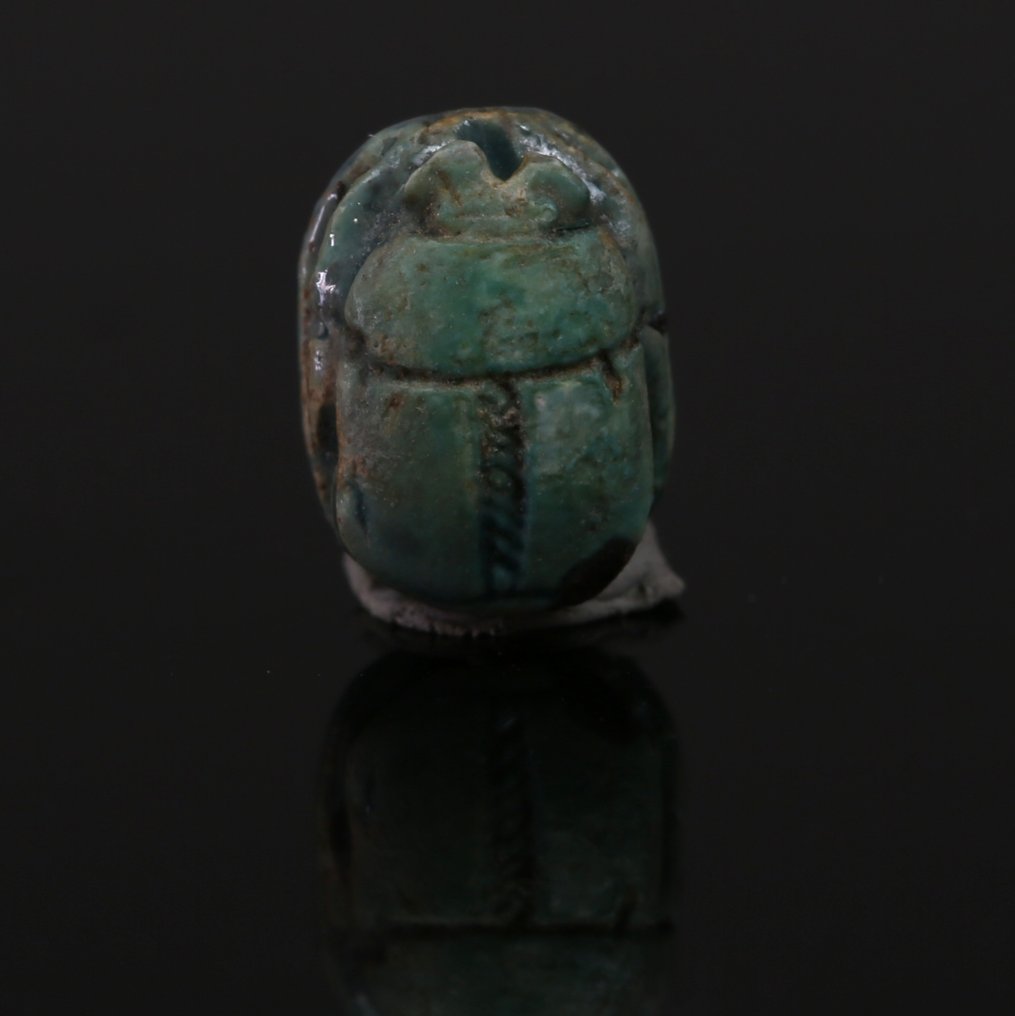
Αρχαία Αίγυπτος, περίοδος Αμάρνα Faience Σκαραβαίος, βασιλεία Αμενχοτέπ Γ', Από το Μουσείο


02
ημέρες
03
ώρες
29
λεπτά
03
δευτερόλεπτα
Τρέχουσα προσφορά
€ 90
Τιμή επιφύλαξης δεν επιτεύχθηκε

Ειδικός
Επιλεγμένο από Ruth Garrido Vila
Διηύθυνε το Μουσείο Συλλογής Ifergan, ειδικευμένη στην Φοινικική αρχαιολογία.
Εκτιμήστε € 850 - € 1,000
 | 90 € | |
|---|---|---|
| 85 € | |
| 80 € | |
Προστασία Αγοραστή Catawiki
Η πληρωμή σας είναι ασφαλής μαζί μας μέχρι να παραλάβετε το αντικείμενό σας.Προβολή λεπτομερειών
Trustpilot 4.4 | 137663 κριτικών
Βαθμολογήθηκε με Άριστα στο Trustpilot.
Σακαραβος amulet από την περίοδο Αμάννορα (1391–1353 π.Χ.) από φαιανζ, διαστάσεις 6 × 10 mm, σε καλή κατάσταση, συνδεδεμένος με τη βασιλεία του Αμενχοτέπ Γ΄, εξ α Museum deaccession; αγοράστηκε το 2024 από Γερμανία, προηγούμενος ιδιοκτήτης από αγορά αρχαιοτήτων από το 1970, με πιστοποιητικό γνησιότητας και άδεια εξαγωγής.
Περίληψη με τη βοήθεια τεχνητής νοημοσύνης
Περιγραφή από τον πωλητή
ITEM: Σκαραβαίς, reign of Amenhotep III
MATERIAL: Φαιένς
CULTURE: Αιγυπτιακή
PERIOD: Περίοδος Αμάρνα, 1391 – 1353 π.Χ
DIMENSIONS: 6 mm x 10 mm
CONDITION: Καλή κατάσταση
PROVENANCE: Από την Έκθεση Μουσείου της Arbeitsgruppe für Biblische Archäologie, Γερμανία (Deaccession)
Comes with Certificate of Authenticity and Export license
If you bid outside the european union and win the item, we will have to apply for an export licence for your country and shipping will take 3 to 5 weeks.
Σκαραβαϊκά amulets from the Amarna Period, particularly during the reign of Amenhotep III (circa 1391–1353 BCE), represent both continuity and innovation in Egyptian religious and artistic practices. Scarabs had long been used in ancient Egypt as protective amulets, symbols of rebirth, and tokens of personal identity. During Amenhotep III’s reign—an era of immense wealth, artistic refinement, and growing religious experimentation—scarabs continued to hold deep symbolic importance while often serving as diplomatic gifts or royal propaganda tools.
Scarabs from this period were typically made of glazed steatite or faience and bore inscriptions on their flat undersides. These could include the names and titles of the king, deities, or references to specific events. Under Amenhotep III, a distinctive group of large “commemorative scarabs” was produced, bearing long inscriptions detailing royal achievements such as lion hunts, building projects, or diplomatic marriages. These were widely distributed throughout the Near East, emphasizing the pharaoh’s power and divine favor.
Artistically, Amarna Period scarabs often reflect the increasing stylization and realism that characterized the broader visual culture of the time. While most still maintained the traditional beetle form associated with the god Khepri, some scarabs began to show more fluid and dynamic shapes, influenced by the artistic reforms that would fully blossom under Amenhotep IV (Akhenaten). The craftsmanship of these amulets was high, with finely carved hieroglyphs and smooth, glossy glazes in shades of blue and green—colors linked to life, regeneration, and the Nile.
In both funerary and diplomatic contexts, these scarabs served to reinforce the divine nature of the king and the protective power of Egyptian symbolism. Their widespread discovery—from Egyptian tombs to Levantine palaces—attests to Egypt’s far-reaching influence during Amenhotep III’s reign.
Ιστορία πωλητή
Το Antiquarian σας προσφέρει αρχαία τέχνη και αρχαία νομίσματα. Κύριος στόχος μας είναι να προσφέρουμε την υψηλότερη ποιότητα στην καλύτερη τιμή, σεβόμενοι και αυστηρά τη νομοθεσία περί προστασίας της πολιτιστικής κληρονομιάς και τους κανόνες πολιτιστικής κληρονομιάς της UNESCO. Επομένως, όλα τα κομμάτια που δημοσιεύονται προέρχονται από ιδιωτικές συλλογές στις οποίες μπορεί να ελεγχθεί η προέλευση ή από διεθνείς δημοπρασίες. Όλες οι αρχαιότητες και τα νομίσματά μας συνοδεύονται από το Πιστοποιητικό γνησιότητάς τους. Έχουμε πολιτική επιστροφής 90 ημερών χωρίς αμφισβήτηση. Στο Your Antiquarian δεσμευόμαστε να βοηθάμε τις μειονεκτούσες ομάδες και για το λόγο αυτό ένα μέρος κάθε αγοράς δωρίζεται σε φιλανθρωπικά ιδρύματα για να βοηθήσουμε άτομα που έχουν ανάγκη.
Μετάφραση από Google ΜετάφρασηITEM: Σκαραβαίς, reign of Amenhotep III
MATERIAL: Φαιένς
CULTURE: Αιγυπτιακή
PERIOD: Περίοδος Αμάρνα, 1391 – 1353 π.Χ
DIMENSIONS: 6 mm x 10 mm
CONDITION: Καλή κατάσταση
PROVENANCE: Από την Έκθεση Μουσείου της Arbeitsgruppe für Biblische Archäologie, Γερμανία (Deaccession)
Comes with Certificate of Authenticity and Export license
If you bid outside the european union and win the item, we will have to apply for an export licence for your country and shipping will take 3 to 5 weeks.
Σκαραβαϊκά amulets from the Amarna Period, particularly during the reign of Amenhotep III (circa 1391–1353 BCE), represent both continuity and innovation in Egyptian religious and artistic practices. Scarabs had long been used in ancient Egypt as protective amulets, symbols of rebirth, and tokens of personal identity. During Amenhotep III’s reign—an era of immense wealth, artistic refinement, and growing religious experimentation—scarabs continued to hold deep symbolic importance while often serving as diplomatic gifts or royal propaganda tools.
Scarabs from this period were typically made of glazed steatite or faience and bore inscriptions on their flat undersides. These could include the names and titles of the king, deities, or references to specific events. Under Amenhotep III, a distinctive group of large “commemorative scarabs” was produced, bearing long inscriptions detailing royal achievements such as lion hunts, building projects, or diplomatic marriages. These were widely distributed throughout the Near East, emphasizing the pharaoh’s power and divine favor.
Artistically, Amarna Period scarabs often reflect the increasing stylization and realism that characterized the broader visual culture of the time. While most still maintained the traditional beetle form associated with the god Khepri, some scarabs began to show more fluid and dynamic shapes, influenced by the artistic reforms that would fully blossom under Amenhotep IV (Akhenaten). The craftsmanship of these amulets was high, with finely carved hieroglyphs and smooth, glossy glazes in shades of blue and green—colors linked to life, regeneration, and the Nile.
In both funerary and diplomatic contexts, these scarabs served to reinforce the divine nature of the king and the protective power of Egyptian symbolism. Their widespread discovery—from Egyptian tombs to Levantine palaces—attests to Egypt’s far-reaching influence during Amenhotep III’s reign.
Ιστορία πωλητή
Το Antiquarian σας προσφέρει αρχαία τέχνη και αρχαία νομίσματα. Κύριος στόχος μας είναι να προσφέρουμε την υψηλότερη ποιότητα στην καλύτερη τιμή, σεβόμενοι και αυστηρά τη νομοθεσία περί προστασίας της πολιτιστικής κληρονομιάς και τους κανόνες πολιτιστικής κληρονομιάς της UNESCO. Επομένως, όλα τα κομμάτια που δημοσιεύονται προέρχονται από ιδιωτικές συλλογές στις οποίες μπορεί να ελεγχθεί η προέλευση ή από διεθνείς δημοπρασίες. Όλες οι αρχαιότητες και τα νομίσματά μας συνοδεύονται από το Πιστοποιητικό γνησιότητάς τους. Έχουμε πολιτική επιστροφής 90 ημερών χωρίς αμφισβήτηση. Στο Your Antiquarian δεσμευόμαστε να βοηθάμε τις μειονεκτούσες ομάδες και για το λόγο αυτό ένα μέρος κάθε αγοράς δωρίζεται σε φιλανθρωπικά ιδρύματα για να βοηθήσουμε άτομα που έχουν ανάγκη.
Μετάφραση από Google ΜετάφρασηΛεπτομέρειες
Πολιτισμός
Ancient Egypt, Amarna period
Αιώνες/χρονική περίοδος
Amarna period, 1391 - 1353 B.C
Name of object
Scarab, reign of Amenhotep III, Ex MUSEUM
Αποκτήθηκε από
Ιδιωτική συλλογή
Έτος απόκτησης
2024
Υλικό
Faience
Χώρα απόκτησης
Γερμανία
Κατάσταση
Καλή
Προηγούμενος κάτοχος - αποκτήθηκε από
Αγορά αντικών
Προηγούμενος κάτοχος – έτος απόκτησης
1970
Προηγούμενος κάτοχος – χώρα απόκτησης
Γερμανία
Βεβαιώνω ότι έχω αποκτήσει νόμιμα αυτό το αντικείμενο και ότι μου επιτρέπεται να το πουλήσω.
Ναι
Πωλήθηκε από τον/-ην
Αποποίηση ευθυνών
Ο πωλητής ενημερώθηκε από την Catawiki σχετικά με τις απαιτήσεις εγγράφων και εγγυάται τα εξής: - το αντικείμενο αποκτήθηκε νόμιμα - ο πωλητής έχει το δικαίωμα να πωλήσει ή/και να εξαγάγει το αντικείμενο, ανάλογα με την περίπτωση - ο πωλητής θα παράσχει τις απαραίτητες πληροφορίες προέλευσης και θα διευθετήσει τα απαιτούμενα έγγραφα και άδειες, κατά περίπτωση και σύμφωνα με τους τοπικούς νόμους - ο πωλητής θα ειδοποιήσει τον αγοραστή για τυχόν καθυστερήσεις στην έκδοση των αδειών. Υποβάλλοντας προσφορά, αναγνωρίζετε ότι ενδέχεται να απαιτούνται έγγραφα εισαγωγής ανάλογα με τη χώρα διαμονής σας και ότι η έκδοση των αδειών μπορεί να προκαλέσει καθυστερήσεις στην παράδοση του αντικειμένου σας.
Ο πωλητής ενημερώθηκε από την Catawiki σχετικά με τις απαιτήσεις εγγράφων και εγγυάται τα εξής: - το αντικείμενο αποκτήθηκε νόμιμα - ο πωλητής έχει το δικαίωμα να πωλήσει ή/και να εξαγάγει το αντικείμενο, ανάλογα με την περίπτωση - ο πωλητής θα παράσχει τις απαραίτητες πληροφορίες προέλευσης και θα διευθετήσει τα απαιτούμενα έγγραφα και άδειες, κατά περίπτωση και σύμφωνα με τους τοπικούς νόμους - ο πωλητής θα ειδοποιήσει τον αγοραστή για τυχόν καθυστερήσεις στην έκδοση των αδειών. Υποβάλλοντας προσφορά, αναγνωρίζετε ότι ενδέχεται να απαιτούνται έγγραφα εισαγωγής ανάλογα με τη χώρα διαμονής σας και ότι η έκδοση των αδειών μπορεί να προκαλέσει καθυστερήσεις στην παράδοση του αντικειμένου σας.
