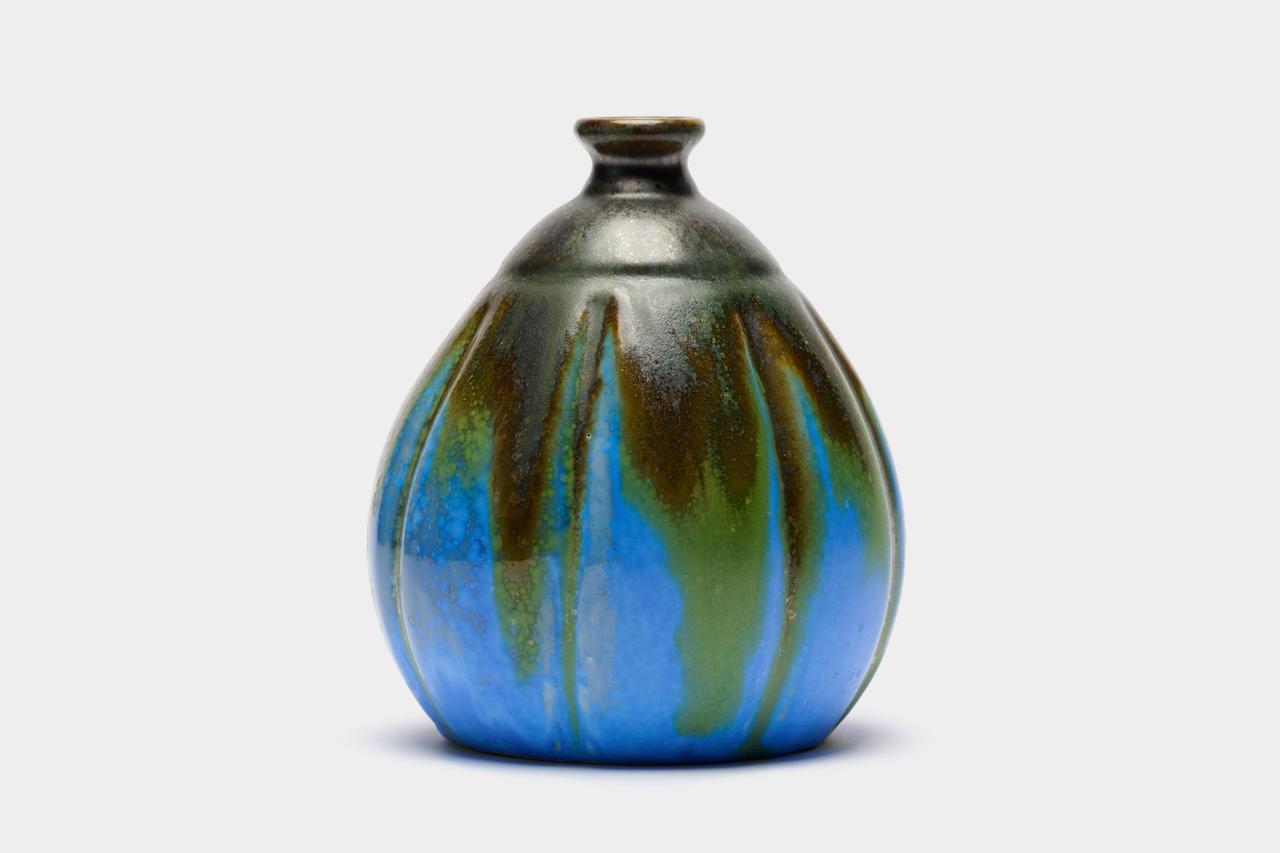
Jarrón Tango Art Déco - Βάζο - Γυαλί


Εναρκτήρια προσφορά
€ 1
Προσθήκη στα αγαπημένα σας για να λαμβάνετε ειδοποιήσεις δημοπρασίας.

Ειδικός
Επιλεγμένο από Michel Karis
Ιστορικός τέχνης με εκτεταμένη εμπειρία σε πολλά οίκους δημοπρασιών αρχαιοτήτων.
Εκτιμήστε € 150 - € 200
Προστασία Αγοραστή Catawiki
Η πληρωμή σας είναι ασφαλής μαζί μας μέχρι να παραλάβετε το αντικείμενό σας.Προβολή λεπτομερειών
Trustpilot 4.4 | 143362 κριτικών
Βαθμολογήθηκε με Άριστα στο Trustpilot.
Περιγραφή από τον πωλητή
Βάζο Tango Art Déco από γυαλί καλλιτεχνικό Bohemian. Αποπνέει φως και χαρά.
Παρουσιάζω αυτό το βάζο Tango της περιόδου Art Déco, φτιαγμένο από γυαλί Bohemian τέχνης. Οπτικά, ο επιρριπτικός διακοσμητικός σχεδιασμός αυτού του κομματιού θυμίζει τη γλώσσα σύνθεσης της Ausführung 166 του Lötz/Loetz: σώμα μονοχρωματικό, κλωστή γυαλιού εφαρμοσμένη και ανεξάρτητα καμπιόνοι γυάλινοι εφαρμοσμένοι άμεσα πάνω στο σώμα.
Το Tango Glass χαρακτηρίζεται από τη χρήση μάζων γυαλιού έντονου χρώματος και χρωματικούς αντίθετους μέσω διακοσμητικών στοιχείων εφαρμοσμένων—άκρες, κλωστές, κουμπιά ή καμπιόνοι—ενώ το κομμάτι παραμένει ακόμα λαμπερό, σε πλαστικό 상태.
ΠΕΡΙΓΡΑΦΗ:
Το βάζο είναι χειροποίητο με φούσκωμα, όπως μαρτυρεί η παρουσία φυσαλίδων αέρα συνεπών με την τεχνολογία της εποχής.
Ξεχωρίζει για την ανοιχτή, αψιδωτή και πλήρη γραμμή του, με ευρύ στόμιό περίπου 14 εκ που ανοίγει τολμηρά πάνω σε έναν κοντό και κομψά στενωπό λαιμό. Από εκεί, το σώμα αναπτύσσεται σε μια ελκυστική μορφή σταγόνας αντίστροφης, συμπαγής και με χαμηλή βάση, χαρίζοντάς του σταθερή και έντονα γλυπτική παρουσία.
Το κομμάτι ζει από τη αντίθεση μεταξύ της έντασης του κίτρινου γυαλιού και των μπλε διακοσμητικών στοιχείων, τα οποία δομούν οπτικά τον όγκο μέσω μίας οριζόντιας ζώνης από εφαρμοσμένο γυαλί και μιας διαδοχής ανυψωμένων καμπιονιών. Αυτά τα στοιχεία προσφέρουν κιναιτικό ρυθμό γεωμετρίας στην ρευστότητα της μορφής που φουσκώνει.
PONTIL & ΑΤΡΙΒΟΥΤΙΟΝ
Η βάση διατηρεί το στίγμα του αρχικού ρωγμικού pontil (rough pontil mark), ένα χαρακτηριστικό απόηχο της χειροποίητης διαδικασίας κατασκευής που αυτό το κομμάτι διατηρεί, με ακανόνιστο περίγραμμα και τραχύτητα υφής, χαρακτηριστικά ενός pontil όχι πλήρως γυαλισμένου.
Το κομμάτι θα μπορούσε να τοποθετηθεί εντός του παραγωγικού πεδίου κατασκευαστών Bohemian όπως Welz, Kralik, Rückl ή Rindskopf· ωστόσο, δεν θα ήταν αυστηρό ή έντιμο να γίνει συγκεκριμένη απόδοση, καθώς ένα σημαντικό μέρος αυτής της παραγωγής δεν φέρει υπογραφή ή αναγνωριστικό σήμα. Ούτε η φύση του pontil επιτρέπει από μόνη της να προσδιοριστεί απόδοση, διότι εντός της ίδιας βιομηχανίας μπορεί να βρεθούν κομμάτια με pontiles τόσο τραχείς όσο και γυαλισμένους.
Μεγάλο μέρος γυαλιού που παρήχθη κατά την περίοδο αυτή δεν μπορεί αυτή τη στιγμή να αποδοθεί αξιόπιστα σε συγκεκριμένο κατασκευαστή, λόγω απώλειας αρχείων, βιβλίων προτύπων και βιομηχανικής τεκμηρίωσης, καθώς και της τρέχουσας άγνοιας για την ταυτότητα ορισμένων βιομηχανιών γυαλιού.
ΑΝΑΦΕΣΗ: Περίπου 1920-1930 (Μεσοπολεμική περίοδο).
ΔΙΑΣΤΑΣΕΙΣ:
Ύψος: 20 εκ
Διάμετρος στόματος: 13,5 εκ
Μέγιστη διάμετρος σώματος: 16 εκ
Διάμετρος βάσης: 9 εκ
ΚΑΤΑΣΤΑΣΗ:
Εξαιρετικό, χωρίς ρωγμές ή τριξίματα. Διατηρεί μόνο μια πατίνα εδραίωσης και μικρές ενδείξεις ιστορικής τριβής συνεπείς με την ηλικία του.
ΠΑΡΑΡΤΗΜΑΤΙΚΕΣ ΣΗΜΕΙΩΣΕΙΣ:
** Οι φωτογραφίες αποτελούν μέρος της περιγραφής.
** Οι μετρήσεις και το τελικό βάρος που αναφέρονται αντιστοιχούν στη διαμόρφωση ενός ασφαλούς συσκευασίας, απαραίτητης για τη σωστή προστασία αυτού του κομματιού κατά τη μεταφορά.
::::::::::::::::::::::::::::::::: ΑΓΓΛΙΚΑ :::::::::::::::::::::::::::::::::
Art Deco Tango vase in Bohemian art glass. ca. 1920–1930. Inspired by the decorative language of Lötz/Loetz Ausführung 166.
I present this Tango vase from the Art Deco period, made of Bohemian art glass that radiates light and joy. Visually, the applied decoration of this piece recalls the compositional language of Lötz/Loetz Ausführung 166: monochrome body, applied glass thread and independent glass cabochons applied directly onto the body.
Tango Glass is characterized by the use of intensely colored glass masses and chromatic contrasts produced by means of applied decorative elements—rims, threads, buttons or cabochons—while the piece is still incandescent, in a plastic state.
DESCRIPTION:
The vase is handcrafted by blowing, as evidenced by the presence of air seeds consistent with the technology of the period.
It stands out for its bold and full flared silhouette, with a wide mouth of approximately 14 cm that opens audaciously over a short and elegantly narrowed neck. From there, the body develops into a suggestive inverted teardrop shape, massive and with a low base, giving it a stable and distinctly sculptural presence.
The piece lives from the contrast between the intensity of the yellow glass and the blue decorative elements, which visually structure the volume through a horizontal band of applied glass and a succession of raised cabochons. These elements provide a marked geometric rhythm to the fluidity of the blown form.
PONTIL & ATTRIBUTION
The base preserves the original fracture pontil mark (rough pontil mark), a characteristic vestige of the artisanal manufacturing process that this piece preserves, showing an irregular outline and rough texture, characteristic of a not completely polished pontil.
The piece could be situated within the production sphere of Bohemian manufacturers such as Welz, Kralik, Rückl or Rindskopf; however, it would not be rigorous or honest to make a specific attribution, since an important part of this production lacks a signature or identifying mark. Nor does the nature of the pontil alone allow an attribution to be established, since within the same manufactory pieces with both rough and polished pontils can be found.
Much of the glass produced during this period cannot currently be reliably attributed to a specific manufacturer, due to the loss of records, pattern books and industrial documentation, as well as the current lack of knowledge regarding the identity of certain glassworks.
DATING: Circa 1920–1930 (Interwar Period).
DIMENSIONS:
Height: 20 cm
Mouth diameter: 13.5 cm
Maximum body diameter: 16 cm
Base diameter: 9 cm
CONDITION:
Excellent, with no cracks or chips. It presents only a patina from historical settling and slight signs of historical friction consistent with its age.
ADDITIONAL NOTES:
• The photographs form part of the description.
• The final measurements and weight indicated correspond to the configuration of secure packaging, which is essential to ensure the proper protection of this piece during transport.
Λεπτομέρειες
Εποχή
1900-2000
Συγκεκριμένη περιοχή καταγωγής
Bohemia
Αριθμός αντικειμένων
1
Χώρα
Τσεχία
Σχεδιαστής/Καλλιτέχνης/Δημιουργός
Jarrón Tango Art Déco
Υλικό
Γυαλί
Style
Αρ Ντεκό
Χρώμα
Κίτρινο, Μπλε
Κατάσταση
Excellent condition: barely used with minimal signs of wear
Height
20 cm
Width
16 cm
Depth
20 cm
Estimated period
1920-1930
Πωλήθηκε από τον/-ην