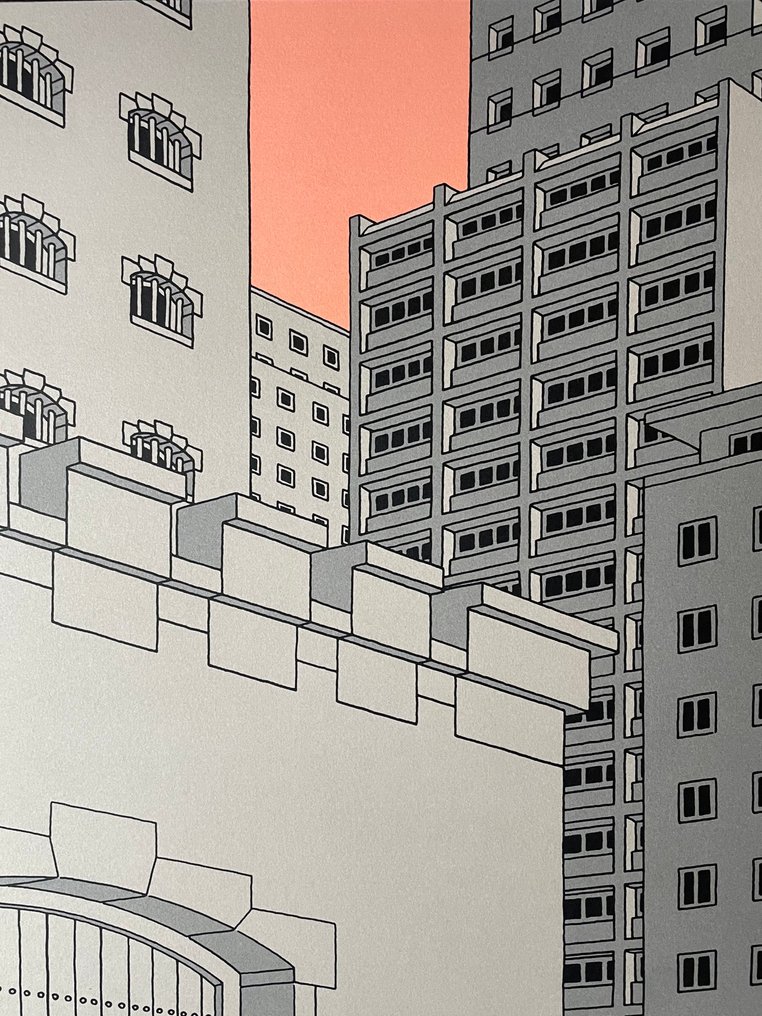
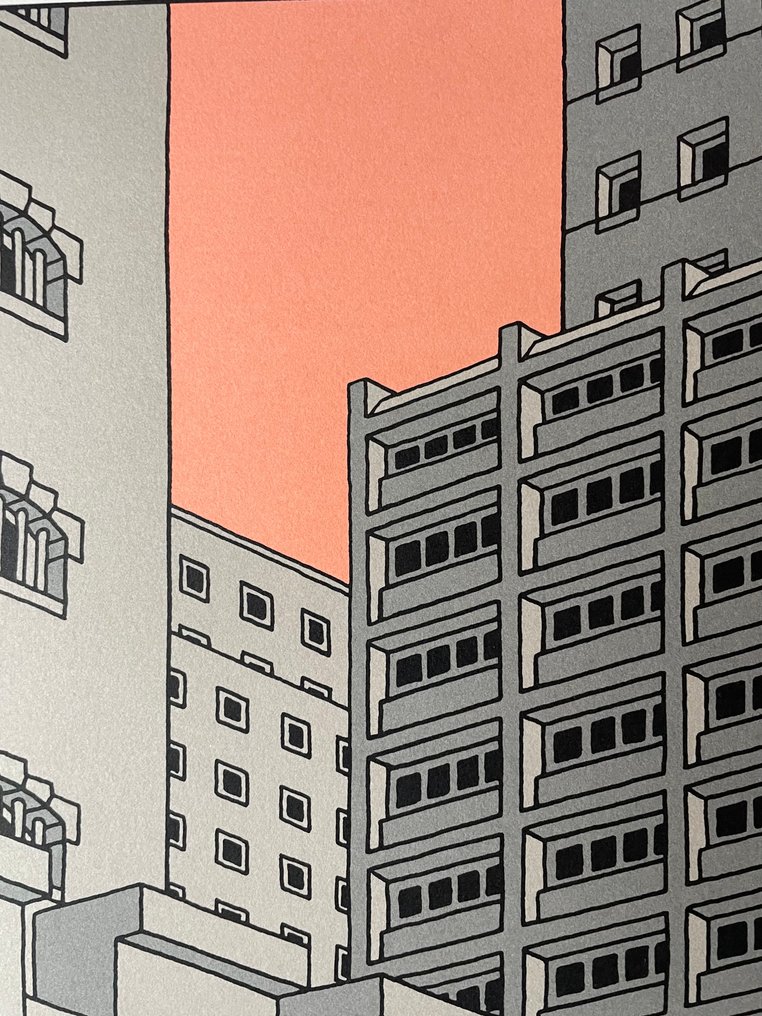
Joost Swarte - Eindelijk vrijheid - Silkscreen ** HANDSIGNED+COA **



02
ημέρες
09
ώρες
50
λεπτά
29
δευτερόλεπτα
Εναρκτήρια προσφορά
€ 1
Τιμή επιφύλαξης δεν επιτεύχθηκε

Ειδικός
Επιλεγμένο από Juan Antonio Rodríguez
Οκτώ χρόνια εμπειρίας ως εκτιμητής στην Balclis, Βαρκελώνη, ειδικός σε αφίσες.
Εκτιμήστε € 150 - € 200
Δεν υποβλήθηκαν προσφορές
Προστασία Αγοραστή Catawiki
Η πληρωμή σας είναι ασφαλής μαζί μας μέχρι να παραλάβετε το αντικείμενό σας.Προβολή λεπτομερειών
Trustpilot 4.4 | 144785 κριτικών
Βαθμολογήθηκε με Άριστα στο Trustpilot.
Η μεταξοτυπία «Eindelijk vrijheid» του Joost Swarte, του 1988, έχει διαστάσεις 70 × 50 εκ., είναι υπογεγραμμένη από τον καλλιτέχνη, τυπωμένη σε βαμβακερό χαρτί vellum 300 g/m² και βρίσκεται σε εξαιρετική κατάσταση, ενώ συνοδεύεται από πιστοποιητικό γνησιότητας.
Περίληψη με τη βοήθεια τεχνητής νοημοσύνης
Περιγραφή από τον πωλητή
Στερεογραφία του Joost Swarte (*)
Τίτλος: “Τελικά ελευθερία”.
Ανώτερης ποιότητας εκτύπωση σε χαρτί vellum από 87% βαμβάκι υψηλής Grammage (300 g/m2).
Υπογεγραμμένο με το χέρι από τον καλλιτέχνη.
Συμπεριλαμβάνει Πιστοποιητικό Αυθεντικότητας (COA).
Ειδικές προδιαγραφές:
Διαστάσεις: 70 x 50 εκ.
Έτος: 1988
Εκδότης: Atelier Swarte, Χάαρλεμ.
Κατάσταση: Εξαιρετική (αυτό το έργο δεν έχει ποτέ πλαστικοποιηθεί ή εκτεθεί, και διατηρείται πάντα σε επαγγελματική φάκελο τέχνης, επομένως προσφέρεται σε τέλεια κατάσταση).
Προέλευση: Ιδιωτική Συλλογή.
Το έργο θα μετακινηθεί και θα πακεταριστεί προσεκτικά σε χαρτοκιβώτιο ενισχυμένο με χαρτόνι. Η αποστολή θα είναι πιστοποιημένη με αριθμό παρακολούθησης (UPS / DPD / DHL / FedEx)
Η αποστολή θα συμπεριλαμβάνει επίσης ασφάλεια μεταφοράς με την πλήρη αποζημίωση της τελικής αξίας του έργου σε περίπτωση απώλειας ή ζημιάς, χωρίς κόστος για τον αγοραστή.
(*) Ο Joost Swarte, γεννημένος στις 24 Δεκεμβρίου 1947 στο Heemstede, είναι ένας από τους πιο διάσημους σκιτσογράφους κόμικ της Ολλανδίας. Σπούδασε στη Σχολή Σχεδίασης του Eindhoven και άρχισε να δημοσιεύει στο δικό του περιοδικό Modern Papier. Δεν περιορίστηκε μόνο στο κόμικ, καθώς έχει διακριθεί ως επιτυχημένος σχεδιαστής, αρχιτέκτονας και γελοιογραφιστής βιτρό, πάντα αναγνωρίσιμο για τη σαφή γραμμή του. Ως συνιδιοκτήτης του Εκδοτικού Οίκου Oog & Blik είναι υπεύθυνος για το σχέδιο πολλών ολλανδικών βιβλίων που έχουν βραβευτεί. Ήταν ένας από τους ιδρυτές των Διεθνών Ημερών της Έντεπης Αφήγησης της Haarlem, Ολλανδία, και έχει αναδειχθεί ως υπερασπιστής των κόμικς στον κόσμο της τέχνης.
Α certainly, Joost Swarte is one of those emblematic comic artists of contemporary comics; his style appears to resemble Hergé and his creations, and it makes sense because nothing better to guarantee the success of characters and stories than looking attractive with pre-existing models. In this sense, Swarte, who still lives today, was born in 1947, is not a contemporary of Hergé and his creations originate with a gap of a couple of decades, Tintin being already a fully consolidated product.
Swarte creates some of his characters with certain aesthetic similarities to what Hergé offered, and also gives some of them an adventure story, perhaps less sophisticated than Tintin, but which allowed, as a veiled objective of many 20th-century cartoonists, to transport children, even just with their imagination, to latitudes that would be hard to visit in reality.
The distinctive value of this brilliant Dutch draftsman, which he particularly impresses in his drawings, is that his academic base is industrial design, and that makes the composition of his panels give more strength to the characters, by the background, furniture and landscapes that compose it. He does not draw to build a story, but his drawings are the story itself, his characters are more credible, fictionally speaking, because his panels have great expressive richness.
That academic background is an investment with which Swarte gifts us the view; it is as if he wants to return to designer mode from time to time; if he has to draw a machine, it is not a simple object, it is quite the opposite, he tries to sophisticated it, a catalog drawn and in full color of products of a furniture store, tools, machines, cars, buildings and even fashion.
When he has the opportunity to draw them, his mechanisms come to life, as if it were the sketch or prototype of something that can become real, of something that, following his instructions, could be put into operation. I don’t know what mechanical knowledge Swarte might have, but surely his designs do not stay in mere reverie.
And then there are his characters; let us start from the reading of his comic strips, which are somewhat erratic, surreal, perhaps eccentric, but certain characters are as surreal as they are humanized animals, dogs on two legs dressed as humans, or animals speaking and reasoning perfectly like you and me.
It is no surprise that some of his most famous characters are difficult to define; Jopo de Pojo is an energetic young man, without malice, who gets into trouble without really intending to, all fruit of double meanings, misinterpretations, mistakes, coincidences… The iconic Jopo de Pojo is a boy who could be of black race, who could be a monkey and who has a crest that is difficult to fit into an animal figure.
Another of his characters, this one entirely human, is Anton Makassar, a kind of crazy investigator (designer) who evokes, in a certain way, Professor Bacterio (Mortadelo y Filemón) from our renowned and not sufficiently recognized Ibáñez (needs an important prize in life and it does not come).
We also have an interesting transgressive element in Swarte, with the bulk of his creation and maturity in the 70s and 80s, he transmits a Central European culture where there was no hypocrisy in sex and pornography; in this sense, his characters have no shame or problem appearing nude (full nudity) and with their bed scenes, without this being understood as incitement to promiscuity toward the youth.
And it is true, because nothing is worse for sexual depravity than wanting to see something pernicious in something as natural as our body; those repressions are what created many sexual predators throughout our recent history.
From Joost Swarte there is an aspect that stands out in any biography you see of him, a dimension that goes beyond the cartoonist and which pointed to the beginning; he had the opportunity to design and to execute for real, since he designed the Toneelschuur theater in Haarlem. Haarlem (Netherlands) is one of those cities, do not ask me why, personal reasons, to which I would like to go someday and I fear I will not reach. His design is, at least, curious and I perceive it as a continuation of his comics. He has also designed apartment buildings.
Swarte is more, much more than his slice of cartoonist; his designs span a bit of everything: stained glass, murals, posters and placards (which today are true collectible objects), playing cards, carpets, wrapping paper… Undoubtedly a necessary draftsman to conceive the evolution of contemporary comics.
Ιστορία πωλητή
Μετάφραση από Google ΜετάφρασηΣτερεογραφία του Joost Swarte (*)
Τίτλος: “Τελικά ελευθερία”.
Ανώτερης ποιότητας εκτύπωση σε χαρτί vellum από 87% βαμβάκι υψηλής Grammage (300 g/m2).
Υπογεγραμμένο με το χέρι από τον καλλιτέχνη.
Συμπεριλαμβάνει Πιστοποιητικό Αυθεντικότητας (COA).
Ειδικές προδιαγραφές:
Διαστάσεις: 70 x 50 εκ.
Έτος: 1988
Εκδότης: Atelier Swarte, Χάαρλεμ.
Κατάσταση: Εξαιρετική (αυτό το έργο δεν έχει ποτέ πλαστικοποιηθεί ή εκτεθεί, και διατηρείται πάντα σε επαγγελματική φάκελο τέχνης, επομένως προσφέρεται σε τέλεια κατάσταση).
Προέλευση: Ιδιωτική Συλλογή.
Το έργο θα μετακινηθεί και θα πακεταριστεί προσεκτικά σε χαρτοκιβώτιο ενισχυμένο με χαρτόνι. Η αποστολή θα είναι πιστοποιημένη με αριθμό παρακολούθησης (UPS / DPD / DHL / FedEx)
Η αποστολή θα συμπεριλαμβάνει επίσης ασφάλεια μεταφοράς με την πλήρη αποζημίωση της τελικής αξίας του έργου σε περίπτωση απώλειας ή ζημιάς, χωρίς κόστος για τον αγοραστή.
(*) Ο Joost Swarte, γεννημένος στις 24 Δεκεμβρίου 1947 στο Heemstede, είναι ένας από τους πιο διάσημους σκιτσογράφους κόμικ της Ολλανδίας. Σπούδασε στη Σχολή Σχεδίασης του Eindhoven και άρχισε να δημοσιεύει στο δικό του περιοδικό Modern Papier. Δεν περιορίστηκε μόνο στο κόμικ, καθώς έχει διακριθεί ως επιτυχημένος σχεδιαστής, αρχιτέκτονας και γελοιογραφιστής βιτρό, πάντα αναγνωρίσιμο για τη σαφή γραμμή του. Ως συνιδιοκτήτης του Εκδοτικού Οίκου Oog & Blik είναι υπεύθυνος για το σχέδιο πολλών ολλανδικών βιβλίων που έχουν βραβευτεί. Ήταν ένας από τους ιδρυτές των Διεθνών Ημερών της Έντεπης Αφήγησης της Haarlem, Ολλανδία, και έχει αναδειχθεί ως υπερασπιστής των κόμικς στον κόσμο της τέχνης.
Α certainly, Joost Swarte is one of those emblematic comic artists of contemporary comics; his style appears to resemble Hergé and his creations, and it makes sense because nothing better to guarantee the success of characters and stories than looking attractive with pre-existing models. In this sense, Swarte, who still lives today, was born in 1947, is not a contemporary of Hergé and his creations originate with a gap of a couple of decades, Tintin being already a fully consolidated product.
Swarte creates some of his characters with certain aesthetic similarities to what Hergé offered, and also gives some of them an adventure story, perhaps less sophisticated than Tintin, but which allowed, as a veiled objective of many 20th-century cartoonists, to transport children, even just with their imagination, to latitudes that would be hard to visit in reality.
The distinctive value of this brilliant Dutch draftsman, which he particularly impresses in his drawings, is that his academic base is industrial design, and that makes the composition of his panels give more strength to the characters, by the background, furniture and landscapes that compose it. He does not draw to build a story, but his drawings are the story itself, his characters are more credible, fictionally speaking, because his panels have great expressive richness.
That academic background is an investment with which Swarte gifts us the view; it is as if he wants to return to designer mode from time to time; if he has to draw a machine, it is not a simple object, it is quite the opposite, he tries to sophisticated it, a catalog drawn and in full color of products of a furniture store, tools, machines, cars, buildings and even fashion.
When he has the opportunity to draw them, his mechanisms come to life, as if it were the sketch or prototype of something that can become real, of something that, following his instructions, could be put into operation. I don’t know what mechanical knowledge Swarte might have, but surely his designs do not stay in mere reverie.
And then there are his characters; let us start from the reading of his comic strips, which are somewhat erratic, surreal, perhaps eccentric, but certain characters are as surreal as they are humanized animals, dogs on two legs dressed as humans, or animals speaking and reasoning perfectly like you and me.
It is no surprise that some of his most famous characters are difficult to define; Jopo de Pojo is an energetic young man, without malice, who gets into trouble without really intending to, all fruit of double meanings, misinterpretations, mistakes, coincidences… The iconic Jopo de Pojo is a boy who could be of black race, who could be a monkey and who has a crest that is difficult to fit into an animal figure.
Another of his characters, this one entirely human, is Anton Makassar, a kind of crazy investigator (designer) who evokes, in a certain way, Professor Bacterio (Mortadelo y Filemón) from our renowned and not sufficiently recognized Ibáñez (needs an important prize in life and it does not come).
We also have an interesting transgressive element in Swarte, with the bulk of his creation and maturity in the 70s and 80s, he transmits a Central European culture where there was no hypocrisy in sex and pornography; in this sense, his characters have no shame or problem appearing nude (full nudity) and with their bed scenes, without this being understood as incitement to promiscuity toward the youth.
And it is true, because nothing is worse for sexual depravity than wanting to see something pernicious in something as natural as our body; those repressions are what created many sexual predators throughout our recent history.
From Joost Swarte there is an aspect that stands out in any biography you see of him, a dimension that goes beyond the cartoonist and which pointed to the beginning; he had the opportunity to design and to execute for real, since he designed the Toneelschuur theater in Haarlem. Haarlem (Netherlands) is one of those cities, do not ask me why, personal reasons, to which I would like to go someday and I fear I will not reach. His design is, at least, curious and I perceive it as a continuation of his comics. He has also designed apartment buildings.
Swarte is more, much more than his slice of cartoonist; his designs span a bit of everything: stained glass, murals, posters and placards (which today are true collectible objects), playing cards, carpets, wrapping paper… Undoubtedly a necessary draftsman to conceive the evolution of contemporary comics.
Ιστορία πωλητή
Μετάφραση από Google ΜετάφρασηΛεπτομέρειες
Εποχή
1900-2000
Designer/artist
Joost Swarte
Poster title
Eindelijk vrijheid - Silkscreen ** HANDSIGNED+COA **
Θέμα
Πρωτότυπα έργα τέχνης, Τέχνη
Χώρα
Βέλγιο
Κατάσταση
A (excellent - mint condition)
Height
70 cm
Width
50 cm
Πωλήθηκε από τον/-ην