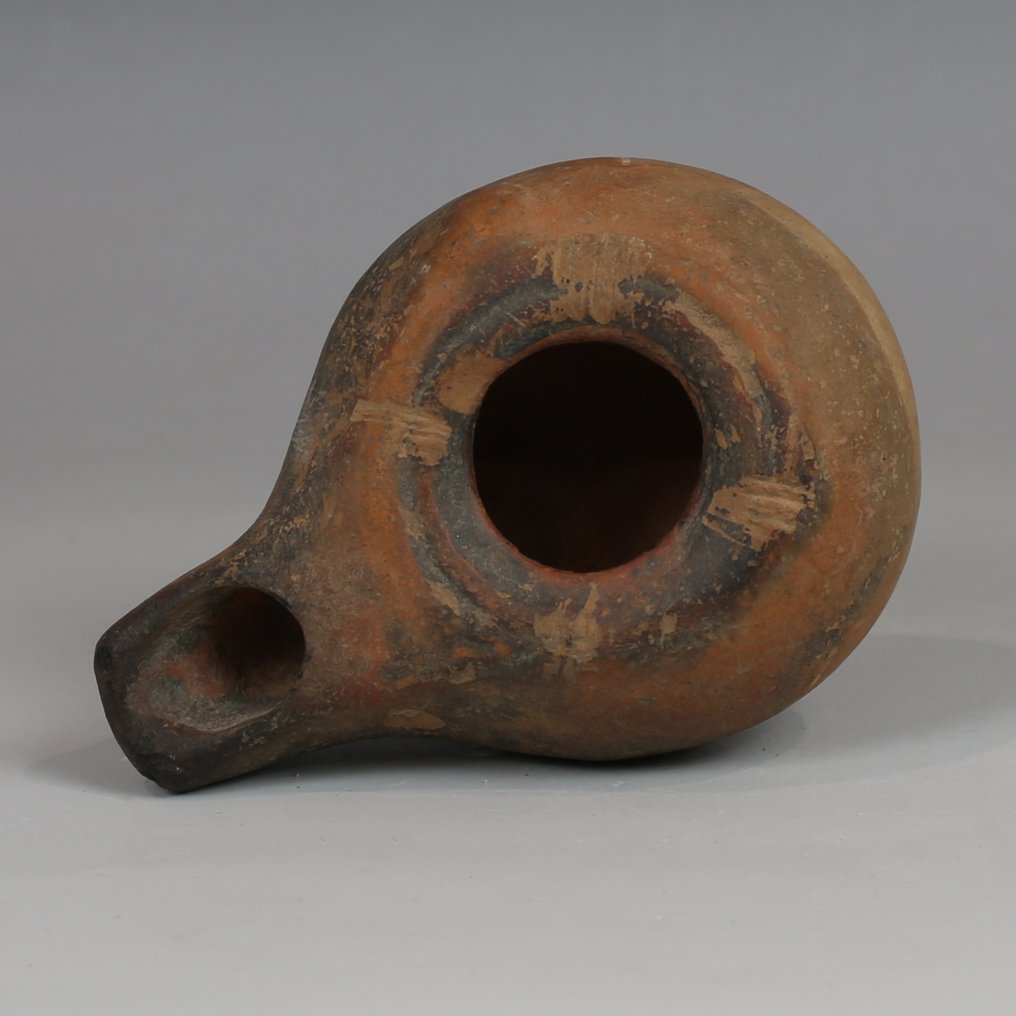
Αρχαία Ελληνική Αγγειοπλαστική Λάμπα λαδιού (χωρίς τιμή ασφαλείας)


02
ημέρες
06
ώρες
34
λεπτά
00
δευτερόλεπτα
Τρέχουσα προσφορά
€ 71
χωρίς τιμή ασφαλείας

Ειδικός
Επιλεγμένο από Ruth Garrido Vila
Διηύθυνε το Μουσείο Συλλογής Ifergan, ειδικευμένη στην Φοινικική αρχαιολογία.
Εκτιμήστε € 330 - € 400
25 άλλα άτομα παρακολουθούν αυτό το αντικείμενο
 Πλειοδότης 4842 Πλειοδότης 4842 | 71 € | |
|---|---|---|
 Πλειοδότης 1916 Πλειοδότης 1916 | 66 € | |
| Πλειοδότης 4842 | 61 € | |
Προστασία Αγοραστή Catawiki
Η πληρωμή σας είναι ασφαλής μαζί μας μέχρι να παραλάβετε το αντικείμενό σας.Προβολή λεπτομερειών
Trustpilot 4.4 | 121899 κριτικών
Βαθμολογήθηκε με Άριστα στο Trustpilot.
Λυχνία λαδιού από πηλό ελληνικής αρχαιότητας, 4ος αιώνας π.Χ., σε καλή κατάσταση, από ιδιωτική ολλανδική συλλογή, με διαπιστευτήριο γνησιότητας και άδεια εξαγωγής ΕΕ.
Περίληψη με τη βοήθεια τεχνητής νοημοσύνης
Περιγραφή από τον πωλητή
ITEM: Oil lamp
MATERIAL: Pottery
CULTURE: Greek
PERIOD: 4th Century B.C
DIMENSIONS: 37 mm x 60 mm x 85 mm
CONDITION: Good condition
PROVENANCE: Ex Dutch private collection, acquired between 1980 - 1990
Comes with Certificate of Authenticity and European Union export license
If you bid outside European Union and win the item, we must request a new export license to your country and the shipment will delay between 3 - 5 weeks.
Greek oil lamps were essential household items in ancient Greece, providing light and illumination during the evening hours. These lamps were typically made from clay, although examples crafted from bronze or other metals also exist. Greek oil lamps consisted of a shallow, bowl-shaped reservoir for holding olive oil, which served as the fuel source, and a central spout or nozzle through which a wick could be inserted. The design of Greek oil lamps varied across different regions and time periods, with some featuring simple, utilitarian forms while others were elaborately decorated with ornate motifs and patterns.
The use of oil lamps in ancient Greece dates back to the Bronze Age, but they became increasingly widespread and standardized during the Classical and Hellenistic periods. Oil lamps were used in both public and private spaces, including homes, temples, workshops, and public buildings. In addition to providing illumination, oil lamps played a role in religious rituals and ceremonies, where they were used to light sacred spaces, altars, and shrines as offerings to the gods.
Greek oil lamps are valuable artifacts for archaeologists and historians studying ancient Greek daily life, technology, and material culture. The examination of lamp typologies, manufacturing techniques, and decorative styles can provide insights into ancient Greek craftsmanship, artistic expression, and social customs.
Ιστορία πωλητή
Το Antiquarian σας προσφέρει αρχαία τέχνη και αρχαία νομίσματα. Κύριος στόχος μας είναι να προσφέρουμε την υψηλότερη ποιότητα στην καλύτερη τιμή, σεβόμενοι και αυστηρά τη νομοθεσία περί προστασίας της πολιτιστικής κληρονομιάς και τους κανόνες πολιτιστικής κληρονομιάς της UNESCO. Επομένως, όλα τα κομμάτια που δημοσιεύονται προέρχονται από ιδιωτικές συλλογές στις οποίες μπορεί να ελεγχθεί η προέλευση ή από διεθνείς δημοπρασίες. Όλες οι αρχαιότητες και τα νομίσματά μας συνοδεύονται από το Πιστοποιητικό γνησιότητάς τους. Έχουμε πολιτική επιστροφής 90 ημερών χωρίς αμφισβήτηση. Στο Your Antiquarian δεσμευόμαστε να βοηθάμε τις μειονεκτούσες ομάδες και για το λόγο αυτό ένα μέρος κάθε αγοράς δωρίζεται σε φιλανθρωπικά ιδρύματα για να βοηθήσουμε άτομα που έχουν ανάγκη.
Μετάφραση από Google ΜετάφρασηITEM: Oil lamp
MATERIAL: Pottery
CULTURE: Greek
PERIOD: 4th Century B.C
DIMENSIONS: 37 mm x 60 mm x 85 mm
CONDITION: Good condition
PROVENANCE: Ex Dutch private collection, acquired between 1980 - 1990
Comes with Certificate of Authenticity and European Union export license
If you bid outside European Union and win the item, we must request a new export license to your country and the shipment will delay between 3 - 5 weeks.
Greek oil lamps were essential household items in ancient Greece, providing light and illumination during the evening hours. These lamps were typically made from clay, although examples crafted from bronze or other metals also exist. Greek oil lamps consisted of a shallow, bowl-shaped reservoir for holding olive oil, which served as the fuel source, and a central spout or nozzle through which a wick could be inserted. The design of Greek oil lamps varied across different regions and time periods, with some featuring simple, utilitarian forms while others were elaborately decorated with ornate motifs and patterns.
The use of oil lamps in ancient Greece dates back to the Bronze Age, but they became increasingly widespread and standardized during the Classical and Hellenistic periods. Oil lamps were used in both public and private spaces, including homes, temples, workshops, and public buildings. In addition to providing illumination, oil lamps played a role in religious rituals and ceremonies, where they were used to light sacred spaces, altars, and shrines as offerings to the gods.
Greek oil lamps are valuable artifacts for archaeologists and historians studying ancient Greek daily life, technology, and material culture. The examination of lamp typologies, manufacturing techniques, and decorative styles can provide insights into ancient Greek craftsmanship, artistic expression, and social customs.
Ιστορία πωλητή
Το Antiquarian σας προσφέρει αρχαία τέχνη και αρχαία νομίσματα. Κύριος στόχος μας είναι να προσφέρουμε την υψηλότερη ποιότητα στην καλύτερη τιμή, σεβόμενοι και αυστηρά τη νομοθεσία περί προστασίας της πολιτιστικής κληρονομιάς και τους κανόνες πολιτιστικής κληρονομιάς της UNESCO. Επομένως, όλα τα κομμάτια που δημοσιεύονται προέρχονται από ιδιωτικές συλλογές στις οποίες μπορεί να ελεγχθεί η προέλευση ή από διεθνείς δημοπρασίες. Όλες οι αρχαιότητες και τα νομίσματά μας συνοδεύονται από το Πιστοποιητικό γνησιότητάς τους. Έχουμε πολιτική επιστροφής 90 ημερών χωρίς αμφισβήτηση. Στο Your Antiquarian δεσμευόμαστε να βοηθάμε τις μειονεκτούσες ομάδες και για το λόγο αυτό ένα μέρος κάθε αγοράς δωρίζεται σε φιλανθρωπικά ιδρύματα για να βοηθήσουμε άτομα που έχουν ανάγκη.
Μετάφραση από Google ΜετάφρασηΛεπτομέρειες
Πολιτισμός
Αρχαία Ελληνική
Αιώνες/χρονική περίοδος
4th Century B.C
Name of object
Oil lamp
Αποκτήθηκε από
Ιδιωτική συλλογή
Έτος απόκτησης
2025
Υλικό
Αγγειοπλαστική
Χώρα απόκτησης
Ολλανδία
Κατάσταση
Καλή
Προηγούμενος κάτοχος - αποκτήθηκε από
Αγορά αντικών
Προηγούμενος κάτοχος – έτος απόκτησης
1980
Προηγούμενος κάτοχος – χώρα απόκτησης
Ολλανδία
Βεβαιώνω ότι έχω αποκτήσει νόμιμα αυτό το αντικείμενο και ότι μου επιτρέπεται να το πουλήσω.
Ναι
Πωλήθηκε από τον/-ην
Αποποίηση ευθυνών
Ο πωλητής ενημερώθηκε από την Catawiki σχετικά με τις απαιτήσεις εγγράφων και εγγυάται τα εξής: - το αντικείμενο αποκτήθηκε νόμιμα - ο πωλητής έχει το δικαίωμα να πωλήσει ή/και να εξαγάγει το αντικείμενο, ανάλογα με την περίπτωση - ο πωλητής θα παράσχει τις απαραίτητες πληροφορίες προέλευσης και θα διευθετήσει τα απαιτούμενα έγγραφα και άδειες, κατά περίπτωση και σύμφωνα με τους τοπικούς νόμους - ο πωλητής θα ειδοποιήσει τον αγοραστή για τυχόν καθυστερήσεις στην έκδοση των αδειών. Υποβάλλοντας προσφορά, αναγνωρίζετε ότι ενδέχεται να απαιτούνται έγγραφα εισαγωγής ανάλογα με τη χώρα διαμονής σας και ότι η έκδοση των αδειών μπορεί να προκαλέσει καθυστερήσεις στην παράδοση του αντικειμένου σας.
Ο πωλητής ενημερώθηκε από την Catawiki σχετικά με τις απαιτήσεις εγγράφων και εγγυάται τα εξής: - το αντικείμενο αποκτήθηκε νόμιμα - ο πωλητής έχει το δικαίωμα να πωλήσει ή/και να εξαγάγει το αντικείμενο, ανάλογα με την περίπτωση - ο πωλητής θα παράσχει τις απαραίτητες πληροφορίες προέλευσης και θα διευθετήσει τα απαιτούμενα έγγραφα και άδειες, κατά περίπτωση και σύμφωνα με τους τοπικούς νόμους - ο πωλητής θα ειδοποιήσει τον αγοραστή για τυχόν καθυστερήσεις στην έκδοση των αδειών. Υποβάλλοντας προσφορά, αναγνωρίζετε ότι ενδέχεται να απαιτούνται έγγραφα εισαγωγής ανάλογα με τη χώρα διαμονής σας και ότι η έκδοση των αδειών μπορεί να προκαλέσει καθυστερήσεις στην παράδοση του αντικειμένου σας.
