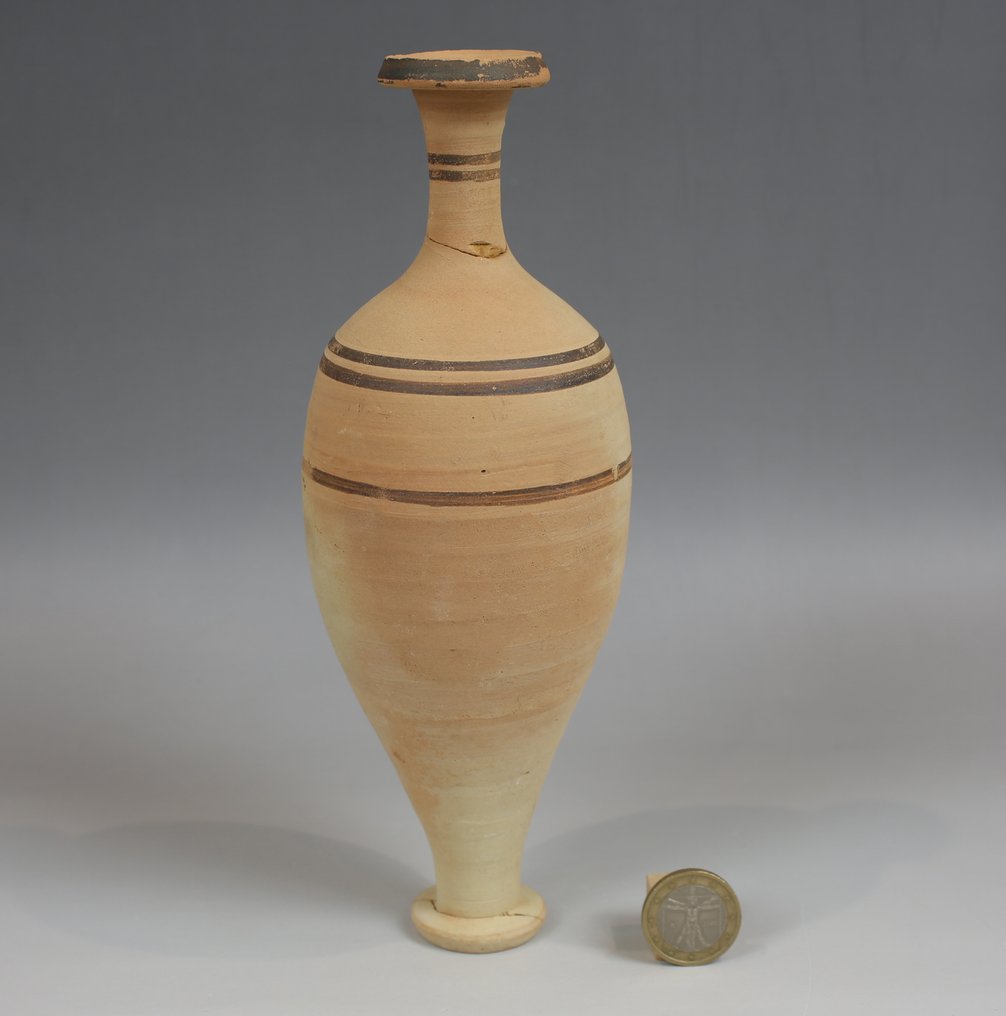
Αρχαία Ελληνική Αγγειοπλαστική Unguentarium, ΤΕΡΑΣΤΙΟΣ (χωρίς τιμή ασφαλείας)



02
ημέρες
06
ώρες
26
λεπτά
29
δευτερόλεπτα
Τρέχουσα προσφορά
€ 160
χωρίς τιμή ασφαλείας

Ειδικός
Επιλεγμένο από Ruth Garrido Vila
Διηύθυνε το Μουσείο Συλλογής Ifergan, ειδικευμένη στην Φοινικική αρχαιολογία.
Εκτιμήστε € 400 - € 500
26 άλλα άτομα παρακολουθούν αυτό το αντικείμενο
 Πλειοδότης 6655 Πλειοδότης 6655 | 160 € | |
|---|---|---|
 Πλειοδότης 5405 Πλειοδότης 5405 | 150 € | |
 Πλειοδότης 4464 Πλειοδότης 4464 | 150 € | |
Προστασία Αγοραστή Catawiki
Η πληρωμή σας είναι ασφαλής μαζί μας μέχρι να παραλάβετε το αντικείμενό σας.Προβολή λεπτομερειών
Trustpilot 4.4 | 121899 κριτικών
Βαθμολογήθηκε με Άριστα στο Trustpilot.
Ελληνιστικό αγγειοπλαστικό αγγείον άρωσης από Ελληνική κουλτούρα, 3ος αιώνας π.Χ., 206 mm × 77 mm, σε καλή κατάσταση με επισκευές, προέλευση Ex γερμανική ιδιωτική συλλογή (F.B.), αποκτηθέν σε ευρωπαϊκούς πλειστηριασμούς αρχαιοτήτων μεταξύ 2000–2009, περιλαμβάνει πιστοποιητικό αυθεντικότητας και άδεια εξαγωγής ΕΕ.
Περίληψη με τη βοήθεια τεχνητής νοημοσύνης
Περιγραφή από τον πωλητή
ITEM: Unguentarium
MATERIAL: Pottery
CULTURE: Greek
PERIOD: 3rd Century B.C
DIMENSIONS: 206 mm x 77 mm
CONDITION: Good condition, repaired
PROVENANCE: Ex German private collection, F.B., acquired in European antiquities auctions between 2000 - 2009.
Hellenistic pottery refers to ceramic artifacts produced during the Hellenistic period, which spanned from the death of Alexander the Great in 323 BCE to the emergence of the Roman Empire in the 1st century BCE. This era witnessed a remarkable fusion of artistic influences from the Greek world, the Near East, and Egypt, leading to a diverse range of pottery styles and forms. Hellenistic pottery was characterized by its innovation and experimentation, often departing from the classical Greek aesthetics. Common decorative motifs included intricate painted designs, such as floral patterns, mythological scenes, and genre scenes, which reflected the eclectic nature of the period. Hellenistic pottery was also known for its production of utilitarian wares, such as cooking vessels, storage containers, and tableware, which were created in various shapes and sizes to meet the diverse needs of the time. The Hellenistic period's pottery not only served practical purposes but also acted as a canvas for artistic expression and cultural exchange.
One of the most notable developments in Hellenistic pottery was the emergence of three distinct regional styles: the Hellenistic Greek style, which retained some elements of classical Greek pottery but incorporated new elements; the Eastern Mediterranean style, heavily influenced by the rich artistic traditions of the Near East and Persia; and the Egyptian style, characterized by its colorful and intricate decoration.
Comes with Certificate of Authenticity and European Union export license
If you bid outside European Union and win the item, we must request a new export license to your country and the shipment will delay between 3 - 5 weeks
Ιστορία πωλητή
Το Antiquarian σας προσφέρει αρχαία τέχνη και αρχαία νομίσματα. Κύριος στόχος μας είναι να προσφέρουμε την υψηλότερη ποιότητα στην καλύτερη τιμή, σεβόμενοι και αυστηρά τη νομοθεσία περί προστασίας της πολιτιστικής κληρονομιάς και τους κανόνες πολιτιστικής κληρονομιάς της UNESCO. Επομένως, όλα τα κομμάτια που δημοσιεύονται προέρχονται από ιδιωτικές συλλογές στις οποίες μπορεί να ελεγχθεί η προέλευση ή από διεθνείς δημοπρασίες. Όλες οι αρχαιότητες και τα νομίσματά μας συνοδεύονται από το Πιστοποιητικό γνησιότητάς τους. Έχουμε πολιτική επιστροφής 90 ημερών χωρίς αμφισβήτηση. Στο Your Antiquarian δεσμευόμαστε να βοηθάμε τις μειονεκτούσες ομάδες και για το λόγο αυτό ένα μέρος κάθε αγοράς δωρίζεται σε φιλανθρωπικά ιδρύματα για να βοηθήσουμε άτομα που έχουν ανάγκη.
Μετάφραση από Google ΜετάφρασηITEM: Unguentarium
MATERIAL: Pottery
CULTURE: Greek
PERIOD: 3rd Century B.C
DIMENSIONS: 206 mm x 77 mm
CONDITION: Good condition, repaired
PROVENANCE: Ex German private collection, F.B., acquired in European antiquities auctions between 2000 - 2009.
Hellenistic pottery refers to ceramic artifacts produced during the Hellenistic period, which spanned from the death of Alexander the Great in 323 BCE to the emergence of the Roman Empire in the 1st century BCE. This era witnessed a remarkable fusion of artistic influences from the Greek world, the Near East, and Egypt, leading to a diverse range of pottery styles and forms. Hellenistic pottery was characterized by its innovation and experimentation, often departing from the classical Greek aesthetics. Common decorative motifs included intricate painted designs, such as floral patterns, mythological scenes, and genre scenes, which reflected the eclectic nature of the period. Hellenistic pottery was also known for its production of utilitarian wares, such as cooking vessels, storage containers, and tableware, which were created in various shapes and sizes to meet the diverse needs of the time. The Hellenistic period's pottery not only served practical purposes but also acted as a canvas for artistic expression and cultural exchange.
One of the most notable developments in Hellenistic pottery was the emergence of three distinct regional styles: the Hellenistic Greek style, which retained some elements of classical Greek pottery but incorporated new elements; the Eastern Mediterranean style, heavily influenced by the rich artistic traditions of the Near East and Persia; and the Egyptian style, characterized by its colorful and intricate decoration.
Comes with Certificate of Authenticity and European Union export license
If you bid outside European Union and win the item, we must request a new export license to your country and the shipment will delay between 3 - 5 weeks
Ιστορία πωλητή
Το Antiquarian σας προσφέρει αρχαία τέχνη και αρχαία νομίσματα. Κύριος στόχος μας είναι να προσφέρουμε την υψηλότερη ποιότητα στην καλύτερη τιμή, σεβόμενοι και αυστηρά τη νομοθεσία περί προστασίας της πολιτιστικής κληρονομιάς και τους κανόνες πολιτιστικής κληρονομιάς της UNESCO. Επομένως, όλα τα κομμάτια που δημοσιεύονται προέρχονται από ιδιωτικές συλλογές στις οποίες μπορεί να ελεγχθεί η προέλευση ή από διεθνείς δημοπρασίες. Όλες οι αρχαιότητες και τα νομίσματά μας συνοδεύονται από το Πιστοποιητικό γνησιότητάς τους. Έχουμε πολιτική επιστροφής 90 ημερών χωρίς αμφισβήτηση. Στο Your Antiquarian δεσμευόμαστε να βοηθάμε τις μειονεκτούσες ομάδες και για το λόγο αυτό ένα μέρος κάθε αγοράς δωρίζεται σε φιλανθρωπικά ιδρύματα για να βοηθήσουμε άτομα που έχουν ανάγκη.
Μετάφραση από Google ΜετάφρασηΛεπτομέρειες
Πολιτισμός
Αρχαία Ελληνική
Αιώνες/χρονική περίοδος
3rd Century B.C
Name of object
HUGE, Unguentarium
Αποκτήθηκε από
Ιδιωτική συλλογή
Έτος απόκτησης
2025
Υλικό
Αγγειοπλαστική
Χώρα απόκτησης
Γερμανία
Κατάσταση
Καλή
Προηγούμενος κάτοχος - αποκτήθηκε από
Αγορά αντικών
Προηγούμενος κάτοχος – έτος απόκτησης
1980
Προηγούμενος κάτοχος – χώρα απόκτησης
Γερμανία
Βεβαιώνω ότι έχω αποκτήσει νόμιμα αυτό το αντικείμενο και ότι μου επιτρέπεται να το πουλήσω.
Ναι
Πωλήθηκε από τον/-ην
Αποποίηση ευθυνών
Ο πωλητής ενημερώθηκε από την Catawiki σχετικά με τις απαιτήσεις εγγράφων και εγγυάται τα εξής: - το αντικείμενο αποκτήθηκε νόμιμα - ο πωλητής έχει το δικαίωμα να πωλήσει ή/και να εξαγάγει το αντικείμενο, ανάλογα με την περίπτωση - ο πωλητής θα παράσχει τις απαραίτητες πληροφορίες προέλευσης και θα διευθετήσει τα απαιτούμενα έγγραφα και άδειες, κατά περίπτωση και σύμφωνα με τους τοπικούς νόμους - ο πωλητής θα ειδοποιήσει τον αγοραστή για τυχόν καθυστερήσεις στην έκδοση των αδειών. Υποβάλλοντας προσφορά, αναγνωρίζετε ότι ενδέχεται να απαιτούνται έγγραφα εισαγωγής ανάλογα με τη χώρα διαμονής σας και ότι η έκδοση των αδειών μπορεί να προκαλέσει καθυστερήσεις στην παράδοση του αντικειμένου σας.
Ο πωλητής ενημερώθηκε από την Catawiki σχετικά με τις απαιτήσεις εγγράφων και εγγυάται τα εξής: - το αντικείμενο αποκτήθηκε νόμιμα - ο πωλητής έχει το δικαίωμα να πωλήσει ή/και να εξαγάγει το αντικείμενο, ανάλογα με την περίπτωση - ο πωλητής θα παράσχει τις απαραίτητες πληροφορίες προέλευσης και θα διευθετήσει τα απαιτούμενα έγγραφα και άδειες, κατά περίπτωση και σύμφωνα με τους τοπικούς νόμους - ο πωλητής θα ειδοποιήσει τον αγοραστή για τυχόν καθυστερήσεις στην έκδοση των αδειών. Υποβάλλοντας προσφορά, αναγνωρίζετε ότι ενδέχεται να απαιτούνται έγγραφα εισαγωγής ανάλογα με τη χώρα διαμονής σας και ότι η έκδοση των αδειών μπορεί να προκαλέσει καθυστερήσεις στην παράδοση του αντικειμένου σας.
