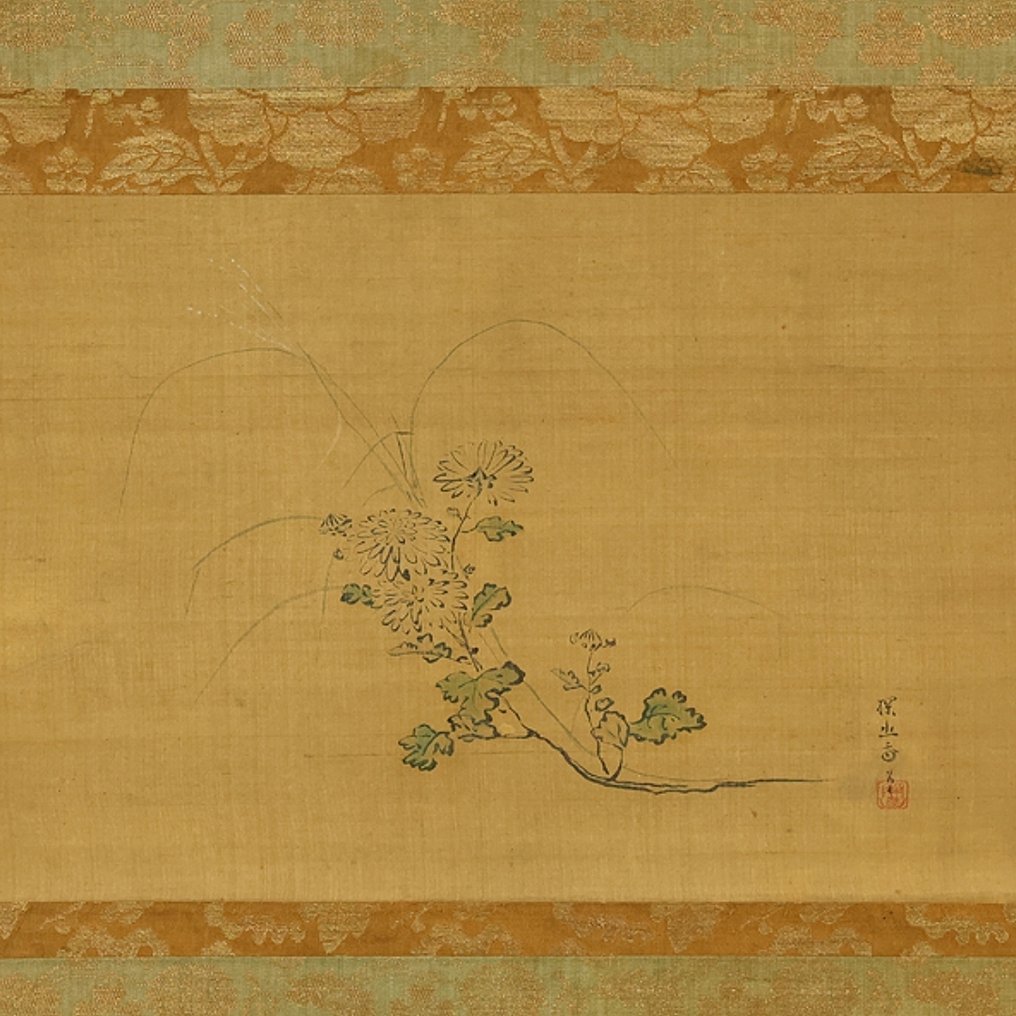
Wild Chrysanthemum - Beauty of Simplicity and Blank with Box - Attributed to Kano Tan'yū 狩野探幽 (1602-1674) - Ιαπωνία - Αρχές της περιόδου Edo (χωρίς τιμή ασφαλείας)


02
ημέρες
10
ώρες
13
λεπτά
08
δευτερόλεπτα
Τρέχουσα προσφορά
€ 55
χωρίς τιμή ασφαλείας

Ειδικός
Επιλεγμένο από Giovanni Bottero
Έχει μεταπτυχιακό στην Ιστορία Ιαπωνικής Τέχνης με άνω των 10 ετών εμπειρία.
Εκτιμήστε € 400 - € 500
37 άλλα άτομα παρακολουθούν αυτό το αντικείμενο
 Πλειοδότης 1281 Πλειοδότης 1281 | 55 € | |
|---|---|---|
 Πλειοδότης 1180 Πλειοδότης 1180 | 50 € | |
| Πλειοδότης 1281 | 45 € | |
Προστασία Αγοραστή Catawiki
Η πληρωμή σας είναι ασφαλής μαζί μας μέχρι να παραλάβετε το αντικείμενό σας.Προβολή λεπτομερειών
Trustpilot 4.4 | 121798 κριτικών
Βαθμολογήθηκε με Άριστα στο Trustpilot.
Μια εκλεπτυσμένη κακετζίκου αποδοθείσα στον Κάνο Τανγιού από τον 17ο αιώνα, χειρογραφη με nogiku και μινιμαλιστική σύνθεση που προσκαλεί στη σιωπηλή προβληματισμό.
Περίληψη με τη βοήθεια τεχνητής νοημοσύνης
Περιγραφή από τον πωλητή
狩野探幽 Kano Tanyu (1602-1674)
Painter of the early Edo period and establisher of Edo Kano school. The eldest son of 狩野孝信 Kano Takanobu (1751-1618) and grandson of Kano Eitoku (1543-1590). Founder of the Kajibashi Kano school. He is said to be a precocious genius and is praised as the second coming of Eitoku. His wide range of works includes Sansui landscapes, figures, flowers, and birds. Tanyu's elegant new style, which made use of marginal spaces, was called the Edo Kano style, and it was inherited as the standard of the Kano school thereafter. He was active in the paintings of castles such as Nijo Castle, Osaka Castle, Nagoya Castle, and Edo Castle, as well as in the painting of the inner court. He was also in charge of the decoration of the Tokugawa family mausoleums such as Nikko Toshogu, Zojoji, Kan-eiji, and Edo Castle's Momijiyama.
with signature 'Tanyusai hitsu' 探幽斎筆 and seal 'Tanyu' 探幽
A refined Japanese hanging scroll attributed to Kanō Tan’yū (狩野探幽), a leading master of the early Edo period and one of the most influential painters of the Kanō school. The artwork presents a delicate rendering of wild chrysanthemums (nogiku), executed in subtle ink and color with a minimalist composition. In Japanese aesthetics, wild chrysanthemums symbolize modesty, transience, and seasonal change. Their understated beauty reflects the principles of wabi (quiet elegance) and kanso (simplicity), while the use of blank space (ma) invites contemplation and emotional resonance. Tan’yū’s botanical works are known for their poetic restraint and refined brushwork, capturing nature’s essence with minimal means. The scroll is accompanied by a preservation box. Likely produced in the mid-17th century, it embodies the philosophical depth and visual clarity of classical Japanese painting.
Attributed to 狩野探幽 Kano Tan'yū (1602-1674) Japanese antique art kakejiku kakemono wall hanging scroll / Wild Chrysanthemum - Beauty of Simplicity and Blank with Box
Whole dimensions: 20.3" W x 41.5" H / 51.6cm x 105.5cm
Inside dimensions: 14" W x 8.8" H / 35.6cm x 22.5cm
Material: Silk
Technique: Handpainted
Roller ends: Bone
Weight: 580g including Box
Condition
Antique items have originally crease, stain, damage, and more. I would like you to refer to the listing photos, but please understand that it's difficult to show all conditions by the photos. Special notes: STAIN, CREASE, DAMAGE a little, FOLD, STAIN in the back of the mounting.
Shipping
"FREE SHIPPING" all over the world by Registered Airmail, EMS, or DHL.
Ιστορία πωλητή
Η Reiwa Antiques είναι ένας επίσημα εξουσιοδοτημένος έμπορος αντίκες με έδρα την Ιαπωνία, που προσφέρει μια σειρά από αυθεντικές ιαπωνικές αντίκες, συμπεριλαμβανομένων παραδοσιακών έργων ζωγραφικής, εξαιρετικής καλλιγραφίας και όμορφα σκεύη τσαγιού. Στόχος μας είναι να συνεχίσουμε να σας παρέχουμε μια ευχάριστη εμπειρία αγοράς. Ως μέρος αυτού, για να μειώσουμε όσο το δυνατόν περισσότερο το βάρος ΦΠΑ και Φόρου Εισαγωγών, προσφέρουμε δωρεάν αποστολή. Ασχολούμαστε με συναλλαγές στο εξωτερικό για περισσότερα από 10 χρόνια. Να είστε βέβαιοι ότι θα συσκευάζουμε πάντα τα αντικείμενά σας προσεκτικά και θα κάνουμε το καλύτερο δυνατό για να παραδίδουμε τα αντικείμενά σας με ασφάλεια. Οι συνήθεις μέθοδοι αποστολής είναι καταχωρημένη αεροπορική αποστολή, EMS (ταχυδρομική ταχυδρομική αποστολή) ή DHL. Μη διστάσετε να με ενημερώσετε εάν έχετε οποιεσδήποτε ερωτήσεις ή χρειάζεστε βοήθεια.
Με εκτίμηση,
Αντίκες Reiwa
Μετάφραση από Google Μετάφραση狩野探幽 Kano Tanyu (1602-1674)
Painter of the early Edo period and establisher of Edo Kano school. The eldest son of 狩野孝信 Kano Takanobu (1751-1618) and grandson of Kano Eitoku (1543-1590). Founder of the Kajibashi Kano school. He is said to be a precocious genius and is praised as the second coming of Eitoku. His wide range of works includes Sansui landscapes, figures, flowers, and birds. Tanyu's elegant new style, which made use of marginal spaces, was called the Edo Kano style, and it was inherited as the standard of the Kano school thereafter. He was active in the paintings of castles such as Nijo Castle, Osaka Castle, Nagoya Castle, and Edo Castle, as well as in the painting of the inner court. He was also in charge of the decoration of the Tokugawa family mausoleums such as Nikko Toshogu, Zojoji, Kan-eiji, and Edo Castle's Momijiyama.
with signature 'Tanyusai hitsu' 探幽斎筆 and seal 'Tanyu' 探幽
A refined Japanese hanging scroll attributed to Kanō Tan’yū (狩野探幽), a leading master of the early Edo period and one of the most influential painters of the Kanō school. The artwork presents a delicate rendering of wild chrysanthemums (nogiku), executed in subtle ink and color with a minimalist composition. In Japanese aesthetics, wild chrysanthemums symbolize modesty, transience, and seasonal change. Their understated beauty reflects the principles of wabi (quiet elegance) and kanso (simplicity), while the use of blank space (ma) invites contemplation and emotional resonance. Tan’yū’s botanical works are known for their poetic restraint and refined brushwork, capturing nature’s essence with minimal means. The scroll is accompanied by a preservation box. Likely produced in the mid-17th century, it embodies the philosophical depth and visual clarity of classical Japanese painting.
Attributed to 狩野探幽 Kano Tan'yū (1602-1674) Japanese antique art kakejiku kakemono wall hanging scroll / Wild Chrysanthemum - Beauty of Simplicity and Blank with Box
Whole dimensions: 20.3" W x 41.5" H / 51.6cm x 105.5cm
Inside dimensions: 14" W x 8.8" H / 35.6cm x 22.5cm
Material: Silk
Technique: Handpainted
Roller ends: Bone
Weight: 580g including Box
Condition
Antique items have originally crease, stain, damage, and more. I would like you to refer to the listing photos, but please understand that it's difficult to show all conditions by the photos. Special notes: STAIN, CREASE, DAMAGE a little, FOLD, STAIN in the back of the mounting.
Shipping
"FREE SHIPPING" all over the world by Registered Airmail, EMS, or DHL.
Ιστορία πωλητή
Η Reiwa Antiques είναι ένας επίσημα εξουσιοδοτημένος έμπορος αντίκες με έδρα την Ιαπωνία, που προσφέρει μια σειρά από αυθεντικές ιαπωνικές αντίκες, συμπεριλαμβανομένων παραδοσιακών έργων ζωγραφικής, εξαιρετικής καλλιγραφίας και όμορφα σκεύη τσαγιού. Στόχος μας είναι να συνεχίσουμε να σας παρέχουμε μια ευχάριστη εμπειρία αγοράς. Ως μέρος αυτού, για να μειώσουμε όσο το δυνατόν περισσότερο το βάρος ΦΠΑ και Φόρου Εισαγωγών, προσφέρουμε δωρεάν αποστολή. Ασχολούμαστε με συναλλαγές στο εξωτερικό για περισσότερα από 10 χρόνια. Να είστε βέβαιοι ότι θα συσκευάζουμε πάντα τα αντικείμενά σας προσεκτικά και θα κάνουμε το καλύτερο δυνατό για να παραδίδουμε τα αντικείμενά σας με ασφάλεια. Οι συνήθεις μέθοδοι αποστολής είναι καταχωρημένη αεροπορική αποστολή, EMS (ταχυδρομική ταχυδρομική αποστολή) ή DHL. Μη διστάσετε να με ενημερώσετε εάν έχετε οποιεσδήποτε ερωτήσεις ή χρειάζεστε βοήθεια.
Με εκτίμηση,
Αντίκες Reiwa
Μετάφραση από Google ΜετάφρασηΛεπτομέρειες
Καλλιτέχνης
Attributed to Kano Tan'yū 狩野探幽 (1602-1674)
Απόδοση
Αποδίδεται σε
Τίτλος έργου τέχνης
Wild Chrysanthemum - Beauty of Simplicity and Blank with Box
Υπογραφή
Υπογεγραμμένο χειρόγραφα
Χώρα
Ιαπωνία
Κατάσταση
Καλή κατάσταση
Height
105.5 cm
Width
51.6 cm
Βάρος
580 g
Απεικόνιση/θέμα
Φυτά και λουλούδια
Style
Κλασικό
Περίοδος
17th century
Δυναστικό στυλ/περίοδος
Αρχές της περιόδου Edo
Provenance
Γκαλερί / Έμπορος αντικών
Πωλήθηκε από τον/-ην
