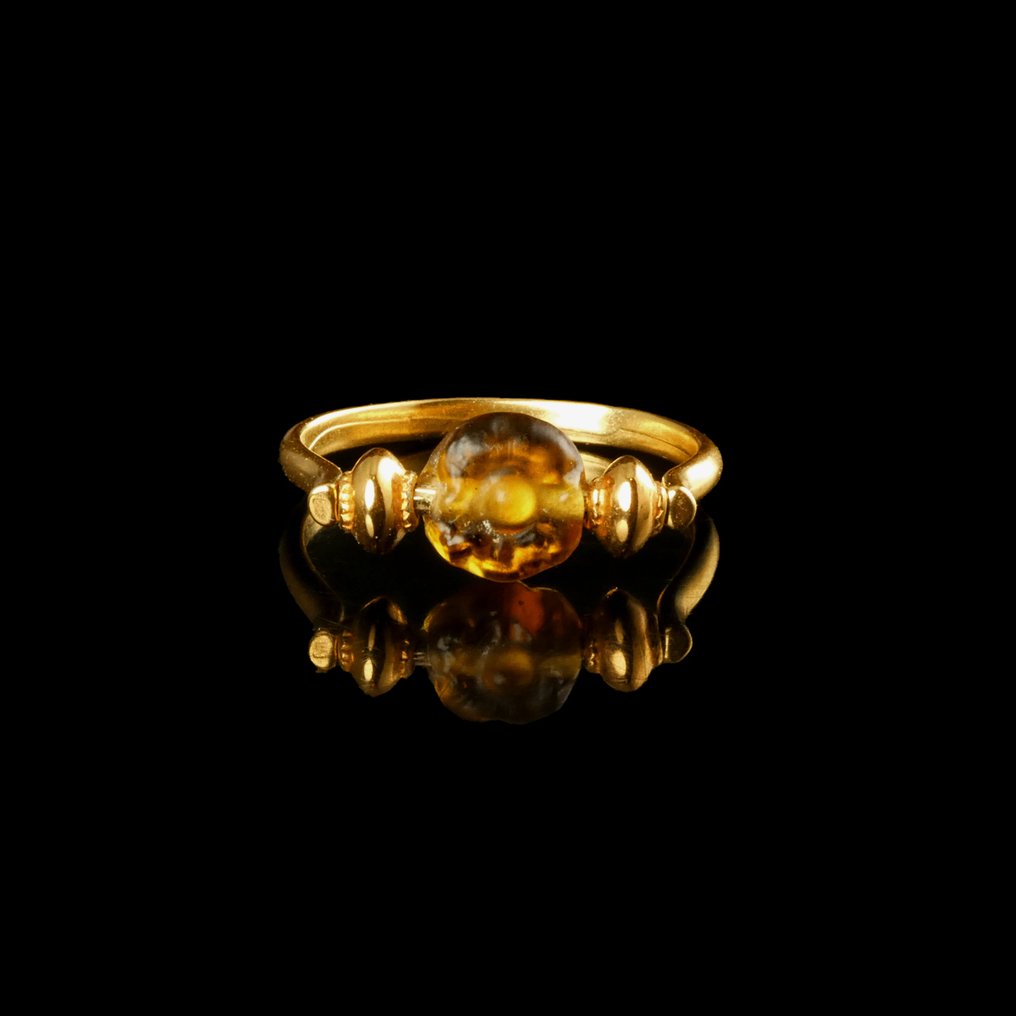
Ύστερη Ρωμαϊκή / Πρώιμη Βυζαντινή Δαχτυλίδι με διακοσμημένη χάντρα με φυλαχτό.


01
ημέρα
18
ώρες
45
λεπτά
01
δευτερόλεπτο
Τρέχουσα προσφορά
€ 80
Τιμή επιφύλαξης δεν επιτεύχθηκε

Ειδικός
Επιλεγμένο από Peter Reynaers
Διαθέτει σχεδόν 30 χρόνια εμπειρίας και έχει δειξει ρόλο συντονιστή σε αρκετές διαδικτυακές ομάδες έρευνας τέχνης.
Εκτιμήστε € 160 - € 200
37 άλλα άτομα παρακολουθούν αυτό το αντικείμενο
 Πλειοδότης 4101 Πλειοδότης 4101 | 80 € | |
|---|---|---|
| Πλειοδότης 4101 | 75 € | |
 Πλειοδότης 4512 Πλειοδότης 4512 | 65 € | |
Προστασία Αγοραστή Catawiki
Η πληρωμή σας είναι ασφαλής μαζί μας μέχρι να παραλάβετε το αντικείμενό σας.Προβολή λεπτομερειών
Trustpilot 4.4 | 121899 κριτικών
Βαθμολογήθηκε με Άριστα στο Trustpilot.
Δαχτυλίδι με διακοσμημένο φυλαχτό bead,Late Ρωμαϊκή/ΑρχαιοΒυζαντινή κουλτούρα, γυάλινο bead τοποθετημένο σε μοτέρ χρυσό-επιχρυσωμένο δαχτυλίδι που μπορεί να περιστραφεί, με διάμετρο bead περίπου 8,6 mm, εξωτερική διάμετρος περίπου 23,1 mm και εσωτερική 20,1–18,8 mm, χρονολογία 4ος–7ος αιώνας μ.Χ., σε καλή κατάσταση και φοριέται, τα beads επανασυνδέθηκαν με σύγχρονους spacers, αποκτήθηκε το 2016 στο Ηνωμένο Βασίλειο από γκαλερί/αντικοπωλείο; πιστοποιητικό γνησιότητας διαθέσιμο κατόπιν αίτησης.
Περίληψη με τη βοήθεια τεχνητής νοημοσύνης
Περιγραφή από τον πωλητή
Attention: due to customs regulations we can only ship inside the European Union. Please ensure you have a valid EU shipping address before placing a bid.
Ring with a late Roman decorated amber colour glass amulet bead. The ancient bead is set on a modern gold-plated ring and is free to rotate (swivel-type).
Outside diameter: ± 23,1 mm
Inside diameter: ± 20,1 - 18,8 mm
Diameter bead: ± 8,6 mm
Condition: good condition and wearable. The ancient beads are restrung and combined with modern gold-plated spacer beads and fittings. Signs of wear consistent with age and use. See images.
Composed with beads originating from various old collections, acquired in the UK between 2016-2024.
Every ancient bead shows subtle variations and signs of age, reflecting its history and adding to the unique charm of every composition.
Certificate of Authenticity (PDF) is available upon request.
ANCIENT GLASS
Glass has always been found in nature, but the humans first created glass about 4.000 years ago. when ancient craftsmen in Mesopotamia discovered the art of mixing sand, soda and lime to make glass.
For centuries, glass was a luxury item and reserved for the upper classes.
Glassmaking centers around the Mediterranean world experimented with new techniques (casting, core-forming, mosaic glass) and with colours by adding metallic oxides (cobalt, copper, etc) to the mixture.
The Romans learned the glass-making craft after the conquest of Egypt in the 1st century BC. During the 1st century AD the glassblowing technique revolutionized the production and made it possible to produce larger quantities. By adding manganese dioxide Roman glassmakers successfully produced colourless or ‘aqua’ glass for the first time.
Roman glass became a very popular material, used for beads, glass windows, mosaic tiles, tableware pieces etc. Roman glass was traded all over the Roman Empire and far beyond to Central Africa, Scandinavia and via the Silk Route to China.
Ιστορία πωλητή
Παρακαλούμε διαβάστε προσεκτικά τις πληροφορίες μας.
*ΠΛΗΡΟΦΟΡΙΕΣ ΑΠΟΣΤΟΛΗΣ Λόγω διαδικασιών ασφάλισης, η συνδυασμένη αποστολή είναι δυνατή μόνο με μία πληρωμή. (1 αναφορά πληρωμής = 1 ασφαλισμένο δέμα.) Αν αποδεχθείτε μια προσφορά μετά τον διαγωνισμό και πληρώσετε ξεχωριστά, οι αποστολές δεν μπορούν να συνδυαστούν χειροκίνητα εκ των υστέρων. Παρακαλούμε βεβαιωθείτε ότι η διεύθυνση αποστολής σας είναι πλήρης και σωστή πριν από την πληρωμή. Οι αλλαγές που γίνονται μετά την πληρωμή δεν προωθούνται αυτόματα σε εμάς.
* ΠΙΣΤΟΠΟΙΗΤΙΚΟ ΑΥΘΕΝΤΙΚΟΤΗΤΑΣ (COA) Για σκοπούς ασφάλισης, μπορούμε να παρέχουμε ψηφιακό Πιστοποιητικό Αυθεντικότητας (PDF) για κάθε αντικείμενο με τιμή εκτίμησης 100 ευρώ ή περισσότερο. Το COA διατίθεται κατόπιν αιτήματος εντός 20 ημερών από την ημερομηνία του διαγωνισμού. Οδηγίες θα παρέχονται κατά την αποστολή της παραγγελίας σας. Τα πιστοποιητικά δεν περιλαμβάνονται στη συσκευασία.
ΑΣΦΑΛΙΣΗ & Αιτήσεις Αποζημίωσης
Όλα τα δέματά μας αποστέλλονται με εξωτερική ασφάλιση. Αυτή η ασφάλιση απαιτεί τα εξής:
> Παρακολουθήστε την online παρακολούθηση και ενημερώστε για καθυστερήσεις εντός 14 ημερών μετά την ημερομηνία αποστολής.
Σε περίπτωση ζημιάς: γράψτε κράτηση στη σημείωση παράδοσης, διατηρήστε όλη τη συσκευασία και στείλτε μας φωτογραφίες της ζημιάς.
* ΣΗΜΑΝΤΙΚΟΙ ΑΓΟΡΑΣΤΕΣ ΕΚΤΟΣ ΤΗΣ ΕΕ: Δεν μπορούμε να αποστείλουμε σε χώρες εκτός Ευρωπαϊκής Ένωσης. Παρακαλούμε βεβαιωθείτε ότι έχετε διεύθυνση αποστολής στην ΕΕ πριν από την προσφορά. Δεν μπορούν να γίνουν εξαιρέσεις. Η Ελβετία, η Νορβηγία και το Ηνωμένο Βασίλειο δεν αποτελούν μέρος της ΕΕ.
ΕΝΗΜΕΡΩΣΗ ΓΙΑ ΤΗΝ ΤΕΚΜΗΡΙΩΣΗ: Τα προηγούμενα τιμολόγια και έγγραφα εισαγωγής/εξαγωγής δεν θα κοινοποιούνται στους πελάτες.
Αυτή η ανακοίνωση αφορά μια νέα συνεργασία μεταξύ Rolex και Cypress, που στοχεύει στην προώθηση καινοτόμων προϊόντων και υπηρεσιών. Η συνεργασία αυτή θα ενισχύσει τη δέσμευση και των δύο οργανισμών για αριστεία και καινοτομία, δημιουργώντας νέες ευκαιρίες για τους πελάτες και τους συνεργάτες μας.
Σας ευχαριστούμε για το ενδιαφέρον σας και καλή επιτυχία στις προσφορές σας!
Μετάφραση από Google ΜετάφρασηAttention: due to customs regulations we can only ship inside the European Union. Please ensure you have a valid EU shipping address before placing a bid.
Ring with a late Roman decorated amber colour glass amulet bead. The ancient bead is set on a modern gold-plated ring and is free to rotate (swivel-type).
Outside diameter: ± 23,1 mm
Inside diameter: ± 20,1 - 18,8 mm
Diameter bead: ± 8,6 mm
Condition: good condition and wearable. The ancient beads are restrung and combined with modern gold-plated spacer beads and fittings. Signs of wear consistent with age and use. See images.
Composed with beads originating from various old collections, acquired in the UK between 2016-2024.
Every ancient bead shows subtle variations and signs of age, reflecting its history and adding to the unique charm of every composition.
Certificate of Authenticity (PDF) is available upon request.
ANCIENT GLASS
Glass has always been found in nature, but the humans first created glass about 4.000 years ago. when ancient craftsmen in Mesopotamia discovered the art of mixing sand, soda and lime to make glass.
For centuries, glass was a luxury item and reserved for the upper classes.
Glassmaking centers around the Mediterranean world experimented with new techniques (casting, core-forming, mosaic glass) and with colours by adding metallic oxides (cobalt, copper, etc) to the mixture.
The Romans learned the glass-making craft after the conquest of Egypt in the 1st century BC. During the 1st century AD the glassblowing technique revolutionized the production and made it possible to produce larger quantities. By adding manganese dioxide Roman glassmakers successfully produced colourless or ‘aqua’ glass for the first time.
Roman glass became a very popular material, used for beads, glass windows, mosaic tiles, tableware pieces etc. Roman glass was traded all over the Roman Empire and far beyond to Central Africa, Scandinavia and via the Silk Route to China.
Ιστορία πωλητή
Παρακαλούμε διαβάστε προσεκτικά τις πληροφορίες μας.
*ΠΛΗΡΟΦΟΡΙΕΣ ΑΠΟΣΤΟΛΗΣ Λόγω διαδικασιών ασφάλισης, η συνδυασμένη αποστολή είναι δυνατή μόνο με μία πληρωμή. (1 αναφορά πληρωμής = 1 ασφαλισμένο δέμα.) Αν αποδεχθείτε μια προσφορά μετά τον διαγωνισμό και πληρώσετε ξεχωριστά, οι αποστολές δεν μπορούν να συνδυαστούν χειροκίνητα εκ των υστέρων. Παρακαλούμε βεβαιωθείτε ότι η διεύθυνση αποστολής σας είναι πλήρης και σωστή πριν από την πληρωμή. Οι αλλαγές που γίνονται μετά την πληρωμή δεν προωθούνται αυτόματα σε εμάς.
* ΠΙΣΤΟΠΟΙΗΤΙΚΟ ΑΥΘΕΝΤΙΚΟΤΗΤΑΣ (COA) Για σκοπούς ασφάλισης, μπορούμε να παρέχουμε ψηφιακό Πιστοποιητικό Αυθεντικότητας (PDF) για κάθε αντικείμενο με τιμή εκτίμησης 100 ευρώ ή περισσότερο. Το COA διατίθεται κατόπιν αιτήματος εντός 20 ημερών από την ημερομηνία του διαγωνισμού. Οδηγίες θα παρέχονται κατά την αποστολή της παραγγελίας σας. Τα πιστοποιητικά δεν περιλαμβάνονται στη συσκευασία.
ΑΣΦΑΛΙΣΗ & Αιτήσεις Αποζημίωσης
Όλα τα δέματά μας αποστέλλονται με εξωτερική ασφάλιση. Αυτή η ασφάλιση απαιτεί τα εξής:
> Παρακολουθήστε την online παρακολούθηση και ενημερώστε για καθυστερήσεις εντός 14 ημερών μετά την ημερομηνία αποστολής.
Σε περίπτωση ζημιάς: γράψτε κράτηση στη σημείωση παράδοσης, διατηρήστε όλη τη συσκευασία και στείλτε μας φωτογραφίες της ζημιάς.
* ΣΗΜΑΝΤΙΚΟΙ ΑΓΟΡΑΣΤΕΣ ΕΚΤΟΣ ΤΗΣ ΕΕ: Δεν μπορούμε να αποστείλουμε σε χώρες εκτός Ευρωπαϊκής Ένωσης. Παρακαλούμε βεβαιωθείτε ότι έχετε διεύθυνση αποστολής στην ΕΕ πριν από την προσφορά. Δεν μπορούν να γίνουν εξαιρέσεις. Η Ελβετία, η Νορβηγία και το Ηνωμένο Βασίλειο δεν αποτελούν μέρος της ΕΕ.
ΕΝΗΜΕΡΩΣΗ ΓΙΑ ΤΗΝ ΤΕΚΜΗΡΙΩΣΗ: Τα προηγούμενα τιμολόγια και έγγραφα εισαγωγής/εξαγωγής δεν θα κοινοποιούνται στους πελάτες.
Αυτή η ανακοίνωση αφορά μια νέα συνεργασία μεταξύ Rolex και Cypress, που στοχεύει στην προώθηση καινοτόμων προϊόντων και υπηρεσιών. Η συνεργασία αυτή θα ενισχύσει τη δέσμευση και των δύο οργανισμών για αριστεία και καινοτομία, δημιουργώντας νέες ευκαιρίες για τους πελάτες και τους συνεργάτες μας.
Σας ευχαριστούμε για το ενδιαφέρον σας και καλή επιτυχία στις προσφορές σας!
Μετάφραση από Google ΜετάφρασηΛεπτομέρειες
Πολιτισμός
Ύστερη Ρωμαϊκή / Πρώιμη Βυζαντινή
Αιώνες/χρονική περίοδος
4th - 7th century AD
Name of object
Ring with decorated amulet bead
Αποκτήθηκε από
Γκαλερί / Έμπορος αντικών
Έτος απόκτησης
2016
Χώρα απόκτησης
Ηνωμένο Βασίλειο
Κατάσταση
Καλή
Προηγούμενος κάτοχος - αποκτήθηκε από
Γκαλερί / Έμπορος αντικών
Προηγούμενος κάτοχος – έτος απόκτησης
2016
Προηγούμενος κάτοχος – χώρα απόκτησης
Ηνωμένο Βασίλειο
Βεβαιώνω ότι έχω αποκτήσει νόμιμα αυτό το αντικείμενο και ότι μου επιτρέπεται να το πουλήσω.
Ναι
Πωλήθηκε από τον/-ην
Αποποίηση ευθυνών
Ο πωλητής ενημερώθηκε από την Catawiki σχετικά με τις απαιτήσεις εγγράφων και εγγυάται τα εξής: - το αντικείμενο αποκτήθηκε νόμιμα - ο πωλητής έχει το δικαίωμα να πωλήσει ή/και να εξαγάγει το αντικείμενο, ανάλογα με την περίπτωση - ο πωλητής θα παράσχει τις απαραίτητες πληροφορίες προέλευσης και θα διευθετήσει τα απαιτούμενα έγγραφα και άδειες, κατά περίπτωση και σύμφωνα με τους τοπικούς νόμους - ο πωλητής θα ειδοποιήσει τον αγοραστή για τυχόν καθυστερήσεις στην έκδοση των αδειών. Υποβάλλοντας προσφορά, αναγνωρίζετε ότι ενδέχεται να απαιτούνται έγγραφα εισαγωγής ανάλογα με τη χώρα διαμονής σας και ότι η έκδοση των αδειών μπορεί να προκαλέσει καθυστερήσεις στην παράδοση του αντικειμένου σας.
Ο πωλητής ενημερώθηκε από την Catawiki σχετικά με τις απαιτήσεις εγγράφων και εγγυάται τα εξής: - το αντικείμενο αποκτήθηκε νόμιμα - ο πωλητής έχει το δικαίωμα να πωλήσει ή/και να εξαγάγει το αντικείμενο, ανάλογα με την περίπτωση - ο πωλητής θα παράσχει τις απαραίτητες πληροφορίες προέλευσης και θα διευθετήσει τα απαιτούμενα έγγραφα και άδειες, κατά περίπτωση και σύμφωνα με τους τοπικούς νόμους - ο πωλητής θα ειδοποιήσει τον αγοραστή για τυχόν καθυστερήσεις στην έκδοση των αδειών. Υποβάλλοντας προσφορά, αναγνωρίζετε ότι ενδέχεται να απαιτούνται έγγραφα εισαγωγής ανάλογα με τη χώρα διαμονής σας και ότι η έκδοση των αδειών μπορεί να προκαλέσει καθυστερήσεις στην παράδοση του αντικειμένου σας.
