The Records & Vinyl category focuses on special and rare objects for collectors.
To successfully sell your records on Catawiki, they need to meet certain standards to be approved by our in-house experts.
What we accept
We seek official high-quality records and other sought-after music formats that appeal to serious fans and collectors:
- First/rare pressings or limited edition records (LPs, box sets, picture discs, 7” singles, 12” Maxi Singles)
- Hard to find MiniDiscs, audio cassettes, CDs, music LaserDiscs and Shellac
- Media and sleeve/box must be a minimum of Very good plus (VG+) condition quality.
- Objects with an estimated minimum value of €50
(You can combine objects in one submission to meet this threshold)
Note: Our experts review the description, photos, videos, and any other documentation you provide to assess whether your object is suitable for auction. Acceptance is at our full discretion and is not guaranteed. Please note that even if an object is accepted, this does not ensure it will sell.
What we do not accept
To keep our auctions trustworthy and attractive to buyers, we do not accept:
- Objects in poor or fair condition with audible/visual defects
- Counterfeit / unofficial items
- Grouped submissions with mixed musical genres and/or too many artists with no real link to each other.
- Grouped submissions with multiple low value/interest objects. Though technically of a cumulative €50 value, this is not suitable for our auctions. So please avoid low value submissions of this nature.
- Widely available items with no real collectable value
- Records by the following genres or themes that are of little interest for our bidders:
- Schlager, Operette, Dutch & Flemish ‘kleinkunst’ & cabaret, children’s music or fairy tales
- Any sort of educational material or historical speeches unrelated to music
Getting your submission ready
1. Fill in all the details and write a clear description
When you submit an object, you’ll see fields to guide you in providing the right information, such as: object type, artist, album, number of items, etc. These fields ensure your listing is clear, searchable, and easy for bidders to understand.
Please also use the object description field to share the following mandatory information (in English) for each individually numbered item in your submission:
Item 1 -
Artist: The Rolling Stones
Album: Sticky Fingers
Label: Rolling Stones Records – COC 59100
Country: UK
Released:1971
Genre: Blues Rock, Classic Rock
Conditions : Sleeve: EX / Vinyl: VG+
Item 2 - etc.
Tip: The more detail you provide, the easier it is for bidders to understand the value of your object – and the more likely it is to sell. Find here more tips on how to write a clear, accurate description.
The condition will be assessed according to the below condition standards. No variant on this guide is accepted:
Very Good Plus (VG+) — slight signs of use/traces visible but no audible problems/cover with fairly visible signs of age but no tears.
Excellent (EX) — very slight inaudible problems / cover shows very slight signs of wear.
Near Mint (NM) — as new
Mint (M) — new
Mint & Sealed (M&S) — in new condition and still sealed
2. Great photos matter
Photos are the first thing bidders see – so make them count! We recommend including at least 5 high-quality images that clearly show the condition and details of your object. This helps bidders make informed decisions and increases your chances of a successful sale.
When offering objects to the records and vinyl auctions, be sure to have a neutral background giving clear, in-focus images in the following order:
- Group picture highlighting all album covers together if it is a grouped submission
- Photos of the front and back sleeves/box or case
- Close-up of record label/barcode/Matrix and any other writing that helps identify your pressing
- Photos of media outside of the sleeve/case, if not sealed
- Miscellaneous items included with the record/media
We do not accept the following types of photos:
- Photos with people, selfies, screenshots
- Blurry, unreadable labels
- Dark, poor lighting
- Non neutral background
- Poorly farmed images, where there is needlessly more area captured than just the album sleeve in the image
Tip: Use a neutral background (white or black), avoid low-quality or stock images, and aim for natural lighting. Find here more tips on how to take professional photos.
📌Examples of the good vs. bad photos:
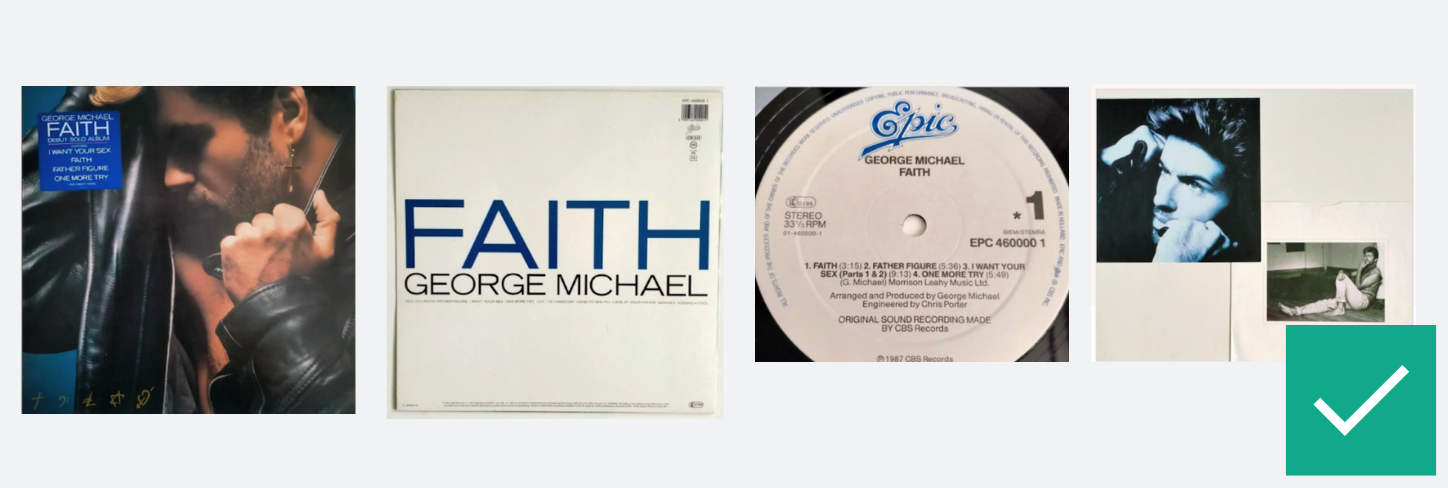
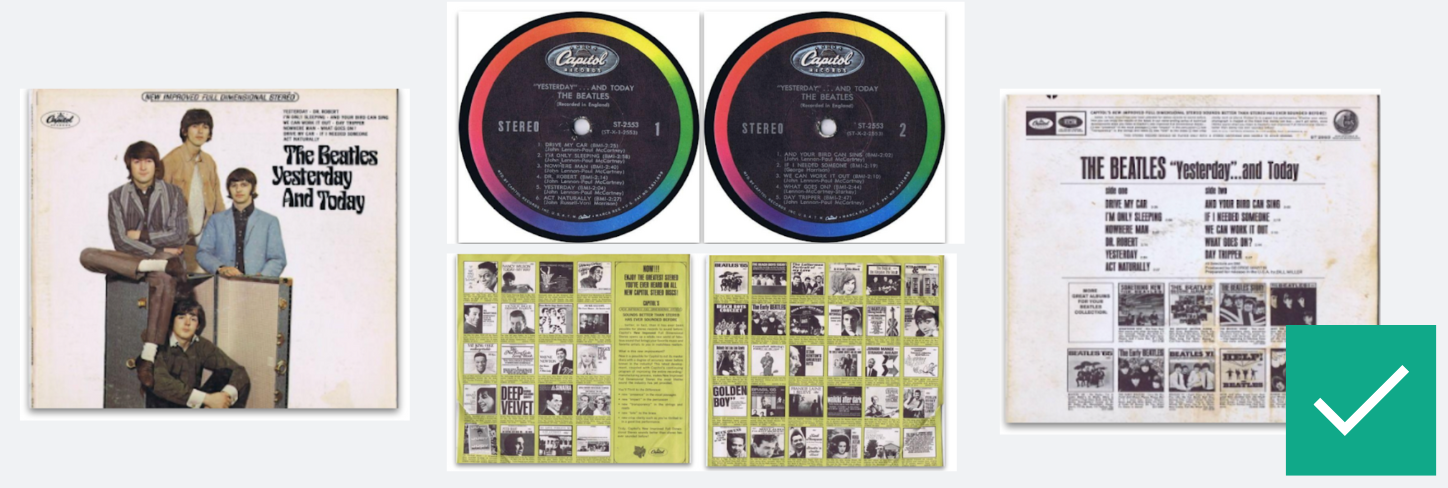
- These are good examples because they show the full set clearly: front and back covers, labels, inserts, and sleeves — all photographed in high resolution with proper framing and lighting. This gives bidders a complete and accurate view of what's included and the condition of each element.
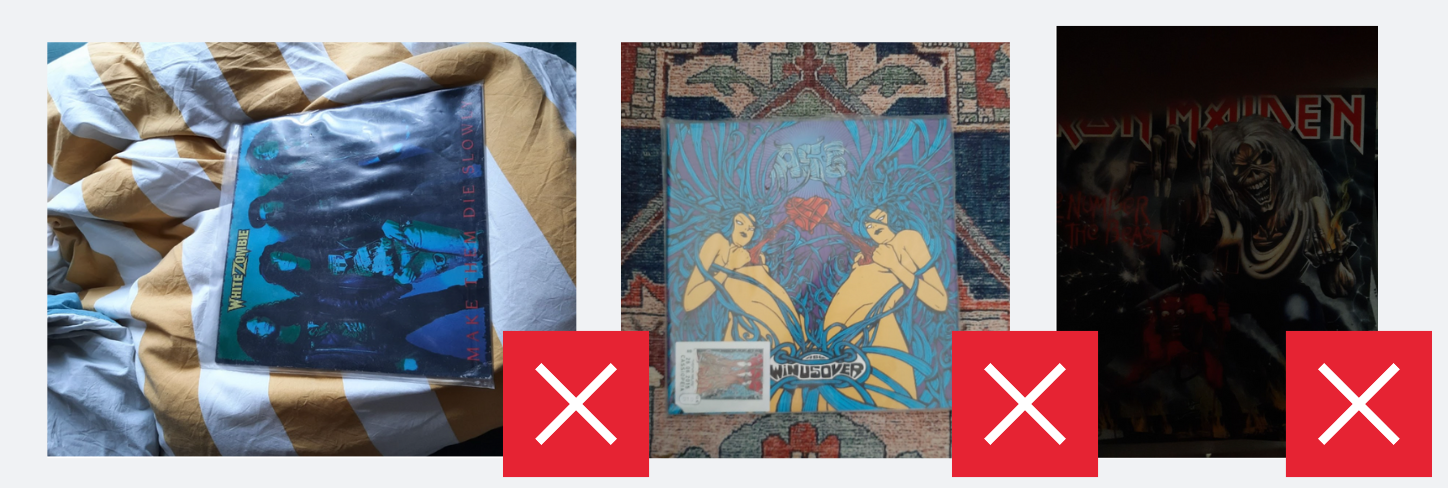
- These photos are ineffective because they don’t allow buyers to properly assess the record:
- The first image is poorly framed, with most of the photo taken up by a distracting, non-neutral background. The lighting causes glare on the plastic outer sleeve, making it difficult to evaluate the condition.
- In the second photo, the record sleeve blends into the patterned background, and the plastic wrap further obscures the details.
- The third image is far too dark, with the sleeve barely visible. None of these photos meet the quality standards needed for a trustworthy, buyer-friendly listing.
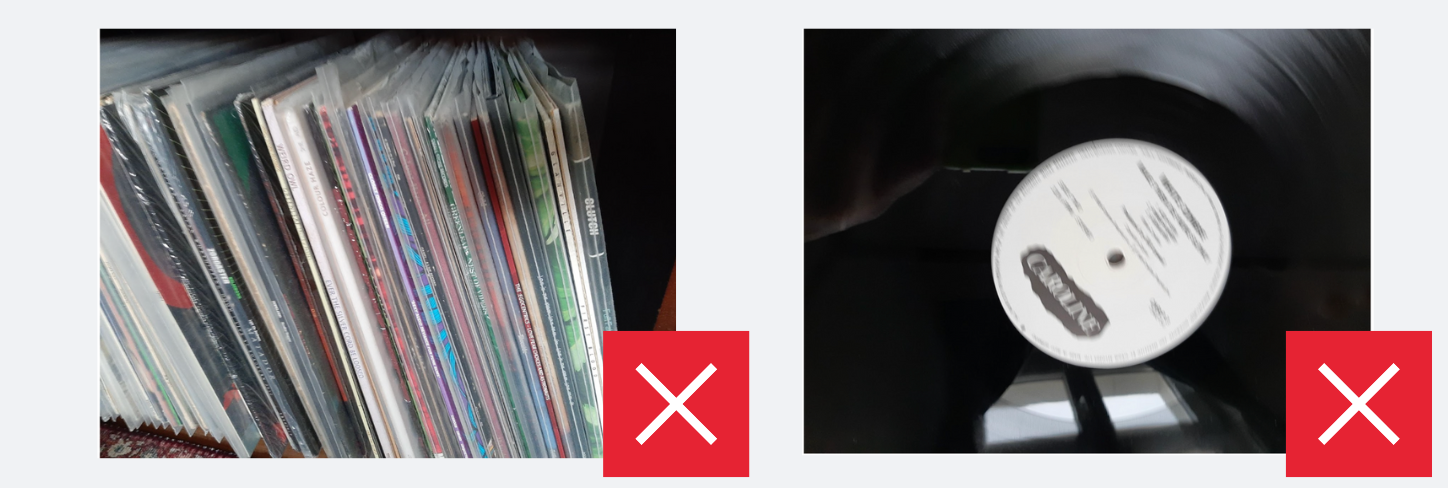
- These images are not suitable for auction:
- In the first photo, it’s unclear which records are included, as multiple items are shown without focus.
- The second image is blurry, with the label out of focus and too far away to read making it impossible for buyers to verify the item.
3. Additional expert tips to maximise your auction success
Prepare your records
Clean records before photographing to remove dust and fingerprints. Use natural light where possible to capture sharp, true-to-condition images.
Curate carefully
For multi-item submissions, aim for coherence. Stick to one genre, and ideally no more than three artists. Avoid low-value “basement bin” bundles — quality always outperforms quantity.
Build trust with clarity
Since buyers can’t inspect records in person, clear, high-resolution photos and honest, accurate descriptions are essential. Be transparent about flaws — note and photograph any scratches, marks, or wear. This helps avoid cancellations and builds buyer confidence.
Reserve price guidance
You may set a reserve price (a hidden minimum) for objects valued at €200 or more. We typically recommend setting it at around 20% below the estimated value to encourage competitive bidding and maintain strong buyer interest.
That said, No Reserve objects often perform better — they receive higher visibility in the auction and attract up to 29% more bidders on average.
Special guidance for classical music
For classical music, we recommend a focused theme: ideally one composer or soloist per submission. Highlight important names (soloist, conductor, etc.) in both the title and description of each album. This greatly increases interest from serious collectors.
Consider shipping in advance
Buyers pay shipping, but excessive rates may deter bids. Offer fair, reasonable shipping costs and use specialised packaging to protect records and maintain your seller rating.
Stay connected with your expert
Use the message box at submission to ask questions or clarify details. Our experts are here to support you and will gladly offer feedback to improve your object.
Final checks before auction
Your object will appear in preview one day before the auction starts — use this time to review all details. Please note: once the object is live, it cannot be withdrawn (see Seller’s terms).
Ready to sell? List your music collectables today
Selling with us is free – commission is only applied if your object sells.
Follow these guidelines to maximize your chances of success.
Register as a seller and submit your object for auction now
Still need help? Contact our Customer Support team for assistance.