No. 105338064

No longer available
Thrace, Ainos half Mnaieion / Tetradrachm
Bidding closed
1 day ago

Thrace, Ainos half Mnaieion / Tetradrachm

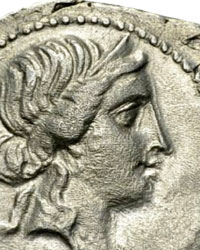
THRACE, Ainos. Circa 415/4-413/2 BC. AR Tetradrachm. Head of Hermes right, wearing petasos / Goat standing right; ivy branch to right; all within incuse square. Ainos came rather late to currency production, striking its first tetradrachms only after the expulsion of the Persians from northern Greece following Xerxes’ defeat at Salamis. Its first period ended with the Athenian coinage decree of 449 BC, but the mint was in operation again by circa 435 BC, tapering off rapidly until disappearing with the conquest of the city by Philip of Macedon in 342 BC. Its uniform types throughout its history were Hermes and the goat, the latter the symbol of the pasture land that provided what prosperity Ainos had. Hermes was the patron deity of Ainos, dating from the time of the Trojan War. According to a poem by Kallimachos, the sculptor Epeios, who constructed the Trojan Horse, also made a wooden statue (ξοανον) of Hermes, which was washed out to sea and recovered by fishermen by the Hebros river. The fishermen, thinking it just a piece of driftwood, tried to burn it in their bonfire. When it failed to burn they took fright and threw it back into the sea, which promptly cast it back again. The natives accepted it as a relic of the gods, and erected the sanctuary of Hermes Perpheraios (the Wanderer) at the future site of Ainos. The later coins of Ainos, with their splendid facing head of Hermes, showcase some of the finest numismatic art of the Greek world. Nevertheless, Ainos never became an important city or trading center. The climate might have had something to do with it; according to Athaneus, Ainos had two seasons, eight months of cold and four months of winter. At least the goats liked it. Weight: 16,55 gr Diameter: 25,2 mm Condition: Very Fine

No. 105338064

No longer available
Thrace, Ainos half Mnaieion / Tetradrachm

Thrace, Ainos half Mnaieion / Tetradrachm

THRACE, Ainos. Circa 415/4-413/2 BC. AR Tetradrachm. Head of Hermes right, wearing petasos / Goat standing right; ivy branch to right; all within incuse square.
Ainos came rather late to currency production, striking its first tetradrachms only after the expulsion of the Persians from northern Greece following Xerxes’ defeat at Salamis. Its first period ended with the Athenian coinage decree of 449 BC, but the mint was in operation again by circa 435 BC, tapering off rapidly until disappearing with the conquest of the city by Philip of Macedon in 342 BC. Its uniform types throughout its history were Hermes and the goat, the latter the symbol of the pasture land that provided what prosperity Ainos had. Hermes was the patron deity of Ainos, dating from the time of the Trojan War. According to a poem by Kallimachos, the sculptor Epeios, who constructed the Trojan Horse, also made a wooden statue (ξοανον) of Hermes, which was washed out to sea and recovered by fishermen by the Hebros river. The fishermen, thinking it just a piece of driftwood, tried to burn it in their bonfire. When it failed to burn they took fright and threw it back into the sea, which promptly cast it back again. The natives accepted it as a relic of the gods, and erected the sanctuary of Hermes Perpheraios (the Wanderer) at the future site of Ainos. The later coins of Ainos, with their splendid facing head of Hermes, showcase some of the finest numismatic art of the Greek world. Nevertheless, Ainos never became an important city or trading center. The climate might have had something to do with it; according to Athaneus, Ainos had two seasons, eight months of cold and four months of winter. At least the goats liked it.

Weight: 16,55 gr
Diameter: 25,2 mm

Condition: Very Fine

Bidding closed
Carmen Vera Gutiérrez
Expert
Estimate € 3,900 - € 4,300

Similar objects

For you in

古代コイン

Set a search alert
Set a search alert to get notified when new matches are available.

This object was featured in


How to buy on Catawiki

Learn more about our Buyer Protection

      1. Discover something special

      Browse through thousands of special objects selected by experts. View the photos, details and estimated value of each special object. 

      2. Place the top bid

      Find something you love and place the top bid. You can follow the auction to the end or let our system do the bidding for you. All you have to do is set a bid for the maximum amount you want to pay. 

      3. Make a secure payment

      Pay for your special object and we’ll keep your payment secure until it arrives safe and sound. We use a trusted payment system to handle all transactions. 

Have something similar to sell?

Whether you're new to online auctions or sell professionally, we can help you earn more for your special objects.

Sell your object