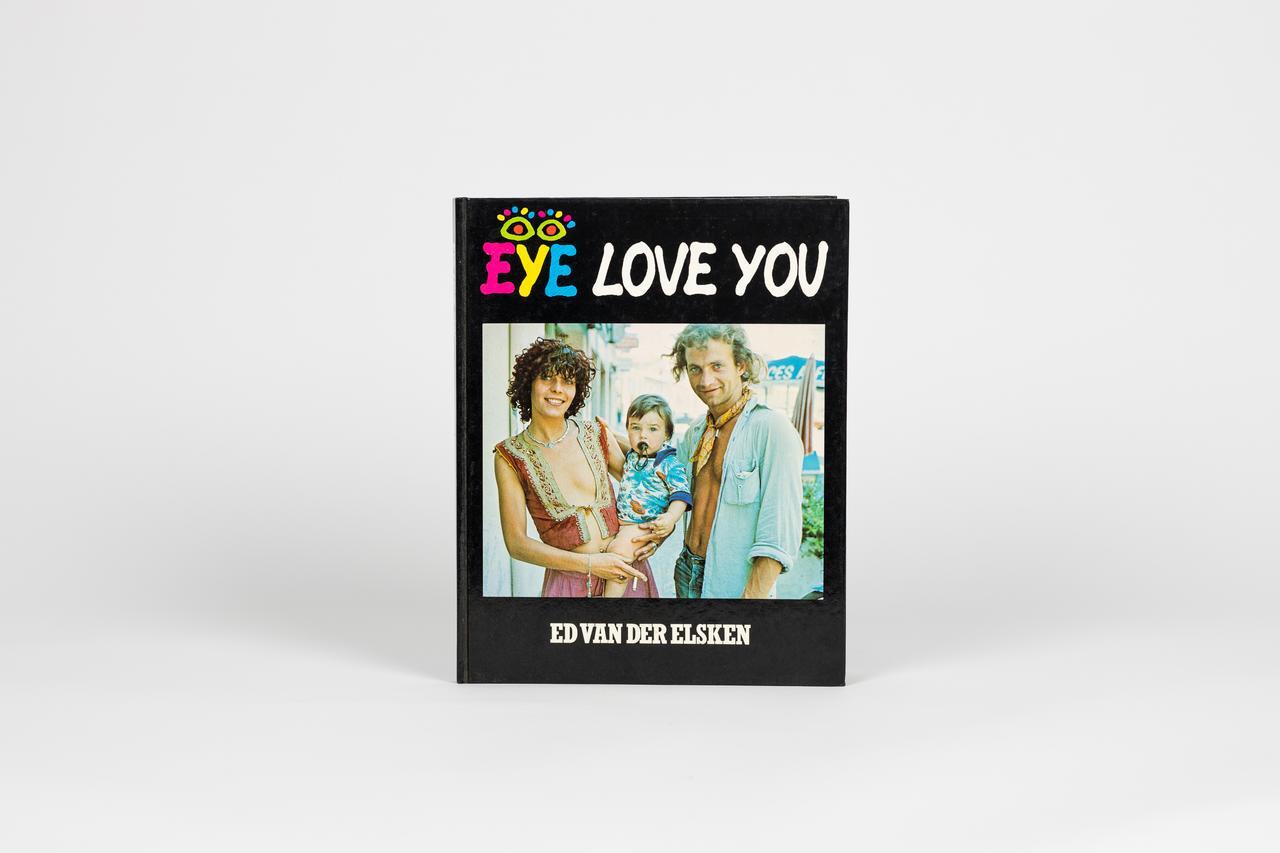
No. 105610726

No. 105610726
ENJOY THE NEWEST EDITION of the SUPER POPULAR SINGLE-SELLER AUCTIONS by 5Uhr30.com (Ecki Heuser, Cologne, Germany).
Offering some of the BEST PHOTOBOOKS WORLDWIDE - from my private collection and from recent acquisitations.
EXCELLENT, SMALL, VERY EARLY CATALOGUE by Joel Meyerowitz from 1980 (!).
VERY BEAUTIFUL, WIDELY UNKNOWN PUBLICATION by the famous American Magnum photographer ("Aftermath").
Joel Meyerowitz became a full member of the Magnum Photos in 1989 and later served as its president from 2003 to 2007. Along with William Eggleston and Stephen Shore, Joel Meyerowitz is celebrated as a key figure in the 1970s "New Color Photography" movement. Joel Meyerowitz is world-famous for his dynamic, candid shots capturing daily life on the streets of New York City. As a veteran photographer of the agency, his work and administrative leadership helped shape the trajectory of Magnum Photos into the 21st century.
5Uhr30.com guarantees detailed and accurate descriptions, 100% protection,
100% insurance and combined shipping worldwide.
Steidelijk Museum, Amsterdam. 1980. First edition, first printing.
Softcover (as issued). 210 x 275 mm. 16 pages. 7 color photos (6 inside, 1 on the front cover). Photos: Joel Meyerowitz. Design: Wim Crouwel. Text: Els Barents. Text in Dutch.
Condition:
Inside fresh and flawless; clean with no previous owner marks and with no foxing. Outside with little trace of use; partly a bit yellowed, little crease at the top right corner of the rear side (with no consequences for inside). Overall fine condition.
Great, widely unknown Joel Meyerowitz publication.
"Joel Meyerowitz, born 1938, is an American street, portrait and landscape photographer. He began photographing in color in 1962 and was an early advocate of the use of color during a time when there was significant resistance to the idea of color photography as serious art. In the early 1970s he taught photography at the Cooper Union in New York City.
His work is in the collections of the International Center of Photography, Museum of Modern Art, and New York Public Library, all in New York, and the Museum of Contemporary Photography in Chicago.
Henri Cartier-Bresson was born in Chanteloup-en-Brie, Seine-et-Marne, France. His father was a wealthy textile manufacturer, whose Cartier-Bresson thread was a staple of French sewing kits. His mother's family were cotton merchants and landowners from Normandy, where Henri spent part of his childhood. His mother was descended from Charlotte Corday.
The Cartier-Bresson family lived in a bourgeois neighborhood in Paris, Rue de Lisbonne, near Place de l'Europe and Parc Monceau. Since his parents were providing financial support, Henri pursued photography more freely than his contemporaries. Henri also sketched.
Young Henri took holiday snapshots with a Box Brownie; he later experimented with a 3×4 inch view camera. He was raised in traditional French bourgeois fashion, and was required to address his parents with formal vous rather than tu. His father assumed that his son would take up the family business, but Henri was strong-willed and also feared this prospect.
Cartier-Bresson attended École Fénelon, a Catholic school that prepared students for the Lycée Condorcet. A governess called "Miss Kitty" who came from across the Channel, instilled in him the love of - and competence in - the English language. The proctor caught him reading a book by Rimbaud or Mallarmé, and reprimanded him, "Let's have no disorder in your studies!". Cartier-Bresson said, "He used the informal 'tu', which usually meant you were about to get a good thrashing. But he went on, 'You're going to read in my office.' Well, that wasn't an offer he had to repeat."
In early 1947, Cartier-Bresson, with Robert Capa, David Seymour, William Vandivert and George Rodger founded Magnum Photos. Capa's brainchild, Magnum was a cooperative picture agency owned by its members. The team split photo assignments among the members. Rodger, who had quit Life in London after covering World War II, would cover Africa and the Middle East. Chim, who spoke a variety of European languages, would work in Europe. Cartier-Bresson would be assigned to India and China. Vandivert, who had also left Life, would work in America, and Capa would work anywhere that had an assignment. Maria Eisner managed the Paris office and Rita Vandivert, Vandivert's wife, managed the New York office and became Magnum's first president.
Cartier-Bresson achieved international recognition for his coverage of Gandhi's funeral in India in 1948 and the last stage of the Chinese Civil War in 1949. He covered the last six months of the Kuomintang administration and the first six months of the Maoist People's Republic. He also photographed the last surviving Imperial eunuchs in Beijing, as the city was being liberated by the communists. In Shanghai, he often worked in the company of photojournalist Sam Tata, whom Cartier-Bresson had previously befriended in Bombay. From China, he went on to Dutch East Indies (Indonesia), where he documented the gaining of independence from the Dutch. In 1950, Cartier-Bresson had traveled to the South India. He had visited Tiruvannamalai, a town in the Indian State of Tamil Nadu and photographed the last moments of Ramana Maharishi, Sri Ramana Ashram and its surroundings. A few days later he also visited and photographed Sri Aurobindo, Mother and Sri Aurobindo Ashram, Pondicherry.
Magnum's mission was to "feel the pulse" of the times and some of its first projects were People Live Everywhere, Youth of the World, Women of the World and The Child Generation. Magnum aimed to use photography in the service of humanity, and provided arresting, widely viewed images."
(Wikipedia)
How to buy on Catawiki
1. Discover something special
2. Place the top bid
3. Make a secure payment