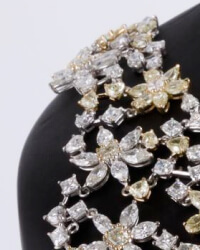
チェーン - 14 kt. Rose gold - 7.01ct. tw. Diamond (Lab-grown) - ラウンド E-VVS2


02
days
04
hours
34
minutes
10
seconds
Current bid
€ 31
Reserve price not met

 | €31 | |
|---|---|---|
 | €28 | |
| €25 | |
Catawiki Buyer Protection
Your payment’s safe with us until you receive your object.View details
Trustpilot 4.4 | 143727 reviews
Rated Excellent on Trustpilot.
A 14 kt rose gold pendant set with a single round brilliant lab-grown diamond of 7.01 ct, color E, clarity VVS2, cut Very Good, with IGI report LG783618877, total pendant weight 3.60 g and length 41 cm.
AI-assisted summary
Description from the seller
ラボで育成されたダイヤモンドとは?
ラボで育成されたダイヤモンドは、地球の深部でダイヤモンドが形成される条件を再現する技術を用いて科学者が作り出したダイヤモンドです。ラボ育成ダイヤモンドは、自然に形成されたダイヤモンドと化学的・物理的・光学的に全く同一であり、違いを生む唯一の要因は“ラボ由来”であることだけです。したがってラボ育成ダイヤモンドを“希少”または“ユニーク”とみなすことはできず、天然ダイヤモンドと比較してより手頃な選択肢となり、カラットあたりの価格もかなり低く評価されます。
IGIがグレードした Laboratory Grown Diamonds、14kgfローズゴールドのペンダントにセット。
形状: ラウンドブリリアント
重量: 7.01カラット
カラー: E
クラリティ: VVS2
カット: Very Good
仕上げ: Excellent
対称性: Excellent
蛍光性: なし
レーザー刻印 IGI: LG783618877
ネックレスの重量: 3.60 g
金属: ローズゴールド
純度: 14kt (585)
すべての品は Malca-Amit - FedEX - DHL によって安全かつ秘匿に発送します。
あなたの居住国には追加の関税や輸入税が課される場合があります。ヨーロッパ連合(EU)以外の配送分の関税は購入者のご負担となることをご了承ください。詳細な金額はお住まいの税務署にお問い合わせください。
Seller's Story
Crystal Fusion is a leading supplier of lab-grown diamonds, specializing in the sale of high-end jewelry directly to consumers. With a strong focus on quality and variety, we offer a wide range of unique and beautiful diamonds created with precision in our laboratory.
Our diamonds are of the highest quality and meet the strictest ethical standards, allowing customers to enjoy the beauty of these stunning gemstones without worrying about their origins. With an extensive selection of styles and designs, ranging from classic and timeless to modern and contemporary, we offer our customers the opportunity to express their personal style and taste with a unique and high-quality piece of jewelry.
Crystal Fusion strives to provide every customer with an unforgettable shopping experience, excelling in customer service, craftsmanship and reliability. We invite you to discover our collection and experience what it means to own a beautiful lab-grown diamond jewelry from Crystal Fusion.
Details
時代
After 2000
Total carat weight of all stones
7.01
鑑定書番号
LG783618877
Diamond type of main stone
Lab-grown
鑑定書
International Gemological Institute (IGI)
メインストーンのダイヤモンドカラーグレード
E
純度
14 kt.
ブランドジュエリー
いいえ'
Number of diamonds main stone
1
金属
Rose gold
メインストーンの総カラット重量
7.01
メインストーン
Diamond
メインストーンのダイヤモンドクラリティグレード
VVS2
総重量
3.6 g
コンディション
New
性別
Women
タイトル補足情報
Round E-VVS2
メインストーンのシェイプ
Round
Cutting style of main stone
Brilliant cut
長さ
41 cm
Sold by
Disclaimer
Catawiki always aims to offer you the best possible buying experience. Our experts virtually review and select every object in line with our submission guidelines. While we strive to provide a detailed description and photographs of each jewellery object, discrepancies or inaccuracies may occur. It is your responsibility to review all of the information provided about an object, including the condition and description, before placing an order. Sellers are responsible for the information, pictures and description provided, including the quality, quantity and nature of the jewellery supplied. A small imperfection that cannot be seen in the photo but is included in the description is not a non-conformity. What are lab-grown diamonds? Lab-grown diamonds are diamonds produced by scientists using technology that recreates the conditions under which diamonds form deep in the earth. A lab-grown diamond is chemically, physically, and optically identical to diamonds that formed naturally - the only factor that makes them different from a natural diamond is that they originate from a lab. For that reason, lab-grown diamonds cannot be considered ‘rare’ or ‘unique’ and as such they represent a more affordable option when compared to natural diamonds and are valued at a considerably lower price per carat. Due to their availability and evolving market dynamics, lab-grown diamonds may not retain value over time and typically do not carry much resale value. A Laboratory Report is not a guarantee, valuation or appraisal regarding the articles described therein. A Laboratory Report contains only the characteristics of an article described after it has been graded, tested, examined, and analysed using the techniques and equipment used at the time of the examination from that specific Gemological Laboratory. The results of any other examination performed on the article may differ depending when, how, by whom and with which grading standard the article is examined. In addition, any changes and improvements in techniques and equipment that may have occurred which may enable the examiner to detect, among other things, the use of processes for altering the characteristics of an article which use was previously undetectable, does not automatically mean the object does not conform to its description.
Catawiki always aims to offer you the best possible buying experience. Our experts virtually review and select every object in line with our submission guidelines. While we strive to provide a detailed description and photographs of each jewellery object, discrepancies or inaccuracies may occur. It is your responsibility to review all of the information provided about an object, including the condition and description, before placing an order. Sellers are responsible for the information, pictures and description provided, including the quality, quantity and nature of the jewellery supplied. A small imperfection that cannot be seen in the photo but is included in the description is not a non-conformity. What are lab-grown diamonds? Lab-grown diamonds are diamonds produced by scientists using technology that recreates the conditions under which diamonds form deep in the earth. A lab-grown diamond is chemically, physically, and optically identical to diamonds that formed naturally - the only factor that makes them different from a natural diamond is that they originate from a lab. For that reason, lab-grown diamonds cannot be considered ‘rare’ or ‘unique’ and as such they represent a more affordable option when compared to natural diamonds and are valued at a considerably lower price per carat. Due to their availability and evolving market dynamics, lab-grown diamonds may not retain value over time and typically do not carry much resale value. A Laboratory Report is not a guarantee, valuation or appraisal regarding the articles described therein. A Laboratory Report contains only the characteristics of an article described after it has been graded, tested, examined, and analysed using the techniques and equipment used at the time of the examination from that specific Gemological Laboratory. The results of any other examination performed on the article may differ depending when, how, by whom and with which grading standard the article is examined. In addition, any changes and improvements in techniques and equipment that may have occurred which may enable the examiner to detect, among other things, the use of processes for altering the characteristics of an article which use was previously undetectable, does not automatically mean the object does not conform to its description.