Nr 101265889

Sprzedane
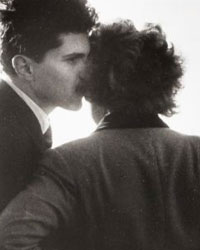
Weegee (1899–1968) - Cop Killer 1939
Ostateczna oferta
€ 240
5 tygodni temu

Weegee (1899–1968) - Cop Killer 1939

Cop Killer, 1939 Print from Weegee Portfolio Exhibition Print based on the 1982 prints by Sid Kaplan, Produced for Amber Film & Photography Collective, Newcastle upon Tyne Arthur (Usher) Fellig (June 12, 1899 – December 26, 1968), known by his pseudonym Weegee, was a photographer and photojournalist, known for his stark black and white street photography in New York City. Weegee worked in Manhattan's Lower East Side as a press photographer during the 1930s and 1940s and developed his signature style by following the city's emergency services and documenting their activity.[2] Much of his work depicted unflinchingly realistic scenes of urban life, crime, injury and death. He worked at night and competed with the police to be first at the scene of a crime, selling his photographs to tabloids and photographic agencies.[5] His photographs, centered around Manhattan police headquarters, were soon published by the Daily News and other tabloids, as well as more upscale publication such as Life magazine. Most of his notable photographs were taken with very basic press photographer equipment and methods of the era, a 4×5 Speed Graphic camera preset at f/16 at 1/200 of a second, with flashbulbs and a set focus distance of ten feet.[11] He was a self-taught photographer with no formal training. Five of his photographs were acquired by the Museum of Modern Art (MoMA) in 1943. These works were included in its exhibition Action Photography.[21] He was later included in "50 Photographs by 50 Photographers", another MoMA show organized by photographer Edward Steichen,. Naked City (1945) was his first book of photographs. Film producer Mark Hellinger bought the rights to the title from Weegee.[21] In 1948, Weegee's aesthetic formed the foundation for Hellinger's film The Naked City. It was based on a gritty 1948 story written by Malvin Wald about the investigation into a model's murder in New York. In the 1950s and 1960s, Weegee experimented with panoramic photographs, photo distortions and photography through prisms. Using a plastic lens, he made a famous photograph of Marilyn Monroe in which her face is grotesquely distorted yet still recognizable. Weegee can be seen as the American counterpart to Brassaï, who photographed Paris street scenes at night. Weegee's themes of nudists, circus performers, freaks and street people were later taken up and developed by Diane Arbus in the early 1960s.

Nr 101265889

Sprzedane
Weegee (1899–1968) - Cop Killer 1939

Weegee (1899–1968) - Cop Killer 1939

Cop Killer, 1939

Print from Weegee Portfolio
Exhibition Print based on the 1982 prints by Sid Kaplan,
Produced for
Amber Film & Photography Collective, Newcastle upon Tyne


Arthur (Usher) Fellig (June 12, 1899 – December 26, 1968), known by his pseudonym Weegee, was a photographer and photojournalist, known for his stark black and white street photography in New York City.
Weegee worked in Manhattan's Lower East Side as a press photographer during the 1930s and 1940s and developed his signature style by following the city's emergency services and documenting their activity.[2] Much of his work depicted unflinchingly realistic scenes of urban life, crime, injury and death.
He worked at night and competed with the police to be first at the scene of a crime, selling his photographs to tabloids and photographic agencies.[5] His photographs, centered around Manhattan police headquarters, were soon published by the Daily News and other tabloids, as well as more upscale publication such as Life magazine.
Most of his notable photographs were taken with very basic press photographer equipment and methods of the era, a 4×5 Speed Graphic camera preset at f/16 at 1/200 of a second, with flashbulbs and a set focus distance of ten feet.[11] He was a self-taught photographer with no formal training.

Five of his photographs were acquired by the Museum of Modern Art (MoMA) in 1943. These works were included in its exhibition Action Photography.[21] He was later included in "50 Photographs by 50 Photographers", another MoMA show organized by photographer Edward Steichen,.

Naked City (1945) was his first book of photographs. Film producer Mark Hellinger bought the rights to the title from Weegee.[21] In 1948, Weegee's aesthetic formed the foundation for Hellinger's film The Naked City. It was based on a gritty 1948 story written by Malvin Wald about the investigation into a model's murder in New York.

In the 1950s and 1960s, Weegee experimented with panoramic photographs, photo distortions and photography through prisms. Using a plastic lens, he made a famous photograph of Marilyn Monroe in which her face is grotesquely distorted yet still recognizable.
Weegee can be seen as the American counterpart to Brassaï, who photographed Paris street scenes at night. Weegee's themes of nudists, circus performers, freaks and street people were later taken up and developed by Diane Arbus in the early 1960s.

Podobne przedmioty

Dla Ciebie w

Fotografia

Ustaw alert wyszukiwania
Ustaw alert wyszukiwania, aby otrzymywać powiadomienia o nowych dopasowaniach.

Ten przedmiot został zaprezentowany w


Jak kupować w serwisie Catawiki

Dowiedz się więcej o naszej ochronie nabywców

      1. Odkryj coś wyjątkowego

      Przeglądaj tysiące wyjątkowych przedmiotów wybranych przez ekspertów. Zobacz zdjęcia, szczegóły i wartość szacunkową każdego wyjątkowego przedmiotu. 

      2. Złóż najwyższą ofertę

      Znajdź coś, co Ci się podoba i złóż najwyższą ofertę. Możesz śledzić aukcję do końca lub pozwolić naszemu systemowi licytować za Ciebie. Wszystko, co musisz zrobić, to ustawić ofertę na maksymalną kwotę, którą planujesz wydać. 

      3. Dokonaj bezpiecznej płatności

      Zapłać za swój wyjątkowy przedmiot, a my zabezpieczymy Twoją płatność, dopóki Twój przedmiot nie dotrze bezpiecznie do Ciebie. Używamy zaufanego systemu płatności do obsługi wszystkich transakcji. 

Masz coś podobnego do sprzedania?

Niezależnie od tego, czy dopiero zaczynasz przygodę z aukcjami internetowymi, czy sprzedajesz już profesjonalnie, możemy pomóc Ci sprzedać Twoje wyjątkowe przedmioty za wyższe kwoty, tak abyś mógł zarobić więcej.

Sprzedaj swój przedmiot