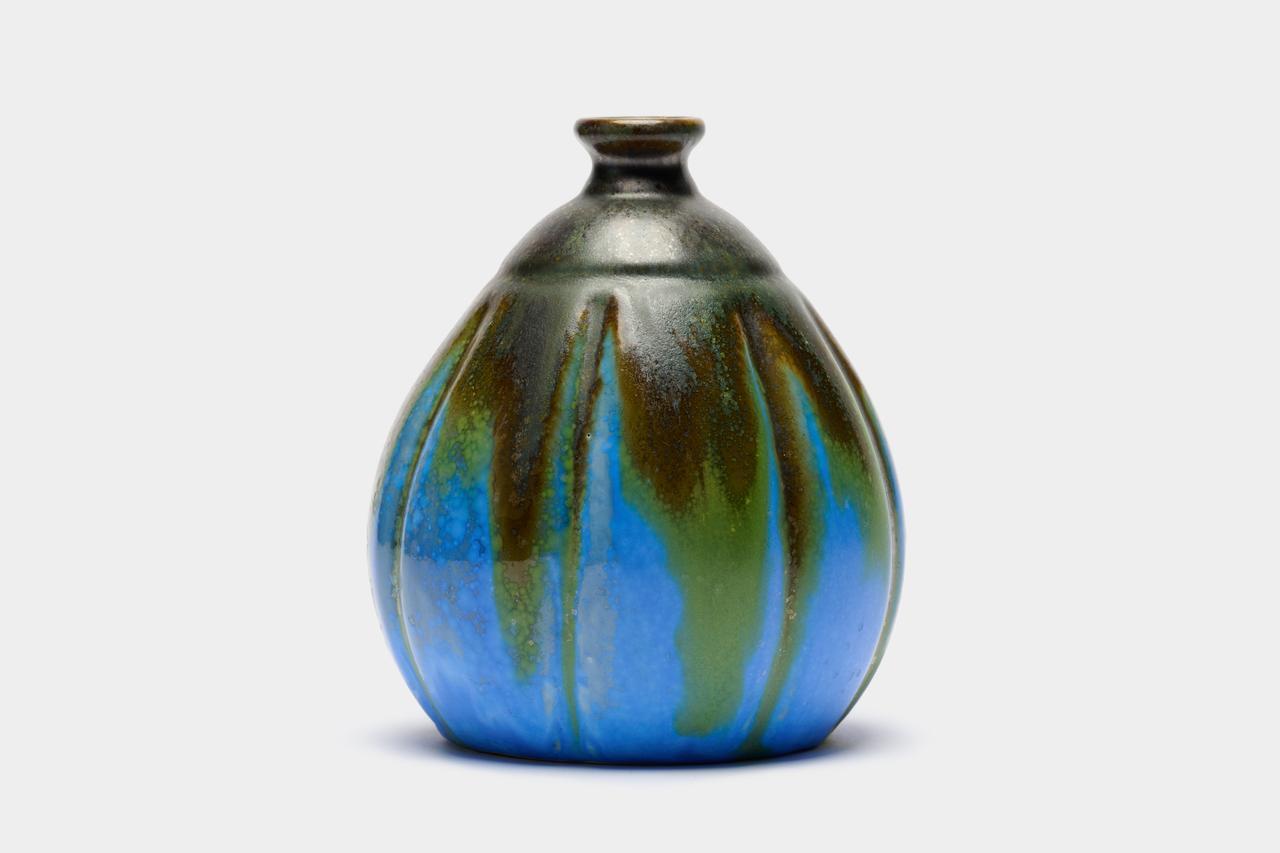
Harrach - Butelka - Szkło uranowe


04
dni
03
godziny
06
minuty
12
sekundy
Aktualna oferta
€ 30
Cena minimalna nie została osiągnięta

Ekspert
Wyselekcjonowany przez Florentin Brunz Gaborieau
Posiada magistra historii sztuki, specjalizuje się w drugim cesarstwie francuskim i złotym wieku Holandii.
Estymacja € 150 - € 200
Liczba osób obserwujących ten przedmiot: 11
 Licytant 1859 Licytant 1859 | € 30 | |
|---|---|---|
 Licytant 6740 Licytant 6740 | € 25 |
Ochrona nabywców Catawiki
Twoja płatność jest u nas bezpieczna, dopóki nie otrzymasz przedmiotu.Zobacz szczegóły
Trustpilot: 4.4 | opinie: 128236
Doskonała ocena na Trustpilot.
Wazon z opalescencyjnego szkła uranowego Harrach, Böhmen, koniec XIX wieku, okrągła forma, ręcznie malowana różowa dekoracja, wysokość 8 cm, średnica wejścia 12 cm, podstawa 6 cm, w doskonałym stanie.
Podsumowanie wspomagane sztuczną inteligencją
Opis od sprzedawcy
Victorian opalescent uranium glass art vase, late 19th century, produced in the Bohemian glass workshops of HARRACH.
The vase shown is a piece of opalescent uranium glass art, produced in the Victorian style in the late 19th century. It is a decorative object, possibly a rose bowl, with wavy edges finished in pink and rich decoration, applied by hand, with polychrome enamels depicting flowers, including pansies.
• Material: Opalescent uranium glass, which has a milky hue and a slight iridescence.
• Design: Rounded shape, with a small base and wide, hand-curled edges.
• Decoration: Hand-painted with enamels, a popular technique for artistic glassware of that period.
• Manufacturer: The opalescent uranium glass vase was produced by the Czech manufacturer Harrach.
Impeccable condition
Opening diameter - 12 cm
Base diameter - 6 cm
Height - 8 cm
Uranium was used in glass (known as "uranium glass" or "Vaseline glass") mainly between the 1830s and 1940s, being added in percentages of 1% to 2%
(sometimes up to 25% for intense colors) to the composition of the glass to give it a yellow-green, fluorescent hue, visible under ultraviolet light.
• Appearance and color: Under black light (UV), the glass glows brightly in a neon green color.
• History: Its use was popular in the 19th and early 20th centuries. It was restricted during World War II due to the use of uranium in nuclear projects.
• Use: It was used for decorative objects, tableware, vases, jewelry, and table glassware.
• Radioactivity: Uranium glass is generally weakly radioactive, but is considered safe for occasional or occasional exposure, but it is recommended to avoid using it for acidic foods/beverages, as the uranium may leach out over time.
• Identification: The easiest way to identify it is to use a UV flashlight, which will make the glass glow.
Trimiteți feedback
By the end of the 19th century, the glassworks employed around 400 people, and in 1895 a large grinding workshop was established, with electric lighting and electricity from water turbines, now a national technical monument.
In the early 20th century, the glassworks pioneered Art Nouveau. Under the leadership of Bohdan Kadlec and Jan Malina and with artists such as Josef Petříček and Julius Jelínek, the glassworks collaborated with notable figures including Alfons Mucha and Jan Kotěra. Floral motifs inspired by French florists and LC Tiffany were developed.
The product will be properly packaged so that it reaches you in perfect condition.
Victorian opalescent uranium glass art vase, late 19th century, produced in the Bohemian glass workshops of HARRACH.
The vase shown is a piece of opalescent uranium glass art, produced in the Victorian style in the late 19th century. It is a decorative object, possibly a rose bowl, with wavy edges finished in pink and rich decoration, applied by hand, with polychrome enamels depicting flowers, including pansies.
• Material: Opalescent uranium glass, which has a milky hue and a slight iridescence.
• Design: Rounded shape, with a small base and wide, hand-curled edges.
• Decoration: Hand-painted with enamels, a popular technique for artistic glassware of that period.
• Manufacturer: The opalescent uranium glass vase was produced by the Czech manufacturer Harrach.
Impeccable condition
Opening diameter - 12 cm
Base diameter - 6 cm
Height - 8 cm
Uranium was used in glass (known as "uranium glass" or "Vaseline glass") mainly between the 1830s and 1940s, being added in percentages of 1% to 2%
(sometimes up to 25% for intense colors) to the composition of the glass to give it a yellow-green, fluorescent hue, visible under ultraviolet light.
• Appearance and color: Under black light (UV), the glass glows brightly in a neon green color.
• History: Its use was popular in the 19th and early 20th centuries. It was restricted during World War II due to the use of uranium in nuclear projects.
• Use: It was used for decorative objects, tableware, vases, jewelry, and table glassware.
• Radioactivity: Uranium glass is generally weakly radioactive, but is considered safe for occasional or occasional exposure, but it is recommended to avoid using it for acidic foods/beverages, as the uranium may leach out over time.
• Identification: The easiest way to identify it is to use a UV flashlight, which will make the glass glow.
Trimiteți feedback
By the end of the 19th century, the glassworks employed around 400 people, and in 1895 a large grinding workshop was established, with electric lighting and electricity from water turbines, now a national technical monument.
In the early 20th century, the glassworks pioneered Art Nouveau. Under the leadership of Bohdan Kadlec and Jan Malina and with artists such as Josef Petříček and Julius Jelínek, the glassworks collaborated with notable figures including Alfons Mucha and Jan Kotěra. Floral motifs inspired by French florists and LC Tiffany were developed.
The product will be properly packaged so that it reaches you in perfect condition.
Szczegóły
Era
1400-1900
Waga
275 g
Rodzaj szkła
Szkło uranowe
Określony region pochodzenia
Harrachov
Liczba przedmiotów
1
Kraj pochodzenia
Czechy
Producent/ marka
Harrach
Materiał
Szkło
Stan
Stan doskonały - przedmiot prawie nieużywany, z minimalnymi oznakami wieku oraz zużycia.
Wysokość
8 cm
Szerokość
12 cm
Głębokość
12 cm
Szacowany okres
1850-1900
Sprzedawane przez