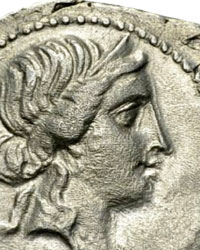
Mysia, Lampsacus Unit 190-85 BC


Rozpoczyna się jutro
Cena wywoławcza
€ 1
Dodaj do ulubionych, aby otrzymać powiadomienie o rozpoczęciu aukcji.

Ekspert
Wyselekcjonowany przez Carmen Vera Gutiérrez
Doświadczona rzeczoznawczyni antyków, specjalistka od hiszpańskich i starych monet.
Estymacja € 200 - € 220
Ochrona nabywców Catawiki
Twoja płatność jest u nas bezpieczna, dopóki nie otrzymasz przedmiotu.Zobacz szczegóły
Trustpilot: 4.4 | opinie: 127823
Doskonała ocena na Trustpilot.
Opis od sprzedawcy
Mysie, Unité, Lampsaque
A. : Tête laurée d’Apollon à droite.
R. : Lyre ; protomé de Pégase dans le champ à gauche.
Au IIᵉ siècle av. J.-C., Lampsaque passe progressivement sous l’influence du royaume de Pergame, tout en conservant une prospérité fondée sur le commerce maritime et la viticulture. À la mort d’Attale III (133 av. J.-C.), elle est intégrée au domaine romain, devenant une cité alliée privilégiée grâce à sa fidélité envers Rome. Au Iᵉʳ siècle av. J.-C., elle soutient la République contre Mithridate VI du Pont, ce qui lui vaut d’importants privilèges et une autonomie municipale renforcée au sein de la province d’Asie.
- - -
Mysia, Unit, Lampsacus
A. : Laureate head of Apollo facing right.
R. : Lyre ; protome of Pegasus in the field on the left.
In the 2nd century BC, Lampsacus gradually fell under the influence of the Kingdom of Pergamon, while maintaining a prosperity based on maritime trade and viticulture. Upon the death of Attalus III (133 BC), it was incorporated into the Roman domain, becoming a privileged allied city thanks to its loyalty to Rome. In the 1st century BC, it supported the Republic against Mithridates VI of Pontus, which earned it significant privileges and increased municipal autonomy within the province of Asia.
Mysie, Unité, Lampsaque
A. : Tête laurée d’Apollon à droite.
R. : Lyre ; protomé de Pégase dans le champ à gauche.
Au IIᵉ siècle av. J.-C., Lampsaque passe progressivement sous l’influence du royaume de Pergame, tout en conservant une prospérité fondée sur le commerce maritime et la viticulture. À la mort d’Attale III (133 av. J.-C.), elle est intégrée au domaine romain, devenant une cité alliée privilégiée grâce à sa fidélité envers Rome. Au Iᵉʳ siècle av. J.-C., elle soutient la République contre Mithridate VI du Pont, ce qui lui vaut d’importants privilèges et une autonomie municipale renforcée au sein de la province d’Asie.
- - -
Mysia, Unit, Lampsacus
A. : Laureate head of Apollo facing right.
R. : Lyre ; protome of Pegasus in the field on the left.
In the 2nd century BC, Lampsacus gradually fell under the influence of the Kingdom of Pergamon, while maintaining a prosperity based on maritime trade and viticulture. Upon the death of Attalus III (133 BC), it was incorporated into the Roman domain, becoming a privileged allied city thanks to its loyalty to Rome. In the 1st century BC, it supported the Republic against Mithridates VI of Pontus, which earned it significant privileges and increased municipal autonomy within the province of Asia.
Szczegóły
Era
Przed 1400 r.
Waga
7,63 g
Kultura/region
Mysia, Lampsacus
Rok / Okres i Odmiana
190-85 BC
Waluta
Unit
Metal
CU
Stan
Klasyfikowane przez NGC
Numer certyfikacji
8583834-016