编号 100207080

已售出
Louis Poulsen - Poul Henningsen - 灯具 - 铜, 金属 - PH 4½-3½ 户外墙
最终出价
€ 610
16小时前

Louis Poulsen - Poul Henningsen - 灯具 - 铜, 金属 - PH 4½-3½ 户外墙

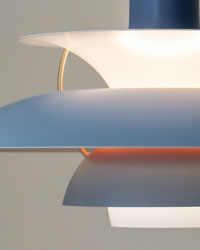
PH 4½-3 outdoor wall lamp designed by Poul Henningsen and produced in 2020 at Louis Poulsen. The fixture is designed based on the principle of a reflective three-shade system, which directs the light downwards. The shades have a matt white painted interior surface, diffusing the light in a comfortable way. Materials Shades: Spun copper. Wall box: Spun copper. Arm: Copper. Finish Copper, brushed. In general well-patinated. Upper shade has a little dent. Size and measurement (mm) Width: 450 Height: 290 Length: 505 Weight 6.8 kg Will be packed carefully and shipped by professional carrier no later than three days after the end of auction. If you have any question don't hesitate to contact me. Poul Henningsen designed the three-shade system back in 1925-1926. The first lights using the system were designed by PH in cooperation with Louis Poulsen for an exhibition in Paris. This partnership continued up until his death in 1967. Throughout his life, PH sought to create glare-free light, direct light where it was most needed, and create soft shadows, using incandescent bulbs as a light source. PH 3/2½ Wall is a member of the three-shade family which numbers 30 lights today, including three for outdoor use. Thus PH did not just design a light, but an entire system – around a thousand different models have been produced over the years. This wide selection consisted of table, floor and wall lamps, as well as a number of different chandeliers, which were very popular in the 30s for lighting private homes from high ceilings. There were countless combination options. The lights were available in different colours, as well as a range of sizes. The first shades were made of metal with a painted undersurface, such as white, gold or silver – depending on whether diffuse, warm or cold light was desired. Glass was later introduced for the three-shade system. In addition to the downward-directed light, glass lamps illuminated the room. PH was the first person to pursue a scientific approach to light and use the logarithmic spiral as a basis. By using a design based on the logarithmic spiral he achieved even distribution of light over the entire curve of the shade. This even light distribution, together with the diffuse reflection through the glass, made it possible to control glare and shadow. Each shade reduces the amount of light equally, due to their distance from the light source. The PH light model numbers refer to the shade size. Each top shade had a corresponding set of middle and lower shades. In the ‘pure’ models, such as the 2/2, the top shade has a size of about 20 cm, with corresponding lower shades. PH 3/2½ Wall consists of an approximately 30 cm top shade, but uses lower shades from the 2½ model. These ‘hybrid’ models were introduced due to the desire to hang pendants at lower heights. The system was also used for wall, floor and table lamps. PH 4½-3 Wall was introduced in 1966.
编号 100207080

已售出
Louis Poulsen - Poul Henningsen - 灯具 - 铜, 金属 - PH 4½-3½ 户外墙

Louis Poulsen - Poul Henningsen - 灯具 - 铜, 金属 - PH 4½-3½ 户外墙

PH 4½-3 outdoor wall lamp designed by Poul Henningsen and produced in 2020 at Louis Poulsen.

The fixture is designed based on the principle of a reflective three-shade system, which directs the light downwards. The shades have a matt white painted interior surface, diffusing the light in a comfortable way.

Materials
Shades: Spun copper. Wall box: Spun copper. Arm: Copper.
Finish
Copper, brushed.

In general well-patinated. Upper shade has a little dent.

Size and measurement (mm)
Width: 450
Height: 290
Length: 505
Weight 6.8 kg


Will be packed carefully and shipped by professional carrier no later than three days after the end of auction.

If you have any question don't hesitate to contact me.


Poul Henningsen designed the three-shade system back in 1925-1926. The first lights using the system were designed by PH in cooperation with Louis Poulsen for an exhibition in Paris. This partnership continued up until his death in 1967. Throughout his life, PH sought to create glare-free light, direct light where it was most needed, and create soft shadows, using incandescent bulbs as a light source.

PH 3/2½ Wall is a member of the three-shade family which numbers 30 lights today, including three for outdoor use. Thus PH did not just design a light, but an entire system – around a thousand different models have been produced over the years. This wide selection consisted of table, floor and wall lamps, as well as a number of different chandeliers, which were very popular in the 30s for lighting private homes from high ceilings. There were countless combination options. The lights were available in different colours, as well as a range of sizes. The first shades were made of metal with a painted undersurface, such as white, gold or silver – depending on whether diffuse, warm or cold light was desired. Glass was later introduced for the three-shade system. In addition to the downward-directed light, glass lamps illuminated the room.

PH was the first person to pursue a scientific approach to light and use the logarithmic spiral as a basis. By using a design based on the logarithmic spiral he achieved even distribution of light over the entire curve of the shade. This even light distribution, together with the diffuse reflection through the glass, made it possible to control glare and shadow. Each shade reduces the amount of light equally, due to their distance from the light source. The PH light model numbers refer to the shade size. Each top shade had a corresponding set of middle and lower shades. In the ‘pure’ models, such as the 2/2, the top shade has a size of about 20 cm, with corresponding lower shades. PH 3/2½ Wall consists of an approximately 30 cm top shade, but uses lower shades from the 2½ model. These ‘hybrid’ models were introduced due to the desire to hang pendants at lower heights. The system was also used for wall, floor and table lamps.

PH 4½-3 Wall was introduced in 1966.

最终出价
€ 610
Henri Daumont
专家
估价  € 700 - € 850

类似物品

类别为您准备的

灯具

设置搜索提醒
设置搜索提醒,以便在有新匹配项目时随时收到通知。

该物品出现在


如何在Catawiki上购买

详细了解我们的买家保障

      1. 发现奇珍异品

      饱览数以千计的专家精选的稀奇物品。查看每件稀奇物品的照片、详情和估价。 

      2. 设置最高出价

      找到您喜欢的物品并设置最高出价。您可以关注拍卖直到最后,也可以让系统为您出价。您只需设置可接受的最高出价。 

      3. 安全支付

      当您付款拍下心仪的稀奇物品后,我们会确保货款的安全,直至物品安然交付与您。我们使用受信赖的支付系统来处理所有交易。 

有类似的东西要出售吗?

无论您是在线拍卖的新手还是专业销售,我们都可以帮助您为您的独特物品赚取更多收入。

出售您的物品