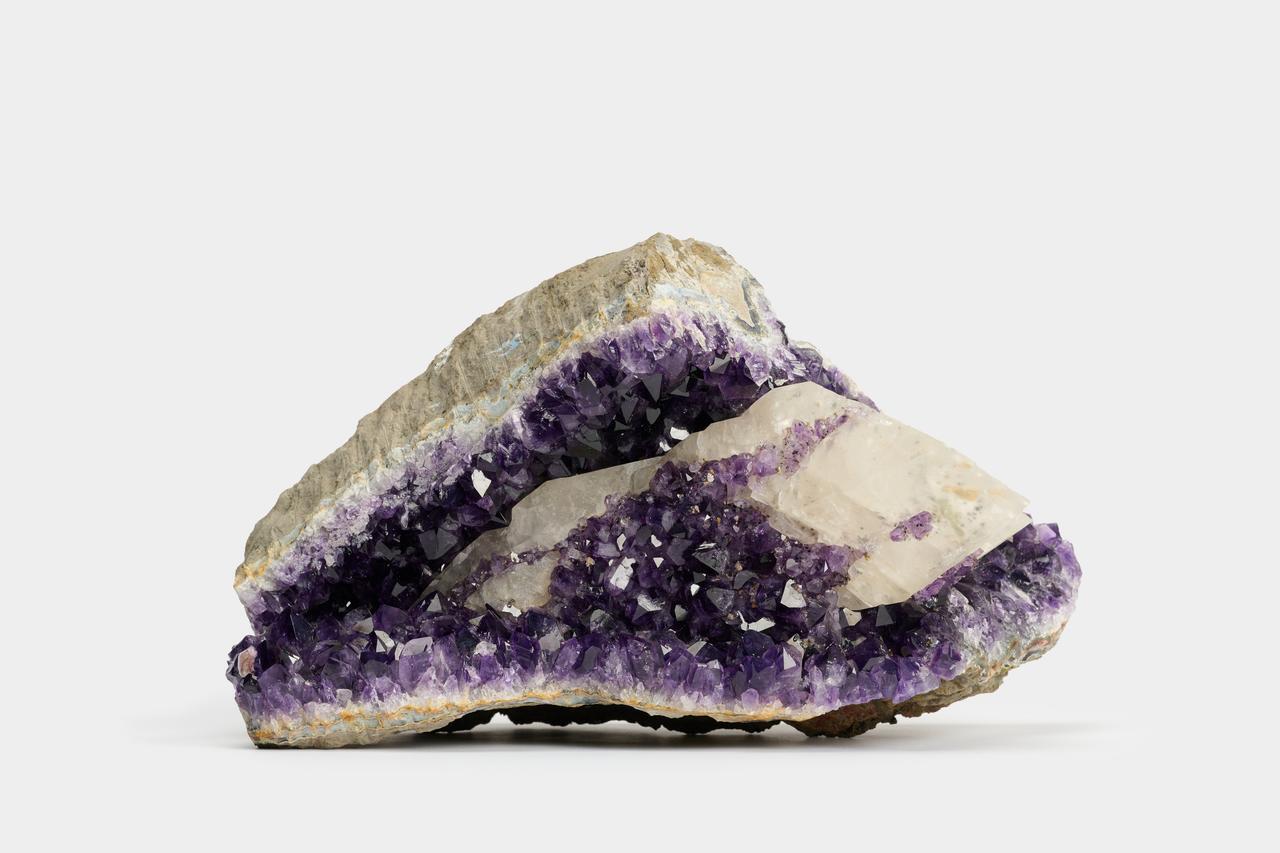
青金石 自由形式 - 高度: 13.5 cm - 宽度: 8 cm- 772 g - (1)


08
天
09
小时
59
分钟
34
秒

没有出价记录
Catawiki买家保障
在您收到物品之前,您的付款将在我们这里受到安全保管。查看详细信息
Trustpilot 4.4分 | 135773条评论
在Trustpilot上被评为优秀。
来自阿富汗巴达赫尚省的自由形青金石,重量772 g,尺寸13.5 × 8 × 5.5 cm。
AI辅助摘要
卖家的描述
Lapis for short, is a deep-blue metamorphic rock used as a semi-precious stone that has been prized since antiquity for its intense color. Originating from the Persian word for the gem, lāžward,[1] lapis lazuli is a rock composed primarily of the minerals lazurite, pyrite and calcite. As early as the 7th millennium BC, lapis lazuli was mined in the Sar-i Sang mines,[2] in Shortugai, and in other mines in Badakhshan province in modern northeast Afghanistan.[3] Lapis lazuli artifacts, dated to 7570 BC, have been found at Bhirrana, which is the oldest site of Indus Valley Civilisation.[4] Lapis was highly valued by the Indus Valley Civilisation (3300–1900 BC).[4][5][6] Lapis beads have been found at Neolithic burials in Mehrgarh, the Caucasus, and as far away as Mauritania.[7] It was used in the funeral mask of Tutankhamun (1341–1323 BC).[8]
By the end of the Middle Ages, Europe began importing Lapis lazuli in order to grind it into powder and make ultramarine pigment. Ultramarine was used by some of the most important artists of the Renaissance and Baroque, including Masaccio, Perugino, Titian and Vermeer; it was often reserved for the clothing of the central figures of their paintings, especially the Virgin Mary. Ultramarine has also been found in dental tartar of medieval nuns and scribes, perhaps as a result of licking their painting brushes while producing medieval texts and manuscripts.[9]
History
Excavations from Tepe Gawra show that Lapis lazuli was introduced to Mesopotamia approximately in the late Ubaid period, c. 4900–4000 BCE.[10] A traditional understanding was that the Lapis lazuli was mined some 1,500 miles to the east – in Badakhshan. Indeed, the Persian لاژورد lāžavard/lāževard, also written لاجورد lājevard, is commonly interpreted as having an origin in a local place name.
From the Persian, the Arabic لازورد lāzaward is the etymological source of both the English word azure (via Old French azur) and Medieval Latin lazulum, which came to mean 'heaven' or 'sky'. To disambiguate, lapis lazulī ("stone of lazulum") was used to refer to the stone itself, and is the term ultimately imported into Middle English.[11] Lazulum is etymologically related to the color blue, and used as a root for the word for blue in several languages, including Spanish and Portuguese azul.[11][12]
Mines in northeast Afghanistan continue to be a major source of lapis lazuli. Important amounts are also produced from mines west of Lake Baikal in Russia, and in the Andes mountains in Chile which is the source that the Inca used to carve artifacts and jewelry. Smaller quantities are mined in Pakistan, Italy, Mongolia, the United States, and Canada.[13]
Science and uses
Composition
The most important mineral component of lapis lazuli is lazurite[14] (25% to 40%),[citation needed] a blue feldspathoid silicate mineral of the sodalite family, with the formula Na7Ca(Al6Si6O24)(SO4)(S3) ·H2O .[15] Most lapis lazuli also contains calcite (white), and pyrite (metallic yellow). Some samples of lapis lazuli contain augite, diopside, enstatite, mica, hauynite, hornblende, nosean, and sulfur-rich löllingite geyerite.
Lapis lazuli usually occurs in crystalline marble as a result of contact metamorphism.
Color
Lapis lazuli seen through a microscope (x240 magnification)
The intense blue color is due to the presence of the trisulfur radical anion (S•−
3) in the crystal.[16] The presence of disulfur (S•−
2) and tetrasulfur (S•−
4) radicals can shift the color towards yellow or red, respectively.[17] These radical anions substitute for the chloride anions within the sodalite structure.[18] The S•−
3 radical anion exhibits a visible absorption band in the range 595–620 nm with high molar absorptivity, leading to its bright blue color.[19]
Sources
Lapis lazuli is found in limestone in the Kokcha River valley of Badakhshan province in north-eastern Afghanistan, where the Sar-i Sang mine deposits have been worked for more than 6,000 years.[20] Afghanistan was the source of lapis for the ancient Persian, Egyptian and Mesopotamian civilizations, as well as the later Greeks and Romans. Ancient Egyptians obtained the material through trade with Mesopotamians, as part of Egypt–Mesopotamia relations and from ancient Ethiopia . During the height of the Indus Valley Civilisation, approximately 2000 BC, the Harappan colony, now known as Shortugai, was established near the lapis mines.[7]
In addition to the Afghan deposits, lapis is also extracted in the Andes (near Ovalle, Chile); and to the west of Lake Baikal in Siberia, Russia, at the Tultui lazurite deposit. It is mined in smaller amounts in Angola, Argentina, Burma, Ethiopia, Pakistan, Canada, Italy, India, and in the United States in California and Colorado.[13]
Uses and substitutes
Lapis takes an excellent polish and can be made into jewellery, carvings, boxes, mosaics, ornaments, small statues, and vases. Interior items and finishing of buildings can be also made with lapis. During the Renaissance, lapis was ground and processed to make the pigment ultramarine for use in frescoes and oil painting. Its usage as a pigment in oil paint largely ended during the early 19th century, when a chemically identical synthetic variety became available.
Lapis lazuli is commercially synthesized or simulated by the Gillson process, which is used to make artificial ultramarine and hydrous zinc phosphates.[21] Spinel or sodalite, or dyed jasper or howlite, can be substituted for lapis.[22]
Lapis for short, is a deep-blue metamorphic rock used as a semi-precious stone that has been prized since antiquity for its intense color. Originating from the Persian word for the gem, lāžward,[1] lapis lazuli is a rock composed primarily of the minerals lazurite, pyrite and calcite. As early as the 7th millennium BC, lapis lazuli was mined in the Sar-i Sang mines,[2] in Shortugai, and in other mines in Badakhshan province in modern northeast Afghanistan.[3] Lapis lazuli artifacts, dated to 7570 BC, have been found at Bhirrana, which is the oldest site of Indus Valley Civilisation.[4] Lapis was highly valued by the Indus Valley Civilisation (3300–1900 BC).[4][5][6] Lapis beads have been found at Neolithic burials in Mehrgarh, the Caucasus, and as far away as Mauritania.[7] It was used in the funeral mask of Tutankhamun (1341–1323 BC).[8]
By the end of the Middle Ages, Europe began importing Lapis lazuli in order to grind it into powder and make ultramarine pigment. Ultramarine was used by some of the most important artists of the Renaissance and Baroque, including Masaccio, Perugino, Titian and Vermeer; it was often reserved for the clothing of the central figures of their paintings, especially the Virgin Mary. Ultramarine has also been found in dental tartar of medieval nuns and scribes, perhaps as a result of licking their painting brushes while producing medieval texts and manuscripts.[9]
History
Excavations from Tepe Gawra show that Lapis lazuli was introduced to Mesopotamia approximately in the late Ubaid period, c. 4900–4000 BCE.[10] A traditional understanding was that the Lapis lazuli was mined some 1,500 miles to the east – in Badakhshan. Indeed, the Persian لاژورد lāžavard/lāževard, also written لاجورد lājevard, is commonly interpreted as having an origin in a local place name.
From the Persian, the Arabic لازورد lāzaward is the etymological source of both the English word azure (via Old French azur) and Medieval Latin lazulum, which came to mean 'heaven' or 'sky'. To disambiguate, lapis lazulī ("stone of lazulum") was used to refer to the stone itself, and is the term ultimately imported into Middle English.[11] Lazulum is etymologically related to the color blue, and used as a root for the word for blue in several languages, including Spanish and Portuguese azul.[11][12]
Mines in northeast Afghanistan continue to be a major source of lapis lazuli. Important amounts are also produced from mines west of Lake Baikal in Russia, and in the Andes mountains in Chile which is the source that the Inca used to carve artifacts and jewelry. Smaller quantities are mined in Pakistan, Italy, Mongolia, the United States, and Canada.[13]
Science and uses
Composition
The most important mineral component of lapis lazuli is lazurite[14] (25% to 40%),[citation needed] a blue feldspathoid silicate mineral of the sodalite family, with the formula Na7Ca(Al6Si6O24)(SO4)(S3) ·H2O .[15] Most lapis lazuli also contains calcite (white), and pyrite (metallic yellow). Some samples of lapis lazuli contain augite, diopside, enstatite, mica, hauynite, hornblende, nosean, and sulfur-rich löllingite geyerite.
Lapis lazuli usually occurs in crystalline marble as a result of contact metamorphism.
Color
Lapis lazuli seen through a microscope (x240 magnification)
The intense blue color is due to the presence of the trisulfur radical anion (S•−
3) in the crystal.[16] The presence of disulfur (S•−
2) and tetrasulfur (S•−
4) radicals can shift the color towards yellow or red, respectively.[17] These radical anions substitute for the chloride anions within the sodalite structure.[18] The S•−
3 radical anion exhibits a visible absorption band in the range 595–620 nm with high molar absorptivity, leading to its bright blue color.[19]
Sources
Lapis lazuli is found in limestone in the Kokcha River valley of Badakhshan province in north-eastern Afghanistan, where the Sar-i Sang mine deposits have been worked for more than 6,000 years.[20] Afghanistan was the source of lapis for the ancient Persian, Egyptian and Mesopotamian civilizations, as well as the later Greeks and Romans. Ancient Egyptians obtained the material through trade with Mesopotamians, as part of Egypt–Mesopotamia relations and from ancient Ethiopia . During the height of the Indus Valley Civilisation, approximately 2000 BC, the Harappan colony, now known as Shortugai, was established near the lapis mines.[7]
In addition to the Afghan deposits, lapis is also extracted in the Andes (near Ovalle, Chile); and to the west of Lake Baikal in Siberia, Russia, at the Tultui lazurite deposit. It is mined in smaller amounts in Angola, Argentina, Burma, Ethiopia, Pakistan, Canada, Italy, India, and in the United States in California and Colorado.[13]
Uses and substitutes
Lapis takes an excellent polish and can be made into jewellery, carvings, boxes, mosaics, ornaments, small statues, and vases. Interior items and finishing of buildings can be also made with lapis. During the Renaissance, lapis was ground and processed to make the pigment ultramarine for use in frescoes and oil painting. Its usage as a pigment in oil paint largely ended during the early 19th century, when a chemically identical synthetic variety became available.
Lapis lazuli is commercially synthesized or simulated by the Gillson process, which is used to make artificial ultramarine and hydrous zinc phosphates.[21] Spinel or sodalite, or dyed jasper or howlite, can be substituted for lapis.[22]
详细资料
物品件数
1
主要矿物
Lapis Lzuli
矿物形式
自由形式
重量
772 g
原产地(地区/城市)
Badakhshan
国家
阿富汗
高度
13,5 cm
宽度
8 cm
深度
5,5 cm
免责声明
某些宝石和矿石被认为是对人体的健康和精神有益的吉祥物。 但是,使用或佩戴宝石或矿石并不意味着您可以治疗、痊愈或预防任何疾病。 请咨询您的卫生保健专业人员以获取有关医疗保健问题的详细信息,并且请勿在未咨询您的卫生保健专业人员之前停止使用任何药物治疗或疗程。 使用宝石或矿石作为健康疗法是个人选择中的一项。 虽然自古以来石头或水晶被用于缓解或预防症状,但我们网站上出售的物品不提供疗效的保证。 因此,Catawiki 不能保证或对在此出售的类似物品的有效性承担任何责任。
某些宝石和矿石被认为是对人体的健康和精神有益的吉祥物。 但是,使用或佩戴宝石或矿石并不意味着您可以治疗、痊愈或预防任何疾病。 请咨询您的卫生保健专业人员以获取有关医疗保健问题的详细信息,并且请勿在未咨询您的卫生保健专业人员之前停止使用任何药物治疗或疗程。 使用宝石或矿石作为健康疗法是个人选择中的一项。 虽然自古以来石头或水晶被用于缓解或预防症状,但我们网站上出售的物品不提供疗效的保证。 因此,Catawiki 不能保证或对在此出售的类似物品的有效性承担任何责任。