编号 104885882

已售出
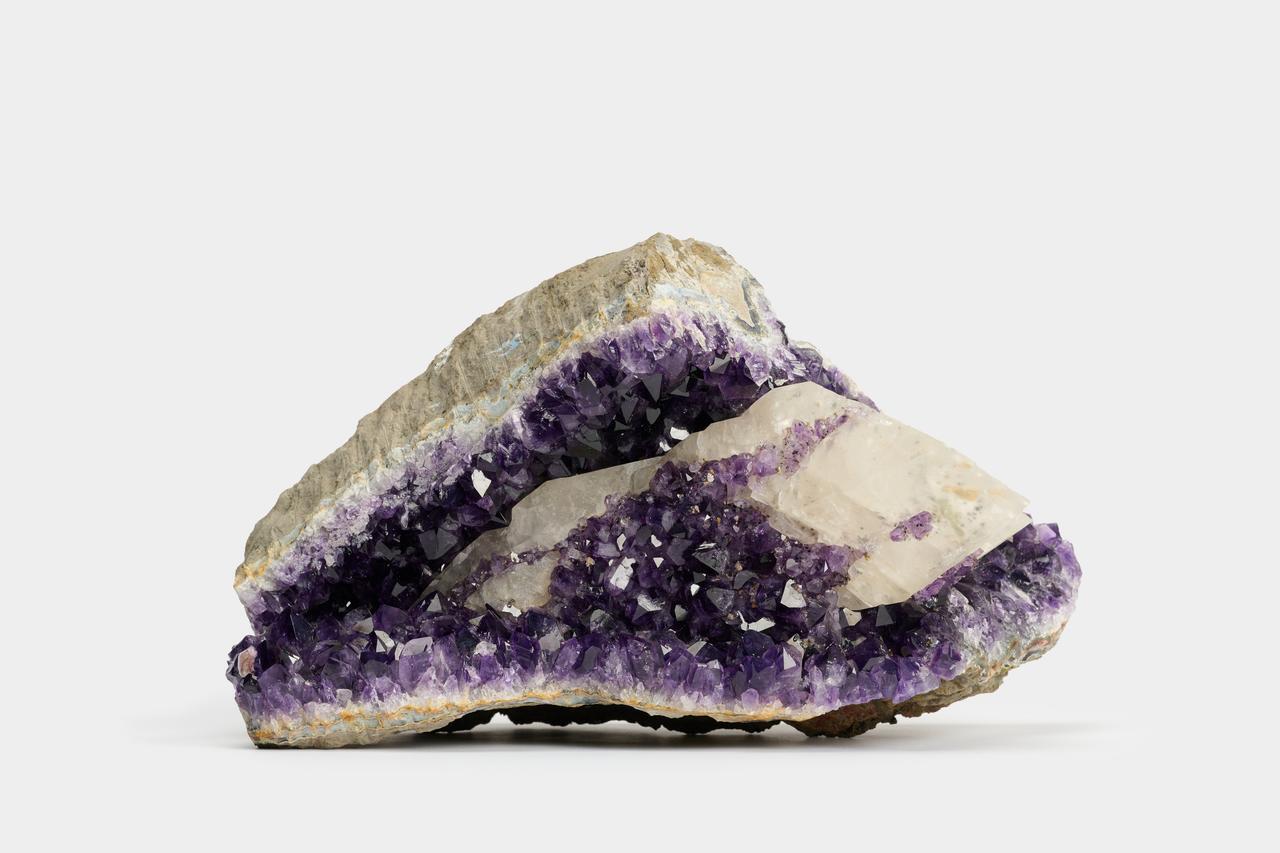
黝帘石 球体 - 高度: 70 cm - 宽度: 104 cm- 104 g - (2)
最终出价
€ 7
没有保留价
7周前

黝帘石 球体 - 高度: 70 cm - 宽度: 104 cm- 104 g - (2)

Exclusive long necklace and bracelet of hematite Greek crosses (protection and balance) and of the (2) - zoisite Greece - First half 20 th century Exclusive long necklace and bracelet of hematite Greek crosses (protection and balance) and of the highest quality natural ruby zoisite. The large clasp is made gold plated. The necklace has been spun by hand with knots in each ruby zoisite bead and cross. The necklace 50 cm, bracelet length 19 cm Material: natural ruby zoisite Top grade Size: 12,30 mm diameter in a bracelet 5 Greek crosses made of natural hematite( 8 x 8 x 3 mm) in a necklace 5 Greek crosses clasp - large & solid - gold plated Set weight Origin Afgan zoisite – 104 gr Gift box pay attention to the photo on the background of the hand - the color of the beads depends on the calibration of your monitor From a chemical point of view, it is a silicate of complex composition, including aluminum and calcium. Ferric ions give the mineral its characteristic pistachio green color. Zoisite (saualpite, aniolite) is a mineral of the subclass of island silicates, a metamorphogenic product of hydrothermal alteration of plagioclase. Named after the Slovenian collector and educator S. Zois (Baron Sigmund Zois von Edelstein; 1747-1819). It was first found in 1805 in Carinthia (Austria-Hungary) on the Sau-Alps ridge (earlier, the mineral was called saualpite after the place of extraction). Greek cross (crux quadrata): An old type of cross with arms of equal length. It is the most absolute simplification of the symbol. It is the concentration in its pure state. The meaning of the Greek Cross is that of protection and balance, due to its symmetrical shape with arms of the same size. It is also believed that the Greek cross is a representation of God and on the other hand the Latin cross that we all know is the representation of the crucifixion of Christ. The Greek Cross despite the fact that its name indicates that it was born and used mainly in Greece, it is not. The Greek Cross makes its appearance in the East by the Christians who inhabited those territories. The cross was based on the Immisa Cross where Jesus died but with the stick shortened, giving it a symmetrical aesthetic to be able to see it in the same way from any direction. It is believed that the use of this cross in the East was influenced by the True Cross found in Jerusalem. Helena of Constantinople, also known as Saint Helena, dedicated her life to finding the relics of the True Cross (the cross where Jesus Christ was crucified). She travelled to Jerusalem in about 326 to discover its location. She finally said to find the place where the true cross and the tomb of Jesus was located. Then her son Constantine built a church at the request of her mother in the same place where there was already an ancient temple erected to Venus (for the Romans) or Aphrodite (for the Greeks). This church was known as the Church of the Holy Sepulchre, located in the area of the old city of Jerusalem. After finding the cross where Jesus Christ died, Saint Helena cut off the lower part of the Cross (approximately a fifth of its height) and sent it to Rome as a relic, known as the Lignum Crucis. She then left the remaining cross in Jerusalem, which, having been sawn, was left in the shape of a Greek Cross.
编号 104885882

已售出
黝帘石 球体 - 高度: 70 cm - 宽度: 104 cm- 104 g - (2)

黝帘石 球体 - 高度: 70 cm - 宽度: 104 cm- 104 g - (2)

Exclusive long necklace and bracelet of hematite Greek crosses (protection and balance) and of the (2) - zoisite
Greece - First half 20
th century
Exclusive long necklace and bracelet of hematite Greek crosses (protection and balance) and of the highest quality natural ruby zoisite. The large clasp is made gold plated.

The necklace has been spun by hand with knots in each ruby zoisite bead and cross.

The necklace 50 cm, bracelet length 19 cm
Material: natural ruby zoisite
Top grade
Size: 12,30 mm diameter
in a bracelet 5 Greek crosses made of natural hematite( 8 x 8 x 3 mm)
in a necklace 5 Greek crosses


clasp - large & solid - gold plated
Set weight
Origin Afgan zoisite
– 104 gr
Gift box
pay attention to the photo on the background of the hand - the color of the beads depends on the calibration of your monitor
From a chemical point of view, it is a silicate of complex composition, including aluminum and calcium. Ferric ions give the mineral its characteristic pistachio green color.
Zoisite (saualpite, aniolite) is a mineral of the subclass of island silicates, a metamorphogenic product of hydrothermal alteration of plagioclase. Named after the Slovenian collector and educator S. Zois (Baron Sigmund Zois von Edelstein; 1747-1819). It was first found in 1805 in Carinthia (Austria-Hungary) on the Sau-Alps ridge (earlier, the mineral was called saualpite after the place of extraction).

Greek cross (crux quadrata): An old type of cross with arms of equal length.
It is the most absolute simplification of the symbol. It is the concentration in its pure state.

The meaning of the Greek Cross is that of protection and balance, due to its symmetrical shape with arms of the same size. It is also believed that the Greek cross is a representation of God and on the other hand the Latin cross that we all know is the representation of the crucifixion of Christ.

The Greek Cross despite the fact that its name indicates that it was born and used mainly in Greece, it is not. The Greek Cross makes its appearance in the East by the Christians who inhabited those territories. The cross was based on the Immisa Cross where Jesus died but with the stick shortened, giving it a symmetrical aesthetic to be able to see it in the same way from any direction.

It is believed that the use of this cross in the East was influenced by the True Cross found in Jerusalem. Helena of Constantinople, also known as Saint Helena, dedicated her life to finding the relics of the True Cross (the cross where Jesus Christ was crucified). She travelled to Jerusalem in about 326 to discover its location. She finally said to find the place where the true cross and the tomb of Jesus was located. Then her son Constantine built a church at the request of her mother in the same place where there was already an ancient temple erected to Venus (for the Romans) or Aphrodite (for the Greeks). This church was known as the Church of the Holy Sepulchre, located in the area of the old city of Jerusalem.

After finding the cross where Jesus Christ died, Saint Helena cut off the lower part of the Cross (approximately a fifth of its height) and sent it to Rome as a relic, known as the Lignum Crucis. She then left the remaining cross in Jerusalem, which, having been sawn, was left in the shape of a Greek Cross.

最终出价
€ 7
没有保留价

类似物品

类别为您准备的

矿石及陨石

设置搜索提醒
设置搜索提醒,以便在有新匹配项目时随时收到通知。

该物品出现在


如何在Catawiki上购买

详细了解我们的买家保障

      1. 发现奇珍异品

      饱览数以千计的专家精选的稀奇物品。查看每件稀奇物品的照片、详情和估价。 

      2. 设置最高出价

      找到您喜欢的物品并设置最高出价。您可以关注拍卖直到最后,也可以让系统为您出价。您只需设置可接受的最高出价。 

      3. 安全支付

      当您付款拍下心仪的稀奇物品后,我们会确保货款的安全,直至物品安然交付与您。我们使用受信赖的支付系统来处理所有交易。 

有类似的东西要出售吗?

无论您是在线拍卖的新手还是专业销售,我们都可以帮助您为您的独特物品赚取更多收入。

出售您的物品