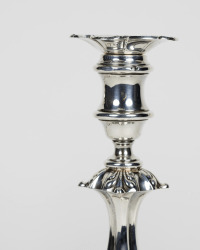
I. Lebedkin, Moskou - 吉都什杯 - 银


02
天
21
小时
03
分钟
42
秒

 | €200 | |
|---|---|---|
| €170 | |
 | €1 |
Catawiki买家保障
在您收到物品之前,您的付款将在我们这里受到安全保管。查看详细信息
Trustpilot 4.4分 | 143878条评论
在Trustpilot上被评为优秀。
银质 Kiddush 杯,来自俄罗斯帝国时期莫斯科,由 I. Lebedkin 制作,日期1899–1908;高4.2 cm,直径3.6 cm,重18.7 g,带有鉴定印记,状况良好(使用痕迹轻微)。
AI辅助摘要
卖家的描述
This stylish Kiddush cup is an authentic object from Imperial Russia, manufactured in Moscow between 1899 and 1908. The piece bears the hallmarks of the Moscow Assurance Office from this period.
To the right of the stamped head are the initials ИЛ visible, belonging to Иван Лебёдкин (Ivan Lebedkin), manager of the Assurance Office in Moscow. This marking enables precise dating within the stated years and confirms the provenance of the object.
The master’s mark is unfortunately unclear, but this does not diminish the historical value of the cup. The clear assurance and assay marks firmly place the piece within the context of late 19th- and early 20th-century Russian Jewish silverware.
This Kiddush cup is suitable for ritual use during Shabbat and holidays as well as for collectors of Judaica and antique Russian silver. A evocative object with an authentic patina and a tangible connection to its time and place of origin.
Height: 4.2 cm. Diameter: 3.6 cm.
Weight: 18.7 grams.
Provenance: From the collection of Devotionalia.
What is Kiddush?
Kiddush ("sanctification") is a short ceremony in which, in the evening at the beginning of Shabbat and other holidays, a prayer is recited over a cup of wine. The blessing is recited by the head of the household in the presence of the whole family, immediately after returning from the synagogue, before the evening meal, and is repeated the next morning. The blessing consists of two blessings: one over the wine and one over the Sabbath or another festival. The father uses the Kiddush cup with the correct amount, and all family members have their own, smaller Kiddush cups. This is considered healthier than drinking directly from the same large, shared Kiddush cup.
The Aish Rabbi answers: The reason for sharing the wine (or grape juice) is that the Wise ones recommend taking part in a "cup of blessing" (kos shel bracha) – that is, a cup that has been used for a mitzvah ("commandment"). Thus the "blessing" is shared with the other participants. Therefore someone typically pours some wine from his own cup after reciting Kiddush, which is then poured into smaller cups for the participants.
It is important to share the wine in the proper manner. The host should pour some wine from his own cup before he begins to drink. Not only is drinking from someone else’s cup unpleasant to many, but only pure wine may be shared. Once someone has drunk from it, the wine is considered pagum (literally: "faulty") and is no longer valid for Kiddush – and only valid wine blesses when shared. Alternatively, the person who recites Kiddush may pass his own cup after drinking. Although wine has already been drunk from it, because it remains in the original cup, it is not pagum and may be shared.
If the host pours wine from his own cup before he begins to drink, he must ensure he pours only a small amount – so that after pouring he still has the full required amount of revi'it in his cup. (See this earlier answer on the required amount of wine.) If his cup is small and there are many guests, a common solution is to pre-pour a portion of wine from the bottle into a separate cup and then pour a little Kiddush wine into that cup before it is shared with others.
Finally, the attendees must wait to drink the wine they have received until the host himself begins to drink. In fact, after the host pours some wine from his cup into a second cup, he must drink it immediately before sharing the poured wine with others.
详细资料
时代
1900-2000
毛重
18,7 g
国家
俄罗斯
设计师/艺术家/制作者
I. Lebedkin, Moskou
材质
银
状态
状态良好 - 使用过,稍有老化的迹象
高度
4,2 cm
宽度
3,6 cm
直径
3,6 cm
深度
0 cm
推算时期
1899-1908