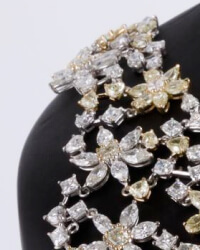
胸针 - 14K包金 黄金 - 古董维多利亚时代 1880年


08
天
04
小时
04
分钟
21
秒

没有出价记录
Catawiki买家保障
在您收到物品之前,您的付款将在我们这里受到安全保管。查看详细信息
Trustpilot 4.4分 | 143806条评论
在Trustpilot上被评为优秀。
约1880年的古董维多利亚式胸针,黄金(14K)材质,镀银盘镶,净重20.2 g,状态非常好,无实验室报告。
AI辅助摘要
卖家的描述
当我们为收藏挑选珠宝时,寻找的不仅仅是美丽。作品还需讲述自身时代的真实。对我们来说,珠宝只有在题材与工艺都忠实于它所创作时期时,才配得上它的位置。若一件珠宝只是模仿一个时期而非真实属于那个时期,它就难以进入我们的收藏。
从这个角度看,这枚胸针无疑属于其世纪。维纳斯、马尔斯与伏尔肯的场景,反映了十九世纪对古典理想的着迷,通过贝特尔·托尔瓦尔德森的艺术得到复兴。这位丹麦雕塑家常与卡诺瓦并提,他为新古典主义带来北方的冷静与清晰,使神话获得新的庄严。托尔瓦尔德森出生于哥本哈根,出身为木匠家庭,成年后在罗马声名鹊起。其安然的浮雕,如此处所呼应之作,在欧洲广为仰慕。
技法也完全属于那个时代。电镀当时是一项现代奇迹,将科学与艺术在共同追求美的路上结合起来。这是一个崇尚进步与完美并重的世纪。甚至拿破仑也曾惊叹过如铝这样的新金属,曾被视为比黄金更珍贵的材料。当然,这枚胸针与铝无关,但这一念头有助于我们记住,每个时代都有自己的进步观,这便是理解这件作品的方式。从这个角度看,它依然是其时代的真实代表,也是我们为何选择它的原因。
antiqu e jewelry object group: brooch
Condition: very good condition
- (more info on our condition scale)
Country of origin: unknown
Style: Empire - 帝国风格,常被视为新古典主义的第二阶段,是19世纪初在欧洲与美国流行的建筑、家具、其他装饰艺术及视觉艺术设计运动,延续至约1830年。该风格源于并以拿破仑一世统治法国的时期命名,被用于美化拿破仑的领导及法兰西国家。风格与德语区的比德迈尔风格、美国的联邦风格、英国的摄政风格相对应。更早阶段的风格在英国被称为亚当风格,在法国则被称为“路易十六世”或路易十六风格。
- 参见:Empire 或更多风格信息
Style specifics: 借鉴了古希腊及罗马帝国的风格要素(因此得名:帝国风格)。帝国时期是新古典主义的第二阶段,显示出强烈的法兰西影响。此风格源自拿破仑试图复兴帝国罗马的奢华与威严。传统的古典图案,早在路易十六时期已出现,被帝国气魄的象征所补充——皇帝的字母徽记与蜂徽;军事战利品的呈现;以及埃及主题的再现(在埃及战役取得成功之后)。若要简要概括这种风格,可以聚焦两个基本概念:雄伟与对称。
Period: ca. 1880
- (events & facts of this era, poetry of this era, fashion of this era)
Source of inspiration: Mythology (and more specific a bas relief by Bertel Thorvaldsen)
Theme: Venus, Mars and Vulcan
Material: the plaque is electorplated silver and the mounting and needle are mostly 14K gold with some minor details in 9K gold (all touchstone tested)
- (more info on precious metals)
Technique: Electroplating - Electroplating is a process of depositing a layer of any desired metal on another material by means of electricity. The term is also used for electrical oxidation of anions on to a solid substrate, as in the formation of silver chloride on silver wire to make silver/silver-chloride electrodes. Electroplating is primarily used to change the surface properties of an object (such as abrasion and wear resistance, corrosion protection, lubricity, aesthetic qualities), but may also be used to build up thickness on undersized parts or to form objects by electroforming. (From: Wikipedia)
Extra information: Bertel Thorvaldsen (19 November 1770 – 24 March 1844) was a Danish sculptor of international fame and medallist, who spent most of his life (1797–1838) in Italy. Thorvaldsen was born in Copenhagen into a Danish/Icelandic family of humble means, and was accepted to the Royal Danish Academy of Art when he was eleven years old. Working part-time with his father, who was a wood carver, Thorvaldsen won many honors and medals at the academy. He was awarded a stipend to travel to Rome and continue his education.
In Rome, Thorvaldsen made a name for himself as a sculptor. Maintaining a large workshop in the city, he worked in a heroic neo-classicist style. His patrons resided all over Europe.
Upon his return to Denmark in 1838, Thorvaldsen was received as a national hero. The Thorvaldsen Museum was erected to house his works next to Christiansborg Palace. Thorvaldsen is buried within the courtyard of the museum. In his time, he was seen as the successor of master sculptor Antonio Canova. His strict adherence to classical norms has tended to estrange modern audiences. Among his more famous public monuments are the statues of Nicolaus Copernicus and Józef Poniatowski in Warsaw; the statue of Maximilian I in Munich; and the tomb monument of Pope Pius VII, the only work by a non-Catholic in St. Peter's Basilica. (From: Wikipedia)
History of Electroplating
Modern electrochemistry was invented by Italian chemist Luigi Valentino Brugnatelli in 1805. Brugnatelli used his colleague Alessandro Volta's invention of five years earlier, the voltaic pile, to facilitate the first electrodeposition. Brugnatelli's inventions were suppressed by the French Academy of Sciences and did not become used in general industry for the following thirty years. By 1839, scientists in Britain and Russia had independently devised metal-deposition processes similar to Brugnatelli's for the copper electroplating of printing press plates.
Boris Jacobi in Russia not only rediscovered galvanoplastics, but developed electrotyping and galvanoplastic sculpture. Galvanoplastics quickly came into fashion in Russia, with such people as inventor Peter Bagration, scientist Heinrich Lenz and science fiction author Vladimir Odoyevsky all contributing to further development of the technology. Among the most notorious cases of electroplating usage in mid-19th century Russia were gigantic galvanoplastic sculptures of St. Isaac's Cathedral in Saint Petersburg and gold-electroplated dome of the Cathedral of Christ the Saviour in Moscow, the tallest Orthodox church in the world.
Soon after, John Wright of Birmingham, England discovered that potassium cyanide was a suitable electrolyte for gold and silver electroplating. Wright's associates, George Elkington and Henry Elkington were awarded the first patents for electroplating in 1840. These two then founded the electroplating industry in Birmingham from where it spread around the world. The Woolrich Electrical Generator of 1844, now in Thinktank, Birmingham Science Museum, is the earliest electrical generator used in industry. It was used by Elkingtons.
The Norddeutsche Affinerie in Hamburg was the first modern electroplating plant starting its production in 1876.(From: Wikipedia)
Hallmarks: "14K" indicating 14K gold
- (more info on hallmarks)
Dimensions: 5,25 cm (2,07 inch) x 4,12 cm (1,62 inch) - See picture with a ruler in cm and inches
Weight: 20,20 gram (12,99 dwt)
Adin Reference Nº: 19352-0081
Copyright photography: Adin, fine antique jewellery
silver on gold jewelry, latest acquisitions,
antique jewelry, estate jewelry, vintage jewelry or modern jewelry
Jewelry with birthstones (or month stones) for:
January - February - March - April - May - June - July
August - September - October - November or December.
Additional information:
jewelry glossary - wall of fame - visit us in Antwerp - subscribe to our mailinglist.
What is antique jewelry? - What is estate jewelry? - What is vintage jewelry?
卖家故事
阿丁(Adin)拥有超过4年的专业知识,汇集了其古董和古董首饰。在我们的提供商页面上,您将获得探索我们位于世界钻石中心安特卫普的精品店的经验。阿丁(Adin)的创始人兼首席执行官Elkan Wijnberg是比利时法院司法专家会以及英国和美国珠宝史学家协会的成员。
使用Google翻译翻译当我们为收藏挑选珠宝时,寻找的不仅仅是美丽。作品还需讲述自身时代的真实。对我们来说,珠宝只有在题材与工艺都忠实于它所创作时期时,才配得上它的位置。若一件珠宝只是模仿一个时期而非真实属于那个时期,它就难以进入我们的收藏。
从这个角度看,这枚胸针无疑属于其世纪。维纳斯、马尔斯与伏尔肯的场景,反映了十九世纪对古典理想的着迷,通过贝特尔·托尔瓦尔德森的艺术得到复兴。这位丹麦雕塑家常与卡诺瓦并提,他为新古典主义带来北方的冷静与清晰,使神话获得新的庄严。托尔瓦尔德森出生于哥本哈根,出身为木匠家庭,成年后在罗马声名鹊起。其安然的浮雕,如此处所呼应之作,在欧洲广为仰慕。
技法也完全属于那个时代。电镀当时是一项现代奇迹,将科学与艺术在共同追求美的路上结合起来。这是一个崇尚进步与完美并重的世纪。甚至拿破仑也曾惊叹过如铝这样的新金属,曾被视为比黄金更珍贵的材料。当然,这枚胸针与铝无关,但这一念头有助于我们记住,每个时代都有自己的进步观,这便是理解这件作品的方式。从这个角度看,它依然是其时代的真实代表,也是我们为何选择它的原因。
antiqu e jewelry object group: brooch
Condition: very good condition
- (more info on our condition scale)
Country of origin: unknown
Style: Empire - 帝国风格,常被视为新古典主义的第二阶段,是19世纪初在欧洲与美国流行的建筑、家具、其他装饰艺术及视觉艺术设计运动,延续至约1830年。该风格源于并以拿破仑一世统治法国的时期命名,被用于美化拿破仑的领导及法兰西国家。风格与德语区的比德迈尔风格、美国的联邦风格、英国的摄政风格相对应。更早阶段的风格在英国被称为亚当风格,在法国则被称为“路易十六世”或路易十六风格。
- 参见:Empire 或更多风格信息
Style specifics: 借鉴了古希腊及罗马帝国的风格要素(因此得名:帝国风格)。帝国时期是新古典主义的第二阶段,显示出强烈的法兰西影响。此风格源自拿破仑试图复兴帝国罗马的奢华与威严。传统的古典图案,早在路易十六时期已出现,被帝国气魄的象征所补充——皇帝的字母徽记与蜂徽;军事战利品的呈现;以及埃及主题的再现(在埃及战役取得成功之后)。若要简要概括这种风格,可以聚焦两个基本概念:雄伟与对称。
Period: ca. 1880
- (events & facts of this era, poetry of this era, fashion of this era)
Source of inspiration: Mythology (and more specific a bas relief by Bertel Thorvaldsen)
Theme: Venus, Mars and Vulcan
Material: the plaque is electorplated silver and the mounting and needle are mostly 14K gold with some minor details in 9K gold (all touchstone tested)
- (more info on precious metals)
Technique: Electroplating - Electroplating is a process of depositing a layer of any desired metal on another material by means of electricity. The term is also used for electrical oxidation of anions on to a solid substrate, as in the formation of silver chloride on silver wire to make silver/silver-chloride electrodes. Electroplating is primarily used to change the surface properties of an object (such as abrasion and wear resistance, corrosion protection, lubricity, aesthetic qualities), but may also be used to build up thickness on undersized parts or to form objects by electroforming. (From: Wikipedia)
Extra information: Bertel Thorvaldsen (19 November 1770 – 24 March 1844) was a Danish sculptor of international fame and medallist, who spent most of his life (1797–1838) in Italy. Thorvaldsen was born in Copenhagen into a Danish/Icelandic family of humble means, and was accepted to the Royal Danish Academy of Art when he was eleven years old. Working part-time with his father, who was a wood carver, Thorvaldsen won many honors and medals at the academy. He was awarded a stipend to travel to Rome and continue his education.
In Rome, Thorvaldsen made a name for himself as a sculptor. Maintaining a large workshop in the city, he worked in a heroic neo-classicist style. His patrons resided all over Europe.
Upon his return to Denmark in 1838, Thorvaldsen was received as a national hero. The Thorvaldsen Museum was erected to house his works next to Christiansborg Palace. Thorvaldsen is buried within the courtyard of the museum. In his time, he was seen as the successor of master sculptor Antonio Canova. His strict adherence to classical norms has tended to estrange modern audiences. Among his more famous public monuments are the statues of Nicolaus Copernicus and Józef Poniatowski in Warsaw; the statue of Maximilian I in Munich; and the tomb monument of Pope Pius VII, the only work by a non-Catholic in St. Peter's Basilica. (From: Wikipedia)
History of Electroplating
Modern electrochemistry was invented by Italian chemist Luigi Valentino Brugnatelli in 1805. Brugnatelli used his colleague Alessandro Volta's invention of five years earlier, the voltaic pile, to facilitate the first electrodeposition. Brugnatelli's inventions were suppressed by the French Academy of Sciences and did not become used in general industry for the following thirty years. By 1839, scientists in Britain and Russia had independently devised metal-deposition processes similar to Brugnatelli's for the copper electroplating of printing press plates.
Boris Jacobi in Russia not only rediscovered galvanoplastics, but developed electrotyping and galvanoplastic sculpture. Galvanoplastics quickly came into fashion in Russia, with such people as inventor Peter Bagration, scientist Heinrich Lenz and science fiction author Vladimir Odoyevsky all contributing to further development of the technology. Among the most notorious cases of electroplating usage in mid-19th century Russia were gigantic galvanoplastic sculptures of St. Isaac's Cathedral in Saint Petersburg and gold-electroplated dome of the Cathedral of Christ the Saviour in Moscow, the tallest Orthodox church in the world.
Soon after, John Wright of Birmingham, England discovered that potassium cyanide was a suitable electrolyte for gold and silver electroplating. Wright's associates, George Elkington and Henry Elkington were awarded the first patents for electroplating in 1840. These two then founded the electroplating industry in Birmingham from where it spread around the world. The Woolrich Electrical Generator of 1844, now in Thinktank, Birmingham Science Museum, is the earliest electrical generator used in industry. It was used by Elkingtons.
The Norddeutsche Affinerie in Hamburg was the first modern electroplating plant starting its production in 1876.(From: Wikipedia)
Hallmarks: "14K" indicating 14K gold
- (more info on hallmarks)
Dimensions: 5,25 cm (2,07 inch) x 4,12 cm (1,62 inch) - See picture with a ruler in cm and inches
Weight: 20,20 gram (12,99 dwt)
Adin Reference Nº: 19352-0081
Copyright photography: Adin, fine antique jewellery
silver on gold jewelry, latest acquisitions,
antique jewelry, estate jewelry, vintage jewelry or modern jewelry
Jewelry with birthstones (or month stones) for:
January - February - March - April - May - June - July
August - September - October - November or December.
Additional information:
jewelry glossary - wall of fame - visit us in Antwerp - subscribe to our mailinglist.
What is antique jewelry? - What is estate jewelry? - What is vintage jewelry?
卖家故事
阿丁(Adin)拥有超过4年的专业知识,汇集了其古董和古董首饰。在我们的提供商页面上,您将获得探索我们位于世界钻石中心安特卫普的精品店的经验。阿丁(Adin)的创始人兼首席执行官Elkan Wijnberg是比利时法院司法专家会以及英国和美国珠宝史学家协会的成员。
使用Google翻译翻译详细资料
时代
1400-1900
鉴定证书
无实验室报告
推算时期
1850-1900
金属
黄金
品牌珠宝首饰
不是
材质细度
14K包金
总重量
20,2 g
状态
状态非常好 - 稍使用过,有一点点磨损的迹象
性别
中性
标题附加信息
Antique Victorian 1880
免责声明
Catawiki始终致力于为您提供最佳的购买体验。我们的专家会根据我们的提交指南来虚拟地审查和选择每一件物品。虽然我们努力提供每一件珠宝的详细描述和照片,但仍可能出现差异或不准确之处。 您有责任在下订单之前查看有关物品的所有信息,包括状况和描述。卖家对所提供的信息、图片和描述承担责任,包括所提供珠宝的质量、数量和性质。照片中看不出来但描述中包含的小瑕疵并不属于不合格。 实验报告并不对其中描述的文章作出保证、估价或评估。实验报告仅包含使用该特定实验室在检查时使用的技术和设备对文章进行评分、测试、检查和分析后所描述的特征。对文章进行的任何其他检查的结果可能会因检查时间、方式、检查者以及检查的评分标准而有所不同。 此外,技术和设备的任何变化和改进可能使审查员能够检测到以前无法检测到的改变物品特性的工艺等,但这并不意味着物品本身就不符合其描述。
Catawiki始终致力于为您提供最佳的购买体验。我们的专家会根据我们的提交指南来虚拟地审查和选择每一件物品。虽然我们努力提供每一件珠宝的详细描述和照片,但仍可能出现差异或不准确之处。 您有责任在下订单之前查看有关物品的所有信息,包括状况和描述。卖家对所提供的信息、图片和描述承担责任,包括所提供珠宝的质量、数量和性质。照片中看不出来但描述中包含的小瑕疵并不属于不合格。 实验报告并不对其中描述的文章作出保证、估价或评估。实验报告仅包含使用该特定实验室在检查时使用的技术和设备对文章进行评分、测试、检查和分析后所描述的特征。对文章进行的任何其他检查的结果可能会因检查时间、方式、检查者以及检查的评分标准而有所不同。 此外,技术和设备的任何变化和改进可能使审查员能够检测到以前无法检测到的改变物品特性的工艺等,但这并不意味着物品本身就不符合其描述。