编号 108269617

编号 108269617
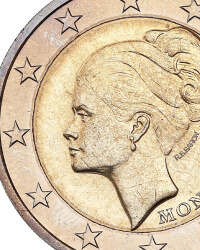
For sale: a set of 5 x 2 Euro coins
Mint disc (outer edge of coin) Italy, 2002, damaged, photo no. 6
Currency: Euro
Year: 2002
Denomination: 2 euro - mint disc (outer edge of coin)
Bimetallic alloy.
Nickel-plated brass with a medium nickel content.
NOTE: Cupronickel ring, without ribs (smooth), inscribed with the number 2 and a star in a repeated sentence.
Shape: Round
Obverse/Reverse Arrangement: Not Reversed
Weight (g) 4.3
During minting, the dies are subjected to high dynamic loads, which sometimes causes damage in the form of cracks or even chipping. Friction between the dies' surfaces and the coin disc causes gradual wear of the dies. Contrary to popular belief, mint flaws are highly sought after by collectors because their uniqueness makes them interesting and often very valuable due to their rarity and exceptionality.
A very rare mint flaw, a real treat for collectors.
2 Euro Belgium 2002 Destructed
Obverse: In the center, the head of King Albert II of Belgium facing left; along the edge, twelve five-pointed stars – the symbol of the European Union; on the right edge, the royal monogram between the stars; on the lower right edge, the year of issue between the stars
Reverse: To the left of the center, the denomination: 2, to the right: EURO; in the background of the inscription, a simplified map of Europe with the outlines of the countries – members of the European Union in 1999; In the background of the map, six vertical parallel lines terminate on both sides with five-pointed stars (the reverse is common to all euro coins).
Ring: serrated with a concave inscription "2" and two stars in a repeating motto.
Design: Jan Alfons Keustermans, Luc Luycx (initials LL below the letter "O" in EURO on the reverse)
Mint: De Koninklijke Munt van België (in Dutch) / La Monnaie Royale de Belgique (in French) (The Royal Belgian Mint), Brussels
During minting, the dies are subjected to high dynamic loads, which sometimes causes damage in the form of cracks or even chipping. Friction between the dies' surfaces and the coin disc causes gradual wear of the dies. Contrary to popular belief, mint flaws are highly sought after by collectors because their uniqueness makes them interesting and often very valuable due to their rarity and exceptionality.
NOTE: The coin's core is separated from the outer ring.
This very rare coin is a real treat for collectors.
2 Euro Netherlands Year 2015 Destructed
Obverse: A joint series of the eurozone countries commemorating the 30th anniversary of the adoption of the European Flag (1985–2015).
Central image: In the center of the coin is a stylized European Union flag, surrounded by human figures. This symbolizes citizens and institutions uniting in building a common European future.
Inscriptions:
On the left side, along the inner ring, is the Dutch name of the country: "NEDERLAND."
At the top are the anniversary years: "1985–2015."
Reverse: To the left of the center, the denomination: 2, to the right: EURO; in the background of the inscription, a simplified map of Europe with the outlines of the European Union member states in 1999; In the background of the map, six vertical parallel lines terminate on both sides with five-pointed stars (the reverse is common to all euro coins).
Coin edge: serrated with a concave inscription: 2 euro edge: "GOD * ZIJ * MET * ONS * (God Be with Us)"
Mint: Koninklijke Nederlandse Munt (Royal Dutch Mint), Utrecht (mintmark after the year of issue on the obverse, before the year of issue: the symbol of mint director Brouwer – sails)
During minting, the dies are subjected to high dynamic loads, which sometimes causes damage in the form of cracks or even chips. Friction between the surfaces of the dies and the coin disc causes gradual wear of the dies. Contrary to popular belief, mint flaws are highly sought after by collectors because their uniqueness makes them interesting and often very valuable due to their rarity and exceptionality. NOTE: The coin's core is separated from the outer ring.
This is a very rare coin, a real collector's item.
Luxembourg 2 Euro, 2014 - circulation coin DESTRUKT - Error (photo number 9 )
A very rare coin, sought after by collectors.
Bimetallic alloy.
Central element: nickel-plated brass. Cupronickel Ring
Side Type: Serrated with Inscription
Edge Inscription: '2 ★ ★ 2 ★ ★ 2 ★ ★ 2 ★ ★ 2 ★ ★'
Shape: Round
Obverse/Reverse Arrangement: Not Reversed
Weight (g) 8.5
Diameter (mm) 25.75
Thickness (mm) 2.2
Designers: Yvette Gastauer-Claire
During minting, the dies are subjected to high dynamic loads, which sometimes causes damage in the form of cracks or even chipping. Friction between the dies' surfaces and the coin blank causes gradual wear of the dies. Contrary to appearances, mint scraps are highly sought after by collectors because their uniqueness makes them interesting and often very valuable due to their rarity and exceptionality.
Reverse: Map of Europe, number 2
Coin core separated from the outer ring
The outer edge of the coin is distorted.
Obverse: Henri, Grand Duke of Luxembourg
Inscription: LËTZEBUERG 2014
The stars on the outer ring are slightly deformed.
The inscription LËTZEBUERG and the year 2014 are distorted. The central part of the coin is not clearly divided into two equal fields. The image of Henri, Grand Duke of Luxembourg is distorted.
The coin's shape is deformed. Additionally, three very narrow, deep grooves are visible on the coin, running vertically, created during the die movement. In numismatics, this is called a "deep die or canceled impression."
An interesting and unique, very rare and unusual coin.
Netherlands: Photo No. 10. This 2-euro commemorative coin from 2013 commemorates the abdication of Queen Beatrix from the Dutch throne in favor of her eldest son, Willem Alexander. The Queen's address and the formal signing of the documents took place on January 28, 2013, and two days later, Willem Alexander was crowned King of the Netherlands – the first king after 123 years of queens' rule in the Netherlands.
Queen Beatrix signs the abdication document alongside Prince Willem Alexander and his wife Máxima Zorreguieta.
OBVERSE: In the center of the coin, the head of Queen Beatrix facing left; on the left in the background, the head of Prince Willem Alexander facing left; At the top, a royal crown divides the inscription along the left edge: WILLEM-ALEXANDER PRINS VAN ORANJE (William Alexander, Prince of Orange) and along the right edge: BEATRIX KONINGIN DER NEDERLANDEN (Beatrice, Queen of the Netherlands); along the bottom edge, in two lines, the date: 28 JANUARI / 2013 (January 28, 2013); a ring of pearls surrounds the inscriptions; along the edge, twelve five-pointed stars – the symbol of the European Union.
REVERSE: Left from the center, face value: 2, right: EURO; in the background of the inscription, a map of Europe; In the background of the map, six vertical parallel lines terminate on both sides with five-pointed stars (the reverse is common to all euro coins).
RING: Reeded with a concave inscription: 2 euro edge: GOD * ZIJ * MET * ONS * (God Be with Us)
DESIGN: Pannos Goutzemisis, Luc Luycx (initials LL below the letter O in EURO on the reverse)
MINT: Koninklijke Nederlandse Munt (Royal Dutch Mint), Utrecht (mintmark behind the date 2013 on the obverse, before the date 2013 the symbol of mint director Brouwer – sails)
During minting, the dies are subjected to high dynamic loads, which sometimes causes damage in the form of cracks or even chipping. Friction between the dies' surfaces and the coin disc causes gradual wear of the dies. Contrary to popular belief, mint flaws are highly sought after by collectors because their uniqueness makes them interesting and often very valuable due to their rarity and exceptionality.
The core of the coin is separated from the outer ring