编号 108556680

编号 108556680
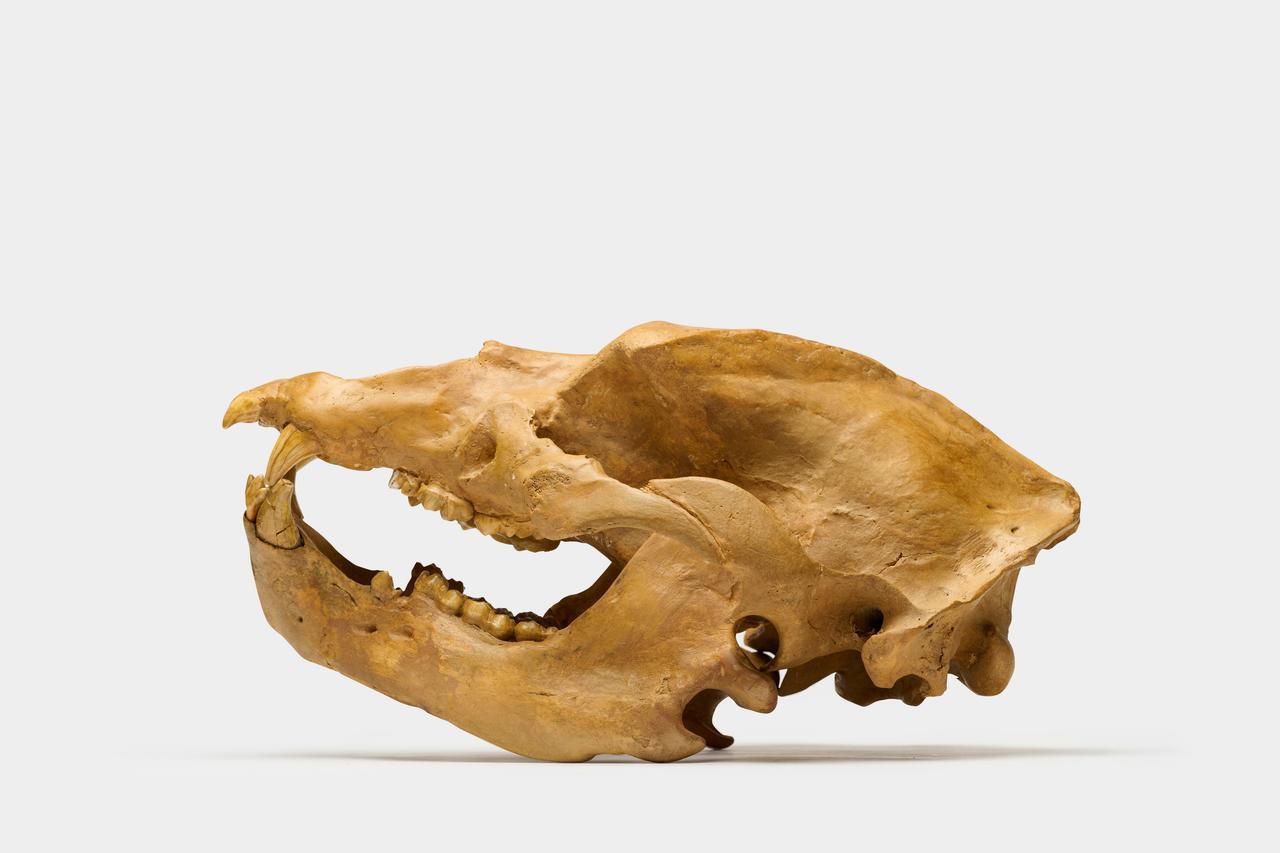
The bone is mottled. Pale ochre under dark, iron-stained patches — the colour of a surface that lay in the ground a long time and took on whatever was around it.
Fossilisation is not one event. Bone buried in wet ground is infiltrated slowly, mineral by mineral, over thousands of years, and the water carries whatever the surrounding sediment carries. Iron leaves brown. Manganese leaves black. Where the flow was even, the colour is even; where it was not, you get patches. That is what the mottling on this jaw is: a map of where the water went.
The teeth are the second thing to notice, and they are the opposite story. Heavily worn — flatter across the top than the teeth of a younger animal — and several broken off at the crown, standing as short stumps with the pale dentine showing through. Along the row, one or two fragments sit loose where the tooth above them has gone.
The jaw is compact for a bison mandible: 36 × 16 cm, 600 g, with a squared, deep body and the hooked process at the rear still intact. The front end is broken away. It comes on a black metal display stand with a small support that holds the tooth row up.
Look at it:
Iron-and-manganese mottling — dark patches over pale ochre, the fossilisation map.
Heavily worn, partly broken teeth — short stumps, pale dentine exposed.
Compact, deep jaw body — 36 × 16 cm, 600 g.
Hooked rear process intact — the muscle attachment, still there.
Black metal stand included — with a support under the tooth row.
This is a cabinet specimen — the piece in a group where you can see the chemistry of fossilisation written on the surface.
Honest note: this is a fossilised bison mandible from the Ice Age, identified as bison on the basis of the bone and the dentition, and listed at genus level (Bison sp.); the exact species is not claimed. The teeth are heavily worn and several are broken; the front of the jaw is broken away. It is a Late Pleistocene fossil, roughly 10,000 to 50,000 years old depending on the deposit it came from. Measurements and weight as measured; the stand is included.
Specifications:
Type: Fossilised bison mandible (lower jaw), with teeth
Species: Bison sp. — Ice Age bison
Size: 36 × 16 cm
Weight: 600 g
Teeth: heavily worn; several broken at the crown
Stand: black metal display stand, included
Age: Late Pleistocene, approx. 10,000–50,000 years BP
Condition: as shown
It is a jaw that records both what the animal did and what the ground did to it. You get to display it.