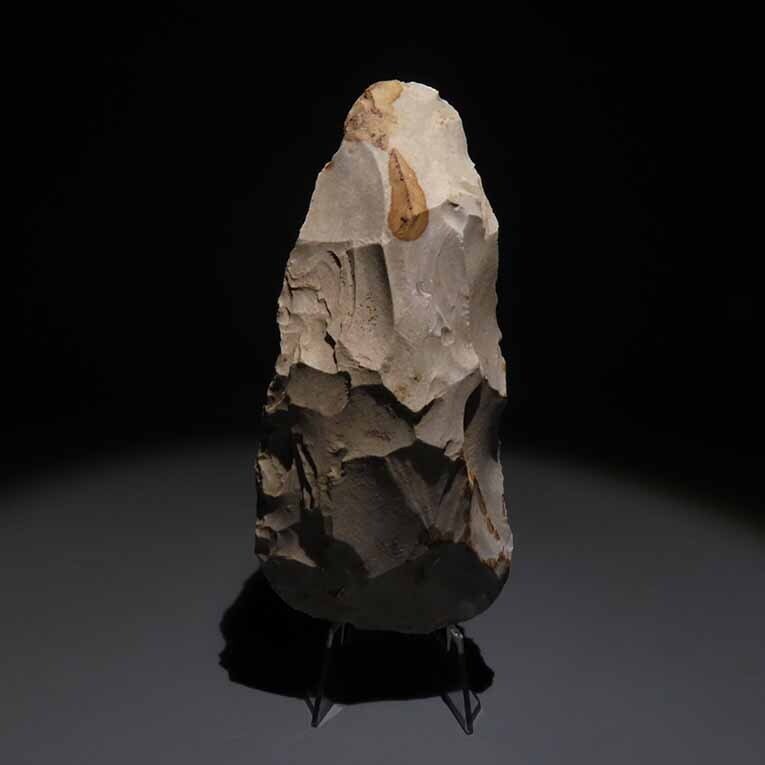
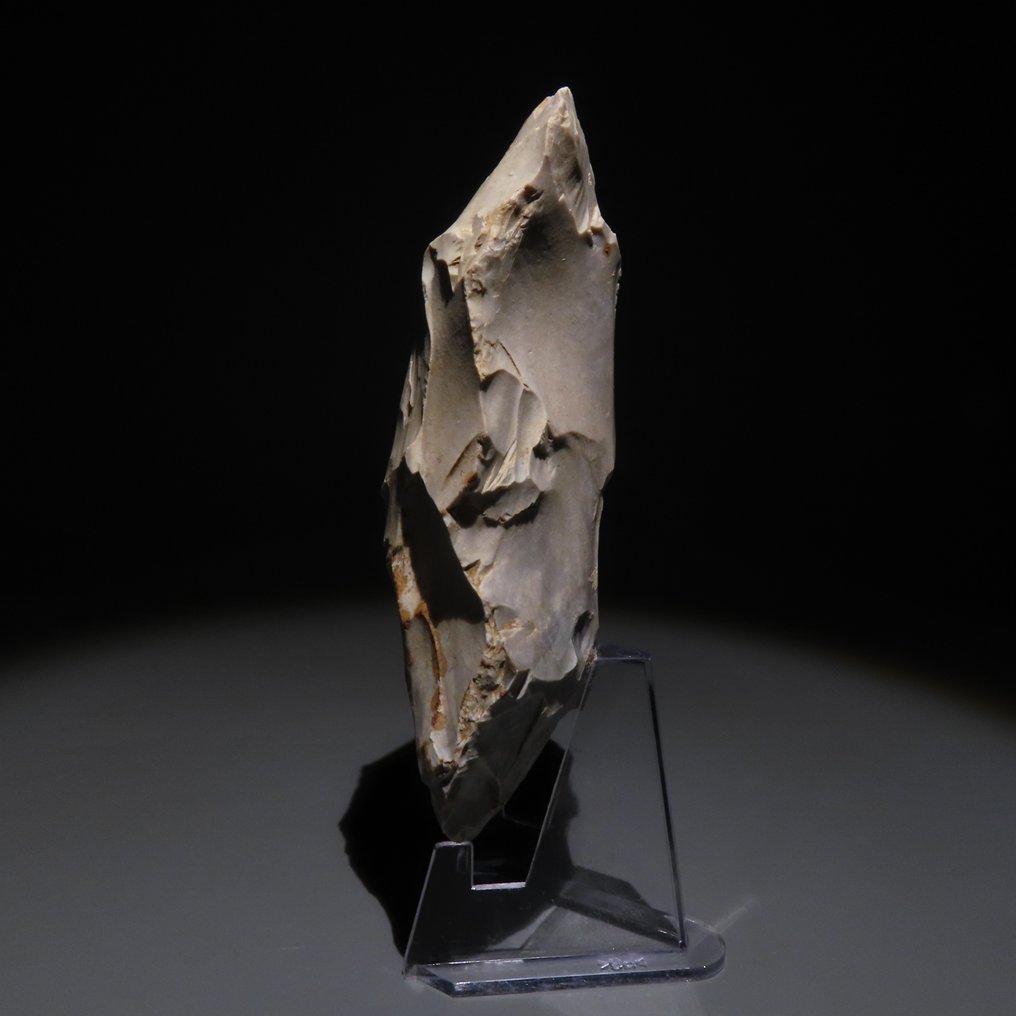
新石器时代 燧石 工具。Spiennes,公元前4500-3500年。高12.5厘米。西班牙进口许可证。 (没有保留价)


02
天
07
小时
36
分钟
20
秒

7名其他人正在关注此物品
 竞买人 3906 竞买人 3906 | €5 | |
|---|---|---|
 竞买人 6305 竞买人 6305 | €3 |
Catawiki买家保障
在您收到物品之前,您的付款将在我们这里受到安全保管。查看详细信息
Trustpilot 4.4分 | 121980条评论
在Trustpilot上被评为优秀。
斯皮恩斯的新石器时代燧石工具,公元前4500–3500年,高12.5厘米,联合国教科文组织遗产来源并附有真实性证明,适合认真的收藏爱好者。
AI辅助摘要
卖家的描述
Tool.
Neolithic Period, Spiennes, 4500-3500 BC.
Flint
12.5 cm Height.
CONDITION: It is preserved in its original state.
PROVENANCE: Private Collection, Belgium. Acquired before the 1970's.
DESCRIPTION:
The Neolithic Flint Mines of Spiennes occupy two chalk plateaux located to the south-east of the city of Mons. They cover an area essentially devoted to agriculture. The site appears on the surface as a large area of meadows and fields strewn with millions of scraps of worked flint. Underground, the site is an immense network of galleries linked to the surface by vertical shafts dug by Neolithic populations.
The Neolithic Flint Mines of Spiennes are the largest and earliest concentration of ancient mines of north-west Europe. The mines were in operation for many centuries and the remains vividly illustrate the development and adaptation of mining techniques employed by prehistoric populations in order to exploit large deposits of a material that was essential for the production of tools and cultural evolution generally. They are also remarkable by the diversity of technical mining solutions implemented and by the fact that they are directly linked to a habitat contemporary to them.
In the Neolithic period, (from the last third of the 5th millennium until the first half of the 3rd millennium), the site was the centre of intensive flint mining present underground. Different techniques were used, the most spectacular and characteristic of which was the digging out of shafts of 0.8 to 1.20m in diameter with a depth down to 16 metres. Neolithic populations could thus pass below levels made up of large blocks of flint (up to 2m in length) that they extracted using a particular technique called ‘striking’ (freeing from below with support of a central chalk wall, shoring up of the block, removal of the wall, removal of the props and lowering of the block). The density of the shafts is important, as many as 5,000 in the zone called Petit Spiennes (14 ha), leading to criss-crossing of pits and shafts in some sectors.
The neolithic flint mines near Spienne in Belgium are part of UNESCO's world heritage since the year 2000 (Id. N°: 1006). With the second half of the 5. Millenium BC stone from the Spienne mine was worked in socially increasingly complex neolithic groups in that region. No doubt a source of wealth to that cultures.
The groups of that area are refered to as Michaelsberg culture. They flourished from the mid 5th Millenium BC until the mid 4th Millenium BC in middle Europe. Their culture streched from Germany, northern France to Belgium. Around Spienne, it was finally replaced by the Seine-Oise-Marne culture, which did not use the nearby mine anymore
Notes:
The seller guarantees that he acquired this piece according to all national and international laws related to the ownership of cultural property. Provenance statement seen by Catawiki.
The piece includes authenticity certificate.
The piece includes Spanish Export License.
卖家故事
古代艺术画廊 - 位于巴塞罗那的考古学,拥有超过 15 年的经验。擅长古典艺术、埃及艺术、亚洲艺术和前哥伦布时期艺术。它保证其所有作品的真实性。它参加了西班牙最重要的艺术博览会,例如 Feriaarte,以及国外的博览会,BRAFA、Parcours des Mondes、Cultures Brussels。
所有作品均附有西班牙文化部颁发的出口许可证。
我们通过 DHL Express 或 Direct Art Transport 快速发货。
使用Google翻译翻译Tool.
Neolithic Period, Spiennes, 4500-3500 BC.
Flint
12.5 cm Height.
CONDITION: It is preserved in its original state.
PROVENANCE: Private Collection, Belgium. Acquired before the 1970's.
DESCRIPTION:
The Neolithic Flint Mines of Spiennes occupy two chalk plateaux located to the south-east of the city of Mons. They cover an area essentially devoted to agriculture. The site appears on the surface as a large area of meadows and fields strewn with millions of scraps of worked flint. Underground, the site is an immense network of galleries linked to the surface by vertical shafts dug by Neolithic populations.
The Neolithic Flint Mines of Spiennes are the largest and earliest concentration of ancient mines of north-west Europe. The mines were in operation for many centuries and the remains vividly illustrate the development and adaptation of mining techniques employed by prehistoric populations in order to exploit large deposits of a material that was essential for the production of tools and cultural evolution generally. They are also remarkable by the diversity of technical mining solutions implemented and by the fact that they are directly linked to a habitat contemporary to them.
In the Neolithic period, (from the last third of the 5th millennium until the first half of the 3rd millennium), the site was the centre of intensive flint mining present underground. Different techniques were used, the most spectacular and characteristic of which was the digging out of shafts of 0.8 to 1.20m in diameter with a depth down to 16 metres. Neolithic populations could thus pass below levels made up of large blocks of flint (up to 2m in length) that they extracted using a particular technique called ‘striking’ (freeing from below with support of a central chalk wall, shoring up of the block, removal of the wall, removal of the props and lowering of the block). The density of the shafts is important, as many as 5,000 in the zone called Petit Spiennes (14 ha), leading to criss-crossing of pits and shafts in some sectors.
The neolithic flint mines near Spienne in Belgium are part of UNESCO's world heritage since the year 2000 (Id. N°: 1006). With the second half of the 5. Millenium BC stone from the Spienne mine was worked in socially increasingly complex neolithic groups in that region. No doubt a source of wealth to that cultures.
The groups of that area are refered to as Michaelsberg culture. They flourished from the mid 5th Millenium BC until the mid 4th Millenium BC in middle Europe. Their culture streched from Germany, northern France to Belgium. Around Spienne, it was finally replaced by the Seine-Oise-Marne culture, which did not use the nearby mine anymore
Notes:
The seller guarantees that he acquired this piece according to all national and international laws related to the ownership of cultural property. Provenance statement seen by Catawiki.
The piece includes authenticity certificate.
The piece includes Spanish Export License.
卖家故事
古代艺术画廊 - 位于巴塞罗那的考古学,拥有超过 15 年的经验。擅长古典艺术、埃及艺术、亚洲艺术和前哥伦布时期艺术。它保证其所有作品的真实性。它参加了西班牙最重要的艺术博览会,例如 Feriaarte,以及国外的博览会,BRAFA、Parcours des Mondes、Cultures Brussels。
所有作品均附有西班牙文化部颁发的出口许可证。
我们通过 DHL Express 或 Direct Art Transport 快速发货。
使用Google翻译翻译详细资料
文化
新石器时代
世纪/时段
Spiennes, 4500-3500 BC
Name of object
Tool. Spiennes, 4500-3500 BC. 12.5 cm height. Spanish Import License.
获得来源
私人收藏
获得年份
2025
材质
燧石
获得国家
比利时
状态
很好
前任拥有者获得来源
私人收藏
前任拥有者获得年份
1970
前任拥有者获得国家
比利时
我确认我合法获得此物品,并且我有权将它出售
是的
免责声明
卖家已就文件要求收到了Catawiki的通知并保证以下内容: - 该物品是合法获得的, - 卖家有权出售和/或出口该物品(如适用), - 卖家将提供必要的出处或来源地信息,并根据当地法律安排所需的文件和许可证/执照, - 如果在获取许可证/执照方面出现任何延误,卖家将通知买家。 出价竞投,表明您知晓根据您居住的国家和地区可能会被需要提供进口文件,以及获得许可证/执照可能会导致物品交付的延迟。
卖家已就文件要求收到了Catawiki的通知并保证以下内容: - 该物品是合法获得的, - 卖家有权出售和/或出口该物品(如适用), - 卖家将提供必要的出处或来源地信息,并根据当地法律安排所需的文件和许可证/执照, - 如果在获取许可证/执照方面出现任何延误,卖家将通知买家。 出价竞投,表明您知晓根据您居住的国家和地区可能会被需要提供进口文件,以及获得许可证/执照可能会导致物品交付的延迟。
