
編號 100073090

已出售
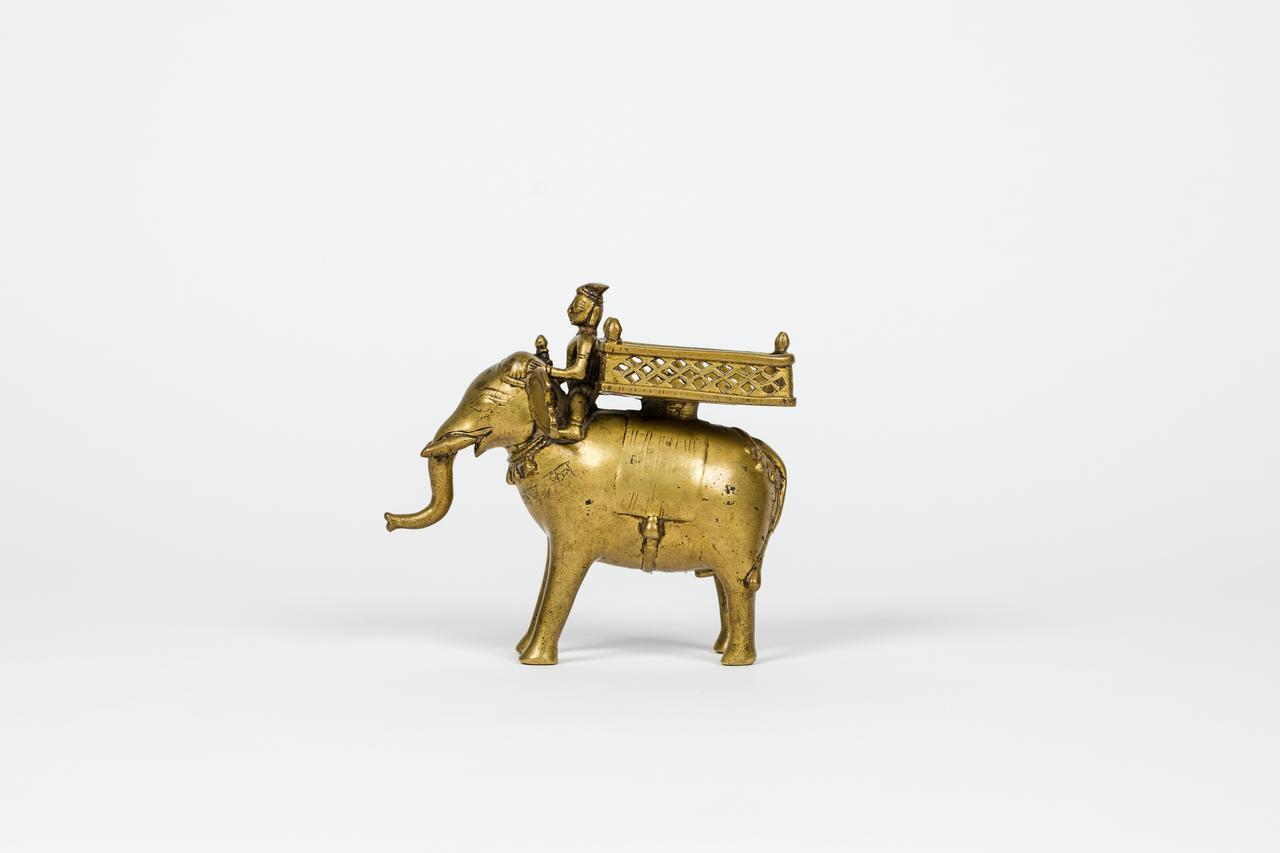
雕像, A bronze sculptural group depicting Radha and Krishna upon a celestial swing (Jhula) – India, 20th - 17 cm - 銅綠青銅
最終出價
€ 55
5 天前

雕像, A bronze sculptural group depicting Radha and Krishna upon a celestial swing (Jhula) – India, 20th - 17 cm - 銅綠青銅

A bronze sculptural group depicting Radha and Krishna upon a celestial swing (Jhula) – India, 20th century Description: This finely executed bronze sculptural group portrays one of Hinduism's most revered iconographic themes: the divine couple Radha and Krishna in an intimate moment of eternal devotion. The composition depicts the two deities seated gracefully upon an ornate swing suspended from an elaborate overhead frame, supported laterally by dramatically modelled Yali guardian beasts. Surmounting the arch is a fierce Kirtimukha face – the "Face of Glory" – a protective motif prevalent in Hindu temple architecture, which marks the transition between the secular and sacred realms. The craftsmanship demonstrates the accomplished technique of Indian bronze casting, employing the lost-wax method (Madhuchista Vidhan), a tradition perfected over centuries. The sculptor has rendered intricate detailing throughout: Krishna is depicted in characteristic pose adorned with ornamental regalia and fine clothing; Radha sits beside him with equal refinement. The foliage-adorned swing itself showcases remarkable precision in its articulation, with delicate floral motifs contributing to the composition's overall elegance. The supporting Yali figures – composite mythological beasts combining leonine and elephantine features – exhibit the dynamic musculature and commanding presence typical of South Indian sculptural traditions. These guardian figures functioned both as structural supports and as protective entities, believed to ward off negative spiritual forces. The surface exhibits a rich, complex patina characteristic of naturally aged bronze, with subtle colour variations suggesting prolonged exposure to environmental conditions consistent with temple or household devotional settings. The patina displays the copper oxide formations typical of authentic historical bronzes, with no evidence of artificial colouring or treatment. Details: Height: 17 cm Weight: 1,109 g Material: Bronze (copper–tin alloy) Technique: Lost-wax casting (Cire Perdue) Period: Estimated 20th century Origin: India, likely South Indian Condition: Well-preserved, with natural patina consistent with age; minor surface wear consistent with handling and historical use Condition: The sculpture exhibits good overall condition, befitting an object of considerable age. The bronze displays an authentic, deeply developed patina with no evidence of artificial burnishing or artificial patination. Surfaces show natural wear appropriate to the piece's estimated age and provenance. The casting is sound with no visible casting flaws or structural cracks. All sculptural elements remain intact and securely attached. The fine detailing – particularly in the faces, ornaments, and floral elements – remains crisp and well-defined, testifying to the original maker's skill and the piece's careful preservation. Additional Information: This sculptural group exemplifies the enduring significance of the Radha–Krishna Jhula motif within Hindu devotional and artistic traditions. The swing (Jhula) itself carries profound spiritual symbolism: it represents the cyclical nature of existence, the dance between worldly desires and spiritual aspirations, and the divine play (Lila) through which Krishna maintains cosmic harmony. The presence of both Yali guardians and the Kirtimukha crown reinforces the sacred nature of the composition, transforming it from a narrative scene into a protective, spiritually charged object intended for worship or home devotion. Indian bronze sculptures of this period represent the continuation of metallurgical traditions dating back to the Chola dynasty and earlier periods, when South Indian artisans achieved extraordinary refinement in the lost-wax casting technique. The composition and iconographic elements suggest a dating within the 18th–19th century, a period when such devotional bronzes remained in active production for both temple installation and private collection. The scale and weight suggest this was a significant personal or household devotional object, typical of pieces commissioned by affluent Hindu families for their prayer rooms or home altars. Collectors of Indian religious metalwork will recognise this as a well-executed example of traditional bronze casting, combining technical accomplishment with authentic spiritual iconography. Collector's note: A substantive bronze sculptural group combining refined craftsmanship, authentic patina, and significant religious iconography. The integration of multiple mythological and architectural elements – the central narrative, the protective Yalis, and the Kirtimukha guardian – creates a layered composition of both artistic and devotional merit. This piece merits the attention of collectors pursuing authenticated Indian bronzes or specialists in Hindu devotional art of the 18th–19th centuries.
編號 100073090

已出售
雕像, A bronze sculptural group depicting Radha and Krishna upon a celestial swing (Jhula) – India, 20th - 17 cm - 銅綠青銅

雕像, A bronze sculptural group depicting Radha and Krishna upon a celestial swing (Jhula) – India, 20th - 17 cm - 銅綠青銅

A bronze sculptural group depicting Radha and Krishna upon a celestial swing (Jhula) – India, 20th century

Description: This finely executed bronze sculptural group portrays one of Hinduism's most revered iconographic themes: the divine couple Radha and Krishna in an intimate moment of eternal devotion. The composition depicts the two deities seated gracefully upon an ornate swing suspended from an elaborate overhead frame, supported laterally by dramatically modelled Yali guardian beasts. Surmounting the arch is a fierce Kirtimukha face – the "Face of Glory" – a protective motif prevalent in Hindu temple architecture, which marks the transition between the secular and sacred realms.

The craftsmanship demonstrates the accomplished technique of Indian bronze casting, employing the lost-wax method (Madhuchista Vidhan), a tradition perfected over centuries. The sculptor has rendered intricate detailing throughout: Krishna is depicted in characteristic pose adorned with ornamental regalia and fine clothing; Radha sits beside him with equal refinement. The foliage-adorned swing itself showcases remarkable precision in its articulation, with delicate floral motifs contributing to the composition's overall elegance. The supporting Yali figures – composite mythological beasts combining leonine and elephantine features – exhibit the dynamic musculature and commanding presence typical of South Indian sculptural traditions. These guardian figures functioned both as structural supports and as protective entities, believed to ward off negative spiritual forces.

The surface exhibits a rich, complex patina characteristic of naturally aged bronze, with subtle colour variations suggesting prolonged exposure to environmental conditions consistent with temple or household devotional settings. The patina displays the copper oxide formations typical of authentic historical bronzes, with no evidence of artificial colouring or treatment.

Details:

Height: 17 cm

Weight: 1,109 g

Material: Bronze (copper–tin alloy)

Technique: Lost-wax casting (Cire Perdue)

Period: Estimated 20th century

Origin: India, likely South Indian

Condition: Well-preserved, with natural patina consistent with age; minor surface wear consistent with handling and historical use

Condition: The sculpture exhibits good overall condition, befitting an object of considerable age. The bronze displays an authentic, deeply developed patina with no evidence of artificial burnishing or artificial patination. Surfaces show natural wear appropriate to the piece's estimated age and provenance. The casting is sound with no visible casting flaws or structural cracks. All sculptural elements remain intact and securely attached. The fine detailing – particularly in the faces, ornaments, and floral elements – remains crisp and well-defined, testifying to the original maker's skill and the piece's careful preservation.

Additional Information: This sculptural group exemplifies the enduring significance of the Radha–Krishna Jhula motif within Hindu devotional and artistic traditions. The swing (Jhula) itself carries profound spiritual symbolism: it represents the cyclical nature of existence, the dance between worldly desires and spiritual aspirations, and the divine play (Lila) through which Krishna maintains cosmic harmony. The presence of both Yali guardians and the Kirtimukha crown reinforces the sacred nature of the composition, transforming it from a narrative scene into a protective, spiritually charged object intended for worship or home devotion.

Indian bronze sculptures of this period represent the continuation of metallurgical traditions dating back to the Chola dynasty and earlier periods, when South Indian artisans achieved extraordinary refinement in the lost-wax casting technique. The composition and iconographic elements suggest a dating within the 18th–19th century, a period when such devotional bronzes remained in active production for both temple installation and private collection. The scale and weight suggest this was a significant personal or household devotional object, typical of pieces commissioned by affluent Hindu families for their prayer rooms or home altars.

Collectors of Indian religious metalwork will recognise this as a well-executed example of traditional bronze casting, combining technical accomplishment with authentic spiritual iconography.

Collector's note: A substantive bronze sculptural group combining refined craftsmanship, authentic patina, and significant religious iconography. The integration of multiple mythological and architectural elements – the central narrative, the protective Yalis, and the Kirtimukha guardian – creates a layered composition of both artistic and devotional merit. This piece merits the attention of collectors pursuing authenticated Indian bronzes or specialists in Hindu devotional art of the 18th–19th centuries.

最終出價
€ 55

類似物品

中的精彩好物

印度及伊斯蘭藝術

設置搜索提醒
設置搜索提醒,以便在有新匹配可用時收到通知。

該物品在


如何在Catawiki上購買

了解更多有關買家保護

      1. 發現獨特物品

      瀏覽專家挑選的數千件獨特物品。查看每件獨特物品的照片、詳情和估價。 

      2. 出價最高

      找到您喜歡的物品並作出最高的出價。您可以跟隨拍賣進行到底,也可以讓我們的系統為您出價。您所要做的就是為您要支付的最高金額設置出價。 

      3. 作出安全可靠的付款

      為您的獨特物品付款,我們將在您的物品安全無恙抵達前,確保您的付款安全。我們使用受信任的支付系統來處理所有交易。 

有類近的物品可以出售?

無論您是網上拍賣的新手還是專業銷售人員,我們都可以幫助您為您的獨特物品賺取更多收益。

出售您的物品