
編號 102294422

已出售
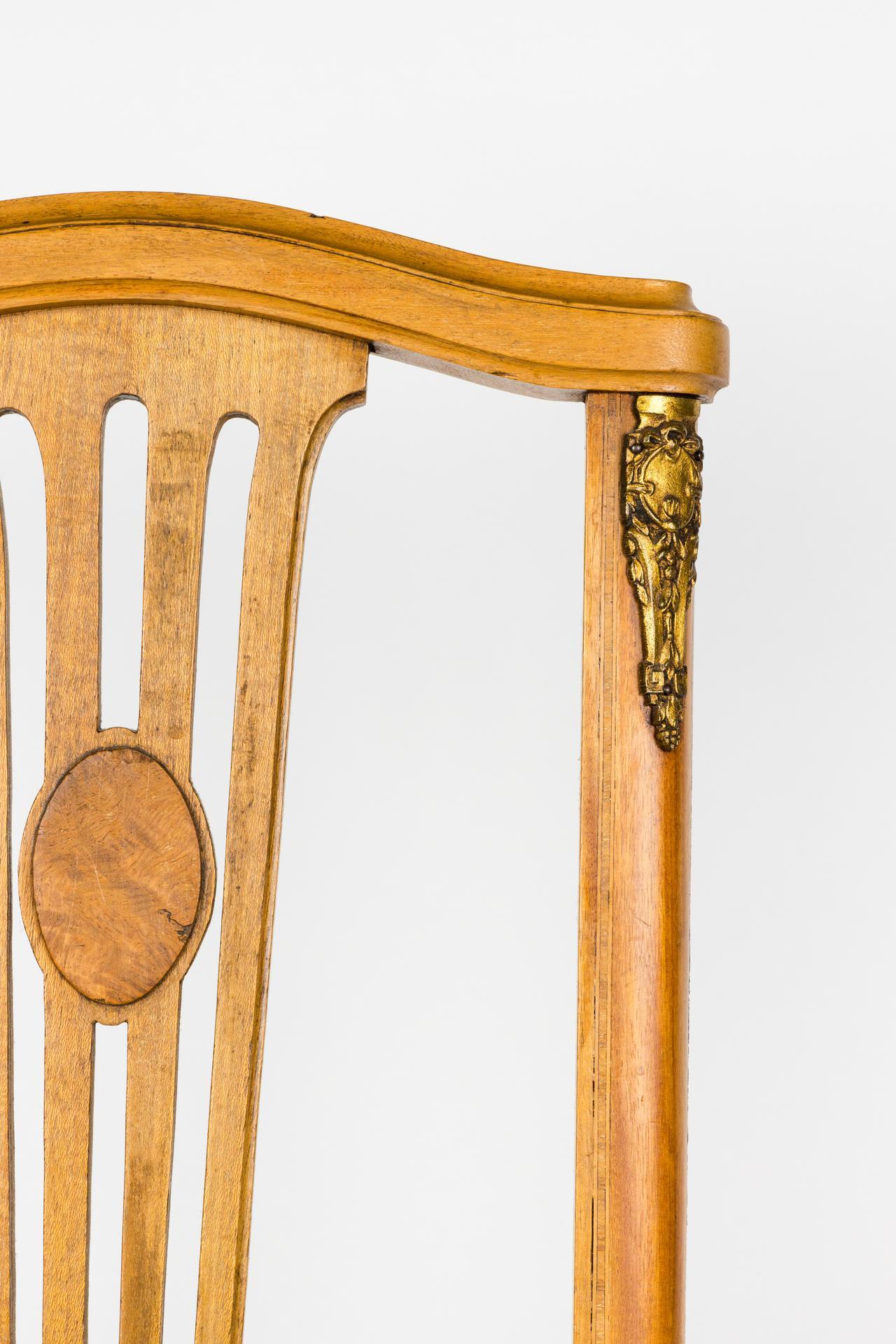
桌 - 木, 山毛櫸, 橡木 - 1910年代的 Thonet 风格桌子
最終出價
€ 140
沒有保留價
11 週前

桌 - 木, 山毛櫸, 橡木 - 1910年代的 Thonet 风格桌子

A square of quiet authority, poised upon four attenuated limbs, this 1910s Thonet style table stands as a lucid testament to the mature phase of Central European bentwood craftsmanship. At once restrained and expressive, it embodies the technical refinement and formal discipline that defined Thonet’s production in the early twentieth century—when industrial logic and artisanal sensitivity were not adversaries, but collaborators. The table’s silhouette is deceptively simple: a rectilinear top with softly eased edges rests upon slender, gently tapering legs. Yet beneath this apparent modesty lies a structural intelligence characteristic of the Thonet manufactory. The legs, likely steam-bent beech, descend in a subtle outward cant before resolving into elegant, slightly splayed feet. This curvature is neither ornamental excess nor mere flourish; it is the visual residue of a process perfected in the late nineteenth century—controlled steam bending that allowed solid wood to assume tensile, resilient arcs without sacrificing strength. The understructure reveals the true poetry of the piece. A sinuous stretcher system, composed of bentwood elements that loop and converge with rhythmic clarity, braces the legs while maintaining visual permeability. The negative space between these components is as deliberate as the wood itself. Such economy of line is a hallmark of Thonet’s ethos: material reduced to its essential trajectory, structure made legible, weight dissolved into contour. The tabletop—likely solid beech or a beech veneer over a stable substrate—presents a warm, darkened patina consistent with age. Its surface bears the quiet record of use: faint tonal variations, minute abrasions, the mellowing of finish. These are not defects but historical inscriptions. Over more than a century, oxidation and handling have deepened the timber’s chromatic register, producing that particular reddish-brown depth so often associated with early Thonet café and domestic tables. Stylistically, the table occupies a transitional moment. It retains the organic linearity of late Historicism and the Secessionist impulse toward refined curvature, yet it anticipates the rational simplifications that would culminate in interwar modernism. There is no applied carving, no superfluous ornament. Its beauty arises from proportion, joinery, and the disciplined repetition of bentwood arcs. In this sense, it participates in the broader narrative of industrial design’s evolution: from decorative embellishment toward structural honesty. Functionally, such tables were conceived for versatility. Compact in footprint yet stable in stance, they served equally well in Viennese cafés, bourgeois parlors, and modest urban apartments. Their relatively light mass allowed easy rearrangement, while their robust joinery ensured durability under constant use. This duality—mobility paired with endurance—was central to Thonet’s global success. Today, the table reads not as a relic but as a quietly authoritative presence. In a contemporary interior, it converses fluently with both period furnishings and minimalist environments. Its graphic legibility—the interplay of straight plane and curved support—offers a compositional anchor without visual heaviness. It is, in essence, a study in balance: between craft and industry, curve and line, delicacy and strength. To encounter a 1910s Thonet table is to witness a chapter in the democratization of design. Here, the innovations of bentwood technology are distilled into a form that is unpretentious yet exacting. More than an occasional table, it is an artifact of modernity’s formative decades—where technique, economy, and elegance converged into enduring form.
編號 102294422

已出售
桌 - 木, 山毛櫸, 橡木 - 1910年代的 Thonet 风格桌子

桌 - 木, 山毛櫸, 橡木 - 1910年代的 Thonet 风格桌子

A square of quiet authority, poised upon four attenuated limbs, this 1910s Thonet style table stands as a lucid testament to the mature phase of Central European bentwood craftsmanship. At once restrained and expressive, it embodies the technical refinement and formal discipline that defined Thonet’s production in the early twentieth century—when industrial logic and artisanal sensitivity were not adversaries, but collaborators.

The table’s silhouette is deceptively simple: a rectilinear top with softly eased edges rests upon slender, gently tapering legs. Yet beneath this apparent modesty lies a structural intelligence characteristic of the Thonet manufactory. The legs, likely steam-bent beech, descend in a subtle outward cant before resolving into elegant, slightly splayed feet. This curvature is neither ornamental excess nor mere flourish; it is the visual residue of a process perfected in the late nineteenth century—controlled steam bending that allowed solid wood to assume tensile, resilient arcs without sacrificing strength.

The understructure reveals the true poetry of the piece. A sinuous stretcher system, composed of bentwood elements that loop and converge with rhythmic clarity, braces the legs while maintaining visual permeability. The negative space between these components is as deliberate as the wood itself. Such economy of line is a hallmark of Thonet’s ethos: material reduced to its essential trajectory, structure made legible, weight dissolved into contour.

The tabletop—likely solid beech or a beech veneer over a stable substrate—presents a warm, darkened patina consistent with age. Its surface bears the quiet record of use: faint tonal variations, minute abrasions, the mellowing of finish. These are not defects but historical inscriptions. Over more than a century, oxidation and handling have deepened the timber’s chromatic register, producing that particular reddish-brown depth so often associated with early Thonet café and domestic tables.

Stylistically, the table occupies a transitional moment. It retains the organic linearity of late Historicism and the Secessionist impulse toward refined curvature, yet it anticipates the rational simplifications that would culminate in interwar modernism. There is no applied carving, no superfluous ornament. Its beauty arises from proportion, joinery, and the disciplined repetition of bentwood arcs. In this sense, it participates in the broader narrative of industrial design’s evolution: from decorative embellishment toward structural honesty.

Functionally, such tables were conceived for versatility. Compact in footprint yet stable in stance, they served equally well in Viennese cafés, bourgeois parlors, and modest urban apartments. Their relatively light mass allowed easy rearrangement, while their robust joinery ensured durability under constant use. This duality—mobility paired with endurance—was central to Thonet’s global success.

Today, the table reads not as a relic but as a quietly authoritative presence. In a contemporary interior, it converses fluently with both period furnishings and minimalist environments. Its graphic legibility—the interplay of straight plane and curved support—offers a compositional anchor without visual heaviness. It is, in essence, a study in balance: between craft and industry, curve and line, delicacy and strength.

To encounter a 1910s Thonet table is to witness a chapter in the democratization of design. Here, the innovations of bentwood technology are distilled into a form that is unpretentious yet exacting. More than an occasional table, it is an artifact of modernity’s formative decades—where technique, economy, and elegance converged into enduring form.

最終出價
€ 140
沒有保留價
Michel Karis
專家
估價  € 230 - € 280

類似物品

中的精彩好物

古董與古典家具

設置搜索提醒
設置搜索提醒,以便在有新匹配可用時收到通知。

該物品在


如何在Catawiki上購買

了解更多有關買家保護

      1. 發現獨特物品

      瀏覽專家挑選的數千件獨特物品。查看每件獨特物品的照片、詳情和估價。 

      2. 出價最高

      找到您喜歡的物品並作出最高的出價。您可以跟隨拍賣進行到底,也可以讓我們的系統為您出價。您所要做的就是為您要支付的最高金額設置出價。 

      3. 作出安全可靠的付款

      為您的獨特物品付款,我們將在您的物品安全無恙抵達前,確保您的付款安全。我們使用受信任的支付系統來處理所有交易。 

有類近的物品可以出售?

無論您是網上拍賣的新手還是專業銷售人員,我們都可以幫助您為您的獨特物品賺取更多收益。

出售您的物品