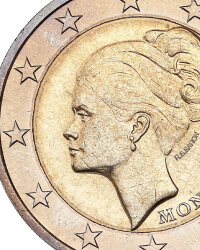
歐洲. 2 Euro Various Years (4 coins with cancellation marks) (沒有保留價)


00
天
21
小時
27
分鐘
07
秒

 | €4 | |
|---|---|---|
 | €2 | |
 | €1 |
Catawiki買家保障
在您收到物品前,我們會妥善保管您的付款。查看詳情
Trustpilot評分 4.4 | 139803 則評論
在Trustpilot獲得極佳評等。
一組四枚歐元硬幣:義大利2002年2歐元,印有但丁·阿利吉耶里,源自拉斐爾壁畫《Disputation on the Blessed Sacrament》,硬幣模具磨損浮雕罕見;法國2007年2歐元空白版,模具磨損;西班牙2001年2歐元,國王胡安·卡洛斯一世頭像,極罕見的邊緣刻文2**;盧森堡2015年2歐元,荷里現大公亨利,皆為雙金屬,重8.5 g,直徑25.75 mm,厚2.2 mm。
AI輔助摘要
賣家描述
Period: European Union (Euro) 2002- ITALY
Italy Currency: 2 x Euro
Type: Circulation Coins
Denomination: 2 euros Italy (head of Dante Alighieri from the fresco "Disputation on the Blessed Sacrament")
Year: 2002
Bimetallic alloy.
Nickel-plated brass.
Cupronickel ring
Side type: Serrated edge
Edge inscription: Serrated with concave inscription:
(value and star repeated six times: * 2 (EURO))
Designers: Maria Carmela Colaneri (initials M.C.C. below Dante's neck on the obverse), Luc Luycx (initials LL below the letter O in EURO on the reverse)
Shape: Round
Obverse/Reverse layout: Unreversed
Weight (g) 8.5
Diameter (mm) 25.75
Thickness (mm) 2.2
Note: The reverse of the coin features additional embossing in the form of a semicircle above the numeral 2 (a rare form of coin damage).
Obverse: In the center of the coin, the head of Dante Alighieri from Raphael's fresco "Disputation on the Blessed Sacrament" facing left; on the left, in two lines, the monogram: RI (REPUBBLICA ITALIANA - Italian Republic) and the year of issue; along the edge, twelve five-pointed stars - the symbol of the European Union.
Reverse: To the left of the center, the face value: 2; to the right: EURO; in the background of the inscription, a simplified map of Europe with the outlines of the countries - members of the European Union in 1999; in the background of the map, vertically, six parallel lines terminating on both sides with five-pointed stars (the reverse is common to all euro coins).
Irregularity Due to die wear, metal bends in the form of longitudinal lines are visible on the coin.
During minting, the dies are subjected to high dynamic loads, which sometimes causes damage in the form of cracks or even chipping. The friction between the surfaces of the dies and the coin causes gradual wear of the dies. Contrary to appearances, mint damage makes these types of coins highly sought after by collectors, as their uniqueness makes them interesting and often very valuable due to their rarity and exceptionality.
An interesting and unique, very rare and unusual form of damage to the Italian 2 Euro coin.
Period: European Union (Euro) 2007 -France
France Currency: mint Euro
Type: Circulation Coins
Denomination: 2 euro mint blank
Year: 2007
Bimetallic alloy.
Nickel-plated brass.
Cuproronickel ring
Side type: No edge serrations
No edge inscription
Shape: Round
Obverse/reverse arrangement: Not reversed
Weight (g) 8.5
Diameter (mm) 25.75
Thickness (mm) 2.2
Irregularity caused by die wear; metal bends in the form of longitudinal lines are visible on the blank.
During the minting of coins, high dynamic loads occur on the dies, which sometimes causes damage in the form of cracks or even chips. Friction between the surfaces of the dies and the coin causes gradual wear of the dies. Contrary to popular belief, mint damage is highly sought after by collectors, as its unique nature makes it interesting and often highly valuable due to its rarity and exceptional quality.
An interesting and unique, very rare and unusual form of damage to a 2 Euro coin blank.
Period: European Union (Euro) Year 2001- Spain
Spain Currency: 2 x Euro (bust of King Juan Carlos I)- Spain
Type: Circulation Coins
Denomination: 2 Euro
Year: 2001
Bimetallic alloy.
Nickel-plated brass.
Cuproronickel ring
Side type: No Edge serrations (very rare coin)
Edge inscription: Serrated with concave inscription:
(the denomination repeated six times with two stars: 2**)
Shape: Round
Obverse/Reverse arrangement: Not reversed
Weight (g) 8.5
Diameter (mm) 25.75
Thickness (mm) 2.2
Obverse: In the center of the coin, the bust of King Juan Carlos I, slightly to the left; On the left edge, in concave letters, ESPAÑA (Spain); along the edge, twelve five-pointed stars – the symbol of the European Union; four stars on the upper right edge are concave; on the lower edge, the year of issue, separated by the lowest star.
Reverse: To the left of the center, the coin's denomination: 2; to the right: EURO; in the background of the inscription, a simplified map of Europe with the outlines of the European Union member states in 1999; in the background of the map, vertically, six parallel lines ending on both sides with five-pointed stars (the reverse is common to all euro coins).
Irregularity caused by die wear; bends in the metal are visible on the coin in the form of longitudinal lines.
During the minting of coins, high dynamic loads occur on the dies, which sometimes causes damage in the form of cracks or even chips. Friction between the surfaces of the dies and the coin causes gradual wear of the dies. Contrary to appearances, mint damage on this type of Spain 2 Euro coin is highly sought after by collectors, as its uniqueness makes it interesting and often highly valuable due to its rarity and exceptional quality.
An interesting and unique, very rare and unusual form of damage on a Spain 2 Euro coin.
Period: European Union (Euro) Year 2015Luxembourg: Currency: Euro (face of Grand Duke Henri)
Type: Circulation coins
Denomination: 2 Euro
Year: 2015
Bimetallic alloy.
Nickel-plated brass.
Cuproronickel ring
Edge inscription: Reeded with concave inscription and the number 2 and two stars in a repeating sentence
Shape: Round
Obverse/Reverse arrangement: Not reversed
Weight (g) 8.5
Diameter (mm) 25.75
Thickness (mm) 2.2
Obverse: In the center, a simplified face of Grand Duke Henri facing right; On the left, vertically in concave letters in two lines: the year of issue and: LËTZEBUERG (Luxembourg); along the edge, a ring of twelve five-pointed stars – the symbol of the European Union.
On the reverse: to the left of the center, the denomination: 2, to the right: EURO; in the background of the inscription, a simplified map of Europe with the outlines of the countries – members of the European Union in 1999; in the background of the map, vertically, six parallel lines ending on both sides with five-pointed stars (the reverse is common to all euro coins).
Irregularity caused by die wear; bends in the metal are visible on the coin in the form of longitudinal lines.
During the minting of coins, the dies are subjected to high dynamic loads, which sometimes causes damage in the form of cracks or even chips. Friction between the surfaces of the dies and the coin causes gradual wear of the dies. Despite appearances, mint damage of this type makes the 2015 Luxembourg 2 Euro coin highly sought after by collectors, as its uniqueness makes it interesting and often highly valuable due to its rarity and exceptional quality.
An interesting and unique, very rare and unusual form of the Destructed 2 Euro Luxembourg coin from 2015
Period: European Union (Euro) 2002- ITALY
Italy Currency: 2 x Euro
Type: Circulation Coins
Denomination: 2 euros Italy (head of Dante Alighieri from the fresco "Disputation on the Blessed Sacrament")
Year: 2002
Bimetallic alloy.
Nickel-plated brass.
Cupronickel ring
Side type: Serrated edge
Edge inscription: Serrated with concave inscription:
(value and star repeated six times: * 2 (EURO))
Designers: Maria Carmela Colaneri (initials M.C.C. below Dante's neck on the obverse), Luc Luycx (initials LL below the letter O in EURO on the reverse)
Shape: Round
Obverse/Reverse layout: Unreversed
Weight (g) 8.5
Diameter (mm) 25.75
Thickness (mm) 2.2
Note: The reverse of the coin features additional embossing in the form of a semicircle above the numeral 2 (a rare form of coin damage).
Obverse: In the center of the coin, the head of Dante Alighieri from Raphael's fresco "Disputation on the Blessed Sacrament" facing left; on the left, in two lines, the monogram: RI (REPUBBLICA ITALIANA - Italian Republic) and the year of issue; along the edge, twelve five-pointed stars - the symbol of the European Union.
Reverse: To the left of the center, the face value: 2; to the right: EURO; in the background of the inscription, a simplified map of Europe with the outlines of the countries - members of the European Union in 1999; in the background of the map, vertically, six parallel lines terminating on both sides with five-pointed stars (the reverse is common to all euro coins).
Irregularity Due to die wear, metal bends in the form of longitudinal lines are visible on the coin.
During minting, the dies are subjected to high dynamic loads, which sometimes causes damage in the form of cracks or even chipping. The friction between the surfaces of the dies and the coin causes gradual wear of the dies. Contrary to appearances, mint damage makes these types of coins highly sought after by collectors, as their uniqueness makes them interesting and often very valuable due to their rarity and exceptionality.
An interesting and unique, very rare and unusual form of damage to the Italian 2 Euro coin.
Period: European Union (Euro) 2007 -France
France Currency: mint Euro
Type: Circulation Coins
Denomination: 2 euro mint blank
Year: 2007
Bimetallic alloy.
Nickel-plated brass.
Cuproronickel ring
Side type: No edge serrations
No edge inscription
Shape: Round
Obverse/reverse arrangement: Not reversed
Weight (g) 8.5
Diameter (mm) 25.75
Thickness (mm) 2.2
Irregularity caused by die wear; metal bends in the form of longitudinal lines are visible on the blank.
During the minting of coins, high dynamic loads occur on the dies, which sometimes causes damage in the form of cracks or even chips. Friction between the surfaces of the dies and the coin causes gradual wear of the dies. Contrary to popular belief, mint damage is highly sought after by collectors, as its unique nature makes it interesting and often highly valuable due to its rarity and exceptional quality.
An interesting and unique, very rare and unusual form of damage to a 2 Euro coin blank.
Period: European Union (Euro) Year 2001- Spain
Spain Currency: 2 x Euro (bust of King Juan Carlos I)- Spain
Type: Circulation Coins
Denomination: 2 Euro
Year: 2001
Bimetallic alloy.
Nickel-plated brass.
Cuproronickel ring
Side type: No Edge serrations (very rare coin)
Edge inscription: Serrated with concave inscription:
(the denomination repeated six times with two stars: 2**)
Shape: Round
Obverse/Reverse arrangement: Not reversed
Weight (g) 8.5
Diameter (mm) 25.75
Thickness (mm) 2.2
Obverse: In the center of the coin, the bust of King Juan Carlos I, slightly to the left; On the left edge, in concave letters, ESPAÑA (Spain); along the edge, twelve five-pointed stars – the symbol of the European Union; four stars on the upper right edge are concave; on the lower edge, the year of issue, separated by the lowest star.
Reverse: To the left of the center, the coin's denomination: 2; to the right: EURO; in the background of the inscription, a simplified map of Europe with the outlines of the European Union member states in 1999; in the background of the map, vertically, six parallel lines ending on both sides with five-pointed stars (the reverse is common to all euro coins).
Irregularity caused by die wear; bends in the metal are visible on the coin in the form of longitudinal lines.
During the minting of coins, high dynamic loads occur on the dies, which sometimes causes damage in the form of cracks or even chips. Friction between the surfaces of the dies and the coin causes gradual wear of the dies. Contrary to appearances, mint damage on this type of Spain 2 Euro coin is highly sought after by collectors, as its uniqueness makes it interesting and often highly valuable due to its rarity and exceptional quality.
An interesting and unique, very rare and unusual form of damage on a Spain 2 Euro coin.
Period: European Union (Euro) Year 2015Luxembourg: Currency: Euro (face of Grand Duke Henri)
Type: Circulation coins
Denomination: 2 Euro
Year: 2015
Bimetallic alloy.
Nickel-plated brass.
Cuproronickel ring
Edge inscription: Reeded with concave inscription and the number 2 and two stars in a repeating sentence
Shape: Round
Obverse/Reverse arrangement: Not reversed
Weight (g) 8.5
Diameter (mm) 25.75
Thickness (mm) 2.2
Obverse: In the center, a simplified face of Grand Duke Henri facing right; On the left, vertically in concave letters in two lines: the year of issue and: LËTZEBUERG (Luxembourg); along the edge, a ring of twelve five-pointed stars – the symbol of the European Union.
On the reverse: to the left of the center, the denomination: 2, to the right: EURO; in the background of the inscription, a simplified map of Europe with the outlines of the countries – members of the European Union in 1999; in the background of the map, vertically, six parallel lines ending on both sides with five-pointed stars (the reverse is common to all euro coins).
Irregularity caused by die wear; bends in the metal are visible on the coin in the form of longitudinal lines.
During the minting of coins, the dies are subjected to high dynamic loads, which sometimes causes damage in the form of cracks or even chips. Friction between the surfaces of the dies and the coin causes gradual wear of the dies. Despite appearances, mint damage of this type makes the 2015 Luxembourg 2 Euro coin highly sought after by collectors, as its uniqueness makes it interesting and often highly valuable due to its rarity and exceptional quality.
An interesting and unique, very rare and unusual form of the Destructed 2 Euro Luxembourg coin from 2015
詳細資料
時代
2000年後
重量
8,5 g
物品數量
4
國家/省
歐洲
描述/主題
王族
額外資料
Various Years (4 coins with cancellation marks)
Denomination
2 Euro
狀態
未分類