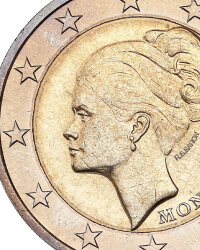
歐洲. 2 Euro 2000/2013 (4 coins with cancellation marks) (沒有保留價)


05
天
18
小時
07
分鐘
30
秒

 | €1 |
|---|
Catawiki買家保障
在您收到物品前,我們會妥善保管您的付款。查看詳情
Trustpilot評分 4.4 | 140462 則評論
在Trustpilot獲得極佳評等。
來自歐洲的4枚2歐元空白硬幣,未分類,2000–2013,帶鑄造痕跡,重量8.5克,主題為王室家族。
AI輔助摘要
賣家描述
Period: European Union (Euro) 2001 (MINT Errors) Photo No. 48
European Currency: Euro COIN BLANK
Type: Circulation Coins
Denomination: 2 euro, coin blank
Year: 2001
Bimetallic alloy.
Nickel-plated brass.
Cuproronickel ring
Edge inscription: Undented
Shape: Round
Obverse/Reverse Arrangement: Not Reversed
Weight (g) 8.5
Diameter (mm) 25.75
Thickness (mm) 2.2
On the obverse and reverse:
Uneven die wear; the coin shows metal bends in the form of longitudinal lines.
During coin minting, the dies are subjected to high dynamic loads, sometimes causing damage in the form of cracks or even chipping. Friction between the dies' surfaces and the coin gradually wears the dies. Contrary to popular belief, mint defects are highly coveted by collectors of this type of coin and the 2 euro coin blank, as their uniqueness makes them interesting and often very valuable due to their rarity and exceptional quality.
An interesting and unique, very rare, and unusual type of defect on a 2 euro coin blank.
2 euro NETHERLANDS (2007) 50th Anniversary of the Treaties of Rome Mint Errors image no. 40
Obverse: In the center of the coin, the open book of the Treaty of Rome; above: EUROPA; in the background, the cobblestones of Piazza del Campidoglio in Rome; below, the year of issue 2007; along the top edge in two lines: VERDRAG VAN ROME / 50 JAAR (50 years of the Treaty of Rome); along the bottom edge: KONINKRIJK DER NEDERLANDEN (Kingdom of the Netherlands); along the edge, twelve five-pointed stars - the symbol of the European Union
Reverse: To the left of the center, the face value: 2; to the right: EURO; in the background, a map of Europe; In the background of the map, vertically, six parallel lines terminating on both sides with five-pointed stars (the reverse is common to all euro coins).
Edge: serrated with a concave inscription:
Edge: serrated with a concave inscription: 2 euro edge: GOD * ZIJ * MET * ONS * (God Be with Us)
Issue date: 2007
Design: Joint proposal of the European Mints, Luc Luycx (initials LL below the letter O in EURO on the reverse)
Mint: Koninklijke Nederlandse Munt (Royal Dutch Mint), Utrecht (mintmark after the year of issue on the obverse, before the year of issue, the symbol of mint director Brouwer – sails)
Irregularities caused by die wear; the coin shows metal bends in the form of longitudinal lines.
During minting, the dies are subjected to high dynamic loads, sometimes causing damage in the form of cracks or even chipping. Friction between the die surfaces and the coin causes gradual wear of the dies. Contrary to popular belief, mint defects are highly sought after by collectors on these types of €2 mint blanks, as their uniqueness makes them interesting and often very valuable due to their rarity and exceptional quality.
Interesting and unique, very rare, and unusual type of defect on a €2 coin blank.
Interesting facts: (see additional photo) The obverse design of the coin commemorating the fiftieth anniversary of the signing of the Treaties of Rome was selected in a competition for European mints. The competition was decided by a three-person committee composed of Joaquín Almunia (Spanish, then Commissioner for Economic and Monetary Affairs), Pervenche Berès (French, then Member of Parliament), and Jean-Claude Juncker (Luxembourgish, then President of the Eurogroup). Apparently, the committee didn't like any of the designs, as official sources indicate that the obverse is ultimately the result of a collaborative effort by European mints.
The obverse depicts the Treaties signed by the six founding countries of the European Economic Community against a background reminiscent of Michelangelo's cobblestones in Piazza del Campidoglio in Rome, where the treaties were signed on March 25, 1957. Above the design are the inscriptions "50 Years of the Treaties of Rome" and "EUROPA," with the name of the issuing eurozone country in its official language or Latin below. The inscriptions on individual coins therefore vary, but the design is the same. The Piazza del Campidoglio in Rome also appears on another European coin – the Italian 50 cent coin.
The Book of the Treaties of Rome, a sketch of the Piazza del Campidoglio in Rome, and the Italian 50 euro cent coin.
2 Euro NETHERLANDS (2013) Abdication of Queen Beatrix (Mint Errors) image no. 42
Obverse: In the center, the head of Queen Beatrix facing left; on the left in the background, the head of Prince Willem-Alexander facing left; at the top, the royal crown divides the inscription along the left edge: WILLEM-ALEXANDER PRINS VAN ORANJE (William Alexander, Prince of Orange) and along the right edge: BEATRIX KONINGIN DER NEDERLANDEN (Beatrice, Queen of the Netherlands); along the bottom edge, in two lines, the date: 28 JANUARI / 2013 (January 28, 2013); a ring of pearls surrounds the inscriptions; along the edge, twelve five-pointed stars - the symbol of the European Union.
Reverse: To the left of the center, the face value: 2, to the right: EURO; in the background of the inscription, a map of Europe; In the background of the map, vertically, six parallel lines terminating on both sides with five-pointed stars (the reverse is common to all euro coins).
Ring: serrated with a concave inscription:
Ring: serrated with a concave inscription:
GOD * ZIJ * MET * ONS * (God Be with Us)
Date of issue: 2013
Design: Pannos Goutzemisis, Luc Luycx (initials LL below the letter O in EURO on the reverse)
Mint: Koninklijke Nederlandse Munt (Royal Dutch Mint), Utrecht (mintmark behind the date 2013 on the obverse, before the date 2013 the symbol of mint director Brouwer – sails)
Irregularities caused by die wear; metal bends in the form of longitudinal lines are visible on the coin.
During minting, the dies are subjected to They are subjected to high dynamic loads, sometimes causing damage in the form of cracks or even chips. Friction between the die surfaces and the coin causes gradual wear of the dies. Contrary to popular belief, mint defects are highly sought after by collectors on these types of 2 euro mint blanks, as their uniqueness makes them interesting and often very valuable due to their rarity and exceptional quality.
An interesting and unique, very rare, and unusual type of defect on a 2 euro coin blank.
Interesting facts: (see additional photo) The 2 euro commemorative coin from 2013 commemorates the abdication of Queen Beatrix from the Dutch throne in favor of her eldest son, Willem Alexander. The Queen's address and the formal signing of the documents took place on January 28, 2013, and two days later, Willem Alexander was crowned King of the Netherlands – the first after 123 years of queens' rule in the Netherlands.
Queen Beatrix signs the abdication document alongside Prince Willem Alexander and his wife Máxima Zorreguieta.
2 Euro IRELAND 2007, Mint Errors image no. 45
Obverse: In the center of the coin, a 14-string Celtic harp (the coat of arms of Ireland since the 16th century); along the left edge: ÉIRE (Ireland); along the right edge: the year of issue; along the edge: twelve five-pointed stars - the symbol of the European Union
Note: there is no visible letter "E" in the inscription EIRE
stars on the outer ring of the coin are barely visible or missing, on the core of the coin there are three deep recesses and visible metal bulges, black spots and pits
Reverse: Left of the center, face value: 2, right: EURO; in the background of the inscription: a map of Europe; In the background of the map, vertically, there are six parallel lines terminating on both sides with five-pointed stars (the reverse is common to all euro coins).
Note: Above and below the EURO inscription on the outer ring, all six vertical parallel lines terminating in five-pointed stars are missing. Several countries are missing from the map of Europe, and metal bulges, black spots, and pits are visible.
Coin edge: Reeded with a concave inscription: 2 edge
(the denomination repeated six times with two stars: 2**)
Design: Jarlath Hayes, (initials LL below the letter O in EURO on the reverse)
Mint: The Currency Centre, Dublin
Irregularity caused by die wear; metal bends in the form of longitudinal lines are visible on the coin.
During the minting of coins, the dies are subject to high dynamic loads, which sometimes causes damage in the form of cracks or even chips. Friction between the surfaces of the dies and the coin causes gradual wear of the dies. Contrary to popular belief, mint damage is highly sought after by collectors on this type of 2 Euro mint blank, as its uniqueness makes it interesting and often highly valuable due to its rarity and exceptional quality.
An interesting and unique, very rare, and unusual form of damage to a 2 Euro coin blank.
Interesting Facts: The harp on Irish coins is a reproduction of the harp of Brian Boru (Brian the Bold 941-1014), the early medieval High King of Ireland and Viking conqueror.
The Currency Center (or, less officially, The Irish Mint) is located in the Sandyford district of Dublin. It was established in 1978 (prior to that date, Irish coins were minted at The Royal Mint in London). Designed by Sam Stephenson, the building received a gold medal from The Royal Institute of the Architects of Ireland.
Period: European Union (Euro) 2001 (MINT Errors) Photo No. 48
European Currency: Euro COIN BLANK
Type: Circulation Coins
Denomination: 2 euro, coin blank
Year: 2001
Bimetallic alloy.
Nickel-plated brass.
Cuproronickel ring
Edge inscription: Undented
Shape: Round
Obverse/Reverse Arrangement: Not Reversed
Weight (g) 8.5
Diameter (mm) 25.75
Thickness (mm) 2.2
On the obverse and reverse:
Uneven die wear; the coin shows metal bends in the form of longitudinal lines.
During coin minting, the dies are subjected to high dynamic loads, sometimes causing damage in the form of cracks or even chipping. Friction between the dies' surfaces and the coin gradually wears the dies. Contrary to popular belief, mint defects are highly coveted by collectors of this type of coin and the 2 euro coin blank, as their uniqueness makes them interesting and often very valuable due to their rarity and exceptional quality.
An interesting and unique, very rare, and unusual type of defect on a 2 euro coin blank.
2 euro NETHERLANDS (2007) 50th Anniversary of the Treaties of Rome Mint Errors image no. 40
Obverse: In the center of the coin, the open book of the Treaty of Rome; above: EUROPA; in the background, the cobblestones of Piazza del Campidoglio in Rome; below, the year of issue 2007; along the top edge in two lines: VERDRAG VAN ROME / 50 JAAR (50 years of the Treaty of Rome); along the bottom edge: KONINKRIJK DER NEDERLANDEN (Kingdom of the Netherlands); along the edge, twelve five-pointed stars - the symbol of the European Union
Reverse: To the left of the center, the face value: 2; to the right: EURO; in the background, a map of Europe; In the background of the map, vertically, six parallel lines terminating on both sides with five-pointed stars (the reverse is common to all euro coins).
Edge: serrated with a concave inscription:
Edge: serrated with a concave inscription: 2 euro edge: GOD * ZIJ * MET * ONS * (God Be with Us)
Issue date: 2007
Design: Joint proposal of the European Mints, Luc Luycx (initials LL below the letter O in EURO on the reverse)
Mint: Koninklijke Nederlandse Munt (Royal Dutch Mint), Utrecht (mintmark after the year of issue on the obverse, before the year of issue, the symbol of mint director Brouwer – sails)
Irregularities caused by die wear; the coin shows metal bends in the form of longitudinal lines.
During minting, the dies are subjected to high dynamic loads, sometimes causing damage in the form of cracks or even chipping. Friction between the die surfaces and the coin causes gradual wear of the dies. Contrary to popular belief, mint defects are highly sought after by collectors on these types of €2 mint blanks, as their uniqueness makes them interesting and often very valuable due to their rarity and exceptional quality.
Interesting and unique, very rare, and unusual type of defect on a €2 coin blank.
Interesting facts: (see additional photo) The obverse design of the coin commemorating the fiftieth anniversary of the signing of the Treaties of Rome was selected in a competition for European mints. The competition was decided by a three-person committee composed of Joaquín Almunia (Spanish, then Commissioner for Economic and Monetary Affairs), Pervenche Berès (French, then Member of Parliament), and Jean-Claude Juncker (Luxembourgish, then President of the Eurogroup). Apparently, the committee didn't like any of the designs, as official sources indicate that the obverse is ultimately the result of a collaborative effort by European mints.
The obverse depicts the Treaties signed by the six founding countries of the European Economic Community against a background reminiscent of Michelangelo's cobblestones in Piazza del Campidoglio in Rome, where the treaties were signed on March 25, 1957. Above the design are the inscriptions "50 Years of the Treaties of Rome" and "EUROPA," with the name of the issuing eurozone country in its official language or Latin below. The inscriptions on individual coins therefore vary, but the design is the same. The Piazza del Campidoglio in Rome also appears on another European coin – the Italian 50 cent coin.
The Book of the Treaties of Rome, a sketch of the Piazza del Campidoglio in Rome, and the Italian 50 euro cent coin.
2 Euro NETHERLANDS (2013) Abdication of Queen Beatrix (Mint Errors) image no. 42
Obverse: In the center, the head of Queen Beatrix facing left; on the left in the background, the head of Prince Willem-Alexander facing left; at the top, the royal crown divides the inscription along the left edge: WILLEM-ALEXANDER PRINS VAN ORANJE (William Alexander, Prince of Orange) and along the right edge: BEATRIX KONINGIN DER NEDERLANDEN (Beatrice, Queen of the Netherlands); along the bottom edge, in two lines, the date: 28 JANUARI / 2013 (January 28, 2013); a ring of pearls surrounds the inscriptions; along the edge, twelve five-pointed stars - the symbol of the European Union.
Reverse: To the left of the center, the face value: 2, to the right: EURO; in the background of the inscription, a map of Europe; In the background of the map, vertically, six parallel lines terminating on both sides with five-pointed stars (the reverse is common to all euro coins).
Ring: serrated with a concave inscription:
Ring: serrated with a concave inscription:
GOD * ZIJ * MET * ONS * (God Be with Us)
Date of issue: 2013
Design: Pannos Goutzemisis, Luc Luycx (initials LL below the letter O in EURO on the reverse)
Mint: Koninklijke Nederlandse Munt (Royal Dutch Mint), Utrecht (mintmark behind the date 2013 on the obverse, before the date 2013 the symbol of mint director Brouwer – sails)
Irregularities caused by die wear; metal bends in the form of longitudinal lines are visible on the coin.
During minting, the dies are subjected to They are subjected to high dynamic loads, sometimes causing damage in the form of cracks or even chips. Friction between the die surfaces and the coin causes gradual wear of the dies. Contrary to popular belief, mint defects are highly sought after by collectors on these types of 2 euro mint blanks, as their uniqueness makes them interesting and often very valuable due to their rarity and exceptional quality.
An interesting and unique, very rare, and unusual type of defect on a 2 euro coin blank.
Interesting facts: (see additional photo) The 2 euro commemorative coin from 2013 commemorates the abdication of Queen Beatrix from the Dutch throne in favor of her eldest son, Willem Alexander. The Queen's address and the formal signing of the documents took place on January 28, 2013, and two days later, Willem Alexander was crowned King of the Netherlands – the first after 123 years of queens' rule in the Netherlands.
Queen Beatrix signs the abdication document alongside Prince Willem Alexander and his wife Máxima Zorreguieta.
2 Euro IRELAND 2007, Mint Errors image no. 45
Obverse: In the center of the coin, a 14-string Celtic harp (the coat of arms of Ireland since the 16th century); along the left edge: ÉIRE (Ireland); along the right edge: the year of issue; along the edge: twelve five-pointed stars - the symbol of the European Union
Note: there is no visible letter "E" in the inscription EIRE
stars on the outer ring of the coin are barely visible or missing, on the core of the coin there are three deep recesses and visible metal bulges, black spots and pits
Reverse: Left of the center, face value: 2, right: EURO; in the background of the inscription: a map of Europe; In the background of the map, vertically, there are six parallel lines terminating on both sides with five-pointed stars (the reverse is common to all euro coins).
Note: Above and below the EURO inscription on the outer ring, all six vertical parallel lines terminating in five-pointed stars are missing. Several countries are missing from the map of Europe, and metal bulges, black spots, and pits are visible.
Coin edge: Reeded with a concave inscription: 2 edge
(the denomination repeated six times with two stars: 2**)
Design: Jarlath Hayes, (initials LL below the letter O in EURO on the reverse)
Mint: The Currency Centre, Dublin
Irregularity caused by die wear; metal bends in the form of longitudinal lines are visible on the coin.
During the minting of coins, the dies are subject to high dynamic loads, which sometimes causes damage in the form of cracks or even chips. Friction between the surfaces of the dies and the coin causes gradual wear of the dies. Contrary to popular belief, mint damage is highly sought after by collectors on this type of 2 Euro mint blank, as its uniqueness makes it interesting and often highly valuable due to its rarity and exceptional quality.
An interesting and unique, very rare, and unusual form of damage to a 2 Euro coin blank.
Interesting Facts: The harp on Irish coins is a reproduction of the harp of Brian Boru (Brian the Bold 941-1014), the early medieval High King of Ireland and Viking conqueror.
The Currency Center (or, less officially, The Irish Mint) is located in the Sandyford district of Dublin. It was established in 1978 (prior to that date, Irish coins were minted at The Royal Mint in London). Designed by Sam Stephenson, the building received a gold medal from The Royal Institute of the Architects of Ireland.
詳細資料
時代
2000年後
重量
8,5 g
物品數量
4
國家/省
歐洲
描述/主題
王族
額外資料
2000/2013 (4 coins with cancellation marks)
Denomination
2 Euro
狀態
未分類