編號 106829257

編號 106829257
Please note: sorry, no shipping to Asia, Africa, South America, Russia, Turkey and Switzerland
Grade: VF dark blackish patina
Material: AE
Weight: 1,87 g
Diameter: 14 mm
Ref.: BMC Caria 56 (ΑΡΙΣΤΑΓΟΡΑΣ in error); R. H. J. Ashton, ‘The late classical/early hellenistic drachms of Knidos’, RN 154 (1999), 90
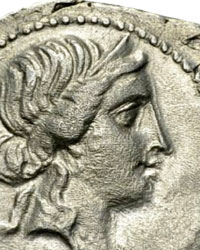
Obverse: ΔΑΜΟΚ[ΡΑΤΙΑΣ], The personification of Democracy with the features of Aphrodite, right
Reverse: Prow, right; beneath, club. Above, ΕΥΦΡΑΓΟΡΑΣ, ΚΝΙ below
The personification of Democracy is as rare in numismatics as in art, until now attested at only two mints: Knidos and Telos (LIMC, s.v. Demokratia 4, opt for Democracy). Two passages in Aristotle, Politics, 1305b 12ff. and 1306b 3ff., apparently describe two separate overthrows of oligarchies at Knidos. The latter ‘is said to have resulted from the disgust felt by some of the ruling class at the excessive despotism of the oligarchs. This has the look of an archaic event. The [former] is a reference to an oligarchy overthrown by the people, the δῆμος. This looks much more like a fourth-century revolution’(S. Hornblower, Mausolus, Oxford, 1982, 117– 8).The ΔΑΜΟΚΡΑΤΙΑΣ bronzes are usually associated with Alexander's presumed restoration of democracy to Knidos after 333. However, numismatic evidence suggesting a mid-fourth century date for these coins indicates that Aristotle's democratic revolution took place during the hegemony of Mausolos or one of his successors (Ashton 1999, 91– 2). Described by the Pactolus Numismatic Academy (PNA). (Source of this passage: Concordia numismatics)