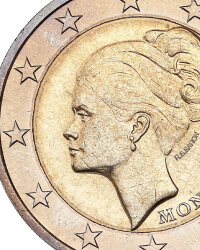
歐洲. 2 Euro Various Years (4 coins with cancellation marks) (沒有保留價)


03
天
13
小時
30
分鐘
44
秒

沒有出價記錄
Catawiki買家保障
在您收到物品前,我們會妥善保管您的付款。查看詳情
Trustpilot評分 4.4 | 141384 則評論
在Trustpilot獲得極佳評等。
四枚未分級的2歐元硬幣,來自不同年份並帶有鑄造缺陷,包含比利時2002年的空心芯與邊緣溝槽、盧森堡2015 Destrukt UNC 的模具磨損異常、法國2007年羅馬條約50週年錯誤(邊緣字樣變化)以及義大利2002年但丁硬幣,單枚重8.5克,直徑25.75毫米,厚度2.2毫米,均為雙金屬材質。
AI輔助摘要
賣家描述
Period: European Union Photo 2
Currency: 2 Euro (Euro) coin blank - Belgium
Year: 2002
Bimetallic alloy.
Medium-nickel brass, nickel-plated.
Shape: Round
Obverse/Reverse Arrangement: Non-reversed
Weight (g) 8.5
Diameter (mm) 25.75
Thickness (mm) 2.2
Obverse: The coin core and outer ring are blank, without symbols or date. The central core of the disc is separated from the outer ring. Four short and very deep slits run diagonally through the center of the coin and the outer ring. All grooves were created during the pressing and minting process under enormous pressure.
Reverse: The coin core and outer ring are blank, without symbols or date. The central core of the disc is separated from the outer ring. Three very deep slits run vertically through the center of the coin. All the grooves were created during the pressing and minting process under enormous pressure.
Note: The disc's edge features the symbols "2" and "two stars" in a repeating pattern. The disc lacks any ribs; this is a Belgian 2-euro coin.
Contrary to popular belief, mint defects on mint discs are highly sought after by collectors, as their uniqueness makes them interesting and often very valuable due to their rarity and exceptionality.
This is a very interesting disc for striking a 2-euro coin - Belgium.
Luxembourg 2 euro, 2015 - DESTRUKT circulation coin (photo 1)
UNC mint error
A very rare coin, sought after by collectors.
Bimetallic alloy.
Coin core: cupronickel
Side type: Serrated with inscription
Edge inscription: "2 ★ ★ 2 ★ ★ ★ ★ 2 ★ ★ ★ 2 ★ ★"
Shape: Round
Obverse/Reverse orientation: Not reversed
Weight (g) 8.5
Diameter (mm) 25.75
Thickness (mm) 2.2
Obverse: Henri, Grand Duke of Luxembourg
Inscription: LËTZEBUERG 2015
Designers: Joaquin Jimenez, Yvette Gastauer-Claire (YGC)
Irregularities caused by die wear; The coin displays visible dents in the metal in the form of longitudinal lines.
During minting, the dies are subjected to high dynamic loads, which sometimes causes damage in the form of cracks or even chipping. Friction between the dies' surfaces and the coin blank causes gradual wear of the dies. Contrary to popular belief, mint debris is highly sought after by collectors, as its uniqueness makes it interesting and often very valuable due to its rarity and exceptionality.
Obverse of the coin: The central core of the coin is separated from the outer ring of the coin. The stars on the outer edge of the coin are deformed. On the left side of the coin, an additional dies strike (double strike) in the shape of a semicircle.
The inscription "LËTZEBUERG" and the year 2015 are distorted, and several letters and numbers are missing. The central part of the coin is not clearly divided into two equal fields. The image of Henri, Grand Duke of Luxembourg is distorted.
Reverse of the coin: The central ring is missing, with four very wide, conical outer slits visible, running through four points of the coin. All the grooves were created during the movement of the die and the minting process under enormous pressure. The numeral 2 is damaged.
The outer ring of the coin is deformed. Six stars and six vertical lines above the inscription "EURO" are missing.
The coin is characterized by interesting and unique, very rare and unusual damage.
France 2 Euro Year 2007 (50th Anniversary of the Treaties of Rome Error) (photo 3 )
A very rare coin sought after by collectors.
Alloy: Bimetal.
Centre: Nickel-plated brass.
Ring: Cupronickel
Side Type: Serrated with inscription
Edge Inscription: '2 ★ ★ 2 ★ ★ 2 ★ ★ 2 ★ ★ 2 ★ ★ 2 ★ ★'
Shape: Round
Obverse/Reverse Layout: Not Reversed
Weight (g) 8.5
Diameter (mm) 25.75
Thickness (mm) 2.2
Obverse: In the center of the coin, the open book of the Treaty of Rome; above: EUROPE; in the background, the cobblestones of Piazza del Campidoglio in Rome; below, year of issue 2007; along the top edge in two lines: TRAITÉ DE ROME / 50 ANS (50 years of the Treaty of Rome); along the bottom edge: RÉPUBLIQUE FRANÇAISE (French Republic); along the edge, twelve five-pointed stars - the symbol of the European Union.
Reverse: Left of center, face value: 2, right: EURO; in the background of the inscription, a map of Europe; in the background of the map, vertically, six parallel lines terminating on both sides with five-pointed stars (the reverse is common to all euro coins).
Edge: Reeded with a concave inscription: the number 2 and two stars in a repeating motto.
Design: Joint proposal of the European mints, Luc Luycx (initials LL below the letter O in EURO on the reverse)
Mint: La Monnaie de Paris (Paris Mint), Pessac (mark The mint's name (before the year of issue) is on the obverse; after the year of issue, the symbol of mint director Hubert Larivière – a hunting horn – is displayed.
Irregularity resulting from die wear; the coin shows metal crushing in the form of longitudinal lines.
During coin minting, high dynamic loads occur on the dies, which sometimes causes damage in the form of cracks or even chips. Friction between the surfaces of the dies and the coin blank causes gradual wear of the dies. Contrary to appearances, mint damage is highly sought after by collectors because its uniqueness makes it interesting and often very valuable due to its rarity and exceptionality.
Obverse of the coin: a leak in the central ring, the stars on the outer edge of the coin are misshapen, and several stars are missing.
NOTE: Double additional minting of the coin at the bottom in the form of a semicircle. Additionally, three wide and convex grooves are visible on the coin. during die movement
NOTE: Ribbing missing on the edge of the coin
Interesting fact: The obverse design of the coin commemorating the 50th anniversary of the signing of the Treaties of Rome was selected in a competition for European mints. The competition was decided by a three-person commission consisting of Joaquín Almunia (Spanish, then Commissioner for Economic and Monetary Affairs), Pervenche Berès (French, then Member of Parliament), and Jean-Claude Juncker (Luxembourgish, then President of the Eurogroup). Apparently, the commission didn't like any of the designs, as official sources indicate that the obverse is ultimately the result of a group effort by the European mints.
The obverse depicts the Treaties signed by the six founding countries of the European Economic Community against a background reminiscent of the cobblestones of Piazza del Campidoglio in Rome, designed by Michelangelo, where the treaties were signed on March 25, 1957. Above the design are the inscriptions "50 Years of the Treaties of Rome" and "EUROPA" followed by the name of the issuing eurozone country in its official language or Latin. The inscriptions on individual coins vary, but the motif is the same.
The Piazza del Campidoglio in Rome also appears on another European coin – the Italian 50 cent coin.
The Book of the Treaties of Rome, a sketch of the Piazza del Campidoglio in Rome, and Italian 50 cent coins.
ITALY 2 Euro Year 2002 - Error PHOTO 4
A very rare coin sought after by collectors.
Alloy: Bimetal.
Centre: Nickel-plated brass.
Ring: Cupronickel
Side Type: Serrated with inscription
Edge Inscription: 2 ★ 2 ★ 2 ★ 2 ★ 2 ★ 2 ★
Shape: Round
Obverse/Reverse Layout: Not Reversed
Weight (g) 8.5
Diameter (mm) 25.75
Thickness (mm) 2.2
Obverse: In the center of the coin, the head of Dante Alighieri from Raphael's fresco "Disputation of the Blessed Sacrament" facing left; On the left, in two lines, the monogram: RI (REPUBBLICA ITALIANA - Italian Republic) and the year of issue; along the edge, twelve five-pointed stars - the symbol of the European Union.
Reverse: Left from the center, face value: 2, right: EURO; in the background, a map of Europe; In the background of the map, vertically, six parallel lines terminate on both sides with five-pointed stars (the reverse is common to all euro coins).
Coin edge: serrated with a concave inscription: the number 2 and ONE star in a repeating sentence.
Design: Maria Carmela Colaneri (initials M.C.C. below Dante's neck on the obverse), Luc Luycx (initials LL below the letter O in EURO on the reverse)
Mint: stituto Poligrafico e Zecca dello Stato (State Printing and Mint), Rome (mintmark - the letter R next to Dante's chin on the obverse)
Irregularity due to die wear; the coin displays metal dents in the form of longitudinal lines.
During minting, high dynamic loads are applied to the dies, which sometimes causes damage in the form of cracks or even chips. Friction between the surfaces of the dies and the coin blank causes gradual wear of the dies. Contrary to appearances, mint detritus is highly sought after by collectors because its uniqueness makes it interesting and often very valuable due to its rarity and exceptionality.
Coin obverse: The central ring is cracked, the stars on the outer edge are misshapen, and several stars are missing.
Fun fact: Dante Alighieri (1265-1321) was the most famous Italian poet of the Middle Ages. His epic poem "The Divine Comedy" (La Divina Commedia), which already embodies many features of Renaissance literature, is a world-renowned masterpiece. The poem's protagonist's journey through Hell, Purgatory, and Paradise, as well as his philosophical reflections, were written for the first time in the vernacular (Tuscan Italian dialect) instead of the then-current Latin. Dante Alighieri in the fresco "Disputation on the Blessed Sacrament" by Raphael and his students from 1508-1509. The fresco can be admired on the west wall of the Segnatura's room in the Vatican Palace in Rome.
Period: European Union Photo 2
Currency: 2 Euro (Euro) coin blank - Belgium
Year: 2002
Bimetallic alloy.
Medium-nickel brass, nickel-plated.
Shape: Round
Obverse/Reverse Arrangement: Non-reversed
Weight (g) 8.5
Diameter (mm) 25.75
Thickness (mm) 2.2
Obverse: The coin core and outer ring are blank, without symbols or date. The central core of the disc is separated from the outer ring. Four short and very deep slits run diagonally through the center of the coin and the outer ring. All grooves were created during the pressing and minting process under enormous pressure.
Reverse: The coin core and outer ring are blank, without symbols or date. The central core of the disc is separated from the outer ring. Three very deep slits run vertically through the center of the coin. All the grooves were created during the pressing and minting process under enormous pressure.
Note: The disc's edge features the symbols "2" and "two stars" in a repeating pattern. The disc lacks any ribs; this is a Belgian 2-euro coin.
Contrary to popular belief, mint defects on mint discs are highly sought after by collectors, as their uniqueness makes them interesting and often very valuable due to their rarity and exceptionality.
This is a very interesting disc for striking a 2-euro coin - Belgium.
Luxembourg 2 euro, 2015 - DESTRUKT circulation coin (photo 1)
UNC mint error
A very rare coin, sought after by collectors.
Bimetallic alloy.
Coin core: cupronickel
Side type: Serrated with inscription
Edge inscription: "2 ★ ★ 2 ★ ★ ★ ★ 2 ★ ★ ★ 2 ★ ★"
Shape: Round
Obverse/Reverse orientation: Not reversed
Weight (g) 8.5
Diameter (mm) 25.75
Thickness (mm) 2.2
Obverse: Henri, Grand Duke of Luxembourg
Inscription: LËTZEBUERG 2015
Designers: Joaquin Jimenez, Yvette Gastauer-Claire (YGC)
Irregularities caused by die wear; The coin displays visible dents in the metal in the form of longitudinal lines.
During minting, the dies are subjected to high dynamic loads, which sometimes causes damage in the form of cracks or even chipping. Friction between the dies' surfaces and the coin blank causes gradual wear of the dies. Contrary to popular belief, mint debris is highly sought after by collectors, as its uniqueness makes it interesting and often very valuable due to its rarity and exceptionality.
Obverse of the coin: The central core of the coin is separated from the outer ring of the coin. The stars on the outer edge of the coin are deformed. On the left side of the coin, an additional dies strike (double strike) in the shape of a semicircle.
The inscription "LËTZEBUERG" and the year 2015 are distorted, and several letters and numbers are missing. The central part of the coin is not clearly divided into two equal fields. The image of Henri, Grand Duke of Luxembourg is distorted.
Reverse of the coin: The central ring is missing, with four very wide, conical outer slits visible, running through four points of the coin. All the grooves were created during the movement of the die and the minting process under enormous pressure. The numeral 2 is damaged.
The outer ring of the coin is deformed. Six stars and six vertical lines above the inscription "EURO" are missing.
The coin is characterized by interesting and unique, very rare and unusual damage.
France 2 Euro Year 2007 (50th Anniversary of the Treaties of Rome Error) (photo 3 )
A very rare coin sought after by collectors.
Alloy: Bimetal.
Centre: Nickel-plated brass.
Ring: Cupronickel
Side Type: Serrated with inscription
Edge Inscription: '2 ★ ★ 2 ★ ★ 2 ★ ★ 2 ★ ★ 2 ★ ★ 2 ★ ★'
Shape: Round
Obverse/Reverse Layout: Not Reversed
Weight (g) 8.5
Diameter (mm) 25.75
Thickness (mm) 2.2
Obverse: In the center of the coin, the open book of the Treaty of Rome; above: EUROPE; in the background, the cobblestones of Piazza del Campidoglio in Rome; below, year of issue 2007; along the top edge in two lines: TRAITÉ DE ROME / 50 ANS (50 years of the Treaty of Rome); along the bottom edge: RÉPUBLIQUE FRANÇAISE (French Republic); along the edge, twelve five-pointed stars - the symbol of the European Union.
Reverse: Left of center, face value: 2, right: EURO; in the background of the inscription, a map of Europe; in the background of the map, vertically, six parallel lines terminating on both sides with five-pointed stars (the reverse is common to all euro coins).
Edge: Reeded with a concave inscription: the number 2 and two stars in a repeating motto.
Design: Joint proposal of the European mints, Luc Luycx (initials LL below the letter O in EURO on the reverse)
Mint: La Monnaie de Paris (Paris Mint), Pessac (mark The mint's name (before the year of issue) is on the obverse; after the year of issue, the symbol of mint director Hubert Larivière – a hunting horn – is displayed.
Irregularity resulting from die wear; the coin shows metal crushing in the form of longitudinal lines.
During coin minting, high dynamic loads occur on the dies, which sometimes causes damage in the form of cracks or even chips. Friction between the surfaces of the dies and the coin blank causes gradual wear of the dies. Contrary to appearances, mint damage is highly sought after by collectors because its uniqueness makes it interesting and often very valuable due to its rarity and exceptionality.
Obverse of the coin: a leak in the central ring, the stars on the outer edge of the coin are misshapen, and several stars are missing.
NOTE: Double additional minting of the coin at the bottom in the form of a semicircle. Additionally, three wide and convex grooves are visible on the coin. during die movement
NOTE: Ribbing missing on the edge of the coin
Interesting fact: The obverse design of the coin commemorating the 50th anniversary of the signing of the Treaties of Rome was selected in a competition for European mints. The competition was decided by a three-person commission consisting of Joaquín Almunia (Spanish, then Commissioner for Economic and Monetary Affairs), Pervenche Berès (French, then Member of Parliament), and Jean-Claude Juncker (Luxembourgish, then President of the Eurogroup). Apparently, the commission didn't like any of the designs, as official sources indicate that the obverse is ultimately the result of a group effort by the European mints.
The obverse depicts the Treaties signed by the six founding countries of the European Economic Community against a background reminiscent of the cobblestones of Piazza del Campidoglio in Rome, designed by Michelangelo, where the treaties were signed on March 25, 1957. Above the design are the inscriptions "50 Years of the Treaties of Rome" and "EUROPA" followed by the name of the issuing eurozone country in its official language or Latin. The inscriptions on individual coins vary, but the motif is the same.
The Piazza del Campidoglio in Rome also appears on another European coin – the Italian 50 cent coin.
The Book of the Treaties of Rome, a sketch of the Piazza del Campidoglio in Rome, and Italian 50 cent coins.
ITALY 2 Euro Year 2002 - Error PHOTO 4
A very rare coin sought after by collectors.
Alloy: Bimetal.
Centre: Nickel-plated brass.
Ring: Cupronickel
Side Type: Serrated with inscription
Edge Inscription: 2 ★ 2 ★ 2 ★ 2 ★ 2 ★ 2 ★
Shape: Round
Obverse/Reverse Layout: Not Reversed
Weight (g) 8.5
Diameter (mm) 25.75
Thickness (mm) 2.2
Obverse: In the center of the coin, the head of Dante Alighieri from Raphael's fresco "Disputation of the Blessed Sacrament" facing left; On the left, in two lines, the monogram: RI (REPUBBLICA ITALIANA - Italian Republic) and the year of issue; along the edge, twelve five-pointed stars - the symbol of the European Union.
Reverse: Left from the center, face value: 2, right: EURO; in the background, a map of Europe; In the background of the map, vertically, six parallel lines terminate on both sides with five-pointed stars (the reverse is common to all euro coins).
Coin edge: serrated with a concave inscription: the number 2 and ONE star in a repeating sentence.
Design: Maria Carmela Colaneri (initials M.C.C. below Dante's neck on the obverse), Luc Luycx (initials LL below the letter O in EURO on the reverse)
Mint: stituto Poligrafico e Zecca dello Stato (State Printing and Mint), Rome (mintmark - the letter R next to Dante's chin on the obverse)
Irregularity due to die wear; the coin displays metal dents in the form of longitudinal lines.
During minting, high dynamic loads are applied to the dies, which sometimes causes damage in the form of cracks or even chips. Friction between the surfaces of the dies and the coin blank causes gradual wear of the dies. Contrary to appearances, mint detritus is highly sought after by collectors because its uniqueness makes it interesting and often very valuable due to its rarity and exceptionality.
Coin obverse: The central ring is cracked, the stars on the outer edge are misshapen, and several stars are missing.
Fun fact: Dante Alighieri (1265-1321) was the most famous Italian poet of the Middle Ages. His epic poem "The Divine Comedy" (La Divina Commedia), which already embodies many features of Renaissance literature, is a world-renowned masterpiece. The poem's protagonist's journey through Hell, Purgatory, and Paradise, as well as his philosophical reflections, were written for the first time in the vernacular (Tuscan Italian dialect) instead of the then-current Latin. Dante Alighieri in the fresco "Disputation on the Blessed Sacrament" by Raphael and his students from 1508-1509. The fresco can be admired on the west wall of the Segnatura's room in the Vatican Palace in Rome.
詳細資料
時代
2000年後
重量
8,5 g
物品數量
4
國家/省
歐洲
描述/主題
王族
額外資料
Various Years (4 coins with cancellation marks)
Denomination
2 Euro
狀態
未分類