Gian Butturini - Tu Interni...Io Libero - 1977

08
天
15
小時
08
分鐘
43
秒

沒有出價記錄
Catawiki買家保障
在您收到物品前,我們會妥善保管您的付款。查看詳情
Trustpilot評分 4.4 | 121798 則評論
在Trustpilot獲得極佳評等。
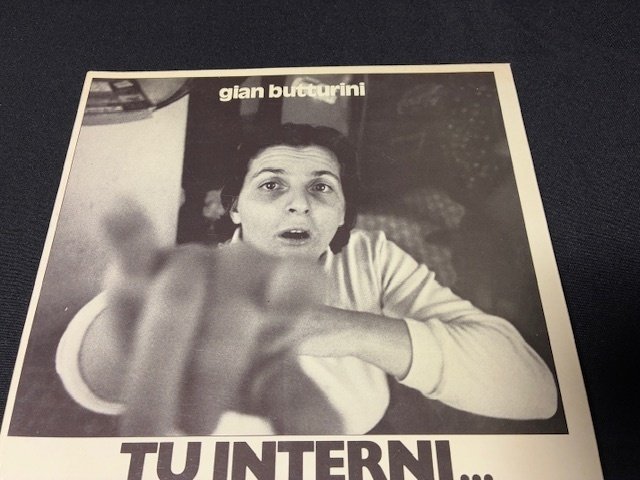
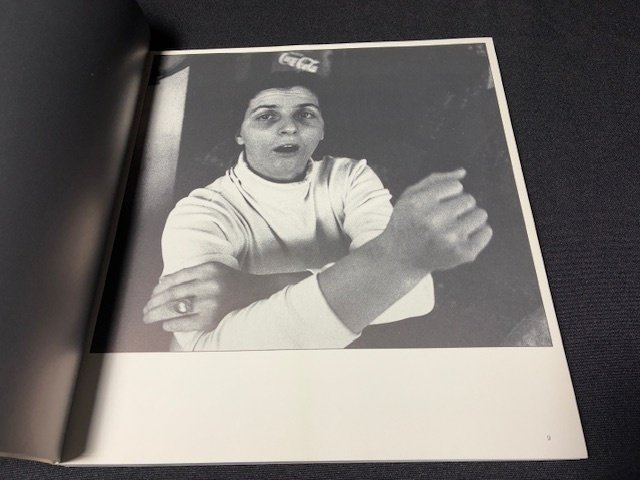
Tu Interni...Io Libero 由 Gian Butturini 著,1977 年第一版,意大利文,148 頁,平裝本,附護封,尺寸 235 x 260 mm。
AI輔助摘要
賣家描述
VERY IMPRESSIVE BOOK by Gian Butturini (1935-2006), genious Italian graphic designer and photographer, well known for his legendary photobook about London (Martin Parr, Gerry Badger, The Photobook, volume 3, page 154/155).
Undertitle:
"Dibattito fotografico assieme a franco basaglia e la sua equipe attraverso la distruzione dell'ospedale psichiatrico di trieste."
Arti Grafiche Bellomi Editore, Verona. 1977. First edition, first printing.
Paperback with dustjacket. 235 x 260 mm. 148 pages. Text in italian.
Condition:
Inside excellent, fresh and flawless, clean with no marks and with no foxing. Outside with very light yellowing at the bottom of the front cover, otherwise excellent; no remarkable flaws or defects. Overall very fine condition.
Great italian photobook - in great condition.
'Trained at the Brera Academy of Fine Arts, in the 1950s Gian Butturini began his activity in Brescia as an advertising graphic and designer.
He opened his professional studio in 1955, collaborated with the advertising agency ‘Manzoni’ in Brescia. He took part in the national exhibition of advertising artists (Galleria d'arte moderna, Milan 1959), in the international exhibition ‘Poster art in the world’ at the Royal Ontario Museum in Toronto (1960), received YAIA prizes at the Milan press club for ‘the best advertisement’ (1961) and for the ‘Breda Meccanica’ campaign in Pallanza (1964), received the Philips prize for the best Italian showcase (1967). He took over from Max Huber in the campaign for ‘Arredamenti di Ponte San Pietro’. He curated the national fashion show ‘Calza 70’, featuring the English model Jenny York, photographed in the streets of London. From 1966, he worked for a few seasons with the Milanese theatre company San Marco 2.
He was a member of Art Directors Club Milano (1966- 1978), he was interior architect for new boutiques in the historic centre of Brescia (Magic Stile, Bettina, Moda Motta, Borghini); as a consultant, he designed exhibition stands for the first E.I.B. -industrial exhibition in Brescia, Mantua and Verona. At the Interplast trade fair, London 1969, he designed and designed the stand for the American Beloit .
On the wave of the ‘68 movements, he progressively orientated his research by engaging in the socio-political field. Presented by the art critic Mario De Micheli, he proposed ‘I Controfumetti’, which overturned the original meaning of values in a pacifist sense, the ‘Strappi underground’, silk-screen lacerations on international themes, and ‘L'uomo violato’, a multiple against consumerism. He took part in round tables on the Underground with Fernanda Pivano and Andrea Valcarenghi (Circolo di via De Amicis, Milan 1971).
He became passionate about photography in the late 1960s, after a period spent in London. In 1969, he published his first photographic book, London by Gian Butturini, inspired by the Beat Generation and the people he met on the streets of the English capital; he portrayed homeless outcasts, heroin addicts, immigrants, anti-Vietnam War protesters, blacks, girls in miniskirts, as well as, by contrast, affluent city dwellers. The book was distinguished by an unusual layout for the time and original graphics: between the photographs, often presented with cuts, tears and provocative juxtapositions, were inserted verses by Allen Ginsberg and quotations by Robert Capa.
For the book London by Gian Butturini, in Peschiera del Garda, he was awarded (in the criticism and costume section) the ‘I Teleobiettivi d'oro 1970’ prize jointly with Dacia Maraini (direction), Alberto Moravia (literature) and Febo Conti (radio and television).
In 1971 he travelled to Cuba, where he made a reportage on the ‘revolutionary island’, published in the volume Cuba. 26 July in 1972, a week after the events of Bloody Sunday, he went to Derry and Belfast, in Northern Ireland, on behalf of Skema magazine, which published his photos exclusively with those of Don McCullin. The following year he witnessed the coup d'état in Chile, where shortly before he had met and photographed Salvador Allende. Between 1973 and 1974, during the Cold War, he made reportages in East Germany, documenting the everyday life of people and public moments.
Among his photo books are accounts of his travels in Latin America, in the Brazilian favelas, in the suburbs of Lima, in the Sahara with the Polisario Front, in Portugal during the Carnation Revolution, the metalworkers of Naples. In 1987 he travelled to Chile following Pope John Paul II and in 2004 he documented the reality of the poor in India and the welfare structures created by Mother Teresa of Calcutta.
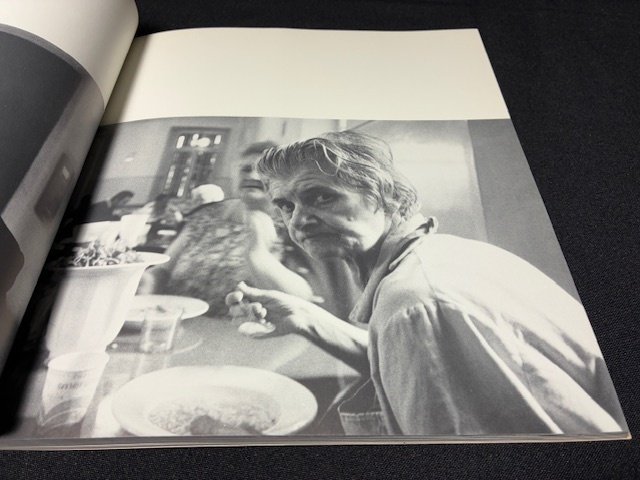
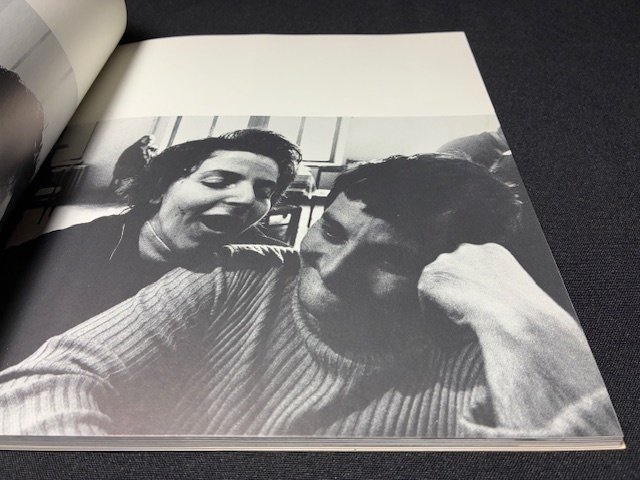
Butturini was called by Franco Basaglia in 1975 in Trieste, to document the stages of his new approach to mental illness that led to the Basaglia Law. Patients are portrayed in their environment, both individually and in groups, during everyday actions such as playing, doing make-up, playing music and dancing.
Although his commitment in the social and civil field was prevalent, as noted by the historian of photography Italo Zannier in the introduction to the book Garda/Benacus, Gian Butturini did not renounce reportages on nature and the environment and others dedicated to the architecture of cities such as Prague and Venice.
In 1975, he began his activity as a director by making the docufilm Crimini di pace on white deaths in construction sites (music by Luigi Nono), in the film he also made a short interview with Franco Basaglia on human alienation recorded in the psychiatrist's Venetian home; in 1976, together with the workers of an occupied metalworking factory, he shot Omac, following the workers in struggle for about a year[4]. In the 1980s and 1990s, he made the docufilm C'era una volta l'ospedale psichiatrico, shot in Trieste and Mantua with Luigi Benevelli, some video interviews with Umberto Mastroianni and Marcello Mastroianni, Franco Rotelli, Tonino Guerra.
He is best remembered for the film Il mondo degli ultimi (1980) with Lino Capolicchio and Mietta Albertini, filmed in the provinces of Brescia and Cremona, in which he narrated the peasant struggles and strikes against the big agrarians. In 2022, the Fondazione Centro Sperimentale di Cinematografia in Rome, in collaboration with Cinecittà, restored and digitised the film, which was presented at the 40th Turin Film Festival in collaboration with the Gian Butturini Association.
Once the filming of Il mondo degli ultimi was finished, Butturini went with the crew to Bologna railway station in the hours following the massacre of 2 August 1980, making Bologna 10.25 - Strage, a documentary in which he interviewed the wounded, witnesses, politicians and mayor Renato Zangheri. Copies of the film are in the archives of the city of Bologna and on YouTube.
The first review of his film works took place at the Ken Damy Museum in Brescia in February 1994. Lino Capolicchio spoke. The 10' short film “Dietro la macchina da presa” (Behind the camera), shot in 1979 during the filming of the movie Il mondo degli ultimi (The world of the last), is also presented.
Gian Butturini told his story in two autobiographical video interviews: ‘Photography as a way of life’ (1995) by Alberto Lorica and ‘Fotografo ergo sum’ (1997) by Renato Ghitti.
He took his last shots in Trieste in the summer of 2006, invited by psychiatrists Franco Rotelli, Peppe Dell'Acqua and Mario Reali, to document the progress made in mental health services and an open-air party at ‘Il posto delle fragole’. He left us on 29 September ...
Photographic works by Gian Butturini can be found at the Tate Modern in London, at the National Photo Library in Havana, at the Civic Graphic and Photographic Collections of the Municipality of Milan, at the Franco Rotelli Documentation Centre in the San Giovanni Park in Trieste and in numerous private collections, including that of Martin Parr.
There have been many exhibitions by Gian Butturini in the course of his activity; here is a selection of his solo, group and posthumous exhibitions in Italy and around the world.'
(Wikipedia)
賣家的故事
歡迎來到 5 點 30 分。
5Uhr30 總部位於科隆最時尚的街區埃倫菲爾德 - 設有一家商店和一個攝影陳列室。
5H30 提供非常罕見、非常美麗、非常特別的相冊 - 已售罄、現代古董和古董。我們還提供照片邀請卡、電影和照片海報、照片目錄和原始照片打印件。
5Uhr30 專門從事德國攝影出版物,
而且還有來自歐洲、日本、北美和南美各地的一系列令人興奮的相冊。旅遊手冊、兒童讀物、公司手冊……一切與攝影有關的狹義或廣義的事物都會激發我們的靈感。如果您在科隆或周邊地區,請訪問我們。你不會後悔的! :)
5:30 am 總是盡力提供最好的狀態。
5 小時 30 分全球發貨,快速、安全 -
提供 100% 保護、全額保險和追踪號碼。
如果您有任何疑問或正在尋找特別的產品,請通過電子郵件與我們聯繫,因為我們僅提供部分優惠。
感謝您的關注。
埃基·豪瑟和團隊
由Google翻譯翻譯VERY IMPRESSIVE BOOK by Gian Butturini (1935-2006), genious Italian graphic designer and photographer, well known for his legendary photobook about London (Martin Parr, Gerry Badger, The Photobook, volume 3, page 154/155).
Undertitle:
"Dibattito fotografico assieme a franco basaglia e la sua equipe attraverso la distruzione dell'ospedale psichiatrico di trieste."
Arti Grafiche Bellomi Editore, Verona. 1977. First edition, first printing.
Paperback with dustjacket. 235 x 260 mm. 148 pages. Text in italian.
Condition:
Inside excellent, fresh and flawless, clean with no marks and with no foxing. Outside with very light yellowing at the bottom of the front cover, otherwise excellent; no remarkable flaws or defects. Overall very fine condition.
Great italian photobook - in great condition.
'Trained at the Brera Academy of Fine Arts, in the 1950s Gian Butturini began his activity in Brescia as an advertising graphic and designer.
He opened his professional studio in 1955, collaborated with the advertising agency ‘Manzoni’ in Brescia. He took part in the national exhibition of advertising artists (Galleria d'arte moderna, Milan 1959), in the international exhibition ‘Poster art in the world’ at the Royal Ontario Museum in Toronto (1960), received YAIA prizes at the Milan press club for ‘the best advertisement’ (1961) and for the ‘Breda Meccanica’ campaign in Pallanza (1964), received the Philips prize for the best Italian showcase (1967). He took over from Max Huber in the campaign for ‘Arredamenti di Ponte San Pietro’. He curated the national fashion show ‘Calza 70’, featuring the English model Jenny York, photographed in the streets of London. From 1966, he worked for a few seasons with the Milanese theatre company San Marco 2.
He was a member of Art Directors Club Milano (1966- 1978), he was interior architect for new boutiques in the historic centre of Brescia (Magic Stile, Bettina, Moda Motta, Borghini); as a consultant, he designed exhibition stands for the first E.I.B. -industrial exhibition in Brescia, Mantua and Verona. At the Interplast trade fair, London 1969, he designed and designed the stand for the American Beloit .
On the wave of the ‘68 movements, he progressively orientated his research by engaging in the socio-political field. Presented by the art critic Mario De Micheli, he proposed ‘I Controfumetti’, which overturned the original meaning of values in a pacifist sense, the ‘Strappi underground’, silk-screen lacerations on international themes, and ‘L'uomo violato’, a multiple against consumerism. He took part in round tables on the Underground with Fernanda Pivano and Andrea Valcarenghi (Circolo di via De Amicis, Milan 1971).
He became passionate about photography in the late 1960s, after a period spent in London. In 1969, he published his first photographic book, London by Gian Butturini, inspired by the Beat Generation and the people he met on the streets of the English capital; he portrayed homeless outcasts, heroin addicts, immigrants, anti-Vietnam War protesters, blacks, girls in miniskirts, as well as, by contrast, affluent city dwellers. The book was distinguished by an unusual layout for the time and original graphics: between the photographs, often presented with cuts, tears and provocative juxtapositions, were inserted verses by Allen Ginsberg and quotations by Robert Capa.
For the book London by Gian Butturini, in Peschiera del Garda, he was awarded (in the criticism and costume section) the ‘I Teleobiettivi d'oro 1970’ prize jointly with Dacia Maraini (direction), Alberto Moravia (literature) and Febo Conti (radio and television).
In 1971 he travelled to Cuba, where he made a reportage on the ‘revolutionary island’, published in the volume Cuba. 26 July in 1972, a week after the events of Bloody Sunday, he went to Derry and Belfast, in Northern Ireland, on behalf of Skema magazine, which published his photos exclusively with those of Don McCullin. The following year he witnessed the coup d'état in Chile, where shortly before he had met and photographed Salvador Allende. Between 1973 and 1974, during the Cold War, he made reportages in East Germany, documenting the everyday life of people and public moments.
Among his photo books are accounts of his travels in Latin America, in the Brazilian favelas, in the suburbs of Lima, in the Sahara with the Polisario Front, in Portugal during the Carnation Revolution, the metalworkers of Naples. In 1987 he travelled to Chile following Pope John Paul II and in 2004 he documented the reality of the poor in India and the welfare structures created by Mother Teresa of Calcutta.
Butturini was called by Franco Basaglia in 1975 in Trieste, to document the stages of his new approach to mental illness that led to the Basaglia Law. Patients are portrayed in their environment, both individually and in groups, during everyday actions such as playing, doing make-up, playing music and dancing.
Although his commitment in the social and civil field was prevalent, as noted by the historian of photography Italo Zannier in the introduction to the book Garda/Benacus, Gian Butturini did not renounce reportages on nature and the environment and others dedicated to the architecture of cities such as Prague and Venice.
In 1975, he began his activity as a director by making the docufilm Crimini di pace on white deaths in construction sites (music by Luigi Nono), in the film he also made a short interview with Franco Basaglia on human alienation recorded in the psychiatrist's Venetian home; in 1976, together with the workers of an occupied metalworking factory, he shot Omac, following the workers in struggle for about a year[4]. In the 1980s and 1990s, he made the docufilm C'era una volta l'ospedale psichiatrico, shot in Trieste and Mantua with Luigi Benevelli, some video interviews with Umberto Mastroianni and Marcello Mastroianni, Franco Rotelli, Tonino Guerra.
He is best remembered for the film Il mondo degli ultimi (1980) with Lino Capolicchio and Mietta Albertini, filmed in the provinces of Brescia and Cremona, in which he narrated the peasant struggles and strikes against the big agrarians. In 2022, the Fondazione Centro Sperimentale di Cinematografia in Rome, in collaboration with Cinecittà, restored and digitised the film, which was presented at the 40th Turin Film Festival in collaboration with the Gian Butturini Association.
Once the filming of Il mondo degli ultimi was finished, Butturini went with the crew to Bologna railway station in the hours following the massacre of 2 August 1980, making Bologna 10.25 - Strage, a documentary in which he interviewed the wounded, witnesses, politicians and mayor Renato Zangheri. Copies of the film are in the archives of the city of Bologna and on YouTube.
The first review of his film works took place at the Ken Damy Museum in Brescia in February 1994. Lino Capolicchio spoke. The 10' short film “Dietro la macchina da presa” (Behind the camera), shot in 1979 during the filming of the movie Il mondo degli ultimi (The world of the last), is also presented.
Gian Butturini told his story in two autobiographical video interviews: ‘Photography as a way of life’ (1995) by Alberto Lorica and ‘Fotografo ergo sum’ (1997) by Renato Ghitti.
He took his last shots in Trieste in the summer of 2006, invited by psychiatrists Franco Rotelli, Peppe Dell'Acqua and Mario Reali, to document the progress made in mental health services and an open-air party at ‘Il posto delle fragole’. He left us on 29 September ...
Photographic works by Gian Butturini can be found at the Tate Modern in London, at the National Photo Library in Havana, at the Civic Graphic and Photographic Collections of the Municipality of Milan, at the Franco Rotelli Documentation Centre in the San Giovanni Park in Trieste and in numerous private collections, including that of Martin Parr.
There have been many exhibitions by Gian Butturini in the course of his activity; here is a selection of his solo, group and posthumous exhibitions in Italy and around the world.'
(Wikipedia)
賣家的故事
歡迎來到 5 點 30 分。
5Uhr30 總部位於科隆最時尚的街區埃倫菲爾德 - 設有一家商店和一個攝影陳列室。
5H30 提供非常罕見、非常美麗、非常特別的相冊 - 已售罄、現代古董和古董。我們還提供照片邀請卡、電影和照片海報、照片目錄和原始照片打印件。
5Uhr30 專門從事德國攝影出版物,
而且還有來自歐洲、日本、北美和南美各地的一系列令人興奮的相冊。旅遊手冊、兒童讀物、公司手冊……一切與攝影有關的狹義或廣義的事物都會激發我們的靈感。如果您在科隆或周邊地區,請訪問我們。你不會後悔的! :)
5:30 am 總是盡力提供最好的狀態。
5 小時 30 分全球發貨,快速、安全 -
提供 100% 保護、全額保險和追踪號碼。
如果您有任何疑問或正在尋找特別的產品,請通過電子郵件與我們聯繫,因為我們僅提供部分優惠。
感謝您的關注。
埃基·豪瑟和團隊
由Google翻譯翻譯詳細資料
書本的數量
1
物品
攝影, 藝術
書本名稱
Tu Interni...Io Libero
作家/ 插畫家
Gian Butturini
狀態
佳
最舊物品的出版年份
1977
Height
260 mm
版本
初版
Width
235 mm
語言
義大利語
原始語言
是
出版社
Arti Grafiche Bellomi Editore, Verona
釘裝
平裝書
附件
帶防塵套
頁數
148
賣家
德國已驗證
protop
Rechtliche Informationen des Verkäufers
- Unternehmen:
- 5Uhr30.com
- Repräsentant:
- Ecki Heuser
- Adresse:
- 5Uhr30.com
Thebäerstr. 34
50823 Köln
GERMANY - Telefonnummer:
- +491728184000
- Email:
- photobooks@5Uhr30.com
- USt-IdNr.:
- DE154811593
AGB
AGB des Verkäufers. Mit einem Gebot auf dieses Los akzeptieren Sie ebenfalls die AGB des Verkäufers.
Widerrufsbelehrung
- Frist: 14 Tage sowie gemäß den hier angegebenen Bedingungen
- Rücksendkosten: Käufer trägt die unmittelbaren Kosten der Rücksendung der Ware
- Vollständige Widerrufsbelehrung