Romersk antik Irisserende glas Lachrymatory (Tåreflaske) - 14.5 mm (Ingen mindstepris)


02
dage
12
timer
52
minutter
20
sekunder
Nuværende bud
€ 7
Ingen mindstepris

Ekspert
Udvalgt af Peter Reynaers
Har næsten 30 års erfaring og har været moderator for flere online kunstforskningsgrupper.
Estimat € 230 - € 280
24 andre mennesker holder øje med dette objekt
 Byder 0459 Byder 0459 | € 7 | |
|---|---|---|
| Byder 4071 | € 6 | |
 Byder 4652 Byder 4652 | € 4 | |
Catawikis køberbeskyttelse
Din betaling er sikker hos os, indtil du modtager din genstand.Se flere oplysninger
Trustpilot 4.4 | %{antal} anmeldelser
Bedømt som Fremragende på Trustpilot.
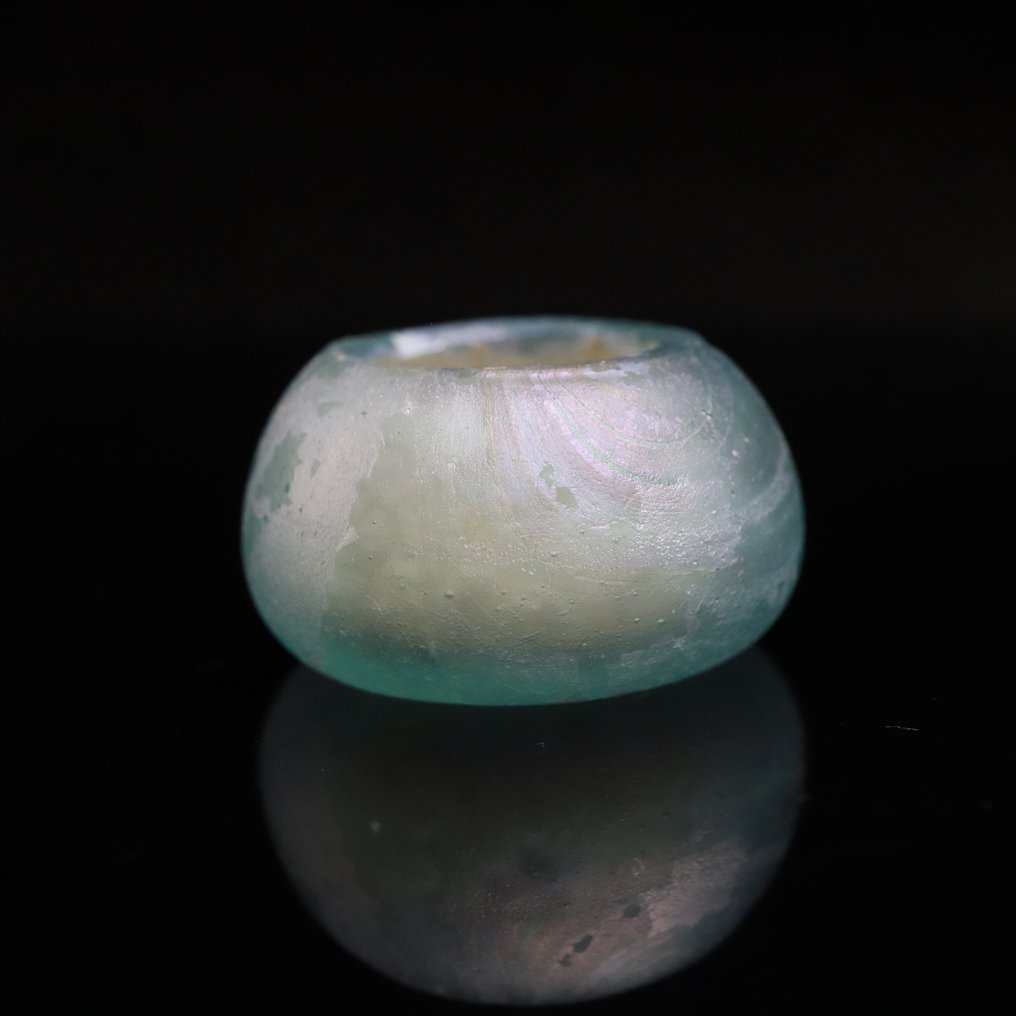
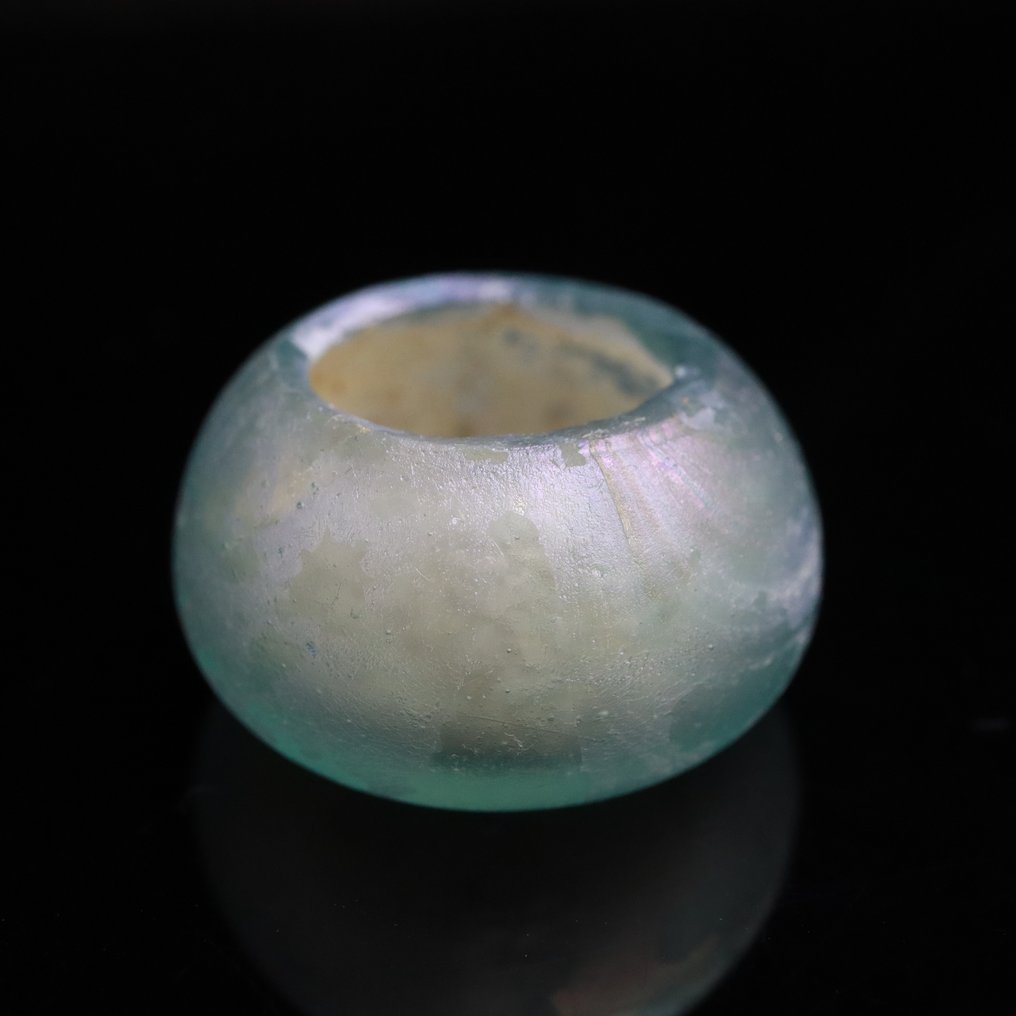
Romersk lachrymator i iriserende glas fra århundrederne I–IV e.Kr., i fremragende stand og med betagende patina.
AI-assisteret oversigt
Beskrivelse fra sælger
Ancient Roman Iridescent Glass Lachrymatory (Tear Vial), 1st–4th Century AD - Top Condition
Note: Sorry, no shipping outside Europe.
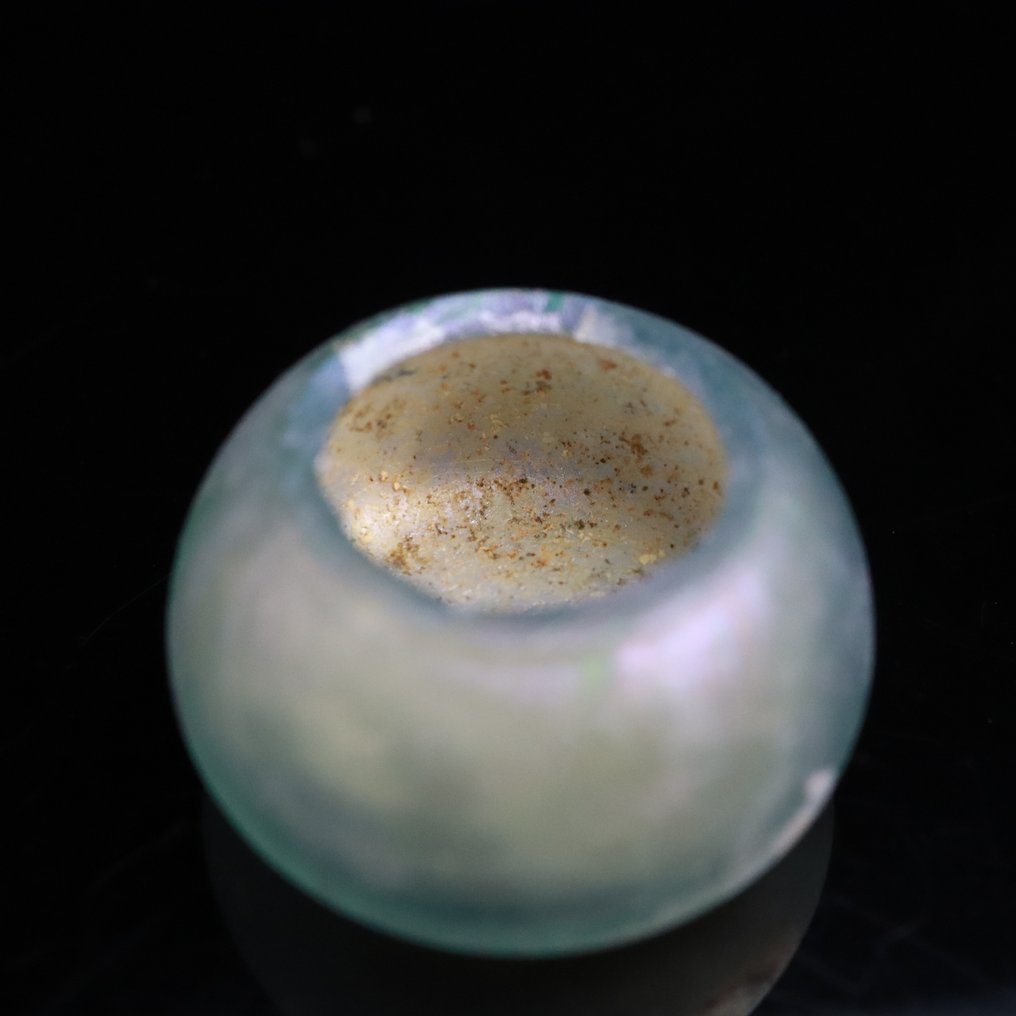
This exquisite ancient Roman glass lachrymatory, often romantically known as a "tear vial," dates to the 1st–4th century AD and features a compact, bulbous form with a wide mouth opening for easy access. Crafted from translucent blue-green glass, it exhibits a striking iridescent sheen—professionally termed "iridescence" or "weathering patina"—that produces rainbow-like colors under light, resulting from the natural delamination and oxidation of the glass surface over centuries of burial.
Symbolism & Historical Significance:
Lachrymatory Vial: These small vessels were primarily used in Roman daily life to hold perfumes, oils, unguents, or medicinal essences, rather than tears as later Victorian myths suggested. The iridescence, caused by the breakdown of silica layers in the glass due to environmental exposure (such as moisture and soil chemicals), creates a prismatic effect that enhances the object's ethereal beauty.
In Roman culture, such vials symbolized personal care, beauty rituals, and sometimes mourning or funerary practices, where they were placed in tombs as grave goods to accompany the deceased into the afterlife.
The shimmering surface, while a product of aging, mirrors the advanced Roman glassmaking techniques, including blowing and molding, which allowed for mass production of delicate items across the empire.
Connection to Ancient Rome:
Produced during the height of the Roman Empire, these lachrymatories were common in households, baths, and burial contexts from Britain to the Near East. The iridescent effect, unique to ancient glass, was not intentional but became a hallmark of authenticity, with similar examples excavated from sites like Pompeii and Roman cemeteries in the Levant, reflecting the widespread trade and innovation in glass technology influenced by earlier Hellenistic traditions.
Condition:
Intact with a beautiful iridescent patina covering the surface, and no cracks or repairs; the glass retains its structural integrity, making it a well-preserved example of Roman artistry.
Dimensions:
Outer Diameter: 26.5 mm
Height: 14.5 mm
Weight: 7.58 g
Provenance:
Previously part of a private European collection, established in the 1980s. A provenance document and declaration of legal origin are available in PDF format upon request.
Note: Please examine the provided images for a detailed impression of the vial. The photos are highly magnified to showcase the iridescent details the best way possible; otherwise, the piece is even more beautiful and attractive in person.
In top condition making it relevant for both collectors and special Christmas gift seekers
Sælger's Historie
Som andengenerations historieentusiast og antik kunstsamler har jeg en dyb passion for historiske artefakter – fra forhistoriske civilisationer til middelalderen. Jeg elsker at forbinde mig med andre historieelskere og dele unikke, nøje udvalgte stykker. Mit mål er at finde nye hjem til bemærkelsesværdige genstande, mens jeg fortsætter med at udvide min egen samling. Du er velkommen til at udforske mit udvalg - jeg håber, du finder noget særligt!
Oversat af Google OversætAncient Roman Iridescent Glass Lachrymatory (Tear Vial), 1st–4th Century AD - Top Condition
Note: Sorry, no shipping outside Europe.
This exquisite ancient Roman glass lachrymatory, often romantically known as a "tear vial," dates to the 1st–4th century AD and features a compact, bulbous form with a wide mouth opening for easy access. Crafted from translucent blue-green glass, it exhibits a striking iridescent sheen—professionally termed "iridescence" or "weathering patina"—that produces rainbow-like colors under light, resulting from the natural delamination and oxidation of the glass surface over centuries of burial.
Symbolism & Historical Significance:
Lachrymatory Vial: These small vessels were primarily used in Roman daily life to hold perfumes, oils, unguents, or medicinal essences, rather than tears as later Victorian myths suggested. The iridescence, caused by the breakdown of silica layers in the glass due to environmental exposure (such as moisture and soil chemicals), creates a prismatic effect that enhances the object's ethereal beauty.
In Roman culture, such vials symbolized personal care, beauty rituals, and sometimes mourning or funerary practices, where they were placed in tombs as grave goods to accompany the deceased into the afterlife.
The shimmering surface, while a product of aging, mirrors the advanced Roman glassmaking techniques, including blowing and molding, which allowed for mass production of delicate items across the empire.
Connection to Ancient Rome:
Produced during the height of the Roman Empire, these lachrymatories were common in households, baths, and burial contexts from Britain to the Near East. The iridescent effect, unique to ancient glass, was not intentional but became a hallmark of authenticity, with similar examples excavated from sites like Pompeii and Roman cemeteries in the Levant, reflecting the widespread trade and innovation in glass technology influenced by earlier Hellenistic traditions.
Condition:
Intact with a beautiful iridescent patina covering the surface, and no cracks or repairs; the glass retains its structural integrity, making it a well-preserved example of Roman artistry.
Dimensions:
Outer Diameter: 26.5 mm
Height: 14.5 mm
Weight: 7.58 g
Provenance:
Previously part of a private European collection, established in the 1980s. A provenance document and declaration of legal origin are available in PDF format upon request.
Note: Please examine the provided images for a detailed impression of the vial. The photos are highly magnified to showcase the iridescent details the best way possible; otherwise, the piece is even more beautiful and attractive in person.
In top condition making it relevant for both collectors and special Christmas gift seekers
Sælger's Historie
Som andengenerations historieentusiast og antik kunstsamler har jeg en dyb passion for historiske artefakter – fra forhistoriske civilisationer til middelalderen. Jeg elsker at forbinde mig med andre historieelskere og dele unikke, nøje udvalgte stykker. Mit mål er at finde nye hjem til bemærkelsesværdige genstande, mens jeg fortsætter med at udvide min egen samling. Du er velkommen til at udforske mit udvalg - jeg håber, du finder noget særligt!
Oversat af Google OversætDetaljer
Kultur
Romersk antik
Århundrede/ Tidsramme
1st–4th Century AD
Name of object
Lachrymatory (Tear Vial)
Erhvervet fra
Privat samling
År erhvervet
2024
Materiale
Iridescent Glass
Land erhvervet fra
Danmark
Stand
Fremragende
Tidligere ejer erhvervet fra
Arvet
Height
14,5 mm
Tidligere ejer – år erhvervet
1980
Width
26,5 mm
Tidligere ejer – land erhvervet fra
Europa
Jeg bekræfter, at jeg har erhvervet denne genstand lovligt, og at jeg har lov til at sælge det
Ja
Solgt af
Disclaimer
Sælgeren er blevet informeret af Catawiki om dokumentationskrav og garanterer følgende: - genstanden er lovligt erhvervet - sælgeren har ret til at sælge og/eller eksportere genstanden, alt efter hvad der er relevant - sælgeren vil give de nødvendige herkomstoplysninger og arrangere påkrævet dokumentation og tilladelser/licenser, som det er relevant og i henhold til lokal lovgivning - sælgeren vil underrette køberen om eventuelle forsinkelser i opnåelsen af tilladelser/licenser Ved at byde anerkender du, at importdokumentation kan være påkrævet afhængigt af dit bopælsland, og at opnåelse af tilladelser/licenser kan forårsage forsinkelser i leveringen af dit objekt.
Sælgeren er blevet informeret af Catawiki om dokumentationskrav og garanterer følgende: - genstanden er lovligt erhvervet - sælgeren har ret til at sælge og/eller eksportere genstanden, alt efter hvad der er relevant - sælgeren vil give de nødvendige herkomstoplysninger og arrangere påkrævet dokumentation og tilladelser/licenser, som det er relevant og i henhold til lokal lovgivning - sælgeren vil underrette køberen om eventuelle forsinkelser i opnåelsen af tilladelser/licenser Ved at byde anerkender du, at importdokumentation kan være påkrævet afhængigt af dit bopælsland, og at opnåelse af tilladelser/licenser kan forårsage forsinkelser i leveringen af dit objekt.
