Germaine Krull - 100 x Paris - 1929


Ανοίγει αύριο
Εναρκτήρια προσφορά
€ 1
Προσθήκη στα αγαπημένα σας για να λαμβάνετε ειδοποιήσεις δημοπρασίας.

Προστασία Αγοραστή Catawiki
Η πληρωμή σας είναι ασφαλής μαζί μας μέχρι να παραλάβετε το αντικείμενό σας.Προβολή λεπτομερειών
Trustpilot 4.4 | 129747 κριτικών
Βαθμολογήθηκε με Άριστα στο Trustpilot.
Περιγραφή από τον πωλητή
ΜΕΓΑΛΗ ΕΥΚΑΙΡΙΑ να αγοράσετε αυτό το FAMOUS PHOTOBOOK TITLE της Germaine Krull από το 1929 (!) - με το ΑΚΟΜΑ ΠΟΛΥ ΣΠΑΝΟ ORIGINAL DUSTJACKET, πολύ όμορφο.
- Hans-Michael Koetzle, «Eyes on Paris. Paris im Fotobuch. 1890 bis heute» («Το Παρίσι στα Φωτοβιβλία. 1890 μέχρι σήμερα»), σελ. 84-85
- Christian Bouqueret, «Paris. Les Livres de Photographie. Des Années 1920 Aux Années 1950», σελ. 35-37
Η Germaine Krull (1897-1985), Γερμανο-ολλανδή φωτογράφος, γνωστή από το «Metal», ζούσε στο Παρίσι από το 1926.
ΘΑΥΜΑΤΙΚΕΣ ΣΕΡΙΑΦΙΑ ΦΩΤΟΓΡΑΦΙΕΣ ΣΕ ΑΝΑΜΕΝΟΜΕΝΑ ΑΝΑΠΤΥΓΜΕΝΗ ΦΩΤΟΓΡΑΦΙΚΗ ΑΝΑΕΙΚΑΝΗ.
Αυτή είναι μια μεγάλη προσφορά από το 5Uhr30.com (Ecki Heuser, Κολωνία, Γερμανία).
Το 5Uhr30.com εγγυάται ακριβείς και λεπτομερείς περιγραφές, 100% προστασία, 100% ασφάλεια και συνδυασμένη αποστολή παγκοσμίως.
Verlag der Reihe, Berlin-Westend. 1929. Πρώτη έκδοση, πρώτη τυπογραφία.
Χαρτόδετο με Dust Jacket. Διαστάσεις 172 x 248 mm (ανακεφαλαίωση). 528 σελίδες (132 σελίδες ανά μέρος). 100 φωτογραφίες (εκάστη) σε ασπρόμαυρο. Φωτογραφίες: Germaine Krull. Πρόλογος: Florent Fels. Κείμενο στα γαλλικά, αγγλικά, γερμανικά.
Κατάσταση:
Εσωτερικά εξαιρετικό, πολύ φρέσκο και απόλυτα άψογο, υπερ-καθαρό χωρίς σημάδια και χωρίς φθορα· πολύ καλύτερο και φρέσκο από το συνηθισμένο (πολλές φορές φθοριωμένο ή με σημάδια). Το Dust Jacket έχει μικρές ελλείψεις (βλ. εικόνες) και μερικές μικρές σχίσεις (επαγγελματικά, χωρίς οξείδωση, κολλημένο από πίσω), ακόμη εντυπωσιακό, με και τις δύο όμορφες πτέρυγες (φρέσκες και πλήρεις, βλ. εικόνες). Γενικά καλό, πολύ καλύτερο και φρέσκο από τα συνήθη.
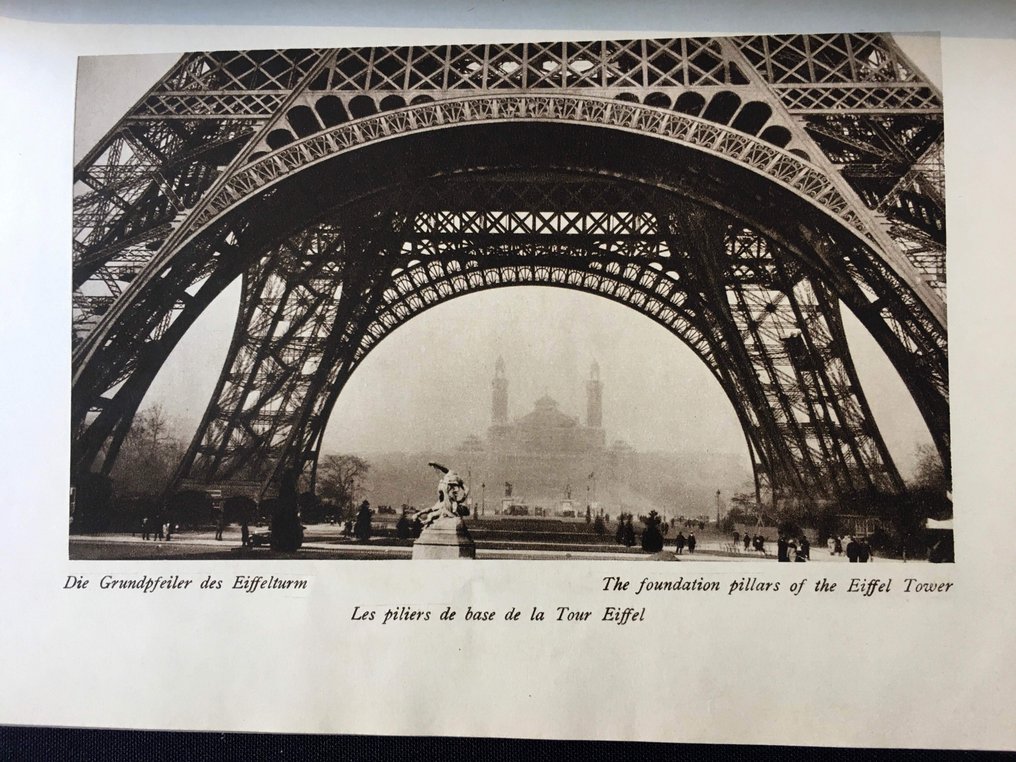
Η σπάνια φωτοβιβλίο της Germaine Krull «100 x Paris» από το 1929 - με το πολύ σπάνιο πρωτότυπο dust jacket.
«Το λιτό τόμο κυκλοφόρησε τον Μάιο του 1929, μόλις δύο χρόνια μετά το ‘Métal’ του Berlin ‘Verlag der Reihe’. Ο εμπνευστής αυτής της σύντομης επιχειρήσεως ήταν ο Οσκαρ Καμίλλο Ρεχτ (1894-1959), έμπορος τέχνης, εκδότης, publicist και, με το όνομα Camille Recht, συγγραφέας του προλόγου στη γερμανική έκδοση της μονογραφίας ‘Atget’ του Berenice Abbott.
«100 x Paris» ήταν το πρώτο από τρεις αντίστοιχους τίτλους, πριν το «100 x Berlin» (εκδόθηκε τον Μάιο του 1929 με φωτογραφίες του László Willinger) και το «100 x Munich» (επίσης εκδόθηκε το 1929 με φωτογραφίες του Ludwig Preiss).
Το βιβλίο διατίθετο είτε σε hardcover (μπλε λινό ύφασμα, ασημένιο ανάγλυφο τίτλο, φωτογραφικά εικονογραφημένο dust jacket) είτε σε φυλλάδιο με πιο μοντέρνο, εμπνευσμένο από Art Deco εξώφυλλο, το οποίο - προς έκπληξη - φέρει το όνομα του συγγραφέα.
Το βιβλίο ανοίγει με πρόλογο του Florent Fels, διευθυντή της L'Art vivant εκείνη την εποχή, ακολουθούν λεπτομερείς λεζάντες και εισαγωγή στα γερμανικά, γαλλικά και αγγλικά αντίστοιχα, και τέλος ένας προγραμματικός αριθμός 100 πλήρων σελίδων πλαισίων.
Αφενός το βιβλίο ακολουθεί έναν σχετικά συμβατικό δρόμο με τη χαμηλής απόχρωσης καστανή έκτυψη σε τεχνοτροπία χαλκού, τα εικονογραφημένα κέντρα και μια οπτική αισθητική που στην πρώτη ματιά φαίνεται λιγότερο πρωτοπόρα. Αφετέρου αποτελεί υπόδειγμα του μοντέρνου «τύπου μεταπολιτικής φωτοβιβλίου» που εμφανίστηκε τη δεκαετία του 1920 και σε αντίθεση με τα «μεγαλοπρεπή άλμπουμ φωτογραφιών και συλλογές καρτ-ποστάλ της παράδοσης των veduta έργων».
Αυτό που πράγματι λείπει από το βιβλίο είναι η τυπική αυστηρότητα και η αισθητική συνοχή που χαρακτηρίζουν το ‘Métal’. Από την άλλη, η Krull αποδεικνύεται μια εξαιρετική εκπρόσωπος του σύγχρονου καλλιτεχνικού μοντερνισμού - τόσο σε θέματα όσο και στην υλοποίησή τους. Οχι λιγότερα από 44 πλάνα δείχνουν αυτοκίνητα. Οι αστικές μετακινήσεις, μερικές πυκνές, γίνονται θέμα της εικόνας εξίσου με το ηλεκτρικό φως, το νέο ψυχαγωγικό μέσο του κινηματογράφου εμφανίζεται (με μεγάλους πίνακες διαφημιστικών) καθώς και νέα κτίρια στο πνεύμα μιας λειτουργικής ‘International Style’. Η Krull στρέφει το δημοσιογραφικά εκπαίδευμένο βλέμμα της τόσο προς τους κλοχάρδες όσο και προς παραδοσιακές μικρές επιχειρήσεις, καταγράφει ανθρώπους με σύγχρονη ενδυμασία που περπατούν στο Bois de Boulogne ή καλεσμένους στην ταράτσα του Dôme στο Montparnasse.
Η πλειονότητα των εικόνων είναι «μετωπικές και στατικές, αλλά μερικές προσφέρουν εκπλήξεις». Για παράδειγμα, σε μορφή τολμηρής κάμερας που κατευθύνεται από πάνω προς τα κάτω, τολμηρά λεπτομερή εικόνα ή σουρεαλιστικές εικονικές εφευρέσεις (όπως ο στήλης του Ιουλίου στην Place de la Bastille, που αναγνωρίζεται μόνο ως σκιά). Πράγματι, ο Paul Fierens αναγνώρισε σουρεαλιστικές στιγμές στο βιβλίο της Krull στην κριτική του, αναφέροντας τον André Breton, τον Atget ή τον Κυβισμό και συμπεραίνοντας ότι ο φακός της Krull «έχει συγγένεια με την ποίηση». Συνολικά, η Kim Sichel συμφωνεί όταν λέει ότι στο «100 x Paris», η δομή του βιβλίου παραμένει συμβατική, «αλλά προσθέτει σύγχρονο σημειολογικό στους φωτογραφίες.»
( Hans-Michael Koetzle )
"During the 1920s, Germaine Krull made her mark on the history of photography with her photo reportages. Using oblique perspectives and cropping, she developed her very own visual language. Her reportages symbolise socio-political empathy.
Born on 20 November 1897, she trained at the Munich School of Photography until 1918, documenting everyday life in the big city with her camera, but also developing a sense for the artistic experiments of the avant-garde. Friends with writers, theatre people and filmmakers, the photographer first lived and worked in Berlin, then in Amsterdam and from 1926 onwards in the French metropolis. In 1967, the only surviving audio document was made at the Cinémathèque française on the occasion of an exhibition that André Malraux, the Minister of Culture, personally organised. However, Germaine Krull is not interested in glamour and high honours, she emphasises: "Photography is a profession. A craft.
After completing her apprenticeship in 1918, the photographer initially put her profession on the back burner and became politically active. But the Munich Soviet Republic was bloodily suppressed and Germaine Krull fled to Moscow. Back in Germany, she opened her own studio in Berlin in 1923. But it was only after she moved to Amsterdam with documentary filmmaker Joris Ivens, where she discovered her penchant for technical installations, quay walls, cranes and warehouses, that she made her breakthrough.
Having now arrived in Paris, the photographer presents the portfolio "Métal". The writer Pierre MacOrlan is enthusiastic: "Whether Germaine Krull is transforming a machine landscape into a symphony or playing with the lights of Paris, she reveals secret details."
The photographer emphasises the beauty of ball bearings or transformers with multiple exposures or black and white compositions that are as objective as they are surrealistically alienated. André Kertész, Man Ray and Berenice Abbott, who established the photographic image as a new, independent art form in 1928 with the "First Independent Salon of Photography", worked in a similar way.
Germaine Krull was one of the participants, but found her own way for her profession: "It is neither painting nor fantasy. The photographer is a witness. The witness of his era. The real photographer is the witness of all days, the reporter."
The virtuoso reporter Germaine Krull becomes the mainstay of the magazine "VU". With her subjective photographic eye and a precisely controlled camera, temperament and technique, art and craftsmanship merge. Highlights of this combination of formal, aesthetic creativity with socio-political empathy are reportages such as "The Women Workers of Paris". For the philosopher Walter Benjamin, Germaine Krull thus stands on a par with photographers such as August Sander or Wilhelm Bloßfeldt in her very own way: "The photographers who did not come to photography by chance, not out of convenience from the fine arts, today form the avant-garde among their peers."
As if she had achieved her goal, Germaine Krull said goodbye to photography. After working as a war reporter during the liberation of France, she travelled through Southeast Asia in 1946 and opened a hotel in Bangkok. It was not until 1960 that the now successful businesswoman picked up her camera again to document relics and monuments of Asian cultures.
Germaine Krull, who died in Wetzlar in 1985, leaves a piece of advice for future generations of photographers: "Photography is not a machine. Unfortunately, you are tied to the machine, the camera, the film, the development. But everyone has to feel their image. And then take one or at most two photos. Just clicking, clicking, clicking - that doesn't get you anywhere."
(Deutschlandfunk)"
Ιστορία πωλητή
καλώς ήρθατε στις 5:30.
Το 5Uhr30 έχει έδρα στο ehrenfeld, την πιο μοντέρνα γειτονιά της Κολωνίας - με κατάστημα και εκθεσιακό χώρο για φωτογραφία.
Το 5H30 προσφέρει πολύ σπάνια, πολύ όμορφα, πολύ ιδιαίτερα άλμπουμ φωτογραφιών - sold-out, μοντέρνα-αντικαρίου και αρχαιολογικά. Προσφέρουμε επίσης προσκλητήρια φωτογραφιών, αφίσες με φιλμ και φωτογραφίες, καταλόγους φωτογραφιών και πρωτότυπες εκτυπώσεις φωτογραφιών.
Το 5Uhr30 είναι εξειδικευμένο σε γερμανικές φωτογραφικές εκδόσεις,
αλλά διαθέτει επίσης μια συναρπαστική σειρά από άλμπουμ φωτογραφιών από όλη την Ευρώπη, την Ιαπωνία, τη Βόρεια και τη Νότια Αμερική. ταξιδιωτικά φυλλάδια, παιδικά βιβλία, μπροσούρες εταιρειών...ό,τι έχει να κάνει με τη φωτογραφία με τη στενή ή την ευρύτερη έννοια μας εμπνέει. επισκεφθείτε μας εάν βρίσκεστε στην Κολωνία ή στη γύρω περιοχή. Δεν θα το μετανιωσεις! :)
5:30 π.μ. προσπαθεί πάντα να προσφέρει την καλύτερη κατάσταση.
Οι 5:30 αποστέλλονται σε όλο τον κόσμο, γρήγορα και ασφαλή -
με 100% προστασία, με πλήρη ασφάλεια και με tracking number.
επικοινωνήστε μαζί μας μέσω email, εάν έχετε οποιεσδήποτε ερωτήσεις ή αν ψάχνετε για κάτι ιδιαίτερο, γιατί μόνο ένα μέρος των προσφορών μας είναι online.
Ευχαριστώ για το ενδιαφέρον σου.
ecki heuser και ομάδα
Μετάφραση από Google ΜετάφρασηΜΕΓΑΛΗ ΕΥΚΑΙΡΙΑ να αγοράσετε αυτό το FAMOUS PHOTOBOOK TITLE της Germaine Krull από το 1929 (!) - με το ΑΚΟΜΑ ΠΟΛΥ ΣΠΑΝΟ ORIGINAL DUSTJACKET, πολύ όμορφο.
- Hans-Michael Koetzle, «Eyes on Paris. Paris im Fotobuch. 1890 bis heute» («Το Παρίσι στα Φωτοβιβλία. 1890 μέχρι σήμερα»), σελ. 84-85
- Christian Bouqueret, «Paris. Les Livres de Photographie. Des Années 1920 Aux Années 1950», σελ. 35-37
Η Germaine Krull (1897-1985), Γερμανο-ολλανδή φωτογράφος, γνωστή από το «Metal», ζούσε στο Παρίσι από το 1926.
ΘΑΥΜΑΤΙΚΕΣ ΣΕΡΙΑΦΙΑ ΦΩΤΟΓΡΑΦΙΕΣ ΣΕ ΑΝΑΜΕΝΟΜΕΝΑ ΑΝΑΠΤΥΓΜΕΝΗ ΦΩΤΟΓΡΑΦΙΚΗ ΑΝΑΕΙΚΑΝΗ.
Αυτή είναι μια μεγάλη προσφορά από το 5Uhr30.com (Ecki Heuser, Κολωνία, Γερμανία).
Το 5Uhr30.com εγγυάται ακριβείς και λεπτομερείς περιγραφές, 100% προστασία, 100% ασφάλεια και συνδυασμένη αποστολή παγκοσμίως.
Verlag der Reihe, Berlin-Westend. 1929. Πρώτη έκδοση, πρώτη τυπογραφία.
Χαρτόδετο με Dust Jacket. Διαστάσεις 172 x 248 mm (ανακεφαλαίωση). 528 σελίδες (132 σελίδες ανά μέρος). 100 φωτογραφίες (εκάστη) σε ασπρόμαυρο. Φωτογραφίες: Germaine Krull. Πρόλογος: Florent Fels. Κείμενο στα γαλλικά, αγγλικά, γερμανικά.
Κατάσταση:
Εσωτερικά εξαιρετικό, πολύ φρέσκο και απόλυτα άψογο, υπερ-καθαρό χωρίς σημάδια και χωρίς φθορα· πολύ καλύτερο και φρέσκο από το συνηθισμένο (πολλές φορές φθοριωμένο ή με σημάδια). Το Dust Jacket έχει μικρές ελλείψεις (βλ. εικόνες) και μερικές μικρές σχίσεις (επαγγελματικά, χωρίς οξείδωση, κολλημένο από πίσω), ακόμη εντυπωσιακό, με και τις δύο όμορφες πτέρυγες (φρέσκες και πλήρεις, βλ. εικόνες). Γενικά καλό, πολύ καλύτερο και φρέσκο από τα συνήθη.
Η σπάνια φωτοβιβλίο της Germaine Krull «100 x Paris» από το 1929 - με το πολύ σπάνιο πρωτότυπο dust jacket.
«Το λιτό τόμο κυκλοφόρησε τον Μάιο του 1929, μόλις δύο χρόνια μετά το ‘Métal’ του Berlin ‘Verlag der Reihe’. Ο εμπνευστής αυτής της σύντομης επιχειρήσεως ήταν ο Οσκαρ Καμίλλο Ρεχτ (1894-1959), έμπορος τέχνης, εκδότης, publicist και, με το όνομα Camille Recht, συγγραφέας του προλόγου στη γερμανική έκδοση της μονογραφίας ‘Atget’ του Berenice Abbott.
«100 x Paris» ήταν το πρώτο από τρεις αντίστοιχους τίτλους, πριν το «100 x Berlin» (εκδόθηκε τον Μάιο του 1929 με φωτογραφίες του László Willinger) και το «100 x Munich» (επίσης εκδόθηκε το 1929 με φωτογραφίες του Ludwig Preiss).
Το βιβλίο διατίθετο είτε σε hardcover (μπλε λινό ύφασμα, ασημένιο ανάγλυφο τίτλο, φωτογραφικά εικονογραφημένο dust jacket) είτε σε φυλλάδιο με πιο μοντέρνο, εμπνευσμένο από Art Deco εξώφυλλο, το οποίο - προς έκπληξη - φέρει το όνομα του συγγραφέα.
Το βιβλίο ανοίγει με πρόλογο του Florent Fels, διευθυντή της L'Art vivant εκείνη την εποχή, ακολουθούν λεπτομερείς λεζάντες και εισαγωγή στα γερμανικά, γαλλικά και αγγλικά αντίστοιχα, και τέλος ένας προγραμματικός αριθμός 100 πλήρων σελίδων πλαισίων.
Αφενός το βιβλίο ακολουθεί έναν σχετικά συμβατικό δρόμο με τη χαμηλής απόχρωσης καστανή έκτυψη σε τεχνοτροπία χαλκού, τα εικονογραφημένα κέντρα και μια οπτική αισθητική που στην πρώτη ματιά φαίνεται λιγότερο πρωτοπόρα. Αφετέρου αποτελεί υπόδειγμα του μοντέρνου «τύπου μεταπολιτικής φωτοβιβλίου» που εμφανίστηκε τη δεκαετία του 1920 και σε αντίθεση με τα «μεγαλοπρεπή άλμπουμ φωτογραφιών και συλλογές καρτ-ποστάλ της παράδοσης των veduta έργων».
Αυτό που πράγματι λείπει από το βιβλίο είναι η τυπική αυστηρότητα και η αισθητική συνοχή που χαρακτηρίζουν το ‘Métal’. Από την άλλη, η Krull αποδεικνύεται μια εξαιρετική εκπρόσωπος του σύγχρονου καλλιτεχνικού μοντερνισμού - τόσο σε θέματα όσο και στην υλοποίησή τους. Οχι λιγότερα από 44 πλάνα δείχνουν αυτοκίνητα. Οι αστικές μετακινήσεις, μερικές πυκνές, γίνονται θέμα της εικόνας εξίσου με το ηλεκτρικό φως, το νέο ψυχαγωγικό μέσο του κινηματογράφου εμφανίζεται (με μεγάλους πίνακες διαφημιστικών) καθώς και νέα κτίρια στο πνεύμα μιας λειτουργικής ‘International Style’. Η Krull στρέφει το δημοσιογραφικά εκπαίδευμένο βλέμμα της τόσο προς τους κλοχάρδες όσο και προς παραδοσιακές μικρές επιχειρήσεις, καταγράφει ανθρώπους με σύγχρονη ενδυμασία που περπατούν στο Bois de Boulogne ή καλεσμένους στην ταράτσα του Dôme στο Montparnasse.
Η πλειονότητα των εικόνων είναι «μετωπικές και στατικές, αλλά μερικές προσφέρουν εκπλήξεις». Για παράδειγμα, σε μορφή τολμηρής κάμερας που κατευθύνεται από πάνω προς τα κάτω, τολμηρά λεπτομερή εικόνα ή σουρεαλιστικές εικονικές εφευρέσεις (όπως ο στήλης του Ιουλίου στην Place de la Bastille, που αναγνωρίζεται μόνο ως σκιά). Πράγματι, ο Paul Fierens αναγνώρισε σουρεαλιστικές στιγμές στο βιβλίο της Krull στην κριτική του, αναφέροντας τον André Breton, τον Atget ή τον Κυβισμό και συμπεραίνοντας ότι ο φακός της Krull «έχει συγγένεια με την ποίηση». Συνολικά, η Kim Sichel συμφωνεί όταν λέει ότι στο «100 x Paris», η δομή του βιβλίου παραμένει συμβατική, «αλλά προσθέτει σύγχρονο σημειολογικό στους φωτογραφίες.»
( Hans-Michael Koetzle )
"During the 1920s, Germaine Krull made her mark on the history of photography with her photo reportages. Using oblique perspectives and cropping, she developed her very own visual language. Her reportages symbolise socio-political empathy.
Born on 20 November 1897, she trained at the Munich School of Photography until 1918, documenting everyday life in the big city with her camera, but also developing a sense for the artistic experiments of the avant-garde. Friends with writers, theatre people and filmmakers, the photographer first lived and worked in Berlin, then in Amsterdam and from 1926 onwards in the French metropolis. In 1967, the only surviving audio document was made at the Cinémathèque française on the occasion of an exhibition that André Malraux, the Minister of Culture, personally organised. However, Germaine Krull is not interested in glamour and high honours, she emphasises: "Photography is a profession. A craft.
After completing her apprenticeship in 1918, the photographer initially put her profession on the back burner and became politically active. But the Munich Soviet Republic was bloodily suppressed and Germaine Krull fled to Moscow. Back in Germany, she opened her own studio in Berlin in 1923. But it was only after she moved to Amsterdam with documentary filmmaker Joris Ivens, where she discovered her penchant for technical installations, quay walls, cranes and warehouses, that she made her breakthrough.
Having now arrived in Paris, the photographer presents the portfolio "Métal". The writer Pierre MacOrlan is enthusiastic: "Whether Germaine Krull is transforming a machine landscape into a symphony or playing with the lights of Paris, she reveals secret details."
The photographer emphasises the beauty of ball bearings or transformers with multiple exposures or black and white compositions that are as objective as they are surrealistically alienated. André Kertész, Man Ray and Berenice Abbott, who established the photographic image as a new, independent art form in 1928 with the "First Independent Salon of Photography", worked in a similar way.
Germaine Krull was one of the participants, but found her own way for her profession: "It is neither painting nor fantasy. The photographer is a witness. The witness of his era. The real photographer is the witness of all days, the reporter."
The virtuoso reporter Germaine Krull becomes the mainstay of the magazine "VU". With her subjective photographic eye and a precisely controlled camera, temperament and technique, art and craftsmanship merge. Highlights of this combination of formal, aesthetic creativity with socio-political empathy are reportages such as "The Women Workers of Paris". For the philosopher Walter Benjamin, Germaine Krull thus stands on a par with photographers such as August Sander or Wilhelm Bloßfeldt in her very own way: "The photographers who did not come to photography by chance, not out of convenience from the fine arts, today form the avant-garde among their peers."
As if she had achieved her goal, Germaine Krull said goodbye to photography. After working as a war reporter during the liberation of France, she travelled through Southeast Asia in 1946 and opened a hotel in Bangkok. It was not until 1960 that the now successful businesswoman picked up her camera again to document relics and monuments of Asian cultures.
Germaine Krull, who died in Wetzlar in 1985, leaves a piece of advice for future generations of photographers: "Photography is not a machine. Unfortunately, you are tied to the machine, the camera, the film, the development. But everyone has to feel their image. And then take one or at most two photos. Just clicking, clicking, clicking - that doesn't get you anywhere."
(Deutschlandfunk)"
Ιστορία πωλητή
καλώς ήρθατε στις 5:30.
Το 5Uhr30 έχει έδρα στο ehrenfeld, την πιο μοντέρνα γειτονιά της Κολωνίας - με κατάστημα και εκθεσιακό χώρο για φωτογραφία.
Το 5H30 προσφέρει πολύ σπάνια, πολύ όμορφα, πολύ ιδιαίτερα άλμπουμ φωτογραφιών - sold-out, μοντέρνα-αντικαρίου και αρχαιολογικά. Προσφέρουμε επίσης προσκλητήρια φωτογραφιών, αφίσες με φιλμ και φωτογραφίες, καταλόγους φωτογραφιών και πρωτότυπες εκτυπώσεις φωτογραφιών.
Το 5Uhr30 είναι εξειδικευμένο σε γερμανικές φωτογραφικές εκδόσεις,
αλλά διαθέτει επίσης μια συναρπαστική σειρά από άλμπουμ φωτογραφιών από όλη την Ευρώπη, την Ιαπωνία, τη Βόρεια και τη Νότια Αμερική. ταξιδιωτικά φυλλάδια, παιδικά βιβλία, μπροσούρες εταιρειών...ό,τι έχει να κάνει με τη φωτογραφία με τη στενή ή την ευρύτερη έννοια μας εμπνέει. επισκεφθείτε μας εάν βρίσκεστε στην Κολωνία ή στη γύρω περιοχή. Δεν θα το μετανιωσεις! :)
5:30 π.μ. προσπαθεί πάντα να προσφέρει την καλύτερη κατάσταση.
Οι 5:30 αποστέλλονται σε όλο τον κόσμο, γρήγορα και ασφαλή -
με 100% προστασία, με πλήρη ασφάλεια και με tracking number.
επικοινωνήστε μαζί μας μέσω email, εάν έχετε οποιεσδήποτε ερωτήσεις ή αν ψάχνετε για κάτι ιδιαίτερο, γιατί μόνο ένα μέρος των προσφορών μας είναι online.
Ευχαριστώ για το ενδιαφέρον σου.
ecki heuser και ομάδα
Μετάφραση από Google ΜετάφρασηΛεπτομέρειες
Αριθμός Βιβλίων
1
Θέμα
Τέχνη, Φωτογραφία
Τίτλος Βιβλίου
100 x Paris
Συγγραφέας/ εικονογράφος
Germaine Krull
Κατάσταση
Πολύ καλή
Έτος δημοσίευσης παλαιότερου αντικειμένου
1929
Height
248 mm
Έκδοση
1η Έκδοση
Width
172 mm
Γλώσσα
Αγγλικά, Γαλλικά, Γερμανικά
Original language
Ναι
Εκδότης
Verlag der Reihe, Berlin-Westend
Βιβλιοδεσία
Μαλακό εξώφυλλο
'Εξτρα
κάλυμμα βιβλίου
Αριθμός σελίδων
528
Πωλήθηκε από τον/-ην
ΓερμανίαΕπαληθεύτηκε
protop
Rechtliche Informationen des Verkäufers
- Unternehmen:
- 5Uhr30.com
- Repräsentant:
- Ecki Heuser
- Adresse:
- 5Uhr30.com
Thebäerstr. 34
50823 Köln
GERMANY - Telefonnummer:
- +491728184000
- Email:
- photobooks@5Uhr30.com
- USt-IdNr.:
- DE154811593
AGB
AGB des Verkäufers. Mit einem Gebot auf dieses Los akzeptieren Sie ebenfalls die AGB des Verkäufers.
Widerrufsbelehrung
- Frist: 14 Tage sowie gemäß den hier angegebenen Bedingungen
- Rücksendkosten: Käufer trägt die unmittelbaren Kosten der Rücksendung der Ware
- Vollständige Widerrufsbelehrung