Αρ. 100825457

Δεν είναι πλέον διαθέσιμο
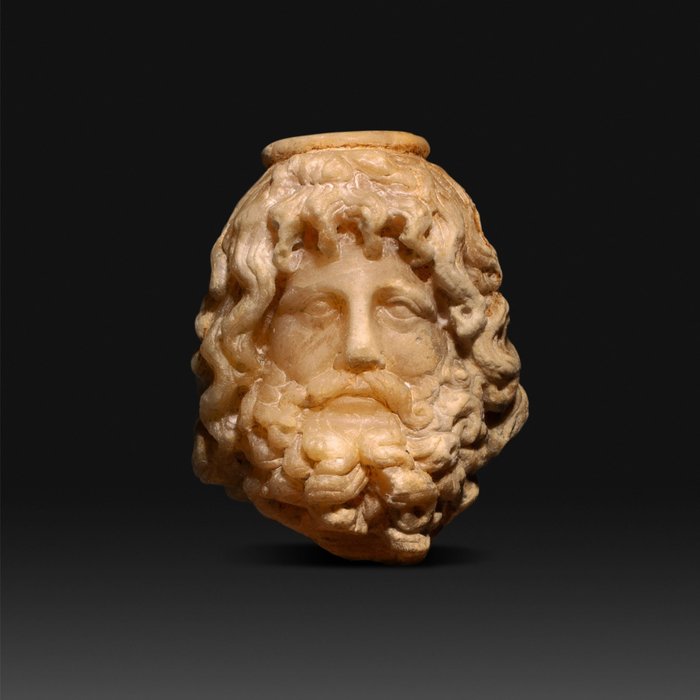
Αρχαία Ρωμαϊκή Αλαβάστρο Κεφάλι του Σέραπι. 1ος - 2ος αιώνας μ.Χ. 9,5 εκ. ύψος. Ισπανική άδεια εξαγωγής.
Οι προσφορές έκλεισαν
πριν 7 εβδομάδες

Αρχαία Ρωμαϊκή Αλαβάστρο Κεφάλι του Σέραπι. 1ος - 2ος αιώνας μ.Χ. 9,5 εκ. ύψος. Ισπανική άδεια εξαγωγής.

Serapis Head. Ancient Roman, 1st - 2nd century AD. Alabaster. Height 9.5 cm and 20 cm with the stand. PROVENANCE: Private collection, France. Acquired by family inheritance. 1970. CONDITION: In a good state of preservation. DESCRIPTION: A beautiful head that belonged to a bust or sculpture, sculpted in translucent alabaster, of the syncretic Egyptian-Roman deity Serapis. It was probably intended to be placed on a private altar or as decoration in a room of a Roman domus. Similar examples have been found in both Egypt and Rome, as well as in other cities on the Italian peninsula. Its sculptural style suggests that it may well have been made in Egypt. This deity is depicted in its most common form: an adult male with long hair and beard. The essential attribute that distinguished the images of Serapis from those of other similar gods is the calathus or modius, the sacred basket of the mysteries, symbol of abundance, which would have been made piece by piece. It unites the concepts of agricultural fertility, life and death; it was used in the art of Ancient Egypt and in the Greco-Roman world. It resembles the bun that was worn on the head to carry something heavy. Its name was given by scholars because of its resemblance to the Roman modius, an utensil used as a unit of measurement for grain capacity. Ptolemy I, the first Greek ruler of Egypt after the death of Alexander the Great, declared Serapis to be the patron saint of Alexandria and the official god of Egypt and Greece, thus linking the two peoples. Ptolemy's intention was probably to find a deity who would command the respect and veneration of the Hellenes and the intensely traditionalist Egyptians alike. It is unlikely that the Greeks would have accepted a zoocephalous deity, in the Egyptian manner, whereas the Egyptians would have been more willing to accept any aspect for this god. A typical Greek icon was therefore chosen, which was proclaimed to be the anthropomorphic equivalent of a much revered Egyptian divinity, the ox Apis, assimilated to Osiris. Serapis is thus a syncretic divinity in which cultic practices of different origins are synthesised in a new image. Notes: The piece includes authenticity certificate. The piece includes Spanish Export License (Passport for European Union) - If the piece is destined outside the European Union a substitution of the export permit should be requested. This process could take between 1 and 2 months. #MasterpiecesW39

Αρ. 100825457

Δεν είναι πλέον διαθέσιμο
Αρχαία Ρωμαϊκή Αλαβάστρο Κεφάλι του Σέραπι. 1ος - 2ος αιώνας μ.Χ. 9,5 εκ. ύψος. Ισπανική άδεια εξαγωγής.

Αρχαία Ρωμαϊκή Αλαβάστρο Κεφάλι του Σέραπι. 1ος - 2ος αιώνας μ.Χ. 9,5 εκ. ύψος. Ισπανική άδεια εξαγωγής.

Serapis Head.

Ancient Roman, 1st - 2nd century AD.

Alabaster.

Height 9.5 cm and 20 cm with the stand.

PROVENANCE: Private collection, France. Acquired by family inheritance. 1970.

CONDITION: In a good state of preservation.

DESCRIPTION:

A beautiful head that belonged to a bust or sculpture, sculpted in translucent alabaster, of the syncretic Egyptian-Roman deity Serapis. It was probably intended to be placed on a private altar or as decoration in a room of a Roman domus. Similar examples have been found in both Egypt and Rome, as well as in other cities on the Italian peninsula. Its sculptural style suggests that it may well have been made in Egypt.

This deity is depicted in its most common form: an adult male with long hair and beard. The essential attribute that distinguished the images of Serapis from those of other similar gods is the calathus or modius, the sacred basket of the mysteries, symbol of abundance, which would have been made piece by piece. It unites the concepts of agricultural fertility, life and death; it was used in the art of Ancient Egypt and in the Greco-Roman world. It resembles the bun that was worn on the head to carry something heavy. Its name was given by scholars because of its resemblance to the Roman modius, an utensil used as a unit of measurement for grain capacity.

Ptolemy I, the first Greek ruler of Egypt after the death of Alexander the Great, declared Serapis to be the patron saint of Alexandria and the official god of Egypt and Greece, thus linking the two peoples. Ptolemy's intention was probably to find a deity who would command the respect and veneration of the Hellenes and the intensely traditionalist Egyptians alike. It is unlikely that the Greeks would have accepted a zoocephalous deity, in the Egyptian manner, whereas the Egyptians would have been more willing to accept any aspect for this god. A typical Greek icon was therefore chosen, which was proclaimed to be the anthropomorphic equivalent of a much revered Egyptian divinity, the ox Apis, assimilated to Osiris. Serapis is thus a syncretic divinity in which cultic practices of different origins are synthesised in a new image.


Notes:

The piece includes authenticity certificate.
The piece includes Spanish Export License (Passport for European Union) - If the piece is destined outside the European Union a substitution of the export permit should be requested. This process could take between 1 and 2 months.
#MasterpiecesW39


Οι προσφορές έκλεισαν
Ruth Garrido Vila
Ειδικός
Εκτιμήστε  € 12,000 - € 15,000

Παρόμοια αντικείμενα

Προτείνεται για εσάς στην

Αρχαιολογία

Ορίστε μια ειδοποίηση αναζήτησης
Ορίστε μια ειδοποίηση αναζήτησης για να λαμβάνετε ειδοποιήσεις όταν είναι διαθέσιμα νέα αποτελέσματα.

Αυτό το αντικείμενο παρουσιάστηκε στο


Πώς να πραγματοποιήσετε αγορές στην Catawiki

Μάθετε περισσότερα σχετικά με την Προστασία Αγοραστή

      1. Ανακαλύψτε κάτι ιδιαίτερο

      Εξερευνήστε χιλιάδες ιδιαίτερα αντικείμενα, επιλεγμένα από ειδικούς. Δείτε τις φωτογραφίες, τις λεπτομέρειες και την εκτιμώμενη αξία κάθε ιδιαίτερου αντικειμένου. 

      2. Υποβάλετε την κορυφαία προσφορά

      Βρείτε κάτι που σας αρέσει και υποβάλετε την κορυφαία προσφορά. Μπορείτε να παρακολουθήσετε τη δημοπρασία μέχρι το τέλος ή να αφήσετε το σύστημά μας να υποβάλει την προσφορά για εσάς. Το μόνο που έχετε να κάνετε είναι να ορίσετε μια προσφορά για το μέγιστο ποσό που θέλετε να πληρώσετε. 

      3. Πληρώστε με ασφάλεια

      Πληρώστε για το ιδιαίτερο αντικείμενό σας και εμείς θα διατηρήσουμε την πληρωμή σας ασφαλή, μέχρι το αντικείμενο να φτάσει στα χέρια σας. Χρησιμοποιούμε ένα αξιόπιστο σύστημα πληρωμών για τη διαχείριση όλων των συναλλαγών. 

Έχετε κάτι παρόμοιο προς πώληση;

Είτε είστε νέοι στις διαδικτυακές δημοπρασίες είτε πουλάτε επαγγελματικά, μπορούμε να σας βοηθήσουμε να κερδίσετε περισσότερα για τα ιδιαίτερα αντικείμενά σας.

Πουλήστε το αντικείμενό σας
