Αρ. 100195413

Δεν είναι πλέον διαθέσιμο
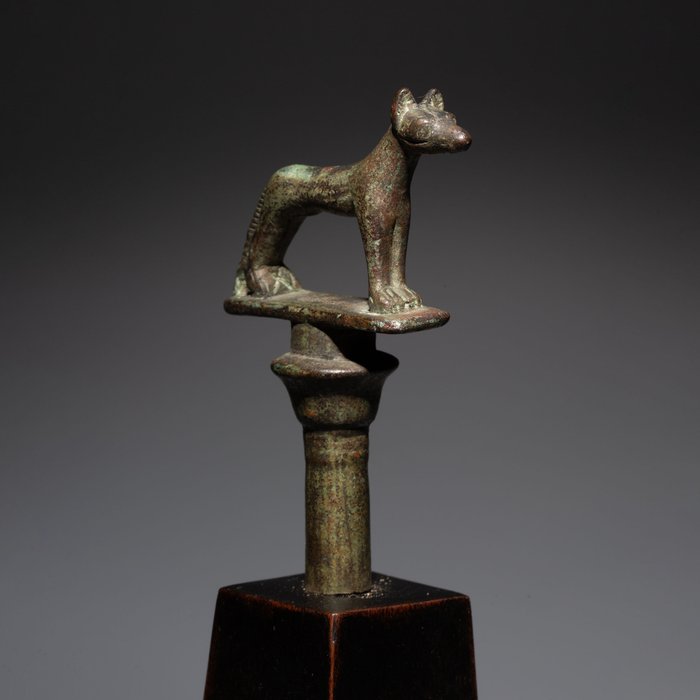
Αρχαία Αιγυπτιακή Μπρούντζος Θεός Wepwawet - Τερματικό σκήπτρο Upuaut. Τελευταία Περίοδος, 626 - 323 π.Χ. 17,5 εκ. ύψος.
Οι προσφορές έκλεισαν
πριν 2 ημέρες

Αρχαία Αιγυπτιακή Μπρούντζος Θεός Wepwawet - Τερματικό σκήπτρο Upuaut. Τελευταία Περίοδος, 626 - 323 π.Χ. 17,5 εκ. ύψος.

God Wepwawet - Upuaut scepter terminal CULTURE: Ancient Egypt PERIOD: Late Period, 626 - 323 BC MATERIAL: Solid Bronze DIMENSIONS: Height 17,5 cm . Height 9,5 cm without stand. PROVENANCE: Collection of Guy Delbès (1928 - 2019), Paris. Private collection, Barcelona. CONDITION: Intact. DESCRIPTION: Terminal of the upper area of a baton or scepter with the effigy of a canid. The piece has a simple finish, with geometric shapes, inspired by columns, especially a typology characteristic of ancient Egypt such as lotiform columns, influenced by the shapes of the lotus flower. On the small capital with a camping structure, a circular podium raises the flat rectangular base where rests in a slender and elegant form, a dog or jackal in a standing position, is the image of the god Wepwawet. Wepwawet "the one who opens the roads", deity of the Duat (Beyond), funerary god and of the war in the Egyptian mythology. Wepwawet was represented in the form of a black dog or jackal with a white head, on an ensign, with one or two uraeus emerging from the sides of the paws. His warrior attributes were a mace and a bow. The Greeks interpreted him as a wolf, from which comes the name of Lycopolis, his city. It is likely that Wepwawet was originally a symbol of the pharaoh, attempting to associate himself with lupine attributes, later deifying himself as a mascot to accompany the pharaoh. Likewise, Wepwawet was said to accompany the pharaoh on hunts, in which capacity it was titled "(one with a) sharp arrow more powerful than the gods alone." In time, the connection with war, and thus with death, led Wepwawet to be seen as the one who opened the gates through and across the Duat to the spirits of the dead. With this and the similarity of the jackal to the wolf, Wepwawet became associated with Anubis, a deity who was worshipped in Asiut, eventually considering himself his son. Viscous as a jackal, he was also said to be the son of Set. Therefore, Wepwawet is often confused with Anubis. This deity appears in the temple of Seti I at Abydos. PARALLELS: Fig. 1 God Upuaut. Ancient Egypt, Lower Epoch, 664 - 323 B.C., bronze. Norwich Castle, Norfolk, inv. 1894.76.725. Fig. 2 God Upuaut. Ancient Egypt, Late Antiquity, 664 - 323 BC, bronze. Christie's London, Antiquities, April 26, 2012, lot 47. Notes: - The piece includes authenticity certificate. - The piece includes Spanish Export License. - The seller guarantees that he acquired this piece according to all national and international laws related to the ownership of cultural property. Provenance statement seen by Catawiki.

Αρ. 100195413

Δεν είναι πλέον διαθέσιμο
Αρχαία Αιγυπτιακή Μπρούντζος Θεός Wepwawet - Τερματικό σκήπτρο Upuaut. Τελευταία Περίοδος, 626 - 323 π.Χ. 17,5 εκ. ύψος.

Αρχαία Αιγυπτιακή Μπρούντζος Θεός Wepwawet - Τερματικό σκήπτρο Upuaut. Τελευταία Περίοδος, 626 - 323 π.Χ. 17,5 εκ. ύψος.

God Wepwawet - Upuaut scepter terminal

CULTURE: Ancient Egypt

PERIOD: Late Period, 626 - 323 BC

MATERIAL: Solid Bronze

DIMENSIONS: Height 17,5 cm . Height 9,5 cm without stand.

PROVENANCE: Collection of Guy Delbès (1928 - 2019), Paris. Private collection, Barcelona.

CONDITION: Intact.

DESCRIPTION:

Terminal of the upper area of a baton or scepter with the effigy of a canid. The piece has a simple finish, with geometric shapes, inspired by columns, especially a typology characteristic of ancient Egypt such as lotiform columns, influenced by the shapes of the lotus flower. On the small capital with a camping structure, a circular podium raises the flat rectangular base where rests in a slender and elegant form, a dog or jackal in a standing position, is the image of the god Wepwawet.

Wepwawet "the one who opens the roads", deity of the Duat (Beyond), funerary god and of the war in the Egyptian mythology. Wepwawet was represented in the form of a black dog or jackal with a white head, on an ensign, with one or two uraeus emerging from the sides of the paws. His warrior attributes were a mace and a bow. The Greeks interpreted him as a wolf, from which comes the name of Lycopolis, his city.

It is likely that Wepwawet was originally a symbol of the pharaoh, attempting to associate himself with lupine attributes, later deifying himself as a mascot to accompany the pharaoh. Likewise, Wepwawet was said to accompany the pharaoh on hunts, in which capacity it was titled "(one with a) sharp arrow more powerful than the gods alone."

In time, the connection with war, and thus with death, led Wepwawet to be seen as the one who opened the gates through and across the Duat to the spirits of the dead. With this and the similarity of the jackal to the wolf, Wepwawet became associated with Anubis, a deity who was worshipped in Asiut, eventually considering himself his son. Viscous as a jackal, he was also said to be the son of Set. Therefore, Wepwawet is often confused with Anubis. This deity appears in the temple of Seti I at Abydos.

PARALLELS:

Fig. 1 God Upuaut. Ancient Egypt, Lower Epoch, 664 - 323 B.C., bronze. Norwich Castle, Norfolk, inv. 1894.76.725.

Fig. 2 God Upuaut. Ancient Egypt, Late Antiquity, 664 - 323 BC, bronze. Christie's London, Antiquities, April 26, 2012, lot 47.


Notes:
- The piece includes authenticity certificate.
- The piece includes Spanish Export License.
- The seller guarantees that he acquired this piece according to all national and international laws related to the ownership of cultural property. Provenance statement seen by Catawiki.

Οι προσφορές έκλεισαν
Ruth Garrido Vila
Ειδικός
Εκτιμήστε  € 13,000 - € 15,000

Παρόμοια αντικείμενα

Προτείνεται για εσάς στην

Αρχαιολογία

Ορίστε μια ειδοποίηση αναζήτησης
Ορίστε μια ειδοποίηση αναζήτησης για να λαμβάνετε ειδοποιήσεις όταν είναι διαθέσιμα νέα αποτελέσματα.

Αυτό το αντικείμενο παρουσιάστηκε στο


Πώς να πραγματοποιήσετε αγορές στην Catawiki

Μάθετε περισσότερα σχετικά με την Προστασία Αγοραστή

      1. Ανακαλύψτε κάτι ιδιαίτερο

      Εξερευνήστε χιλιάδες ιδιαίτερα αντικείμενα, επιλεγμένα από ειδικούς. Δείτε τις φωτογραφίες, τις λεπτομέρειες και την εκτιμώμενη αξία κάθε ιδιαίτερου αντικειμένου. 

      2. Υποβάλετε την κορυφαία προσφορά

      Βρείτε κάτι που σας αρέσει και υποβάλετε την κορυφαία προσφορά. Μπορείτε να παρακολουθήσετε τη δημοπρασία μέχρι το τέλος ή να αφήσετε το σύστημά μας να υποβάλει την προσφορά για εσάς. Το μόνο που έχετε να κάνετε είναι να ορίσετε μια προσφορά για το μέγιστο ποσό που θέλετε να πληρώσετε. 

      3. Πληρώστε με ασφάλεια

      Πληρώστε για το ιδιαίτερο αντικείμενό σας και εμείς θα διατηρήσουμε την πληρωμή σας ασφαλή, μέχρι το αντικείμενο να φτάσει στα χέρια σας. Χρησιμοποιούμε ένα αξιόπιστο σύστημα πληρωμών για τη διαχείριση όλων των συναλλαγών. 

Έχετε κάτι παρόμοιο προς πώληση;

Είτε είστε νέοι στις διαδικτυακές δημοπρασίες είτε πουλάτε επαγγελματικά, μπορούμε να σας βοηθήσουμε να κερδίσετε περισσότερα για τα ιδιαίτερα αντικείμενά σας.

Πουλήστε το αντικείμενό σας
