Αρ. 99934308

Δεν είναι πλέον διαθέσιμο
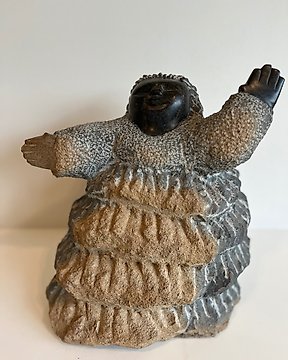
Ένα ξύλινο γλυπτό. - Senufo - Ακτή Ελεφαντοστού
Οι προσφορές έκλεισαν
πριν 3 ώρες

Ένα ξύλινο γλυπτό. - Senufo - Ακτή Ελεφαντοστού

A Senufo maternity sculpture collected in Tingerela region, Ivory Coast, carrying a bowl on her head while two infants suckle on her breasts. Glossy patina; signs of ritual use and age. The Senufo maternity sculpture from Côte d’Ivoire represents one of the most iconic and symbolically complex forms in West African art, embodying ideals of fertility, lineage, spiritual authority, and gendered power. Carved from wood and often stylized with elongated limbs, high foreheads, geometric scarification, and prominent breasts, the figure depicts a serene mother nursing or holding a child—an image that is both literal and metaphorical. While it may appear to simply honor motherhood, the sculpture functions within a much deeper cosmological and ritual framework. It is primarily used in ceremonies by the Tyekpa society, a female-led counterpart to the Poro association, both of which play crucial roles in Senufo social organization, initiation, and funerary practice. As such, the figure is not merely a maternal emblem but a spiritual intermediary that honors ancestors and embodies collective memory. According to Alisa LaGamma (2002), “Kolotyolo, the Supreme Being, is balanced by a more accessible female dimension known as Katyeleeo, or Ancient Mother… the female figure is dominant in commemorative rituals, particularly during funerals of distinguished elders” (Art and Oracle, The Metropolitan Museum of Art). Through its use in ritual, funerary, and initiation contexts, the maternity figure becomes a conduit between the living and the ancestral realm, embodying the Senufo belief that continuity and knowledge depend on the maternal principle. In this way, the sculpture operates on multiple levels: as a visual expression of feminine beauty and strength, a ceremonial object of veneration, and a symbolic figure within a larger religious worldview that values balance between male and female spiritual forces. The M’Bengué region of northern Côte d’Ivoire lies within the cultural heartland of the Senufo people, an agriculturally-based society known for its complex religious systems and extraordinary artistic production. This region, characterized by savanna landscapes and interwoven lineage-based communities, has long been a center of initiation societies, particularly the Poro society, which plays a central role in shaping male identity, social cohesion, and religious authority. Senufo sculpture from M’Bengué—particularly figures and masks—are distinguished by their elongated proportions, stylized anatomical features, and symbolic abstraction, often combining human and animal elements to convey metaphysical qualities. These works are typically carved from hardwood and imbued with ritual significance through consecration and libations. One of the most iconic sculptural forms is the seated or standing female figure, which may represent an ancestral spirit, spirit spouse, or mythic archetype, and is used in initiation rituals or funerary contexts. The sculptor's role, passed down through artisan lineages such as the Kulebele, is highly respected, with aesthetic choices carefully aligned with the community’s cosmological beliefs. As Susan Vogel notes in her study of Senufo art, “Far from being merely decorative, Senufo sculpture from regions such as M’Bengué operates as an active participant in the moral, spiritual, and aesthetic life of the community—both seen and unseen” (Vogel, 1981, p. 61). Works from M’Bengué are often associated with the tyekpa figures (protective figures used in shrines), rhythm pounders (déblé) used in funerals, and kpelie masks, which embody feminine beauty and social harmony. References: Vogel, S. (1981). Art of the Senufo: African Art in Context. New York: The Museum for African Art. Glaze, A. (1981). Art and Death in a Senufo Village. Indiana University Press. Holas, B. (1965). L’Art Nègre de Côte d’Ivoire. Paris: Présence Africaine. Himmelheber, H. (1960). Negerkunst und Negerkünstler. Braunschweig: Klinkhardt & Biermann. CAB19281

Αρ. 99934308

Δεν είναι πλέον διαθέσιμο
Ένα ξύλινο γλυπτό. - Senufo - Ακτή Ελεφαντοστού

Ένα ξύλινο γλυπτό. - Senufo - Ακτή Ελεφαντοστού

A Senufo maternity sculpture collected in Tingerela region, Ivory Coast, carrying a bowl on her head while two infants suckle on her breasts. Glossy patina; signs of ritual use and age.

The Senufo maternity sculpture from Côte d’Ivoire represents one of the most iconic and symbolically complex forms in West African art, embodying ideals of fertility, lineage, spiritual authority, and gendered power. Carved from wood and often stylized with elongated limbs, high foreheads, geometric scarification, and prominent breasts, the figure depicts a serene mother nursing or holding a child—an image that is both literal and metaphorical. While it may appear to simply honor motherhood, the sculpture functions within a much deeper cosmological and ritual framework. It is primarily used in ceremonies by the Tyekpa society, a female-led counterpart to the Poro association, both of which play crucial roles in Senufo social organization, initiation, and funerary practice. As such, the figure is not merely a maternal emblem but a spiritual intermediary that honors ancestors and embodies collective memory. According to Alisa LaGamma (2002), “Kolotyolo, the Supreme Being, is balanced by a more accessible female dimension known as Katyeleeo, or Ancient Mother… the female figure is dominant in commemorative rituals, particularly during funerals of distinguished elders” (Art and Oracle, The Metropolitan Museum of Art). Through its use in ritual, funerary, and initiation contexts, the maternity figure becomes a conduit between the living and the ancestral realm, embodying the Senufo belief that continuity and knowledge depend on the maternal principle. In this way, the sculpture operates on multiple levels: as a visual expression of feminine beauty and strength, a ceremonial object of veneration, and a symbolic figure within a larger religious worldview that values balance between male and female spiritual forces.

The M’Bengué region of northern Côte d’Ivoire lies within the cultural heartland of the Senufo people, an agriculturally-based society known for its complex religious systems and extraordinary artistic production. This region, characterized by savanna landscapes and interwoven lineage-based communities, has long been a center of initiation societies, particularly the Poro society, which plays a central role in shaping male identity, social cohesion, and religious authority. Senufo sculpture from M’Bengué—particularly figures and masks—are distinguished by their elongated proportions, stylized anatomical features, and symbolic abstraction, often combining human and animal elements to convey metaphysical qualities. These works are typically carved from hardwood and imbued with ritual significance through consecration and libations. One of the most iconic sculptural forms is the seated or standing female figure, which may represent an ancestral spirit, spirit spouse, or mythic archetype, and is used in initiation rituals or funerary contexts. The sculptor's role, passed down through artisan lineages such as the Kulebele, is highly respected, with aesthetic choices carefully aligned with the community’s cosmological beliefs. As Susan Vogel notes in her study of Senufo art, “Far from being merely decorative, Senufo sculpture from regions such as M’Bengué operates as an active participant in the moral, spiritual, and aesthetic life of the community—both seen and unseen” (Vogel, 1981, p. 61). Works from M’Bengué are often associated with the tyekpa figures (protective figures used in shrines), rhythm pounders (déblé) used in funerals, and kpelie masks, which embody feminine beauty and social harmony.

References:

Vogel, S. (1981). Art of the Senufo: African Art in Context. New York: The Museum for African Art.

Glaze, A. (1981). Art and Death in a Senufo Village. Indiana University Press.

Holas, B. (1965). L’Art Nègre de Côte d’Ivoire. Paris: Présence Africaine.

Himmelheber, H. (1960). Negerkunst und Negerkünstler. Braunschweig: Klinkhardt & Biermann.

CAB19281

Οι προσφορές έκλεισαν
Dimitri André
Ειδικός
Εκτιμήστε  € 1,400 - € 1,700

Παρόμοια αντικείμενα

Προτείνεται για εσάς στην

Αφρικανική και φυλετική τέχνη

Ορίστε μια ειδοποίηση αναζήτησης
Ορίστε μια ειδοποίηση αναζήτησης για να λαμβάνετε ειδοποιήσεις όταν είναι διαθέσιμα νέα αποτελέσματα.

Αυτό το αντικείμενο παρουσιάστηκε στο


Πώς να πραγματοποιήσετε αγορές στην Catawiki

Μάθετε περισσότερα σχετικά με την Προστασία Αγοραστή

      1. Ανακαλύψτε κάτι ιδιαίτερο

      Εξερευνήστε χιλιάδες ιδιαίτερα αντικείμενα, επιλεγμένα από ειδικούς. Δείτε τις φωτογραφίες, τις λεπτομέρειες και την εκτιμώμενη αξία κάθε ιδιαίτερου αντικειμένου. 

      2. Υποβάλετε την κορυφαία προσφορά

      Βρείτε κάτι που σας αρέσει και υποβάλετε την κορυφαία προσφορά. Μπορείτε να παρακολουθήσετε τη δημοπρασία μέχρι το τέλος ή να αφήσετε το σύστημά μας να υποβάλει την προσφορά για εσάς. Το μόνο που έχετε να κάνετε είναι να ορίσετε μια προσφορά για το μέγιστο ποσό που θέλετε να πληρώσετε. 

      3. Πληρώστε με ασφάλεια

      Πληρώστε για το ιδιαίτερο αντικείμενό σας και εμείς θα διατηρήσουμε την πληρωμή σας ασφαλή, μέχρι το αντικείμενο να φτάσει στα χέρια σας. Χρησιμοποιούμε ένα αξιόπιστο σύστημα πληρωμών για τη διαχείριση όλων των συναλλαγών. 

Έχετε κάτι παρόμοιο προς πώληση;

Είτε είστε νέοι στις διαδικτυακές δημοπρασίες είτε πουλάτε επαγγελματικά, μπορούμε να σας βοηθήσουμε να κερδίσετε περισσότερα για τα ιδιαίτερα αντικείμενά σας.

Πουλήστε το αντικείμενό σας