Máscara Bobo Oulé - Bobo - Burkina Faso


06
días
18
horas
30
minutos
33
segundos
Empezar a pujar
€ 1
Precio de reserva no alcanzado

Experto
Seleccionado por Dimitri André
Posee un título de posgrado en Estudios Africanos y 15 años de experiencia en Arte Africano.
Estimación € 350 - € 400
No hay ninguna puja
Protección del Comprador de Catawiki
Tu pago está protegido con nosotros hasta que recibas tu objeto.Ver detalles
Trustpilot 4.4 | 123609 valoraciones
Valoración Excelente en Trustpilot.
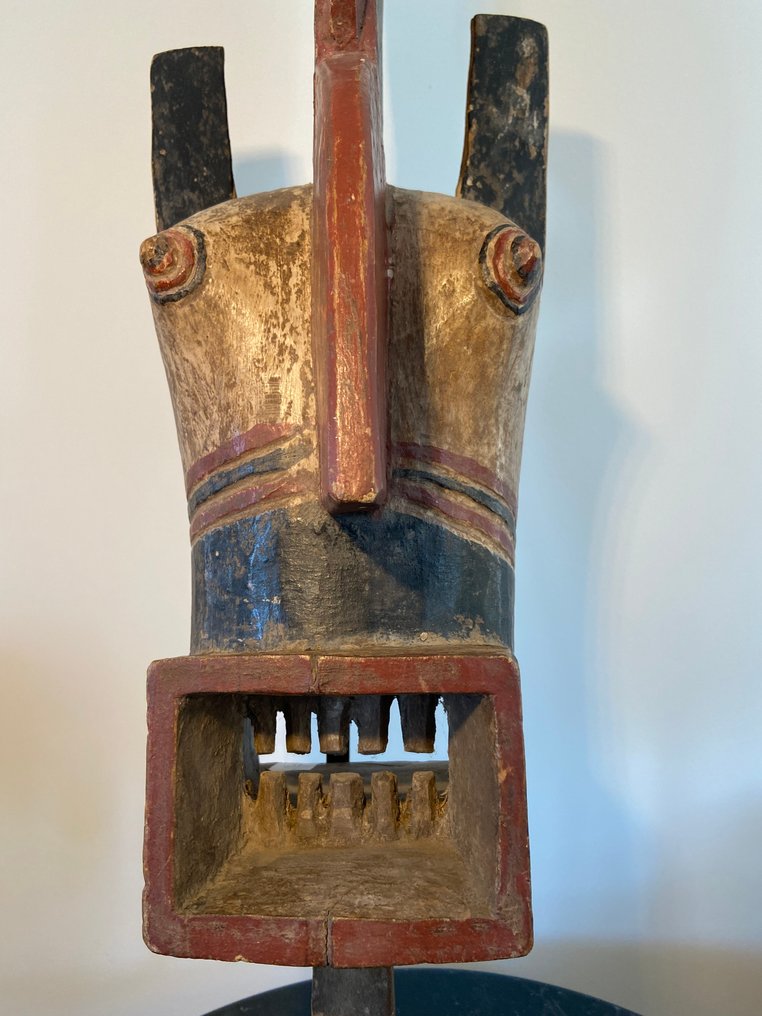
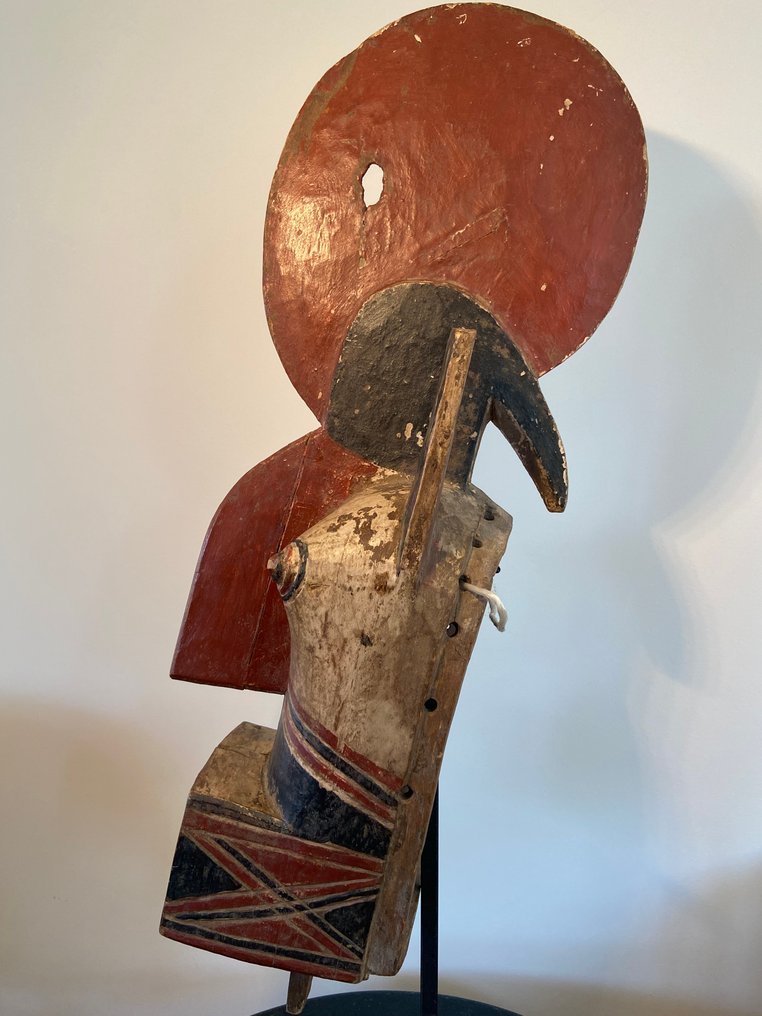
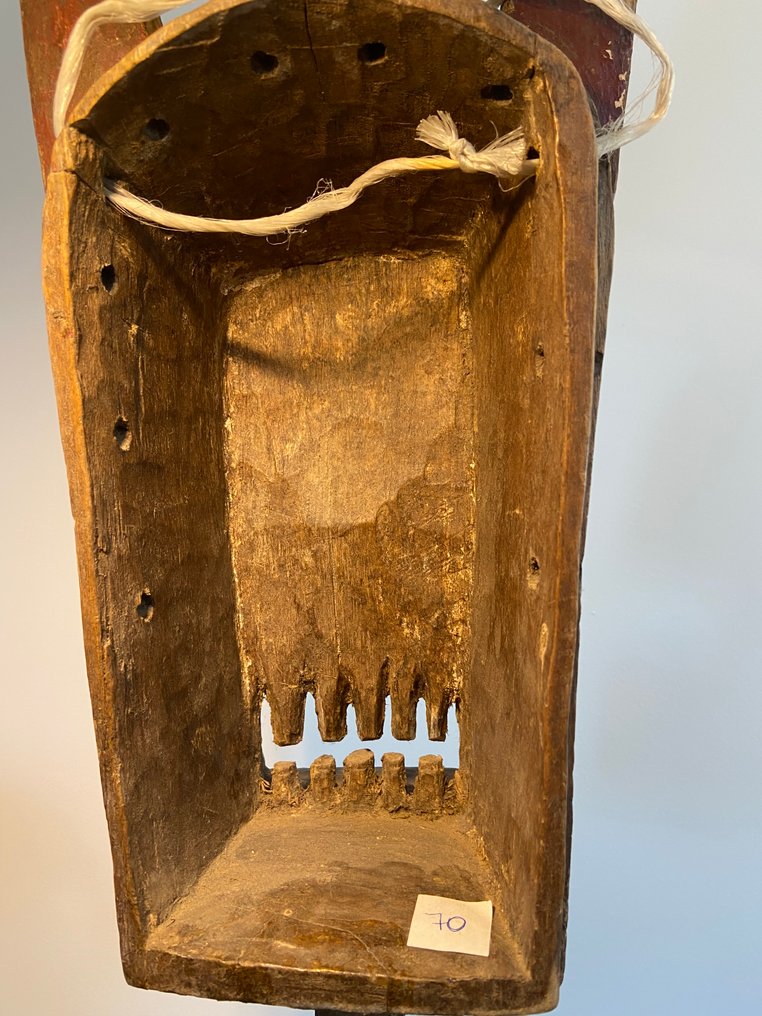
Máscara Bobo Oulé, de Burkina Faso, de la cultura Bobo, datada a mediados del siglo XX, con una altura de 65 cm, en buen estado, procedencia colección Berthe Hartert, Argiles Collection, Barcelona.
Resumen redactado con la ayuda de la IA
Descripción del vendedor
The Bobo Oulé (Bwa), also known as Bobo-Niénégé, “men with scarred faces,” live in the territory called Bwamou, near Dédougou, Tougan, Houndé, and west of Boroma. They make up approximately 75% of the total Bobo population. The masks of the Bobo Oulé are distinguished by their great variety. They are complex creations, anthropomorphic or zoomorphic or specific animals such as buffalo, rooster, antelope, crocodile, and monkey, as well as a wide variety of birds. Each village can have up to fifty masks, all different. In this regard, masks belonging to the same category differ in terms of shape and decoration, which explains why no two masks are ever alike. The polychrome technique used for Bobo Oulé masks is as follows: the carved wood is first painted white; then red and black colors are applied, with black predominating. This decoration must be applied only to the carved surfaces, which gives the design a high relief. The color is based on kaolin and reptile excrement. Black is obtained by mixing boiled resin and a type of root that gives it a kind of shine. For red, a mixture of water, resin, and eggs is used, into whic aterite is pulverized. Sometimes red is obtained by a method that uses a special variety of millet. During festivals in honor of the dead and fertility ceremonies, masked dancers of the secret society Do come out dressed in their fiber costumes, wielding Wood, sticks and leafy branches as weapons.
Provenance: Berthe Hartert collection,
Argiles Collection, Barcelona
The Bobo Oulé (Bwa), also known as Bobo-Niénégé, “men with scarred faces,” live in the territory called Bwamou, near Dédougou, Tougan, Houndé, and west of Boroma. They make up approximately 75% of the total Bobo population. The masks of the Bobo Oulé are distinguished by their great variety. They are complex creations, anthropomorphic or zoomorphic or specific animals such as buffalo, rooster, antelope, crocodile, and monkey, as well as a wide variety of birds. Each village can have up to fifty masks, all different. In this regard, masks belonging to the same category differ in terms of shape and decoration, which explains why no two masks are ever alike. The polychrome technique used for Bobo Oulé masks is as follows: the carved wood is first painted white; then red and black colors are applied, with black predominating. This decoration must be applied only to the carved surfaces, which gives the design a high relief. The color is based on kaolin and reptile excrement. Black is obtained by mixing boiled resin and a type of root that gives it a kind of shine. For red, a mixture of water, resin, and eggs is used, into whic aterite is pulverized. Sometimes red is obtained by a method that uses a special variety of millet. During festivals in honor of the dead and fertility ceremonies, masked dancers of the secret society Do come out dressed in their fiber costumes, wielding Wood, sticks and leafy branches as weapons.
Provenance: Berthe Hartert collection,
Argiles Collection, Barcelona
Datos
N.º de artículos
1
Grupo étnico/cultura
Bobo
País de origen
Burkina Faso
Periodo estimado
mediados del siglo XX
Sold with stand
No
Estado
En buen estado
Título de la obra de arte
Bobo Oulé Mask
Alto
65 cm
Procedencia
Colección privada
Vendido por
