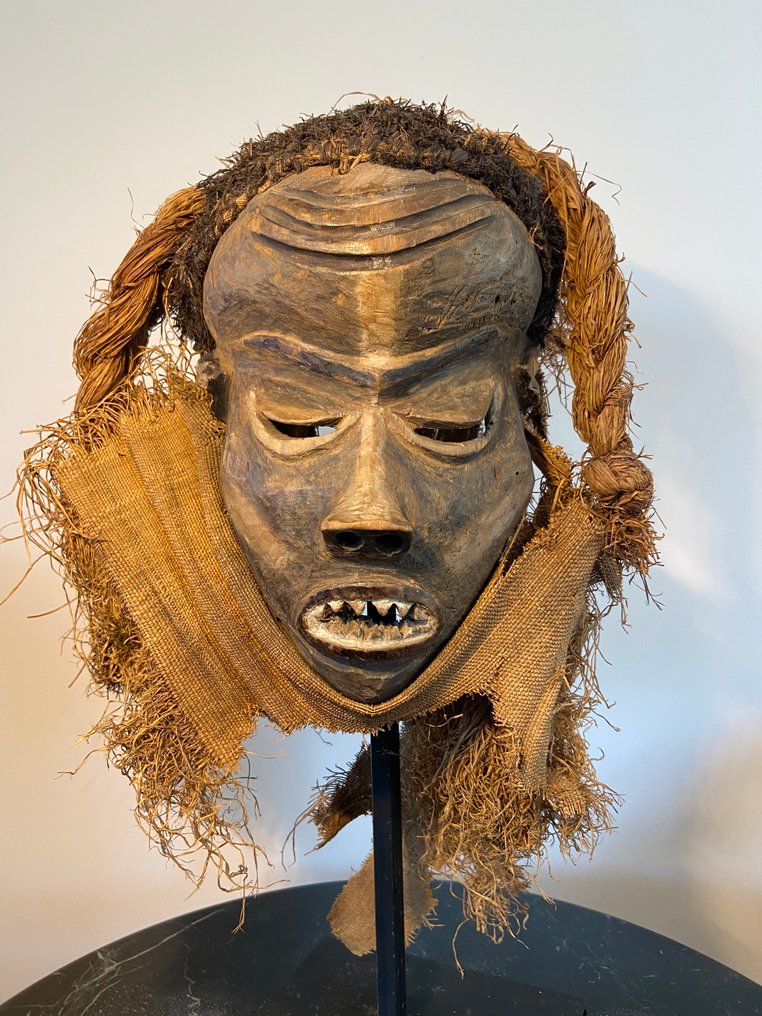
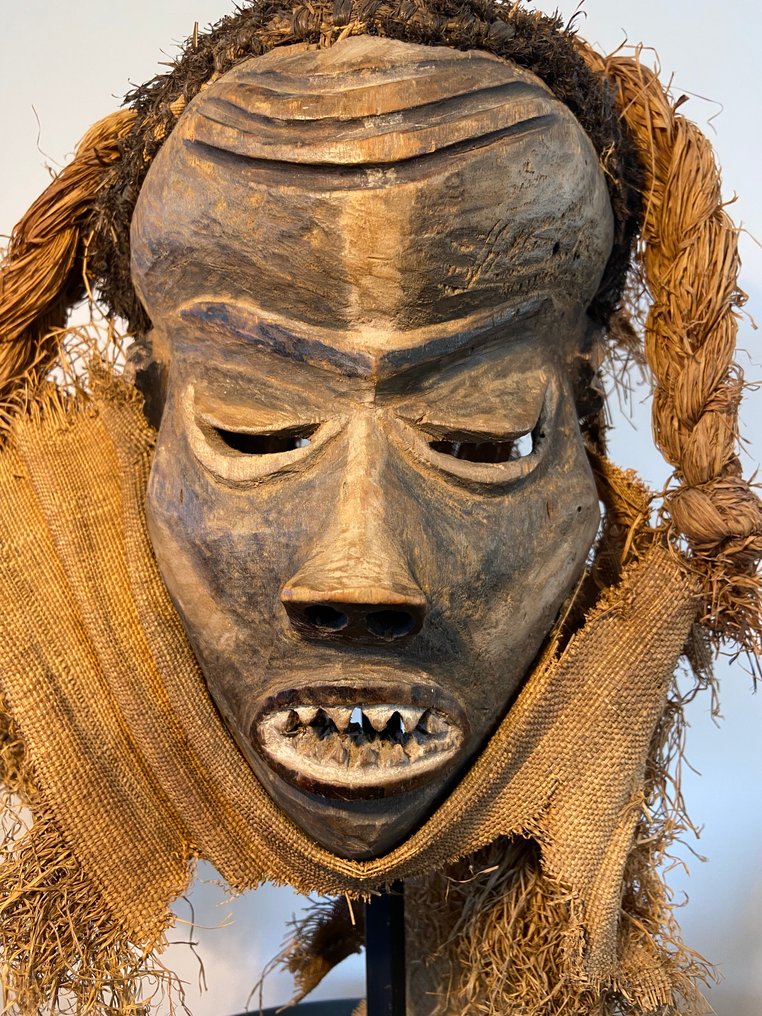
Máscara Pende Kwilu - Mbuya Gabundula - Pende - R.D. Congo


06
días
01
hora
18
minutos
11
segundos
Empezar a pujar
€ 1
Precio de reserva no alcanzado

Experto
Seleccionado por Dimitri André
Posee un título de posgrado en Estudios Africanos y 15 años de experiencia en Arte Africano.
Estimación € 450 - € 500
No hay ninguna puja
Protección del Comprador de Catawiki
Tu pago está protegido con nosotros hasta que recibas tu objeto.Ver detalles
Trustpilot 4.4 | 123641 valoraciones
Valoración Excelente en Trustpilot.
Máscara Pende Kwilu, 30 cm de alto, de madera y fibra, originaria de los Pende en la RD Congo, del siglo XX medio, nombre indígena Mbuya Gabundula, procedencia colección privada.
Resumen redactado con la ayuda de la IA
Descripción del vendedor
The Mbuya masks of the Pende Kwilu or Western Pende are used primarily in the dance that marks the culmination of the initiation period for young people, performed before an assembly of all the villagers. The interpretation of the human face is typical of the western Pende (with influences from the Woyo and Bashilele), with a continuous line of eyebrows, in relief, in a V shape occupying the entire width of the face and painted black; a bulging forehead with Mifunyi folds; the upper eyelids curving downwards; the upturned, pierced nose; the open mouth revealing pointed teeth and the pointed chin. The Gabundula or Executioner mask represents the executioner of the witchcraft society; its fearsome character is symbolized by the Mifunyi folds on the forehead. Europeans associate furrowed brows and a wrinkled forehead; the Pende see these deep furrows as a manifestation of resentment, irascibility, and aggression. At the end of the 1920s and 1930s, many Pende sculptors from the Center sought to illustrate this state of mind by representing the wrinkles in the form of grooves carved into the forehead. This is a convention reserved for frightening characters such as the executioner (Mbuya Gabundula). Gabundula's mouth is larger and more angular. Nguedia says that Pumbu “makes a grimace,” which shows that he is a man who is permanently angry, a dangerous man.
Provenance: Berthe Hartert collection,
Argiles Collection, Barcelona
The Mbuya masks of the Pende Kwilu or Western Pende are used primarily in the dance that marks the culmination of the initiation period for young people, performed before an assembly of all the villagers. The interpretation of the human face is typical of the western Pende (with influences from the Woyo and Bashilele), with a continuous line of eyebrows, in relief, in a V shape occupying the entire width of the face and painted black; a bulging forehead with Mifunyi folds; the upper eyelids curving downwards; the upturned, pierced nose; the open mouth revealing pointed teeth and the pointed chin. The Gabundula or Executioner mask represents the executioner of the witchcraft society; its fearsome character is symbolized by the Mifunyi folds on the forehead. Europeans associate furrowed brows and a wrinkled forehead; the Pende see these deep furrows as a manifestation of resentment, irascibility, and aggression. At the end of the 1920s and 1930s, many Pende sculptors from the Center sought to illustrate this state of mind by representing the wrinkles in the form of grooves carved into the forehead. This is a convention reserved for frightening characters such as the executioner (Mbuya Gabundula). Gabundula's mouth is larger and more angular. Nguedia says that Pumbu “makes a grimace,” which shows that he is a man who is permanently angry, a dangerous man.
Provenance: Berthe Hartert collection,
Argiles Collection, Barcelona
Datos
Nombre de objeto indígena
Mbuya Gabundula
N.º de artículos
1
Grupo étnico/cultura
Pende
País de origen
R.D. Congo
Periodo estimado
mediados del siglo XX
Material
Fiber, Madera
Sold with stand
No
Estado
Estado aceptable.
Título de la obra de arte
Pende Kwilu Mask
Alto
30 cm
Procedencia
Colección privada
Vendido por
