Máscara Pwoom Itok - Kuba - R.D. Congo



06
días
03
horas
38
minutos
15
segundos
Empezar a pujar
€ 1
Precio de reserva no alcanzado

Experto
Seleccionado por Dimitri André
Posee un título de posgrado en Estudios Africanos y 15 años de experiencia en Arte Africano.
Estimación € 350 - € 400
No hay ninguna puja
Protección del Comprador de Catawiki
Tu pago está protegido con nosotros hasta que recibas tu objeto.Ver detalles
Trustpilot 4.4 | 123641 valoraciones
Valoración Excelente en Trustpilot.
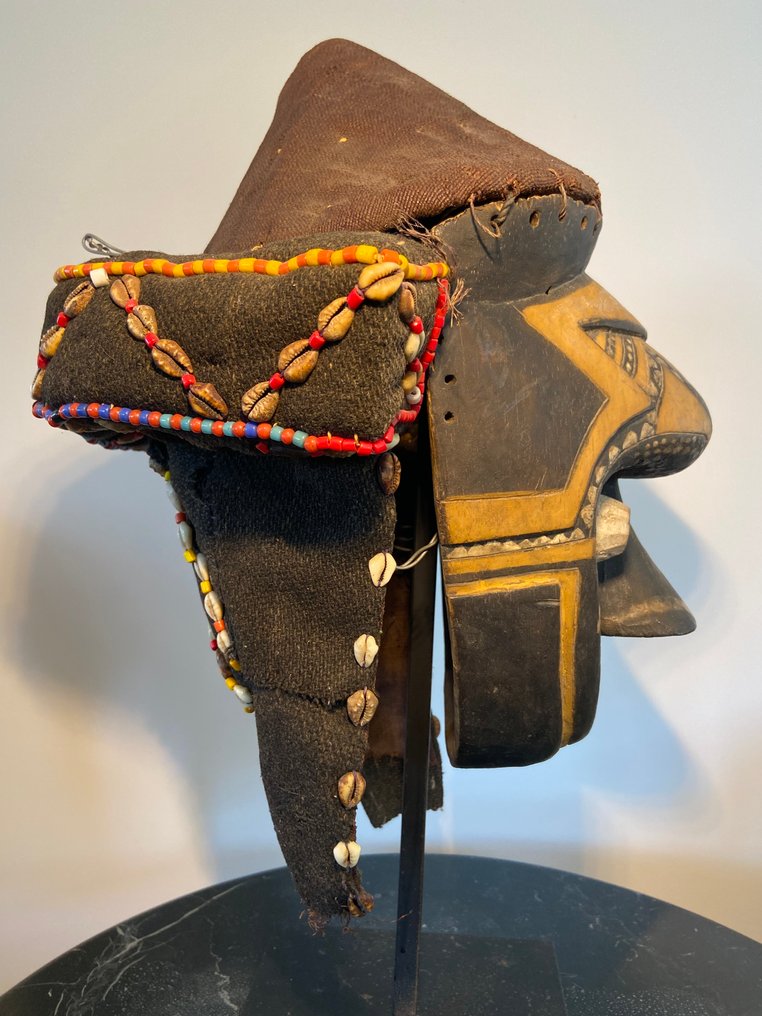
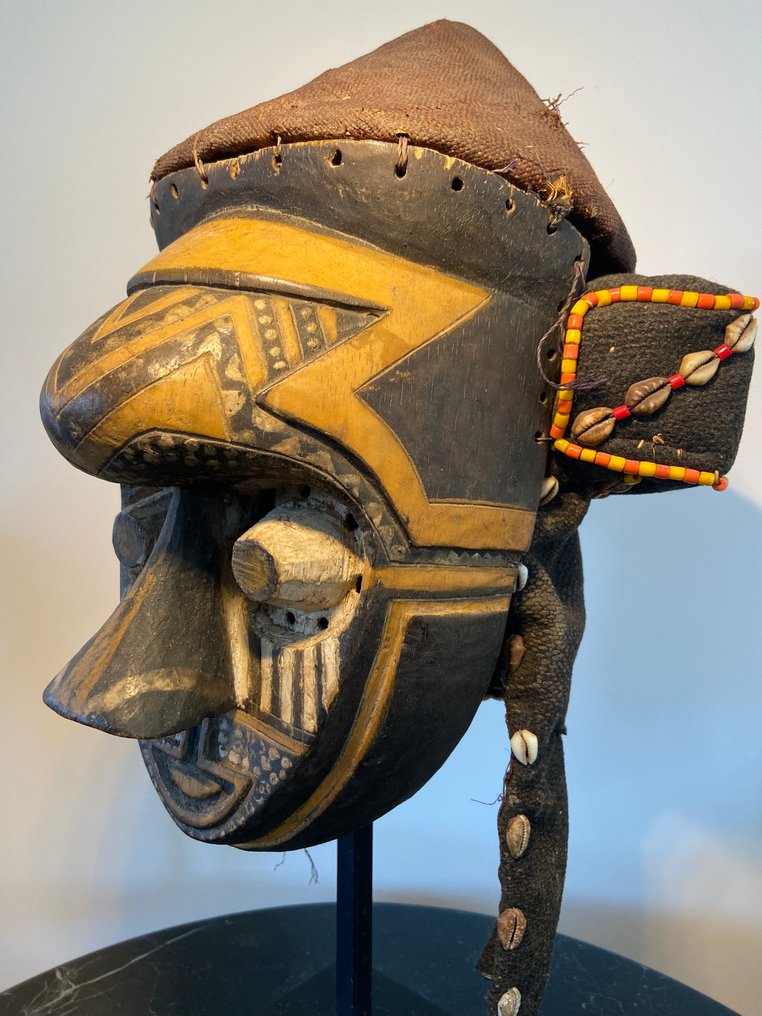
Máscara Pwoom Itok de la cultura Kuba, en la República Democrática del Congo, de principios del siglo XX, tallada en madera con textiles y concha, 35 cm de alto, en buen estado y procedente de una colección privada.
Resumen redactado con la ayuda de la IA
Descripción del vendedor
Masks like this one are often called Pwoom Itok. Other names given to them are Ishieenmaal or Ishendemale. Cornet (1993) stated that the structure is typical of the Ngeende. In 1908, Torday and Joyce, who lived for a time with the Ngongo, found identical examples. All these masks have trilobed hairstyles, made from rota fiber or raffia. The eyes are very prominent, cylindrical in shape and markedly protruding and, according to Cornet, are inspired by the chameleon. The area around the iris has peepholes and the pupils are very emphasized. Other notable features are the sharp, voluminous nose and the semi-elliptical mouth joined to the nose by the columella. Cornet argued that these masks were used in the context of boys' initiations. The Ngongo Torday and Joyce were led to believe by the Ngongo that masks of this type were worn by the Babende, members of a “powerful secret society” of that ethnic group, which held an official position in each village and whose function was to combat crime. Today, it is more likely that this was an elite within the organization rather than a secret society. The Shene Malula mask (pronunciation by Torday and Joyce) performed in the villages along with two others, the Bungu and the Gore Moashi. A Ngongo legend attributes the creation of the mask to a woman from the time of Samba Milepe, who later became the founder of the Babende.
Provenance: Medicus Mundi missonaires
Argiles collection, Barcelona
Masks like this one are often called Pwoom Itok. Other names given to them are Ishieenmaal or Ishendemale. Cornet (1993) stated that the structure is typical of the Ngeende. In 1908, Torday and Joyce, who lived for a time with the Ngongo, found identical examples. All these masks have trilobed hairstyles, made from rota fiber or raffia. The eyes are very prominent, cylindrical in shape and markedly protruding and, according to Cornet, are inspired by the chameleon. The area around the iris has peepholes and the pupils are very emphasized. Other notable features are the sharp, voluminous nose and the semi-elliptical mouth joined to the nose by the columella. Cornet argued that these masks were used in the context of boys' initiations. The Ngongo Torday and Joyce were led to believe by the Ngongo that masks of this type were worn by the Babende, members of a “powerful secret society” of that ethnic group, which held an official position in each village and whose function was to combat crime. Today, it is more likely that this was an elite within the organization rather than a secret society. The Shene Malula mask (pronunciation by Torday and Joyce) performed in the villages along with two others, the Bungu and the Gore Moashi. A Ngongo legend attributes the creation of the mask to a woman from the time of Samba Milepe, who later became the founder of the Babende.
Provenance: Medicus Mundi missonaires
Argiles collection, Barcelona
Datos
N.º de artículos
1
Grupo étnico/cultura
Kuba
País de origen
R.D. Congo
Periodo estimado
Principios del siglo XX
Material
Concha, Madera, Textiles
Sold with stand
No
Estado
En buen estado
Título de la obra de arte
Pwoom Itok Mask
Alto
35 cm
Procedencia
Colección privada
Vendido por
