Máscara casco doble - Ejagham - Ekoi - Camerún



06
días
04
horas
56
minutos
12
segundos
Empezar a pujar
€ 1
Precio de reserva no alcanzado

Experto
Seleccionado por Dimitri André
Posee un título de posgrado en Estudios Africanos y 15 años de experiencia en Arte Africano.
Estimación € 500 - € 550
No hay ninguna puja
Protección del Comprador de Catawiki
Tu pago está protegido con nosotros hasta que recibas tu objeto.Ver detalles
Trustpilot 4.4 | 123609 valoraciones
Valoración Excelente en Trustpilot.
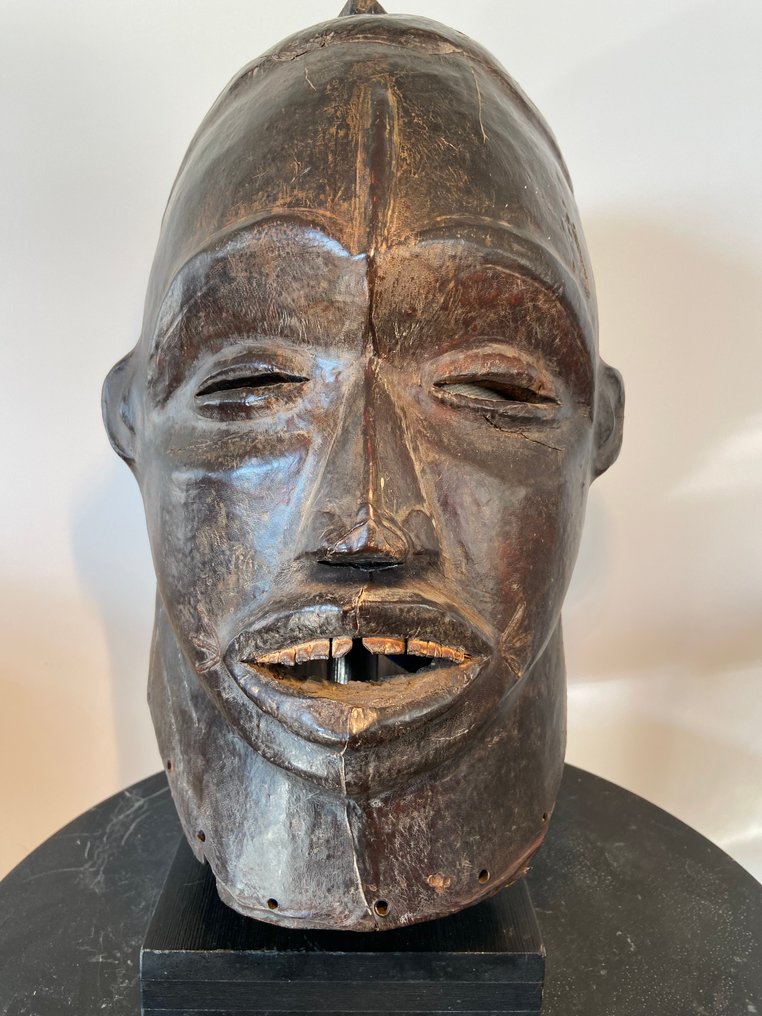
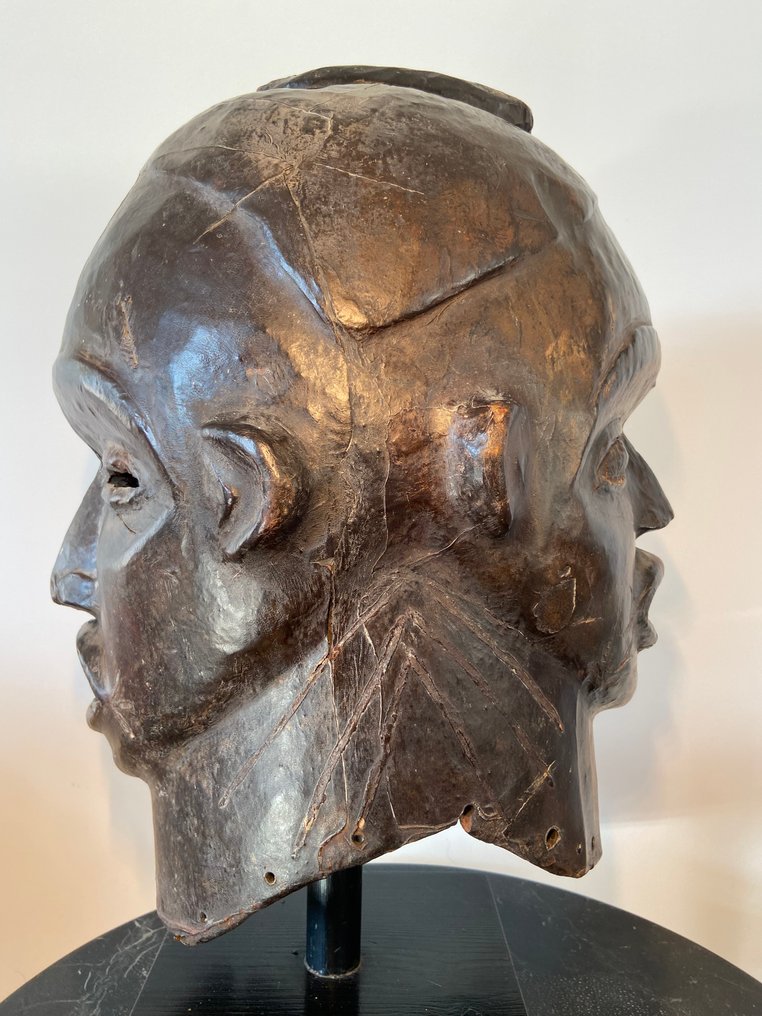
Máscara casco doble de Camerún, Ejagham – Ekoi máscara de casco doble del siglo XX, tallada en madera con piel, 42 cm de alto, procedencia Colección privada.
Resumen redactado con la ayuda de la IA
Descripción del vendedor
In southwestern Cameroon and the neighboring Nigerian territories lives the Ekoi group, which comprises various tribes settled in the interior of the lush virgin forest, at the level of the middle course of the Cross River: the Keaka, the Anyang, the Banyang, the Obang, the Boka, and others. The Ekoi like to call themselves Ejagham. The absolute dominance of secret societies and the environment, virgin forest, gives these peoples relatively uniform cultural characteristics. The origin of their masks, marked by realism, comes from the custom of the ancient Ekoi headhunters. The victors used to tie the heads of their dead enemies to their own heads and then, drunk with the conquest they had achieved, throw themselves into frenzied dances. According to a deep-rooted belief, the blood of the defeated enemies had the power to fertilize the fields. Wooden heads, usually covered with skin, later replaced human heads, but faithfully assumed their characteristics.
It is a double-helmet mask, with a male face with closed eyes, although with a small slit so that the wearer can see, and a female face with open eyes, representing the dualism between life and death.
Provenance: Medicus Mundi missonaires
Argiles collection, Barcelona
In southwestern Cameroon and the neighboring Nigerian territories lives the Ekoi group, which comprises various tribes settled in the interior of the lush virgin forest, at the level of the middle course of the Cross River: the Keaka, the Anyang, the Banyang, the Obang, the Boka, and others. The Ekoi like to call themselves Ejagham. The absolute dominance of secret societies and the environment, virgin forest, gives these peoples relatively uniform cultural characteristics. The origin of their masks, marked by realism, comes from the custom of the ancient Ekoi headhunters. The victors used to tie the heads of their dead enemies to their own heads and then, drunk with the conquest they had achieved, throw themselves into frenzied dances. According to a deep-rooted belief, the blood of the defeated enemies had the power to fertilize the fields. Wooden heads, usually covered with skin, later replaced human heads, but faithfully assumed their characteristics.
It is a double-helmet mask, with a male face with closed eyes, although with a small slit so that the wearer can see, and a female face with open eyes, representing the dualism between life and death.
Provenance: Medicus Mundi missonaires
Argiles collection, Barcelona
Datos
N.º de artículos
1
Grupo étnico/cultura
Ejagham - Ekoi
País de origen
Camerún
Periodo estimado
mediados del siglo XX
Material
Skin, Madera
Sold with stand
No
Estado
En buen estado
Título de la obra de arte
Double helmet mask
Alto
42 cm
Procedencia
Colección privada
Vendido por
