Máscara casco - Kongo



06
días
06
horas
28
minutos
26
segundos
Puja actual
€ 45
Precio de reserva no alcanzado

Experto
Seleccionado por Dimitri André
Posee un título de posgrado en Estudios Africanos y 15 años de experiencia en Arte Africano.
Estimación € 450 - € 500
3 personas más están mirando este objeto
 Pujador 8455 Pujador 8455 | 45 € | |
|---|---|---|
 Pujador 7991 Pujador 7991 | 1 € |
Protección del Comprador de Catawiki
Tu pago está protegido con nosotros hasta que recibas tu objeto.Ver detalles
Trustpilot 4.4 | 123609 valoraciones
Valoración Excelente en Trustpilot.
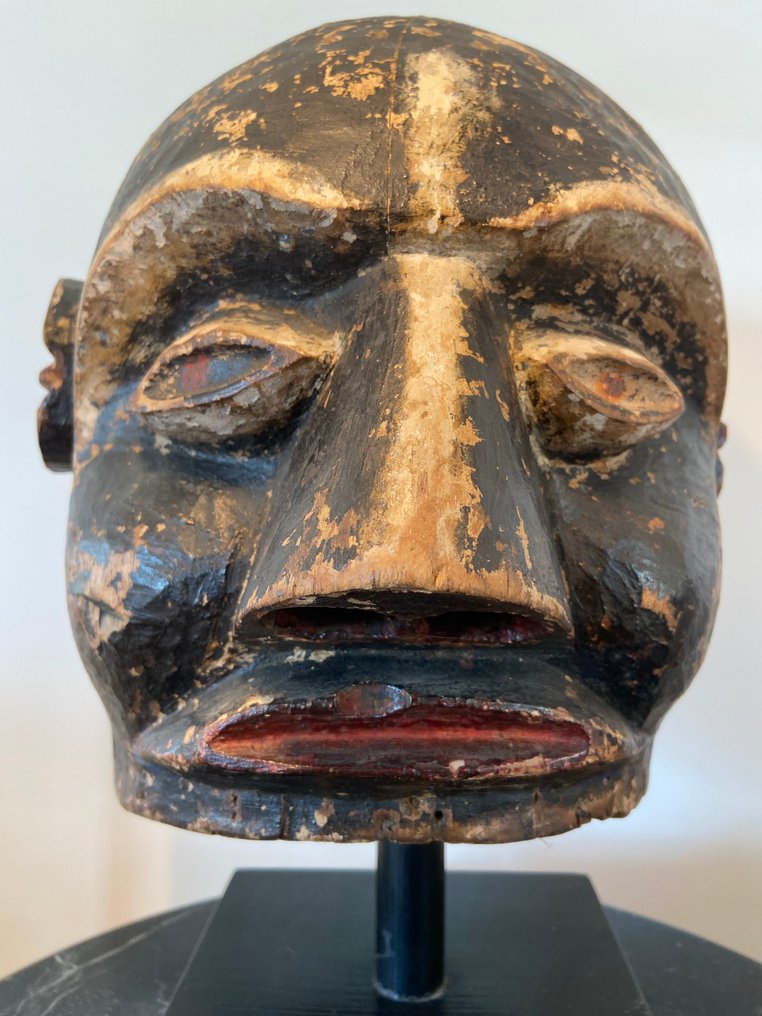
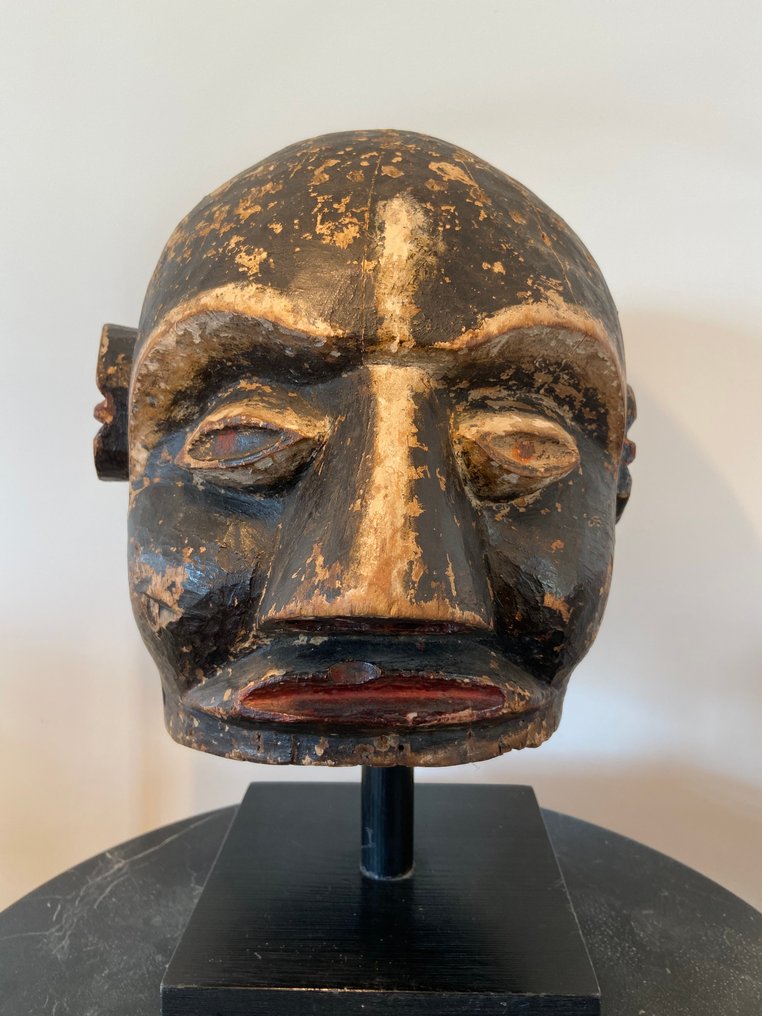
Máscara de madera titulada Máscara casco, del pueblo Kongo, siglo XX medio, procedente de colección privada, colección Berthe Hartert y colección Argiles, Barcelona, 31 cm de alto, en buen estado, sin soporte.
Resumen redactado con la ayuda de la IA
Descripción del vendedor
This mask was acquired as Kongo. Black mask with a smooth spherical head, without any markings on the hair, with the crown full of small holes that do not penetrate to the inside; very arched eyebrows, broad and wide, covering the entire width of the face; sunken eye sockets with protruding almond-shaped eyes edged in white, with painted pupils, one in white with the iris in red and the other in red with the iris in black; very large and wide nose with very wide nostrils, with large holes to the inside (giving the impression that the wearer sees through them); protruding rounded cheeks; slightly protruding, schematic, elongated mouth, without lips, closed and with the interior painted red; it has no chin and the
ears are large, very protruding, semicircular in shape with the interior painted white and a marked throat
painted red. The mask has a wide white line painted across the forehead and nose. The small holes in the Crown could have been used to hold bird feathers to form a headdress, as in some well-known Vili masks.
The overall impression of the mask is one of realism, simplicity, and great expressiveness. According to Anne-Marie Bouttiaux-Ndiaye, "the circular incisions on the forehead and on the head are reminiscent of certain features of the Ndunga of the Kongo Woyo." Ndunga masks are agents of social control that act as a secret police force.
Provenance: Berthe Hartert collection
Argiles collection, Barcelona
This mask was acquired as Kongo. Black mask with a smooth spherical head, without any markings on the hair, with the crown full of small holes that do not penetrate to the inside; very arched eyebrows, broad and wide, covering the entire width of the face; sunken eye sockets with protruding almond-shaped eyes edged in white, with painted pupils, one in white with the iris in red and the other in red with the iris in black; very large and wide nose with very wide nostrils, with large holes to the inside (giving the impression that the wearer sees through them); protruding rounded cheeks; slightly protruding, schematic, elongated mouth, without lips, closed and with the interior painted red; it has no chin and the
ears are large, very protruding, semicircular in shape with the interior painted white and a marked throat
painted red. The mask has a wide white line painted across the forehead and nose. The small holes in the Crown could have been used to hold bird feathers to form a headdress, as in some well-known Vili masks.
The overall impression of the mask is one of realism, simplicity, and great expressiveness. According to Anne-Marie Bouttiaux-Ndiaye, "the circular incisions on the forehead and on the head are reminiscent of certain features of the Ndunga of the Kongo Woyo." Ndunga masks are agents of social control that act as a secret police force.
Provenance: Berthe Hartert collection
Argiles collection, Barcelona
Datos
N.º de artículos
1
Grupo étnico/cultura
Kongo
Periodo estimado
mediados del siglo XX
Material
Madera
Sold with stand
No
Estado
En buen estado
Título de la obra de arte
Mask helmet
Alto
31 cm
Procedencia
Colección privada
Vendido por
